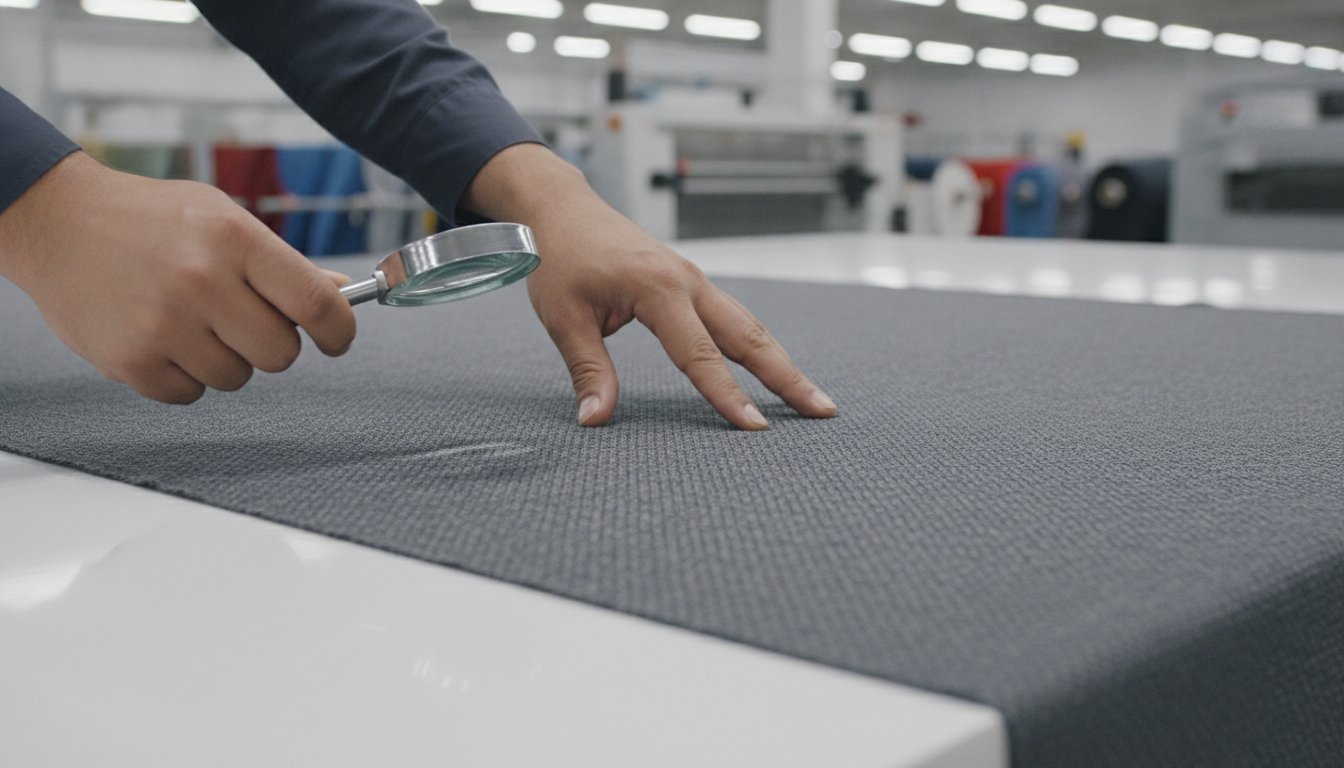

In 2026, the success of your Amazon FBA business is won in the factory, not on a marketing dashboard. While many entrepreneurs focus on advertising, the reality is that operational errors now claim the vast majority of new ventures before they even launch. With Amazon discontinuing its in-house prep and labeling services as of January 1, 2026, the burden of technical compliance has shifted entirely to the seller. Falling victim to common pitfalls for new amazon fba sellers, such as receiving substandard goods or failing to meet the new March 31 barcode mandates, often leads to immediate account suspension or costly inventory rejection.
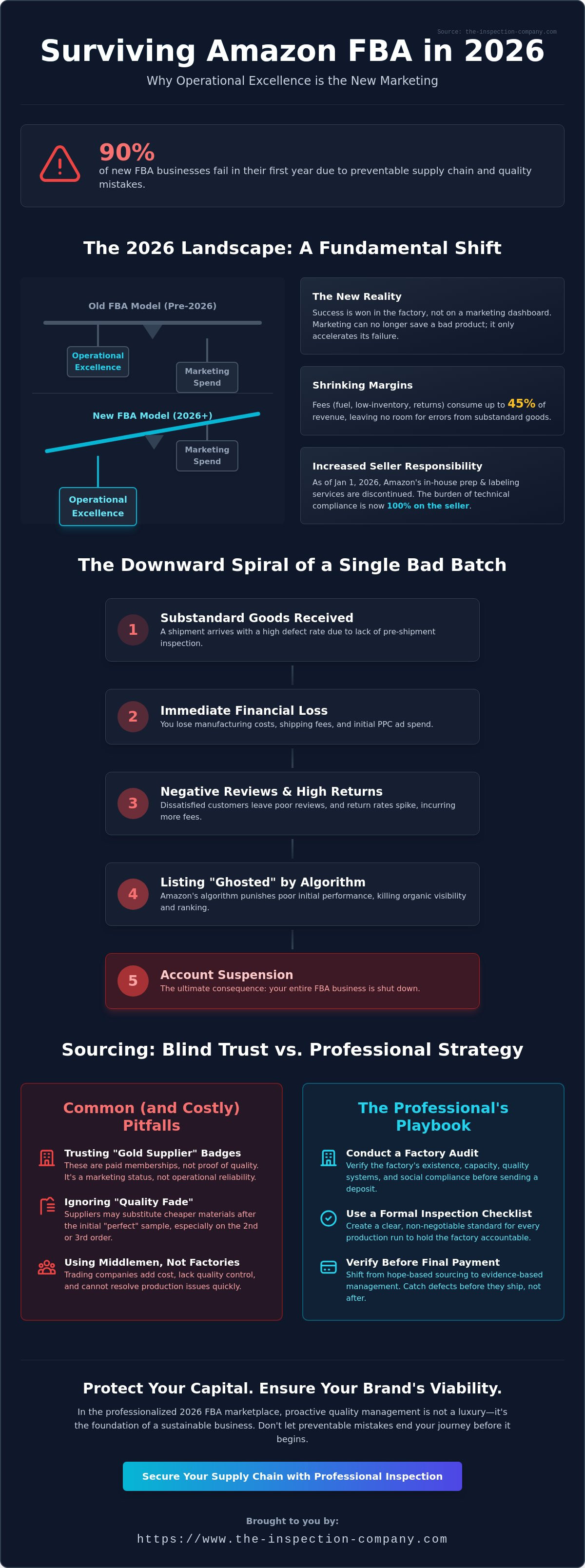
It's natural to feel anxious about a landscape where fuel surcharges and low-inventory fees can consume up to 45% of your revenue. You need the certainty that your capital investment won't result in a shipping container full of unsellable defects. This guide identifies the critical supply chain and quality mistakes that cause 90% of new FBA businesses to fail in their first year. We'll provide a clear verification checklist to use before you pay your supplier, giving you the confidence that your products will pass warehouse inspection and fuel sustainable growth.
Key Takeaways
- Understand why product quality, rather than marketing spend, is the primary driver of account health and low return rates in the 2026 Amazon ecosystem.
- Learn how to navigate common pitfalls for new amazon fba sellers by looking beyond "Gold Supplier" badges to identify true manufacturing reliability.
- Identify the specific labeling and packaging requirements that prevent your inventory from being rejected or lost at fulfillment centers.
- Shift from hope-based sourcing to evidence-based management by applying the 80/20 rule to your production and inspection protocols.
- Master the essential verification steps required before final payment to protect your capital and ensure your brand's long-term viability.
The 2026 FBA Landscape: Why Marketing Can't Save a Bad Product
The era of "launch and hope" is over. In 2026, the Fulfillment by Amazon (FBA) ecosystem has evolved from a simple product-flipping platform into a sophisticated brand-building arena. Many entrepreneurs still believe that aggressive PPC spending can compensate for a mediocre product. This is one of the most dangerous and common pitfalls for new amazon fba sellers. If your product quality is inconsistent, marketing only accelerates your failure by driving more customers to experience, and report, your defects.
High return rates are the primary killer of new accounts. With Amazon's 2026 fee structure consuming between 35% and 45% of product revenue before advertising, there is no margin for error. A return doesn't just cost you a sale; it triggers processing fees and potential disposal costs that quickly turn a profitable month into a net loss. Proactive risk management, such as utilizing a professional Amazon FBA Service, ensures that defects are caught at the factory level rather than in the hands of a customer.
The True Cost of a Single Bad Batch
Financial ruin often starts with a single shipment of substandard goods. When you receive a batch with a high defect rate, the math is brutal. You lose the initial manufacturing cost, the shipping fees, and the PPC capital spent to acquire those dissatisfied customers. Even worse, Amazon's 2026 algorithms are increasingly sensitive to initial performance. If you receive multiple negative reviews in your first 30 days due to quality issues, your listing may be "ghosted," losing its search visibility and organic ranking permanently.
Waiting for customer feedback to identify problems is a reactive strategy that leads to account suspension. Successful sellers in 2026 treat quality management as a preventative investment rather than a luxury. They understand that verifying specifications before the final payment is the only way to maintain the high seller ratings required to survive in an increasingly professionalized marketplace. In this environment, your supply chain is your most important marketing asset.
Sourcing and Manufacturing Traps: The Cost of Blind Trust
Many sellers fall into the trap of assuming a "Gold Supplier" badge on platforms like Alibaba guarantees manufacturing excellence. In reality, these badges are often paid memberships rather than earned certifications of quality. Relying on them is one of the most frequent common pitfalls for new amazon fba sellers. You shouldn't mistake a marketing status for operational reliability. Blind trust in a digital profile often leads to receiving inventory that fails to meet basic safety or performance standards, which can result in immediate listing removal.
Quality fade is another silent killer of FBA businesses. A supplier might provide a perfect initial sample to secure your deposit, only to gradually substitute cheaper materials or simplify production processes in subsequent batches. This often happens in the second or third order when the seller feels comfortable and stops verifying production. Without a formal inspection checklist, you have no baseline to hold the factory accountable when these deviations occur. A Factory Audit is an on-site evaluation of a supplier's quality management systems and social compliance.
Why Factory Audits are Non-Negotiable
A primary risk in international sourcing is unknowingly working with a middleman trading company instead of a direct manufacturer. Middlemen add unnecessary costs and often lack control over the production floor, making it impossible to resolve quality issues quickly. A professional factory audit verifies the physical existence of the facility and its actual production capacity. This process ensures your partner can scale with your growth without sacrificing quality under pressure. It also confirms that the factory adheres to international social compliance standards, protecting your brand from ethical scandals. If you are unsure about a potential partner's capabilities, consulting with a regional expert can prevent a costly misstep before you send a deposit.
Fulfillment and Compliance Nightmares: Avoiding FBA Rejections
Amazon's decision to discontinue in-house prep and labeling services on January 1, 2026, has fundamentally changed the risk profile for importers. You are now entirely responsible for ensuring every unit is "FBA-ready" before it reaches the warehouse. One of the most frequent common pitfalls for new amazon fba sellers is assuming that standard retail packaging is sufficient for the rigors of international logistics. In reality, packaging that looks good on a shelf often fails to protect the product during the multiple touchpoints of cross-border transit. If your items arrive damaged or with unreadable barcodes, Amazon will either charge significant "unplanned service fees" or reject the shipment entirely.
Compliance is another area where many new businesses stumble. As of 2026, Amazon has intensified its automated scanning for region-specific certifications. Failing to provide a Children's Product Certificate (CPC) for toys, RoHS documentation for electronics, or CE marking for European markets results in immediate inventory "ghosting." Furthermore, the new March 31, 2026, barcode requirements mandate that non-brand-registered sellers use Amazon FNSKU stickers even if a manufacturer barcode is present. Using the wrong barcode type leads to commingled inventory issues, where your high-quality goods are mixed with a competitor's inferior stock.
5 Steps to Ensure FBA Compliance Before Shipping
- Step 1: Verify FNSKU barcode readability with a professional scanner to prevent "dark" inventory that cannot be tracked.
- Step 2: Conduct a standardized "drop test" to ensure your packaging survives the impact of warehouse sorting and long-distance shipping.
- Step 3: Confirm all mandatory suffocation warnings on poly bags and "Made in China" labels are clearly visible and permanent.
Specialized Amazon FBA Inspections
A standard quality check is often insufficient for the specific demands of the FBA ecosystem. A dedicated Amazon FBA inspection focuses on the technical details that trigger Amazon's "Product Safety" bots. Our inspectors look for critical product defects such as sharp edges, loose components, or battery safety issues that could lead to account suspension. Catching these errors at the factory is a preventative investment that forestalls much larger financial losses. To ensure your next shipment meets these rigorous 2026 standards, contact our compliance team for a technical consultation.
The Professional Sourcing Strategy: Risk Mitigation as an Investment
Moving from a "hope-based" sourcing approach to evidence-based supply chain management is the hallmark of a professional seller. In a marketplace where Amazon's fee burden can reach 45% of revenue, you can't afford to treat quality control as an optional expense. It's a preventative investment. The 80/20 rule of FBA is a reality for most importers: 80% of your operational headaches, including negative reviews and account health warnings, stem from just 20% of preventable production errors. Identifying these errors before the goods leave the factory floor is the only way to protect your profit margins.
A Pre-Shipment Inspection (PSI) serves as the cheapest insurance policy available in international trade. It provides a final gatekeeping stage where a neutral third party verifies that your order meets every specification. This process relies on clearly defined AQL standards, which translate vague quality expectations into measurable data points. By establishing these limits during the contract phase, you build a more disciplined relationship with your supplier. This clarity helps you avoid the common pitfalls for new amazon fba sellers who fail to define what constitutes a "major" or "minor" defect until it's too late to fix them.
Scaling Safely in 2026
As your business grows, the complexity of your quality management must scale accordingly. High-volume sellers often utilize "During Production Inspections" to monitor the manufacturing process in real-time. This proactive step catches systemic issues while the machinery is still running, preventing an entire batch from being ruined by a single incorrect setting. Furthermore, Container Loading Inspections provide a final layer of security. They ensure the correct quantity is loaded and that the palletization meets Amazon's strict 2026 safety requirements, preventing transit damage and "short-shipping" disputes.
Your supply chain's reliability is the foundation of your brand's longevity. Don't leave your capital to chance in a high-stakes environment. Book your FBA inspection today to secure your inventory and ensure your business remains viable throughout its first year and beyond.
Securing Your 2026 FBA Growth Strategy
The 2026 Amazon marketplace leaves no room for operational friction. Success depends on moving beyond the common pitfalls for new amazon fba sellers by prioritizing technical compliance and factory-level accountability. By shifting your focus from reactive marketing to proactive quality management, you protect your brand from the financial loss of rejected inventory and account suspensions. Managing international production requires a partner with a localized presence and technical expertise.
With over 700 inspectors across Asia and specialized Amazon FBA compliance checklists, we provide the transparency you need to release final payments with confidence. Our detailed reports are delivered within 24 hours, ensuring your supply chain remains agile and efficient. Protect your FBA investment with professional inspections and build a resilient business that thrives in the current competitive landscape. You've done the hard work of finding a product; now ensure it reaches the customer in perfect condition.
Frequently Asked Questions
Can I trust my supplier to do their own quality control?
No, you shouldn't rely solely on a supplier's internal quality control. Factories often prioritize production speed and shipping deadlines over meticulous technical compliance. This conflict of interest is one of the common pitfalls for new amazon fba sellers. An independent third party provides an unbiased assessment to ensure your goods meet the exact standards you've paid for before the final balance is settled.
What happens if Amazon rejects my shipment because of bad labeling?
Amazon will either apply "unplanned service fees" to correct the errors or reject the entire shipment. Since Amazon discontinued its own prep and labeling services in early 2026, a rejection often means your inventory is sent back or destroyed at your expense. This results in significant financial loss and can lead to a "dark inventory" status where your capital is tied up in unsellable stock.
How much does a professional Amazon FBA inspection cost?
The cost of a professional inspection is a preventative investment that varies based on the total man-days required and the complexity of your product's specifications. Instead of viewing this as an added expense, successful sellers treat it as an insurance policy against the much higher costs of returns and account suspensions. You should request a quote based on your specific order volume and the location of your factory.
Is a factory audit necessary if I'm only ordering 500 units?
Yes, a factory audit is essential for any new supplier relationship regardless of order size. This process verifies that you're working with a legitimate manufacturer rather than a middleman trading company with no control over the production floor. Even for 500 units, the risk of receiving "junk" is a major threat to your initial capital and your brand's reputation in the FBA ecosystem.
What is the difference between a minor and a major product defect in FBA terms?
A major defect is a failure that makes the product unsellable, hazardous, or likely to be returned by a customer. These defects often trigger Amazon's automated safety bots and can lead to immediate account suspension. A minor defect is typically an aesthetic issue that doesn't affect the product's function or safety. Distinguishing between these during an Amazon FBA Service inspection is critical for maintaining high seller ratings and avoiding compliance nightmares.