Is a single missing hyphen in your wood packaging worth a "Hold-on-Terminal" status and a $15,000 penalty? Since the U.S. APHIS resumed full enforcement of the ISPM 15 hyphen requirement on January 1, 2026, the margin for error in international logistics has vanished, making a professional container loading inspection checklist more critical than ever. You've likely felt the anxiety of a shipment arriving with moisture damage or facing an Amazon FBA rejection because a factory cut corners on dunnage. It's a common frustration to see your margins evaporate due to preventable errors made during the final stages of the supply chain.
By adopting these rigorous protocols, you can secure your cargo and eliminate the financial friction of transit damage. This article promises to equip you with the professional standards needed to ensure zero-defect arrivals and potentially lower your insurance premiums. We'll preview the 2026 requirements for ISO 17712 high-security seals, detail the latest SOLAS VGM weight verification systems, and provide a standardized loading protocol for all your suppliers. Protecting your investment requires active verification, not just hope.
Key Takeaways
- Quantify the hidden financial impacts of shipping damage, including marketplace ranking penalties and replacement logistics costs that erode your margins.
- Identify the 2026 industry standards for packaging materials and dunnage required to eliminate internal cargo movement and chemical degradation.
- Implement a rigorous container loading inspection checklist to verify container integrity and SKU accuracy before the doors are sealed.
- Learn how to combine Pre-Shipment Inspections with loading protocols to build a 360-degree quality and logistics security framework for all suppliers.
- Secure your supply chain against common factory errors to ensure zero-defect arrivals at your destination or Amazon FBA warehouse.
The Financial Impact of Container Shipping Damage in 2026
Shipping damage is defined as the physical or chemical degradation of goods occurring between the factory floor and the final destination. While visible crushing or broken seals are obvious, chemical issues like oxidation, corrosion, or mold are equally catastrophic for your bottom line. In the high-stakes environment of intermodal freight transport, your cargo passes through multiple handling points, each representing a potential failure. If your team isn't using a rigorous container loading inspection checklist, you're leaving your inventory vulnerable to the structural stresses of 2026's volatile supply chains.
The true cost of damage goes far beyond the invoice value of the lost units. You must account for "hidden" expenses that erode profitability, such as expedited replacement logistics, increased customer churn, and severe marketplace ranking penalties. For brands selling through major retailers, a single shipment of damaged goods can trigger massive chargebacks or Amazon FBA rejections. Often, understanding product defects is the first step in realizing that even a minor manufacturing flaw can cause an item to fail entirely under the pressure of transit. With global trade growth projected at only 2.8% in 2026, protecting every unit is a financial necessity.
The Silent Killers: Moisture and Container Rain
Moisture is an invisible threat that can bankrupt a shipment. Inside a steel container, rapid temperature fluctuations cause "container rain," where condensation collects on the ceiling and drips onto your cargo. This cycle destroys textiles, corrodes sensitive electronics, and compromises the structural integrity of corrugated packaging. Because 2026 transit times have increased by 10 to 14 days due to global conflict diversions, the window for mold growth and moisture damage has expanded. A professional container loading inspection checklist ensures that the container is watertight and that the factory hasn't cut corners on essential desiccants or VCI bags.
Engineering a Damage-Proof Packaging and Palletization Strategy
Preventing transit damage begins long before the cargo reaches the port. In 2026, single-wall boxes are no longer sufficient for the rigors of international transit. You must mandate double-walled corrugated fiberboard as your baseline material to withstand the stacking pressures of a full load. ISTA 3A testing is the gold standard for verifying packaging durability before the first container is even booked. This proactive testing ensures your packaging survives the vibrations and impacts of a global journey, protecting your bottom line from preventable losses.
Internal movement is the primary cause of product friction and breakage. Utilizing air pillows and VCI bags effectively eliminates voids and prevents the chemical degradation mentioned previously. When finalizing your container loading inspection checklist, ensure your inspectors verify that dunnage is applied correctly to every pallet. Proper dunnage is especially vital for an Amazon FBA Inspection, where strict intake standards mean any internal shifting results in rejected shipments. For a technical deep dive, the BIC Container Packing Checklist provides excellent guidance on securing cargo according to international CTU codes.
Palletization Best Practices for Stability
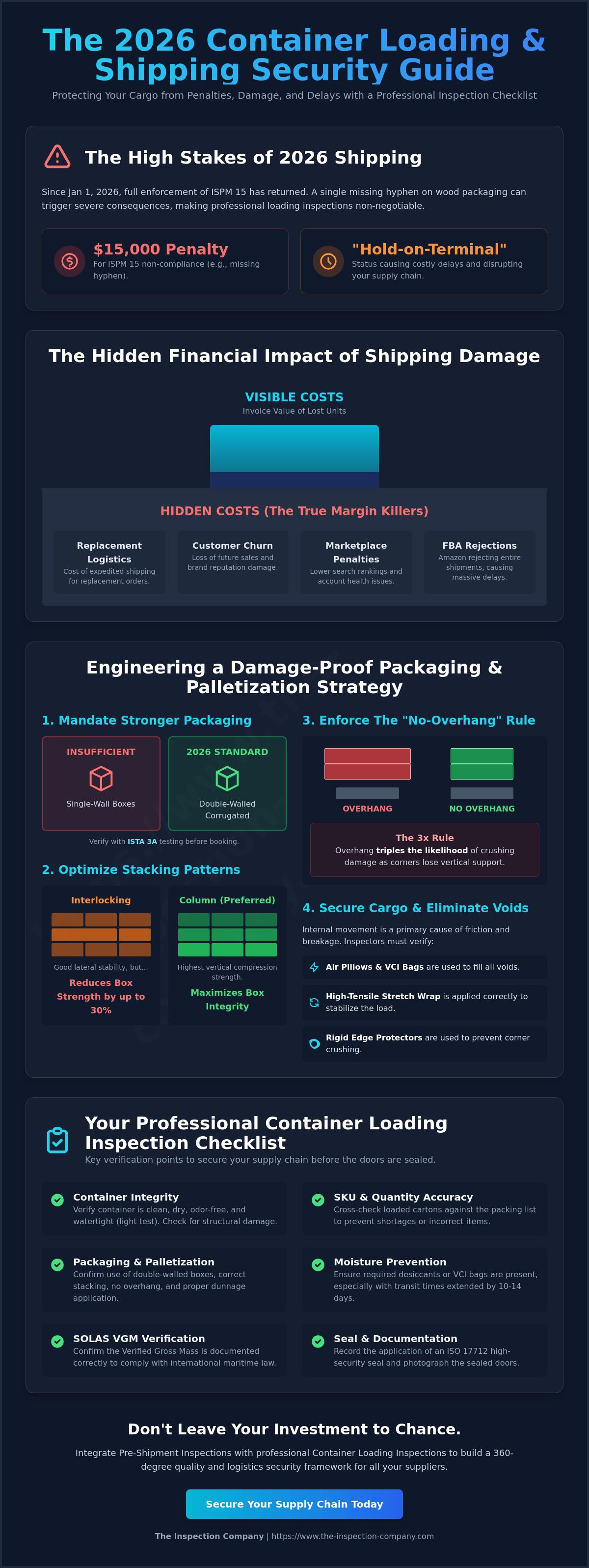
Stacking patterns directly influence your cargo's survival rate. While interlocking patterns provide better lateral stability, column stacking offers the highest vertical compression strength. If your boxes are strong enough, column stacking is preferred because interlocking can reduce box strength by up to 30%. You must strictly enforce the "no-overhang" rule during the loading process. The 3x rule states that overhang on pallet edges triples the likelihood of crushing damage because the box corners lose their vertical support.
In 2026 logistics, high-tensile stretch wrap and rigid edge protectors are mandatory to prevent shifting during transit. A rigorous container loading inspection checklist must confirm these materials are present and correctly applied. Consult with our team to standardize your loading protocols and eliminate these common factory errors before they reach the port.
The Professional Container Loading Inspection (CLI) Checklist
A comprehensive container loading inspection checklist is your final defense against transit-related financial loss. This process begins with verifying the physical vessel itself. By following the CBP 7-Point Container Inspection Process, our inspectors check for structural holes, light leaks, and lingering odors. Previous cargo residue, such as chemicals or organic matter, can contaminate your goods. If these issues aren't caught early, they result in total stock loss before the ship even leaves the harbor.
Beyond structural integrity, the inspection must include rigorous quantity and SKU verification. It's common for factories to ship short or substitute items when they run out of stock. Without a neutral third party on-site, you won't discover these discrepancies until the container is unloaded weeks later. We also enforce the "Tetris" Protocol. This ensures heavy items stay on the bottom and the load remains balanced for stability. An unbalanced load increases the risk of the container tipping during rough seas, potentially leading to crushed inventory.
Witnessing the bolt seal application is the final, critical step. The inspector must document the seal being locked and record the unique serial number in the report. This prevents unauthorized access or tampering during the journey. Contact us today to implement a standardized container loading inspection checklist for all your shipments.
Why Factories Cut Corners During Loading
Asian manufacturing facilities often face extreme time pressure and lack modern loading docks. To save on freight costs, factories frequently overstuff containers. This leads to catastrophic failure for the boxes at the bottom of the stack. Our container loading inspection services provide a necessary layer of accountability. We act as your eyes on the ground, preventing suppliers from taking shortcuts that jeopardize your inventory's safety.
Integrating CLI into a Proactive Risk Mitigation Framework
A container loading inspection checklist is most effective when it functions as the final component of a broader quality control strategy. While the loading process secures your cargo against transit damage, it cannot fix manufacturing defects that occurred earlier. This is why a Pre-Shipment Inspection is the essential prerequisite for a successful loading. By verifying product quality before the boxes are sealed, you ensure that only "zero-defect" inventory reaches the container. Combining these two services creates a 360-degree security framework that protects your capital from both production errors and logistics failures.
Successful risk mitigation also requires contractual leverage. You should always draft a "Right to Inspect" clause directly into your purchase orders. This ensures factory cooperation and establishes clear expectations for the loading process. Without this legal groundwork, suppliers may resist third-party oversight during the high-pressure window before a vessel departs. Our European management team in Asia bridges the gap between Western quality standards and local factory practices, providing the authoritative presence needed to enforce your requirements on the ground.
Leveraging Regional Expertise and Technology
In 2026, shipping windows are tighter than ever due to increased transit times and global supply chain volatility. Our network of over 700 inspectors across Asia provides the rapid response necessary to meet these deadlines without sacrificing thoroughness. We use advanced digital platforms to document every step of your container loading inspection checklist in real-time. This data allows you to track damage trends across multiple shipments and hold specific suppliers accountable for recurring issues like poor palletization or insufficient dunnage.
Proactive oversight is a preventative investment that forestalls much larger financial losses. By standardizing your loading protocols, you eliminate the "hidden" costs of customer churn and marketplace penalties discussed earlier. Don't leave your cargo's safety to chance during the most vulnerable stage of its journey. Risk-averse importers can contact the TIC team for a loading supervision quote to secure their supply chain today.
Securing Your Global Supply Chain for 2026
Protecting your inventory from the volatile shipping conditions of 2026 requires more than just hope. It demands a proactive risk mitigation strategy that identifies vulnerabilities before your cargo ever leaves the factory. By standardizing your packaging with double-walled fiberboard and enforcing the "Tetris" protocol, you eliminate the primary causes of crushing and shifting during transit. A professional container loading inspection checklist acts as your final safeguard, ensuring that every unit is accounted for and every seal is documented.
Don't let preventable logistics errors erode your margins or damage your marketplace reputation. Our European-managed team on the ground in Asia provides the authoritative oversight needed to hold suppliers accountable. With over 700 certified inspectors across key manufacturing hubs, we deliver detailed reports with high-resolution photos within 24 hours of inspection. Secure your next shipment with a professional Container Loading Inspection and gain total control over your logistics security. You've worked hard to build your brand; let's ensure your products arrive in perfect condition.
Frequently Asked Questions
What is the most common cause of product damage during sea freight?
Improper dunnage and a lack of internal cargo securing are the leading causes of transit damage. When items aren't braced correctly, the constant motion of sea transit leads to friction and impact damage. This often results in crushed corners or broken internal components. Implementing a rigorous container loading inspection checklist ensures that your factory uses sufficient air pillows and bracing to eliminate movement.
How can I prevent moisture damage and mold in a shipping container?
You can prevent moisture damage by using industrial grade desiccants and ensuring the container is structurally sound. Moisture cycles, known as container rain, occur when temperatures fluctuate during the extended 2026 transit times. Inspectors must check for light leaks and old odors that indicate a compromised seal. Professional container loading services verify that moisture sensitive goods are protected with VCI bags and proper ventilation.
Is a Container Loading Inspection (CLI) necessary if I already did a PSI?
A Container Loading Inspection is essential because a Pre-Shipment Inspection (PSI) only verifies the quality of the goods themselves. A PSI doesn't account for how those goods are handled during the final loading stage. Without a CLI, a factory might overstuff a container or use a damaged vessel, rendering your previous quality checks useless. It's the final link in a proactive risk mitigation framework.
What should I do if my products arrive damaged despite good packaging?
You should immediately document the damage with photos and cross-reference them with your loading report. If your packaging met industry standards but the cargo still failed, the issue likely lies in the loading density or container integrity. Having a documented container loading inspection checklist allows you to identify if the damage resulted from factory negligence or carrier mishandling. This evidence is critical for insurance claims and supplier disputes.
How do I hold my factory accountable for poor loading practices?
Include a "Right to Inspect" clause in your purchase orders to establish clear accountability from the start. This legal groundwork allows you to deploy third party inspectors who provide neutral, fact based evidence of the loading conditions. When a factory knows their work is being documented by a professional team, they're less likely to cut corners on dunnage or weight distribution. Use these reports to negotiate corrective actions or compensation for damaged inventory.