
A dispute with your manufacturer is not a legal battle; it's a negotiation for leverage based on objective evidence. Many importers believe that once a supplier stops responding or sends defective goods, the only options are expensive litigation or walking away from the loss. However, the most effective way to protect your bottom line is to view these conflicts as tactical maneuvers rather than personal betrayals. Learning how to handle disputes with asian suppliers requires a shift from emotional frustration to evidence-based strategy. You're likely feeling the anxiety of a disappearing contact or the fear of receiving unsellable inventory, but these are manageable risks when you apply a professional framework.
This guide provides the strategic roadmap you need to resolve supplier conflicts effectively while maintaining your supply chain integrity. We'll show you how to enforce original contract terms and secure replacements without the staggering costs of international arbitration, where filing fees at the ICC reach US$5,000 as of 2026. You'll learn how to utilize objective data from Factory Audits and Pre-Shipment Inspections to regain control and demand accountability. We also outline specific steps to prevent these issues in your next order, ensuring your capital remains secure and your operations stay friction-free.
Key Takeaways
- Build an objective evidence trail using detailed QC reports and visual documentation to ensure your supplier cannot ignore quality failures.
- Navigate cultural barriers effectively by understanding the concept of "Face" to keep communication channels open during tense negotiations.
- Learn how to handle disputes with asian suppliers by leveraging contractual penalties and pre-defined quality standards to secure refunds or replacements.
- Protect your bottom line by transitioning from reactive conflict resolution to proactive risk mitigation through tiered inspections and Factory Audits.
Common Types of Disputes with Asian Suppliers
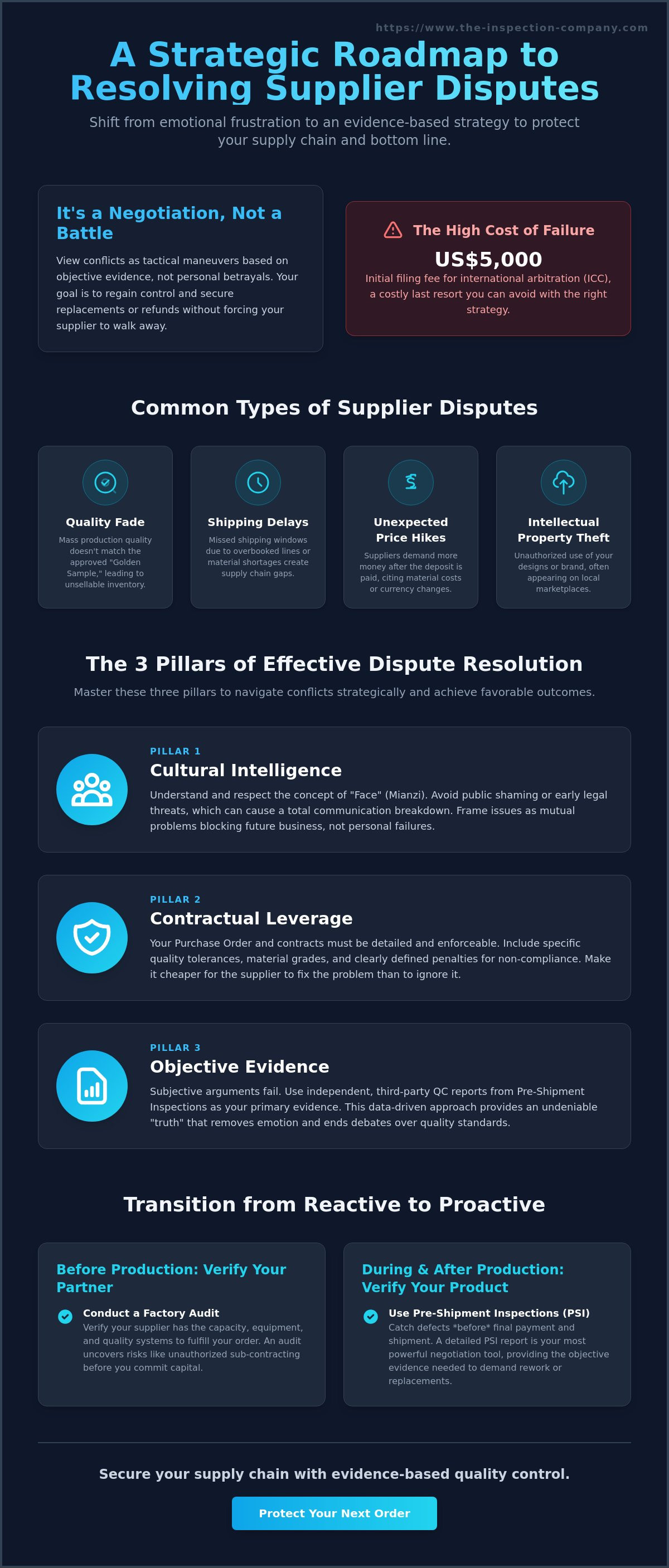
Supply chain friction is often inevitable. Its impact depends entirely on your preparation. Importers typically face four primary categories of conflict that can derail operations and drain capital. Mass production often fails to match the Golden Sample. This quality fade is a primary source of conflict. Without a Pre-Shipment Inspection, you might only discover these defects after the final payment is sent and the goods arrive at your warehouse.
Missed shipping windows create immediate supply chain gaps. These delays often stem from overbooked production lines or material shortages that the supplier fails to communicate until it's too late. Unexpected price hikes after you've paid the deposit are another common frustration. Suppliers may cite rising raw material costs or exchange rate fluctuations to justify a change in the original agreement. Finally, Intellectual Property (IP) issues remain a serious threat. Unauthorized use of your designs or branding can lead to your products appearing on local marketplaces under different names. This theft often happens when factories don't feel a strong contractual obligation to your brand.
The Root Causes of Supplier Conflict
Understanding the origins of these problems is the first step in learning how to handle disputes with asian suppliers. Many conflicts begin with vague Purchase Orders (POs). If your documentation lacks specific technical tolerances or material grades, the factory will likely choose the cheapest option available. Cultural differences also play a role. What an importer considers a major defect might be viewed as an acceptable variation by a local workshop.
Sub-contracting is a significant risk that often goes unnoticed. A factory might outsource your order to an unvetted, lower-quality facility without your knowledge. Conducting a Factory Audit is the only way to verify that your chosen partner has the actual capacity and equipment to fulfill your order. When these issues arise, understanding various dispute resolution methods can help you navigate the negotiation process before it escalates into a total loss. Clear communication and documented evidence are your best tools for maintaining supply chain integrity.
The 3 Pillars of Effective Dispute Resolution in Asia
Successful conflict resolution in Asian manufacturing requires more than just a firm legal standing. It demands a combination of cultural nuance, contractual power, and undeniable data. When you're determining how to handle disputes with asian suppliers, you must shift from a confrontational mindset to a strategic one. Your goal is to regain control without forcing the supplier into a corner where they feel their only option is to walk away from the relationship.
- Cultural Intelligence: In many Asian cultures, the concept of "Face" (Mianzi) is paramount. Publicly shaming a factory manager or using aggressive legal threats early on can cause a total communication breakdown.
- Contractual Leverage: Agreements must be more than just signatures. They should include specific, enforceable penalties for non-compliance that make the cost of fixing the error lower than the cost of ignoring it.
- Objective Evidence: Subjective arguments rarely result in a refund. You need independent reports that provide a clear, technical "truth" the factory management cannot refute.
Maintaining Communication Flow
Don't lead with accusations. Aggressive emails often lead to a "disappearing" supplier who stops answering calls to avoid further humiliation. Instead, focus on the mutual benefit of a resolution. Frame the issue as a barrier to future orders rather than a personal failure. By adopting professional supplier management processes, you signal that you're a high-value partner seeking a professional solution. If communication stalls, it's often helpful to speak with a regional expert who understands local negotiation styles.
The Power of Independent Verification
A supplier might argue that a defect is within "normal" tolerances. An independent third-party report ends this debate immediately. Using Pre-Shipment Inspection results as your primary evidence provides an unbiased perspective. This data-driven approach removes emotion from the negotiation. It forces the supplier to address the specific technical failures identified in the report. When the technical reality is documented by a certified inspector, the factory is much more likely to agree to re-work or replacements to protect their own reputation and bottom line.
Step-by-Step Framework for Resolving Supplier Conflict
Resolving a conflict requires a methodical escalation path that prioritizes your financial recovery over emotional satisfaction. If you're wondering how to handle disputes with asian suppliers without immediately hiring expensive legal counsel, follow this structured framework to maintain leverage.
- Step 1: Document the issue. Compile high-resolution photos, videos, and professional QC reports. Technical evidence is harder to ignore than verbal complaints.
- Step 2: Reference the contract. Point to specific clauses in your PO or Quality Agreement. Use these pre-agreed terms as the objective baseline for your claim.
- Step 3: Propose a resolution. Suggest a practical fix like re-working the batch, a credit for the next order, or a significant discount on the current shipment.
- Step 4: Escalate. If the factory remains uncooperative, issue a formal warning or involve a neutral third-party mediator to break the deadlock.
Negotiating Re-work and Replacements
If a supplier agrees to fix defective goods, don't assume the second attempt will be perfect. You must insist on a During Production Inspection to monitor the correction process in real-time. Clearly define that the supplier bears the cost of all re-inspections and any shipping delays caused by the rework. This ensures the factory has a financial incentive to get it right the second time. It's about shifting the burden of error back to the party responsible for the defect.
When to Walk Away vs. When to Fight
Sometimes, the cost of recovery exceeds the value of the goods. Calculate the ROI of legal action before proceeding. If a supplier stops responding or provides obviously fake documentation, they're likely a 'Red Flag' partner. In these cases, absorbing the loss and moving to a vetted factory is often more cost-effective than chasing a scammer. To protect your future shipments from these risks, contact our regional experts for a consultation on risk mitigation strategies.
Preventing Future Disputes Through Proactive Management
While mastering how to handle disputes with asian suppliers is essential for immediate recovery, the most profitable strategy is preventing friction before it occurs. A reactive approach to quality failures often results in sunk costs and missed market opportunities. By implementing a rigorous oversight framework, you shift the power dynamic from the manufacturer back to your procurement team. This proactive stance ensures that compliance is a requirement rather than a suggestion.
- Conduct a comprehensive Factory Audit before issuing your first deposit. This verifies the facility's actual production capacity, technical equipment, and quality management systems.
- Implement a tiered inspection strategy. Moving from Pre-Production Inspection to Container Loading Inspection ensures errors are caught when they're cheapest to fix.
- Link all final payments to a "Pass" result from an independent inspection. This creates a powerful financial incentive for the factory to prioritize your specific quality standards.
- Diversify your supplier base. Reducing dependency on a single manufacturer prevents a single production failure from paralyzing your entire supply chain.
The Role of a Professional Inspection Company
A dedicated partner acts as your eyes and ears inside the factory. Without a local presence, you're forced to rely on the supplier's self-reported data, which often masks operational friction and hidden defects. Utilizing a centralized quality platform provides real-time visibility into your production status across multiple regions. The Inspection Company manages a network of over 700 inspectors to ensure objective reporting and consistent quality standards across all major Asian manufacturing hubs. This infrastructure transforms vague promises into verifiable performance data. It secures your capital against the unexpected disruptions that drive most commercial disputes.
Secure Your Supply Chain Against Operational Friction
Managing an international supply chain is a high-stakes operation where technical errors translate directly into financial loss. You've learned that how to handle disputes with asian suppliers effectively requires a pivot from emotional confrontation to objective, data-driven negotiation. By documenting defects through professional inspections and leveraging cultural intelligence, you protect your bottom line and maintain your market reputation. It's a shift from being a reactive buyer to a proactive partner in quality management.
The most successful importers don't just resolve conflicts; they prevent them through meticulous oversight. Our European management team oversees more than 700 local inspectors across Asia to provide the transparency you need on the factory floor. We deliver detailed inspection reports within 24 hours, providing the speed and reliability trusted by international retailers and Amazon FBA sellers worldwide. This level of visibility ensures that your capital is protected and your specifications are met before the final payment is ever released.
Don't leave your inventory to chance. Secure your supply chain and prevent disputes by booking a professional inspection today. You now have the strategic roadmap to turn operational friction into a streamlined, resilient, and profitable partnership.
Frequently Asked Questions
Can I legally sue a supplier in China or Vietnam from my home country?
Suing a supplier from your home country is practically impossible for most small to mid-sized importers. Enforcement of foreign court judgments in jurisdictions like China or Vietnam is extremely rare. You'll find more success by including local arbitration clauses in your contracts from the start. This allows you to resolve issues through regional bodies like the HKIAC, which are recognized and enforceable within the supplier's own legal system.
How do I get a refund from an Alibaba supplier if the products are defective?
You must provide objective evidence to secure a refund through platforms like Alibaba. A professional inspection report serves as the technical proof needed to win a Trade Assurance dispute. Suppliers typically refuse refunds based on subjective claims. However, they're forced to negotiate when presented with a "Fail" result from a third-party inspector that documents specific deviations from your original specifications and Golden Sample.
What should I do if my supplier stops responding to my emails during a dispute?
Silence often indicates the supplier is avoiding a difficult conversation to save "Face" or hoping you'll drop the claim. You should immediately deploy a local team or an inspection company to visit the factory premises in person. A physical site visit confirms the factory is still operating and demonstrates that you won't walk away from the financial loss. This proactive step usually forces the supplier back to the negotiating table.
Is it better to ask for a refund or a replacement for defective goods?
Requesting a credit or a replacement is often more successful than demanding a cash refund. Factories are usually more willing to fix errors in a future production run to keep your business and avoid immediate liquidity hits. When you're learning how to handle disputes with asian suppliers, remember that a cash refund is often a non-starter for local management. A replacement allows them to maintain the partnership while correcting the failure.
How can a Pre-Shipment Inspection prevent a dispute from happening in the first place?
This service identifies defects while the goods are still at the factory and under the supplier's control. It allows you to withhold the final payment until the supplier fixes the identified issues. Catching errors before shipment is the most effective way to manage how to handle disputes with asian suppliers because it keeps the leverage in your hands. It's much easier to negotiate re-work before the goods are on the water.