According to Allianz Global Corporate & Specialty, a significant product recall in the electronics sector can cost a brand upwards of $12 million in direct expenses. You're likely aware that importing complex devices from Asia involves high stakes. A single faulty batch of lithium-ion batteries or a minor soldering error can lead to safety hazards and a surge in return rates. Maintaining consistent quality control for consumer electronics is the only way to manage these risks effectively when working with distant suppliers. It's difficult to sleep soundly when you lack transparency into the manufacturing process thousands of miles away.
You can secure your supply chain and protect your reputation by implementing a rigorous, multi-stage inspection strategy. This guide provides a roadmap to achieving zero-defect shipments and full compliance with RoHS and CE standards. We'll detail how European-managed oversight and meticulous testing protocols help you avoid costly surprises before your goods leave the port. We will cover the specific stages of risk mitigation, from initial factory audits to final pre-shipment inspections, giving you the total control you need over your production. One day of inspection can truly save months of trouble.
Key Takeaways
- Understand why consumer electronics require higher levels of oversight and how to verify critical functional, safety, and aesthetic standards.
- Learn how to identify systemic defects early in the manufacturing cycle to prevent minor errors from becoming costly, large-scale failures.
- Discover the specialized technical testing protocols used in quality control for consumer electronics, including internal construction reviews and functional checks.
- Gain insights into selecting an independent inspection partner that combines European management standards with a local Asian presence for maximum transparency.
- Implement a multi-stage inspection strategy to mitigate financial risks, protect your brand reputation, and avoid expensive shipping surprises.
What is Quality Control for Consumer Electronics?
In the context of international trade, Quality Control (QC) is the systematic process of verifying that electronic products meet functional, safety, and aesthetic standards before they leave the factory floor. For importers, quality control for consumer electronics goes beyond checking for surface scratches. It involves rigorous testing of internal circuitry, battery stability, and firmware performance. Unlike softlines or hardlines, electronics carry inherent risks like short circuits or overheating, which can lead to fires or explosions.
Many importers mistakenly believe factory-internal QC is sufficient. However, a factory's internal team often faces pressure to meet production quotas, which can lead to overlooked defects. Relying solely on the manufacturer is a high-risk strategy. Professional importers treat independent verification as the gold standard for risk mitigation. One day of inspection can save months of trouble by identifying issues while the shipment is still at the source.
The High Stakes of Electronic Defects
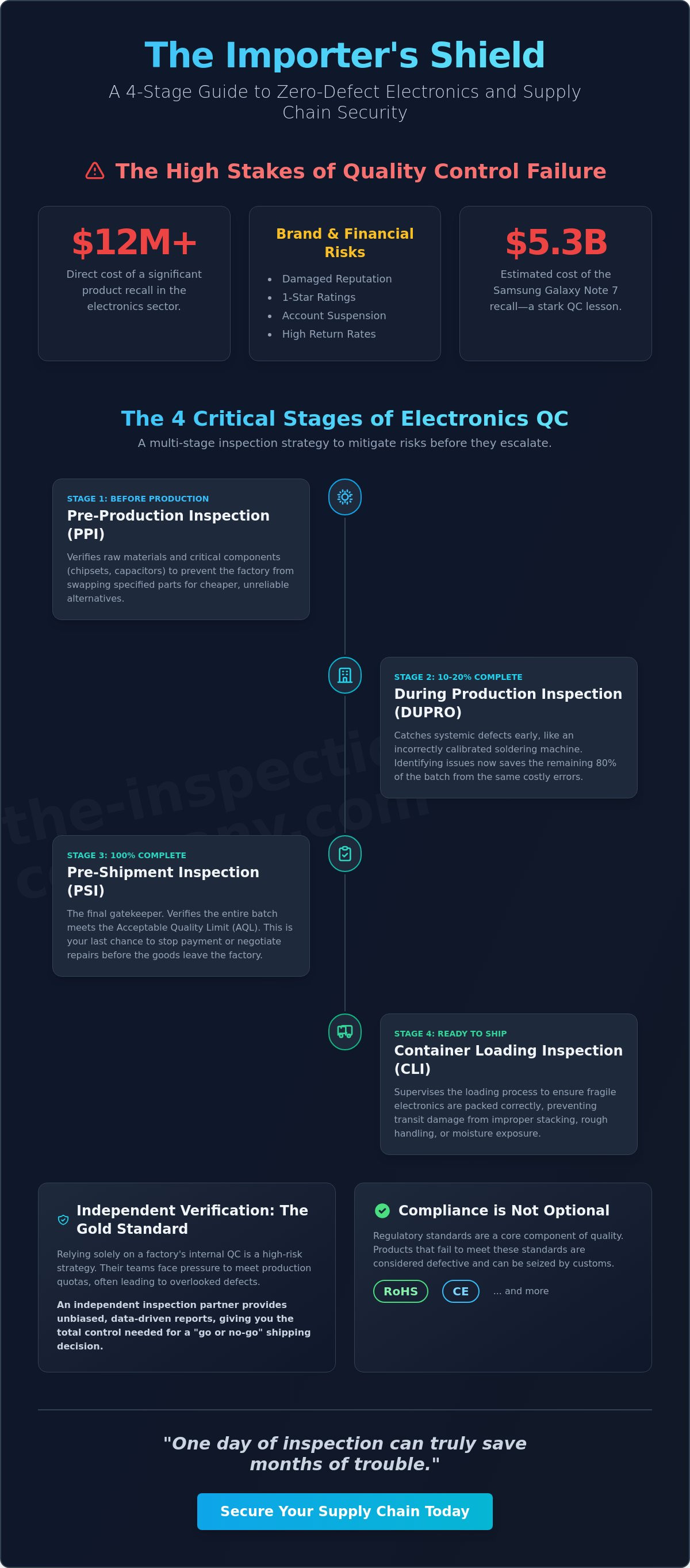
Electronic failures are expensive. The 2016 Samsung Galaxy Note 7 recall cost the company an estimated $5.3 billion, demonstrating that even industry giants aren't immune to QC lapses. For an Amazon seller, a single batch of faulty power banks can result in a 1-star rating and permanent account suspension. Beyond the lost sales, you face the financial burden of shipping defective units back, paying disposal fees for hazardous electronic waste, and refunding disappointed customers.
Regulatory Compliance: RoHS, CE, and Beyond
Compliance isn't a separate legal hurdle; it's a core component of quality control. If a product fails to meet the standards outlined in a RoHS Compliant Meaning Guide, it's a defective product. Customs officials in the EU or USA can seize shipments that lack proper CE marking or contain restricted hazardous substances. Integrating compliance testing into your QC workflow ensures your electronics are safe for the consumer and legal for the market.
The 4 Critical Stages of Electronics Quality Control
Effective quality control for consumer electronics isn't a single event; it's a series of strategic checkpoints designed to eliminate risk. Relying solely on a factory's internal checks is a gamble that often results in high return rates and damaged reputations. To protect your investment, you need a systematic approach across the entire production cycle.
- Pre-Production Inspection (PPI): We verify raw materials and critical components, such as chipsets and capacitors, before assembly starts. This ensures the factory doesn't swap your specified parts for cheaper, unreliable alternatives that could lead to device failure.
- During Production Inspection (DUPRO): This occurs when 10% to 20% of the order is complete. It allows us to catch systemic defects early. If a soldering machine is calibrated incorrectly, identifying the issue now saves the remaining 80% of the batch from the same errors.
- Pre-Shipment Inspection (PSI): This is the final gatekeeper check to ensure the total batch meets the Acceptable Quality Limit (AQL). It's the most common service for a reason; it provides a statistically significant look at the finished goods.
- Container Loading Inspection (CLI): We supervise the loading process to ensure fragile electronics are packed correctly. This prevents transit damage caused by improper stacking, rough handling, or moisture exposure during sea freight.
Why PSI is the Importer's Last Line of Defence
Understanding what pre-shipment means is essential for risk mitigation. It's your final opportunity to stop payment for a defective batch or negotiate repairs before the goods leave the factory floor. Our 24-hour report benefit provides the data needed to make a "go or no-go" decision before the ship sails. Maintaining high standards through quality control for consumer electronics is the only way to secure brand loyalty and avoid the financial drain of mass returns.
Specialized Amazon FBA Inspection Requirements
Selling on Amazon requires strict adherence to their specific FBA standards. Specialized Amazon FBA services focus on unique packaging and labeling requirements that standard factory inspections might miss. Incorrect barcodes or substandard packaging can lead to rejected shipments, additional fees, or even account suspension. Professional oversight ensures your products meet every platform requirement before they reach the warehouse. If you're planning your next production run, you can learn more about our team and how we protect your supply chain.
Technical Testing: How Inspectors Verify Electronics Performance
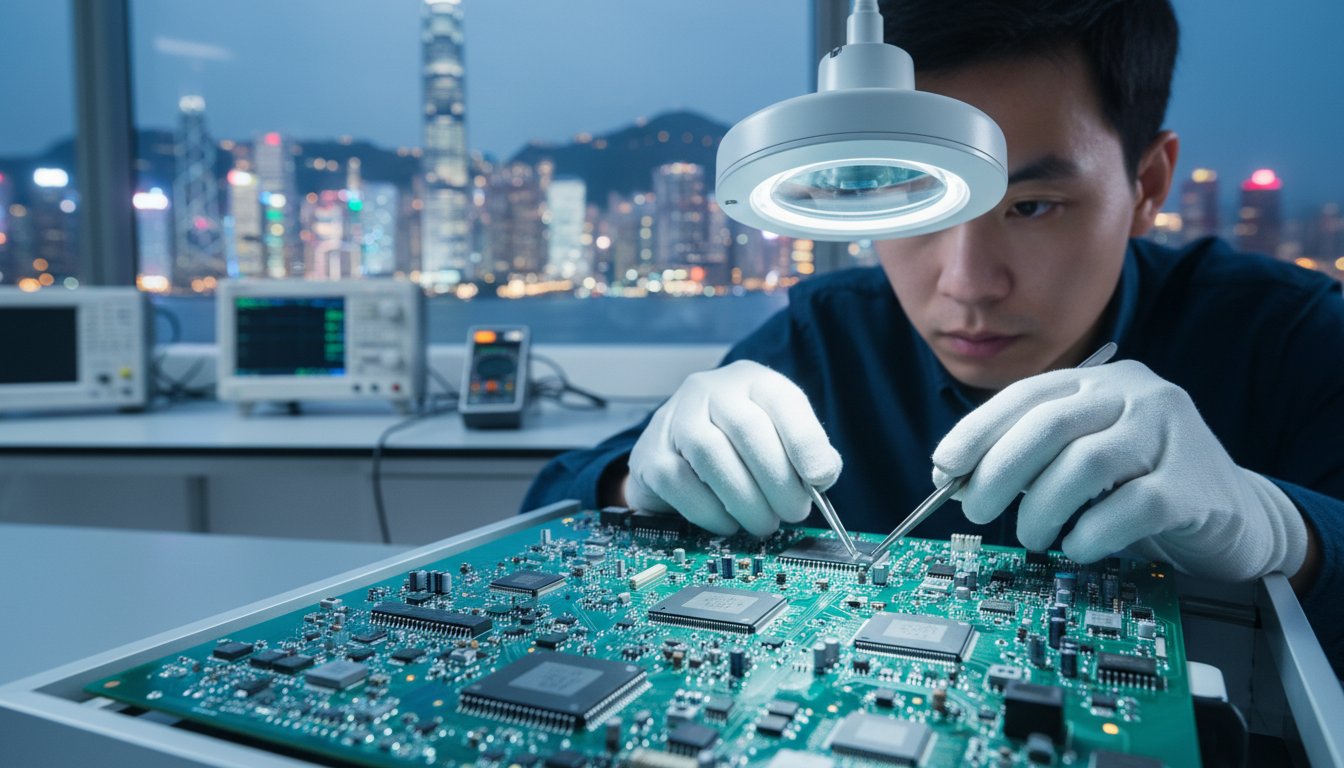
Technical testing moves beyond visual checks to ensure a product's internal integrity. It is the most critical phase of quality control for consumer electronics because it identifies hidden defects that often lead to mass recalls. Inspectors verify that the internal construction matches your specifications exactly. This includes checking soldering quality for "cold joints" and ensuring component placement on the PCB aligns with the approved design.
Functionality testing is equally rigorous. Every button, port, and software feature must work as intended. Inspectors also conduct vital safety checks to protect your brand from liability. These include:
- Hi-Pot Test: Verifies dielectric strength to ensure no electrical leakage occurs.
- Earth Continuity: Confirms the grounding path is secure to prevent shocks.
- Thermal Verification: Monitors heat dissipation under maximum load to prevent overheating.
- Battery Stability: Tests lithium-ion cells for stability during rapid charge and discharge cycles.
The Importance of the 'Golden Sample'
A golden sample is the approved prototype used for all future comparisons. This standard is typically established during the First Article Inspection (FAI). It acts as a physical contract. Without it, factories might swap high-end capacitors for cheaper alternatives mid-production, which compromises the lifespan of your device.
Physical and Durability Tests for Consumer Tech
Products must survive the logistics chain and daily use. We implement ISTA standards for "Drop Tests" to ensure the packaging protects the unit from heights up to 76 centimeters. For the device itself, we perform "plug-unplug" cycle testing on ports and stress tests on screens. These simulations verify that a USB-C port won't fail after 500 uses or that a chassis won't crack under standard pressure.
Don't leave your product's performance to chance. Avoid costly surprises by booking a professional electronics inspection today.
Selecting an Independent Inspection Partner in Asia
Choosing a partner for quality control for consumer electronics is a decision that dictates your brand's survival in a competitive market. You shouldn't settle for a generalist agency that inspects plastic toys one day and complex circuit boards the next. Electronics demand technical precision. Effective oversight requires a blend of European management standards and a deep, local presence across Asian manufacturing hubs. This unique combination ensures that Western quality expectations don't get lost in translation during production floor disputes.
Speed is the primary currency in the tech sector. If an inspection report takes three days to reach your desk, the shipment might already be at sea. We insist on 24-hour reporting because real-time transparency is the only way to stop defects before they become costly liabilities. Integrating professional third-party inspections into your supplier management process transforms QC from a final hurdle into a proactive risk mitigation strategy.
The Inspection Company Advantage
We provide immediate boots on the ground with over 700 specialized inspectors positioned across major Asian industrial zones. This scale allows for rapid response times, often within 48 hours of a booking request. Clients gain full visibility through our Quality Platform, which offers real-time data access. You won't have to guess the status of your order; the data is available exactly when you need it to make critical shipping decisions.
Moving from Transactional to Strategic QC
Stop viewing quality control for consumer electronics as a simple pass or fail gate. It's a rich source of data. By analyzing recurring defects and factory performance metrics, you can identify which suppliers are improving and which represent a growing risk to your reputation. This shift from transactional checking to strategic analysis helps you build a more resilient supply chain. One day of inspection can save months of trouble and protect your bottom line from expensive consumer recalls.
Ready to secure your supply chain and eliminate defects? Explore our full range of inspection services to find the right fit for your next shipment.
Secure Your Supply Chain and Protect Your Bottom Line
Importing high-tech goods requires more than just trust in a factory. It demands a rigorous approach to quality control for consumer electronics that spans from pre-production to the final container loading. By implementing technical performance tests and independent verification at all four critical stages, you eliminate the risk of shipping defective units that damage your brand's reputation. One day of professional inspection can save months of financial trouble; it's the only way to stop problems before your shipment sails across the ocean.
The Inspection Company brings European management standards and over 25 years of experience directly to your manufacturing site in Asia. Our ISO 9001 certified quality systems ensure every component meets strict international standards. You'll receive a detailed report within 24 hours of the inspection, giving you the transparency needed to make informed shipping decisions. Don't leave your investment to chance when you can have total control over your inventory. Secure your electronics shipment today with a professional inspection and enjoy the peace of mind that comes with a verified supply chain.
Frequently Asked Questions
What are the most common defects in consumer electronics?
The most frequent defects include battery failures, screen dead pixels, and poor soldering on circuit boards. Industry data from 2023 indicates that approximately 30% of consumer electronics returns stem from software glitches or hardware malfunctions. Physical damage like scratches on the casing or misaligned ports accounts for another 15% of reported issues. These errors create costly surprises if they aren't identified before the shipment leaves the factory floor.
How much does a third-party electronics inspection cost?
Third-party inspection costs are usually calculated based on a man-day rate rather than a flat fee per project. Most international agencies charge for the time an inspector spends at the factory, which includes travel and reporting. This investment is a fraction of the cost of a total shipment recall. One day of inspection can save months of trouble by stopping defective products from reaching your customers.
Can I rely on my factory's internal quality control report?
Relying solely on internal factory reports is risky because suppliers often prioritize production speed over strict quality standards. An independent quality control for consumer electronics ensures the data you receive is objective and transparent. Statistics show that 40% of factory-issued reports omit minor defects to avoid shipping delays. You need a professional partner on the ground to verify that every unit meets your specific requirements.
What is the difference between a factory audit and a product inspection?
A factory audit evaluates the supplier's manufacturing capabilities and ISO 9001 compliance, while a product inspection focuses on the physical goods themselves. Audits are typically conducted before you place an order to mitigate long-term risks. In contrast, a product inspection occurs during or after production to catch specific defects. Both are essential components of a robust quality control for consumer electronics strategy to avoid costly errors.
How many units are actually checked during a Pre-Shipment Inspection?
Inspectors use the ISO 2859-1 (AQL) standard to determine the sample size based on your total order quantity. For an order of 3,200 units, a Level II inspection typically requires checking 125 individual pieces. This statistical sampling provides a 95% confidence level that the entire lot meets your quality thresholds. It's the most efficient way to identify systemic issues without the expense of checking every single box in the shipment.