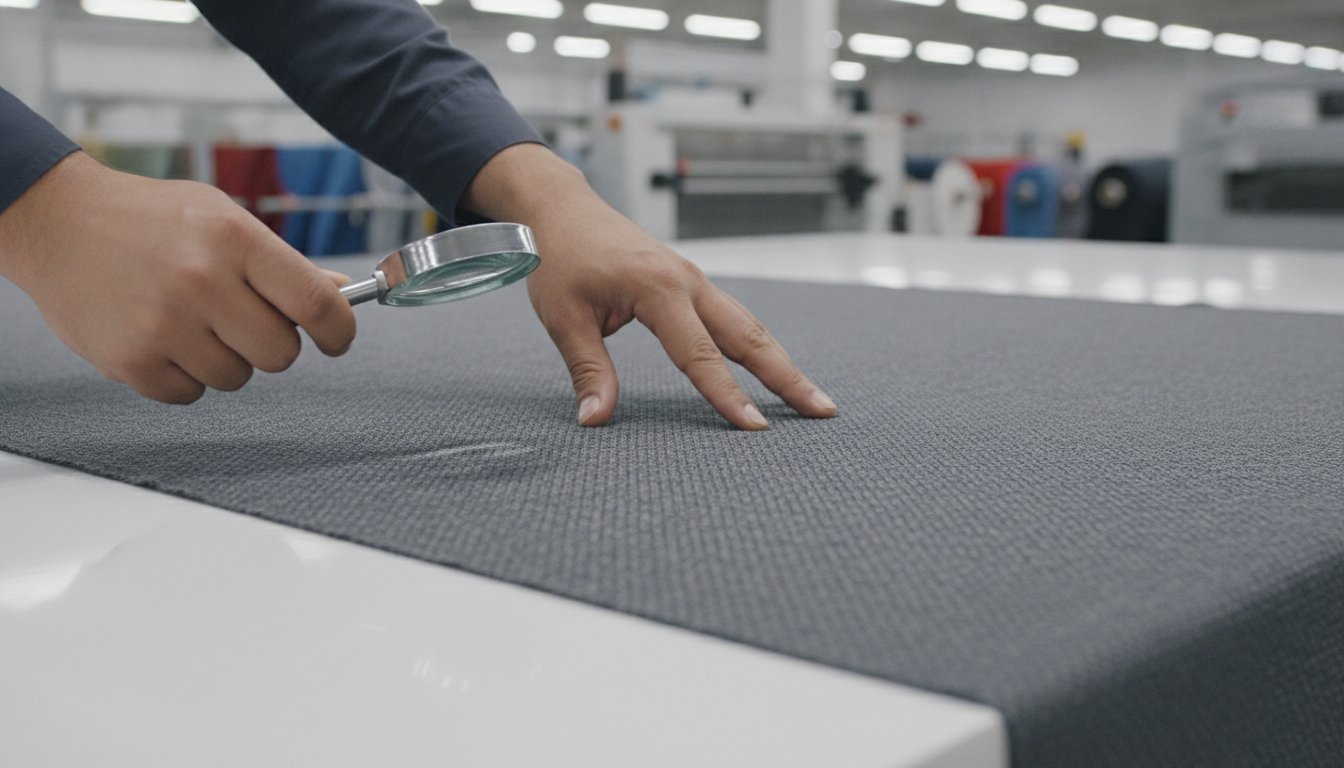

Imagine your cargo arrives at the port, but instead of ready-to-sell inventory, you find thousands of defective units. By then, it's too late to get your money back. Many importers encounter the term "preembarque" español in their quality reports and mistake it for a simple logistics status or airline boarding. In reality, this phase is your final opportunity to stop a financial disaster before it leaves the factory floor. With 2026 trade regulations like China's new supply chain security laws and the US suspension of the Section 321 de minimis exemption, the stakes for every shipment have never been higher.
It's stressful to manage quality across borders, especially when language barriers make technical reports feel like a puzzle. You'll learn the professional meaning of the pre-shipment phase and why a Pre-Shipment Inspection (PSI) is the only way to catch errors before you pay the supplier. We'll provide a clear framework to help you distinguish between travel and trade definitions, ensuring you use independent inspections to avoid costly surprises before your shipment sails.
Key Takeaways
- Understand that "preembarque" español in a trade context refers to the high-stakes window between production completion and cargo loading, where most shipping errors are preventable.
- Identify the exact timing for a Pre-Shipment Inspection (PSI) to ensure 100% of your goods are verified and packed according to your exact specifications.
- Stop costly surprises by learning how to use professional reports to catch manufacturing defects before you issue the final payment to your supplier.
- Realize the value of the "one day of inspection" rule to protect your revenue and avoid the logistical nightmare of international returns.
- Develop a strategy for selecting an independent inspection partner to manage risk and maintain compliance with evolving 2026 global trade regulations.
Table of Contents
Defining 'Preembarque': Beyond the Simple Translation
Many importers encounter the term "preembarque" español when reviewing quality control reports or shipping documents from overseas suppliers. While a standard dictionary might offer a simple translation, the professional meaning in global trade is far more specific and critical to your bottom line. It doesn't just mean "before the ship leaves." It represents a definitive status in the manufacturing cycle where your investment is either secured or at risk.
In international logistics, this term refers to the critical window when goods are 100% finished but haven't yet been loaded into a container. For Spanish-speaking business owners sourcing from Asia, understanding this phase is the difference between receiving a profitable shipment and dealing with a warehouse full of unsellable defects. Using the right terminology ensures that your expectations for quality are clearly communicated to your factory and your inspection team.
Preembarque in Logistics vs. Aviation
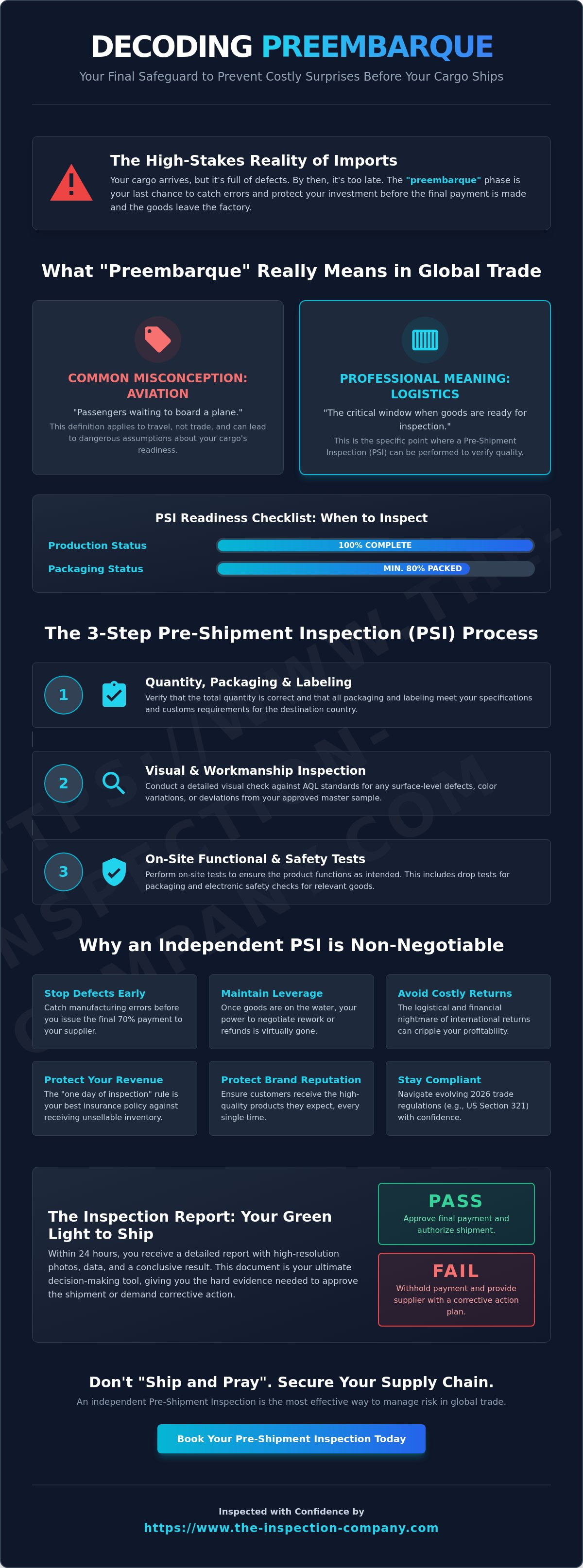
It's easy to get confused because the term appears in two very different industries. In aviation, preembarque describes passengers waiting at a gate to board a plane. However, in the logistics sector, it identifies the specific point where 100% of your production is complete and at least 80% of the order is fully packed. This distinction is vital. If you're looking for a Pre-shipment inspection (PSI), you're dealing with cargo, not people. Preembarque is the final gatekeeper in the supply chain.
Why Importers Must Focus on the Pre-Shipment Phase
The pre-shipment stage is your last chance to catch defects before you send the final payment to a supplier. Once the goods are on the water, your leverage disappears. If you wait until the container arrives at your warehouse to check for quality, you've already lost the battle. Professional importers use this phase to verify that every item meets their specifications and that the "preembarque" español status on their documents actually reflects a ready-to-ship order.
Avoiding the "ship and pray" mentality requires a disciplined approach to quality control. By scheduling a pre-shipment inspection, you stop problems before they sail. This proactive step prevents the costly trouble of international returns and helps maintain your brand's reputation with customers. It's the only way to ensure that what you paid for is what actually gets loaded into the container.
The Pre-Shipment Inspection (PSI) Process Step-by-Step
A professional inspection ensures your "preembarque" español status is backed by hard data rather than supplier promises. This procedure aligns with the international Agreement on Preshipment Inspection, which provides the global framework for verifying quality, quantity, and price before goods leave the country of origin. The transition from the finished phase to the actual loading of the container only happens after you review the findings and grant approval. It's the ultimate safeguard for your capital.
For an inspection to be valid, production must be 100% complete and at least 80% of the order must be packed in final shipping cartons. This allows inspectors to apply Acceptable Quality Limit (AQL) standards. These statistical sampling methods provide a scientifically sound overview of the entire batch without the need to check every single unit, which would be both time-consuming and expensive.
How a Professional PSI is Conducted
Our Pre-Shipment Inspection Service follows a methodical three-step approach to eliminate risk. First, we perform quantity verification and check packaging and labeling to ensure compliance with your destination's customs requirements. Second, our experts conduct a visual inspection for workmanship, looking for any surface-level defects or deviations from your approved sample. Finally, we execute on-site functional testing and safety checks. This includes drop tests for packaging and electronic safety tests for machinery. If you have specific concerns about a new supplier, you can speak with our quality experts to customize the checklist.
The Role of the Inspection Report
The data collected during the "preembarque" español phase is compiled into a detailed report, typically delivered within 24 hours of the site visit. This document includes high-resolution photos and a clear "Pass" or "Fail" result based on your pre-defined criteria. Importers use this data to make an informed decision. You can either release the shipment for loading or demand that the factory performs a rework to fix identified defects. This prevents you from paying for errors that are nearly impossible to correct once the goods arrive at your warehouse.
Why 'Preembarque' Quality Control is Critical for Importers
One day of inspection can save months of trouble and thousands in lost revenue. Importers who skip the "preembarque" español phase often fall into the dangerous "Ship and Pray" trap. They hope the supplier followed the golden sample perfectly. However, hope isn't a quality control strategy. Once you pay the final balance without verification, you lose all leverage to demand corrections. This oversight leads to costly returns and a warehouse full of unsellable inventory.
Skipping this step carries heavy legal and financial risks. The WTO Agreement on Preshipment Inspection outlines the international standards that help prevent fraud and ensure product compliance. Without a professional check, you risk importing goods that fail mandatory safety standards like CE or RoHS. This can result in legal penalties or total shipment seizures at the border. It's an unnecessary risk that is easily avoided with the right partner on the ground.
Risk Mitigation in Asian Manufacturing
Common issues during the pre-shipment stage include incorrect labeling, moisture damage from poor storage, or functional failures. These aren't just minor inconveniences. For e-commerce sellers, a single batch of defective products can destroy your Amazon FBA account health. High return rates and negative reviews are incredibly difficult to recover from. Our guide on understanding product defects explains how these errors originate and why catching them at the factory is mandatory for your brand's reputation.
Financial Protection: PSI as an Investment
The cost of a professional inspection is negligible compared to the financial disaster of a rejected shipment. Independent third-party inspections provide transparent, unbiased data that your supplier can't manipulate. It's a small investment that ensures your brand reputation remains intact by delivering exactly what your customers expect. If you want to secure your next order and avoid costly surprises, contact our quality control team today to discuss your specific requirements.
How to Secure Your Supply Chain Before Shipping
Securing your supply chain goes beyond knowing the term "preembarque" español. It requires a strategic partnership with experts who understand the complexities of manufacturing in Asia. While the pre-shipment inspection serves as your final gatekeeper, it's most effective when combined with initial factory audits. This comprehensive approach ensures you aren't just reacting to defects at the end, but you're also working with reliable, vetted partners from the very start.
Choosing a Partner for Your Inspections
Selecting a Testing, Inspection, and Certification (TIC) company is a decision that directly protects your capital. Look for partners with ISO 9001 certification and a robust network of local inspectors. This ensures fast response times and deep familiarity with regional manufacturing practices. It's also vital to confirm the agency specializes in your specific product category. You can learn more about The Inspection Company and our 25 years of experience in Asian quality management.
We combine European management standards with a permanent on-the-ground presence in Hong Kong and across Asia. This bridge between Western quality expectations and local factory reality is why professional importers trust us. We stop problems before your shipment sails, providing the transparency you need to manage remote production with confidence.
Next Steps for Your Next Order
Planning is essential for a successful "preembarque" español check. Don't wait until the final hour. Follow these steps to ensure a smooth process:
-
Book your inspection at least 5 to 7 days before the expected production completion date.
-
Provide detailed product specifications, drawings, and approved samples to the inspection team.
-
Review your AQL requirements and custom testing checklists with your inspector before they arrive at the factory.
-
Ensure the factory knows that the final payment is contingent on a passed inspection report.
Stop leaving your quality to chance. It's time to take control of your manufacturing outcomes. Avoid costly surprises by booking your Pre-Shipment Inspection today.
Protect Your Investment Before the Cargo Sails
Mastering the technical reality of "preembarque" español is the first step toward a resilient supply chain. This critical window represents your last line of defense against defective products and significant financial loss. By implementing a rigorous Pre-Shipment Inspection, you ensure every item meets your exact specifications before you issue the final payment. It's the most effective way to eliminate the "ship and pray" mentality that ruins retail reputations and leads to expensive returns.
The Inspection Company brings over 25 years of experience in Asian quality management to your business. Our European management team directs more than 700 local inspectors, providing the on-the-ground presence you need to manage remote production with total confidence. As an ISO 9001 certified firm and a Sedex member, we deliver the transparent, authoritative data required for global compliance and risk mitigation. Don't let your next order become a costly surprise. Secure your shipment and avoid costly surprises with a professional PSI.
We're ready to help you build a safer, more reliable path for your international trade operations.
Frequently Asked Questions
What is the difference between 'preembarque' and 'embarque' in shipping?
Preembarque refers to the phase where 100% of your production is finished and at least 80% is packed, allowing for final quality checks at the factory. Embarque, or "loading," is the physical act of moving those verified goods into a container or onto a vessel. Understanding this distinction is vital for timing your final payment; you should only move to the embarque stage once the pre-shipment results are approved and the risk of defects is eliminated.
When should a pre-shipment inspection (PSI) be scheduled?
You should book your inspection at least 5 to 7 days before the factory expects to finish production. The actual site visit occurs when the order is 100% manufactured and at least 80% is packed in shipping cartons. This specific timing allows the inspector to perform a random statistical sampling using AQL standards, ensuring the data accurately represents the entire batch before it leaves the factory floor and your leverage disappears.
Is 'preembarque' the same as 'boarding' on an airplane?
No, while the literal translation of "preembarque" español can mean "pre-boarding" in aviation, the meaning changes entirely in international trade. In a logistics context, it identifies a critical quality control milestone for cargo rather than a passenger status. Importers must recognize this difference to avoid confusion when reviewing manufacturing reports or supply chain security documents that refer to the state of their physical goods rather than travel procedures.
Can I skip the 'preembarque' inspection if I trust my supplier?
Skipping the inspection is a high-risk decision that often leads to costly surprises and financial loss. Even reliable suppliers can experience equipment failure, labor changes, or raw material inconsistencies that result in major defects. Without an independent third-party check, you have no objective way to verify the quality of the goods. One day of inspection is a small investment that prevents the disaster of receiving unsellable inventory at your warehouse.
What happens if the 'preembarque' inspection report shows defects?
If the report identifies defects that exceed your AQL limits, you have the leverage to demand a factory rework before the goods are shipped. You can also negotiate a discount or reject the batch entirely if the errors are critical. The goal is to identify these issues while the goods are still in the factory, as it's nearly impossible to fix products or get a refund once the container is on the water.