
Our Commitment to Quality Standards
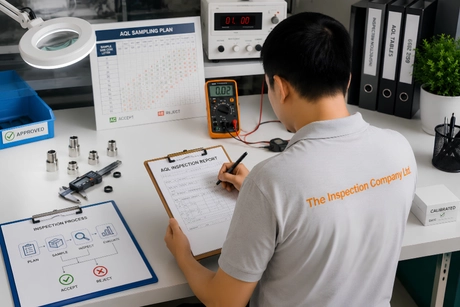
Empower your decisions with AQL-Standard. Our inspectors use ISO 2859 tables for precise product evaluation. Trust our method.
- Sample sizes drawn from the ISO 2859 and ANSI/ASQ Z1.4 tables
- Defects classified as critical, major and minor
- A clear accept-or-reject recommendation on every report
Global Standards
Aligned with international quality benchmarks
Continuous Improvement
Driving excellence in every process
Data-Driven
Decisions based on facts and metrics
Customer Focused
Committed to delivering exceptional value
AQL - Acceptable Quality Level
The Inspection Company Ltd. works according to the international quality standards (AQL), norms, and regulations. This allows customers to understand each report quickly and easily.
The AQL-Standard provides a basis for the clients to decide on how they will proceed. Our inspectors work with the ISO 2859 tables and evaluate the AQL of the inspected product. The ISO 2859 refers to a U.S. standard with equivalents in the national and international standard-setting body (ANSI /ASQC Z 1.4, ISO 2859, NF06 -022, BS 6001, DIN 40080). We use the proven method of Acceptable Quality Level (AQL) to conduct product inspection ANSI/ASQ Z1.4-2008 and MIL-STD 105E Standard for sampling.
The acceptance quality level (AQL) is internationally defined as the maximum defective percentage (or the maximum number of defects per hundred units) that, for the purpose of sampling inspection, can be considered satisfactorily as a process average.
We will select a sampling size quantity (according to the AQL tables), and give you a recommendation according to the number of defects found (critical, major, minor defects). The result will show if you would rather accept or reject the shipment.
- ANSI/ASQC Z 1.4
- ISO 2859
- NF06-022
- BS 6001
- DIN 40080
- MIL-STD 105E
How to Read the AQL Table?
Reading the AQL table involves two primary tables. The first table helps determine the "code letter" based on the lot size and inspection level. This code letter then indicates the sample size and the maximum number of acceptable defects.
Find your sampling plan
Select a lot size, an inspection level, and an AQL to view the matching values in both tables.
Table I – Sample size code letters
Use this table to determine the sample size code letter from your lot or batch size and inspection level.
| Lot or Batch Size | Normal Inspection Levels | Special Inspection Levels | |||||
|---|---|---|---|---|---|---|---|
| I | II | III | S-1 | S-2 | S-3 | S-4 | |
| 2 to 8 | A | A | B | A | A | A | A |
| 9 to 15 | A | B | C | A | A | A | A |
| 16 to 25 | B | C | D | A | A | B | B |
| 26 to 50 | C | D | E | A | B | B | C |
| 51 to 90 | C | E | F | B | B | C | C |
| 91 to 150 | D | F | G | B | B | C | D |
| 151 to 280 | E | G | H | B | C | D | E |
| 281 to 500 | F | H | J | B | C | D | E |
| 501 to 1,200 | G | J | K | C | C | E | F |
| 1,201 to 3,200 | H | K | L | C | D | E | G |
| 3,201 to 10,000 | J | L | M | C | D | F | G |
| 10,001 to 35,000 | K | M | N | C | D | F | H |
| 35,001 to 150,000 | L | N | P | D | E | G | J |
| 150,001 to 500,000 | M | P | Q | D | E | G | J |
| 500,001 and over | N | Q | R | D | E | H | K |
How to Read This Table?
Sample sizes and acceptance / rejection numbers for code letters A to R, across twelve AQL levels.
Table II – Single sample plans for normal inspection (Master Table)
Use the code letter to find the sample size, then read across to your AQL for the acceptance and rejection numbers.
| Sample Size Code Letter | Sample Size | Acceptable Quality Levels (Normal Inspection) | |||||||||||||||||||||||
|---|---|---|---|---|---|---|---|---|---|---|---|---|---|---|---|---|---|---|---|---|---|---|---|---|---|
| 0.065 | 0.10 | 0.15 | 0.25 | 0.4 | 0.65 | 1.0 | 1.5 | 2.5 | 4.0 | 6.5 | 10 | ||||||||||||||
| Ac | Re | Ac | Re | Ac | Re | Ac | Re | Ac | Re | Ac | Re | Ac | Re | Ac | Re | Ac | Re | Ac | Re | Ac | Re | Ac | Re | ||
| A | 2 | 0 | 1 | ||||||||||||||||||||||
| B | 3 | 0 | 1 | ||||||||||||||||||||||
| C | 5 | 0 | 1 | 1 | 2 | ||||||||||||||||||||
| D | 8 | 0 | 1 | 1 | 2 | 2 | 3 | ||||||||||||||||||
| E | 13 | 0 | 1 | 1 | 2 | 2 | 3 | 3 | 4 | ||||||||||||||||
| F | 20 | 0 | 1 | 1 | 2 | 2 | 3 | 3 | 4 | 5 | 6 | ||||||||||||||
| G | 32 | 0 | 1 | 1 | 2 | 2 | 3 | 3 | 4 | 5 | 6 | 7 | 8 | ||||||||||||
| H | 50 | 0 | 1 | 1 | 2 | 2 | 3 | 3 | 4 | 5 | 6 | 7 | 8 | 10 | 11 | ||||||||||
| J | 80 | 0 | 1 | 1 | 2 | 2 | 3 | 3 | 4 | 5 | 6 | 7 | 8 | 10 | 11 | 14 | 15 | ||||||||
| K | 125 | 0 | 1 | 1 | 2 | 2 | 3 | 3 | 4 | 5 | 6 | 7 | 8 | 10 | 11 | 14 | 15 | 21 | 22 | ||||||
| L | 200 | 0 | 1 | 1 | 2 | 2 | 3 | 3 | 4 | 5 | 6 | 7 | 8 | 10 | 11 | 14 | 15 | 21 | 22 | ||||||
| M | 315 | 1 | 2 | 2 | 3 | 3 | 4 | 5 | 6 | 7 | 8 | 10 | 11 | 14 | 15 | 21 | 22 | ||||||||
| N | 500 | 1 | 2 | 2 | 3 | 3 | 4 | 5 | 6 | 7 | 8 | 10 | 11 | 14 | 15 | 21 | 22 | ||||||||
| P | 800 | 1 | 2 | 2 | 3 | 3 | 4 | 5 | 6 | 7 | 8 | 10 | 11 | 14 | 15 | 21 | 22 | ||||||||
| Q | 1250 | 2 | 3 | 3 | 4 | 5 | 6 | 7 | 8 | 10 | 11 | 14 | 15 | 21 | 22 | ||||||||||
| R | 2000 | 3 | 4 | 5 | 6 | 7 | 8 | 10 | 11 | 14 | 15 | 21 | 22 | ||||||||||||
- Use the first sampling plan below the arrow. if sample size equals or exceeds lot size, carry out 100% inspection
- Use the first sampling plan above the arrow
- Ac Acceptance number
- Re Rejection number
Everything you need to know about our quality standards
Clear answers to common questions about our quality and compliance services
What is AQL Sample Size?
How to Calculate AQL Sample Size?
What is the Role of AQL in Quality Control?
Why Do We Use Different Inspection Levels in AQL?
What Happens If Defects Exceed the AQL Threshold?
What Are Critical, Major, and Minor Defects in AQL?
- Critical defects: These defects can cause safety hazards or make the product unsafe to use.
- Major defects: These defects significantly affect the product’s appearance or functionality but do not pose a safety hazard.
- Minor defects: These are small defects that do not affect the product’s overall usability or safety.
Ready to Secure Your Supply Chain?
Our experts in Asia provide professional, fast-response solutions for your inspection and audit needs.