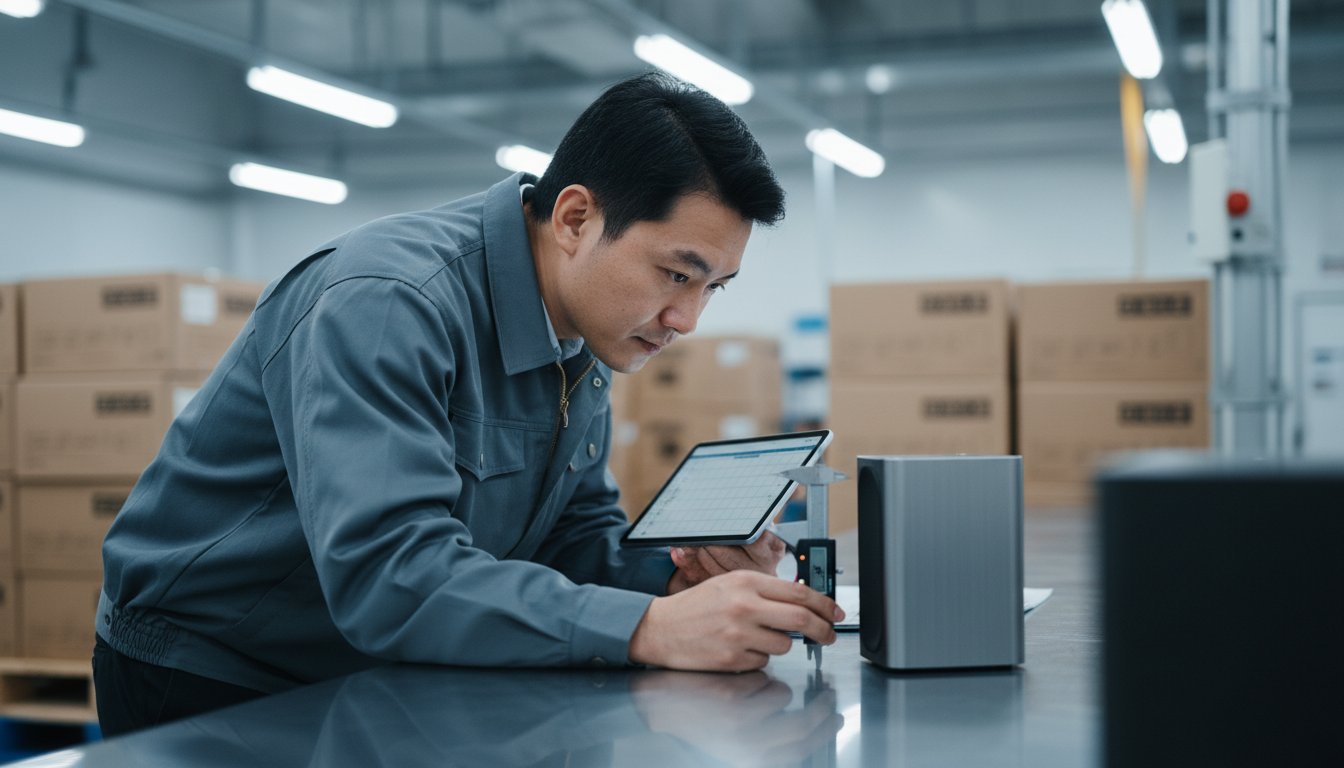

What if the "Golden Sample" sitting on your desk is the only high-quality item your factory ever produces? For many importers, the transition from a perfect prototype to mass production is where critical failures occur, leading to rejected shipments and devastating financial losses. Professional product sample testing isn't just a preliminary step; it's a vital safeguard against manufacturing drift and regulatory non-compliance. You've worked hard to build your brand's reputation, but one batch of defective inventory can dismantle years of effort.
Accepting mass-produced goods that deviate from the initial sample is a preventable operational failure that often results in total financial loss. This guide provides a clear protocol for verifying your samples and ensuring your production run matches your quality requirements. You'll learn how to manage the July 2026 CPSC electronic filing mandates and ISO 9001:2026 updates to maintain absolute compliance. We'll outline how to implement rigorous testing phases to protect your capital and secure your supply chain before the first unit leaves the factory floor.
Key Takeaways
- Learn to distinguish industrial quality control from marketing samples to ensure every material and component meets your technical requirements.
- Discover how to implement physical and functional lab analysis to verify that your product's finish and performance match your original design.
- Develop a professional product sample testing protocol using AQL standards to establish clear, objective criteria for mass production approval.
- Use third-party verification as a strategic investment to mitigate the financial risks of defective inventory and gain critical leverage during supplier negotiations.
What is Product Sample Testing in the B2B Supply Chain?
In international trade, What is Product Sample Testing refers to the technical verification of a product's materials, functionality, and safety standards. It's vital to distinguish this from consumer sampling, which is merely a marketing tactic used to drive sales. In the B2B context, product sample testing is a rigorous quality control mechanism used to establish the "Golden Sample." This approved master version serves as the benchmark for all future manufacturing and is a key component of the Pre-Production Inspection phase, ensuring the manufacturer can meet your exact specifications.
Why Importers Cannot Rely on Factory-Sent Samples Alone
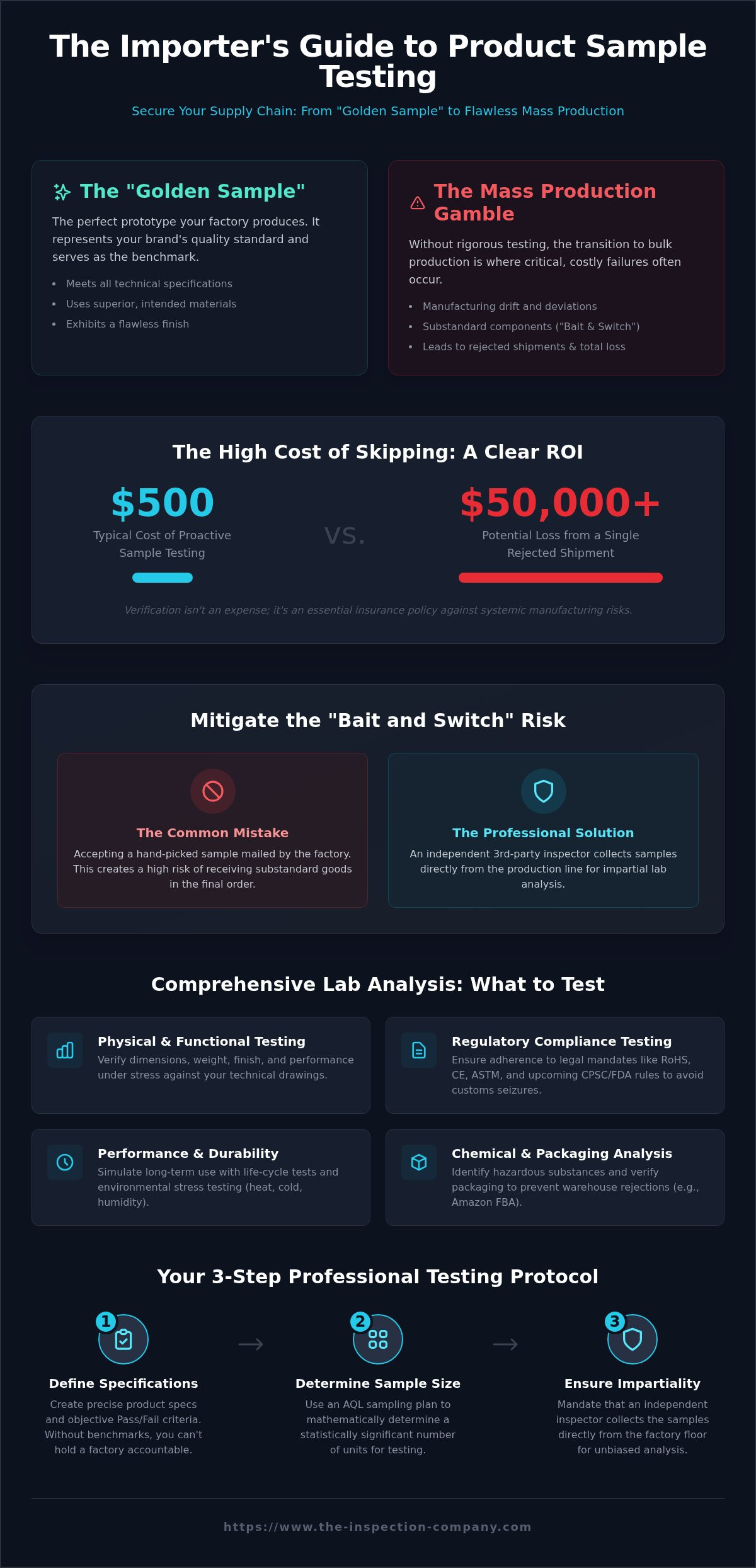
You shouldn't trust a sample that the factory hand-picks and mails to your office. This practice creates a significant "bait and switch" risk where the manufacturer uses superior materials for the prototype but switches to substandard components for the actual order. To ensure accuracy, an independent 3rd party inspection company must collect samples directly from the production site. This impartial collection process guarantees that the units undergoing lab analysis are a true representation of the factory's output, not a polished exception designed to secure your deposit.
The Cost of Skipping the Testing Phase
Ignoring this phase often leads to expensive operational friction. Importers who skip testing frequently face total inventory loss, customs seizures, and even Amazon account suspensions due to safety violations. These errors damage your brand's reputation and drain your liquidity. A $500 investment in professional product sample testing can prevent a $50,000 shipment rejection at your destination port. Proactive verification isn't a luxury; it's an essential insurance policy against the systemic risks of global manufacturing.
Types of Product Sample Testing and Lab Analysis
Effective quality control requires objective, data-driven analysis. Unlike subjective consumer reviews, industrial product sample testing utilizes precise instruments to verify physical specifications. We examine dimensions, weight, and aesthetic finish against your technical drawings to ensure consistency. Functional testing then pushes the product to its limits to ensure it performs under stress without mechanical failure. Chemical analysis identifies hazardous substances, while packaging verification is essential for Amazon FBA Inspections to prevent warehouse rejections.
Regulatory Compliance Testing (RoHS, CE, ASTM)
Compliance is a legal mandate, not a choice. As of July 8, 2026, the CPSC requires electronic filing of compliance certificates for most regulated consumer products. Verification ensures your goods meet the RoHS directive, CE standards, or ASTM requirements. For medical devices, the FDA’s new QMSR standards, effective February 2, 2026, make rigorous material purity checks mandatory. Failure to comply leads to immediate customs seizures and financial penalties.
Performance and Durability Testing
Durability testing simulates long-term use. Life-cycle tests determine exactly how many cycles a product can endure before failure, while environmental stress tests expose units to extreme heat, humidity, or cold. The ROI of Sample Testing is clear when you consider that Amazon-approved lab testing for supplements can range from $250 to $1,000 per product. These costs are minor compared to the expense of a total market withdrawal. If you need a technical breakdown of which tests apply to your category, consult with our laboratory experts today to secure your supply chain.
Developing a Professional Sample Testing Protocol
A structured approach to product sample testing transforms a vague quality check into a robust defense mechanism. You must begin by defining precise product specifications and objective Pass/Fail criteria. Without these benchmarks, your factory cannot be held accountable for manufacturing deviations. Next, utilize an AQL sampling plan to mathematically determine the number of units required for a statistically significant test. Relying on a single unit is a gamble; testing a representative batch is a strategy. Once the quantity is set, ensure an independent inspector picks the samples directly from the line before shipping them to an ISO-certified laboratory for unbiased analysis.
How to Interpret a Lab Testing Report
Reports categorize findings into Critical, Major, and Minor defects. Critical defects pose safety risks or regulatory violations, while Major defects render the product unsellable. Minor defects are aesthetic issues that don't impact primary function. If your product sample testing results show Critical or Major failures, you must halt production immediately. Use the technical report as leverage to negotiate corrective actions or demand re-sampling before releasing any further payments to the supplier.
Integrating Testing with During Production Inspection
Approval of the initial sample doesn't guarantee future consistency. You should integrate continuous testing with your During Production Inspection (DUPRO) to detect manufacturing drift. Linking lab results to the DUPRO report provides a comprehensive view of quality at the mid-point of production. This prevents the costly error of discovering defects only after the entire order is finished and packaged. To establish a customized testing protocol for your next shipment, contact our quality management team for professional guidance.
The ROI of Third-Party Sample Testing Services
Investing in product sample testing is a strategic move that forestalls massive financial losses. While testing fees are a visible line item, they're negligible compared to the catastrophic costs of a product recall or customs seizure. Beyond risk avoidance, professional data provides essential leverage during supplier negotiations. When you present an objective lab report showing specific failures, the factory is compelled to rectify the issues at their own expense rather than debating subjective quality standards. This transparency protects your brand equity and ensures every SKU meets your customer's expectations.
Speed is critical in global trade. Delays in testing often lead to missed shipping windows and depleted inventory levels. We solve this by providing detailed reports within 24 hours of sample collection. This rapid turnaround allows you to maintain aggressive production timelines without compromising on technical oversight. By catching defects early, you avoid the friction of shipping defective inventory across the globe.
Leveraging the TIC Quality Platform
Managing global quality control shouldn't be an administrative burden. The TIC Quality Platform streamlines the entire process by centralizing sample tracking and report management. You gain real-time visibility into your Asian supply chain from anywhere in the world. This digital infrastructure ensures that all stakeholders have access to the same data, reducing communication errors and accelerating decision-making.
Expert Support in Asian Manufacturing Hubs
Our operational model combines European management standards with a localized presence in China, Vietnam, and India. With over 700 inspectors on the ground, we offer the meticulous oversight required for high-stakes manufacturing. This blend of international expertise and local cultural management ensures your specifications aren't lost in translation. Don't leave your quality to chance. Secure your next production run with expert sample testing to ensure your mass production matches your "Golden Sample" perfectly.
Securing Your Supply Chain for 2026 and Beyond
Your brand's growth depends on the reliability of your manufacturing partners. As international regulations like the CPSC electronic filing mandate tighten in 2026, the margin for error has vanished. Trusting a factory's self-selected prototype is no longer a viable business strategy. Implementing a rigorous product sample testing protocol ensures that every unit shipped meets your exact specifications and safety requirements. This proactive approach doesn't just prevent financial loss; it builds the market confidence necessary for long-term success.
By utilizing ISO-certified testing standards and independent oversight, you eliminate the "bait and switch" risks that often plague global trade. We provide the technical expertise you need with 700+ inspectors across Asia and 24-hour detailed reporting to keep your production on schedule. Don't let manufacturing drift compromise your reputation or your capital. Take control of your quality management now to ensure your next shipment is a success.
Book Your Professional Sample Testing Today and manufacture with absolute certainty.
Frequently Asked Questions
What is the difference between a golden sample and a production sample?
A golden sample is the approved prototype that sets the quality standard for your entire order. A production sample is a unit taken directly from the mass manufacturing line during or after production. Comparing them ensures the factory hasn't downgraded materials or craftsmanship after securing your deposit. This verification prevents receiving a shipment that fails to meet the master quality you originally approved and expected.
How much does professional product sample testing cost?
Costs vary significantly based on your specific product category and the required regulatory standards. While these fees are a necessary upfront investment, they're a small fraction of the catastrophic costs associated with a total product recall or a customs seizure. You should view these expenses as an insurance policy that protects your capital. We recommend requesting a technical quote based on your item's material composition and target market requirements.
How long does it typically take to get lab testing results for a sample?
Standard lab analysis usually takes between 3 and 7 business days depending on the complexity of the tests. However, we prioritize speed to minimize production delays by delivering detailed inspection reports within 24 hours of the on-site visit. Quick reporting is essential for maintaining your shipping schedule and identifying potential issues before the factory completes the entire mass production run.
Can I rely on the factory's internal lab for sample testing?
Relying on a factory's internal lab is a major operational risk. Manufacturers have an inherent conflict of interest and may overlook defects to meet delivery deadlines. Professional product sample testing must be performed by an independent, ISO-certified laboratory to ensure unbiased results. Third-party verification provides the objective data you need to hold suppliers accountable and protect your brand's reputation from substandard manufacturing.
What happens if my product sample fails a compliance test?
If your sample fails, you must immediately halt production and issue a formal corrective action plan to the supplier. You shouldn't release final payments until the manufacturer resolves the non-compliance issues. This often involves a secondary round of product sample testing to verify that the corrections are effective. Using a technical failure report provides you with the necessary leverage to demand these improvements at the factory's expense.