
Can you afford to pay for a shipment of defective goods that will lead to a wave of negative reviews and a suspended seller account? For private label owners, the product doesn't just carry your logo; it carries 100% of your reputation risk. Implementing a systematic quality inspection for private label products is no longer optional. With the FDA's Quality Management System Regulation (QMSR) now in full effect as of February 2, 2026, and stricter MoCRA requirements for cosmetic labeling, the margin for error has vanished. Manufacturing defects in Asia become expensive liabilities once they reach Western markets, often resulting in high return rates and eroded trust.
This guide explains how to safeguard your brand equity and profit margins through a rigorous, multi-stage quality framework designed specifically for sourcing. We'll preview a process that covers everything from initial factory audits to final container loading inspections. You'll learn how to identify inconsistent production quality before the goods leave the factory floor. This proactive approach ensures your customers receive exactly what they expect, preventing the hidden costs of shipping faulty goods and protecting your long-term growth in an increasingly regulated marketplace.
Key Takeaways
- Understand why customers hold your brand, not the manufacturer, responsible for defects and how to mitigate this reputation risk.
- Implement a multi-stage quality inspection for private label products to catch systematic errors before they become unmanageable liabilities.
- Learn the specific checkpoints for visual and functional testing, including Pantone matching and marketing claim verification.
- Discover the differences between Pre-Production (PPI) and During Production (DUPRO) inspections to ensure total oversight of the manufacturing cycle.
- Identify why relying on factory-led QC creates a conflict of interest and how third-party inspectors provide the transparency needed for high-stakes trade.
The Critical Link Between Quality Inspection and Private Label Brand Equity
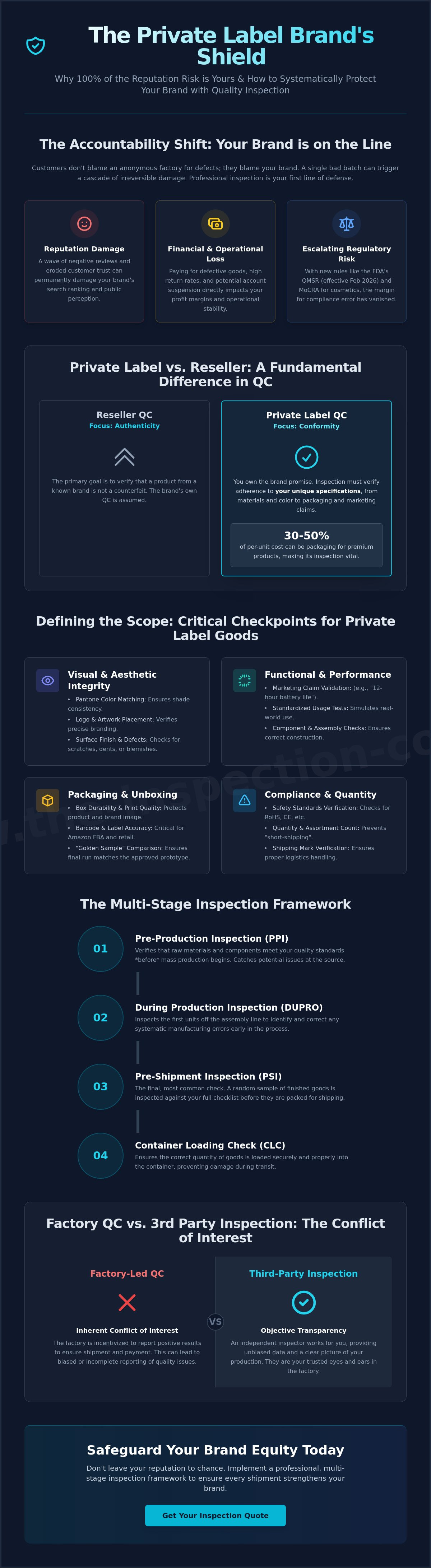
In private label manufacturing, the product is your brand. Quality inspection for private label products goes far beyond checking if a device turns on; it's the rigorous verification of brand-specific standards, aesthetics, and safety requirements. When you source goods internationally, you're implementing a Quality Control system that ensures every unit aligns with your specific market positioning. This process validates that the manufacturer has adhered to your unique specifications rather than just generic industry standards.
The "Accountability Shift" is a harsh reality for modern importers. Your customers don't care about your supplier's internal struggles or manufacturing defects. They blame your brand. If a product fails, the factory remains anonymous while your reputation takes the hit. This shift makes professional inspection an essential investment rather than a luxury. It transforms quality from a supplier dispute into a brand event where you take full control of the customer experience.
Brand erosion happens quickly and is often permanent. On platforms like Amazon, a single batch of faulty goods can trigger a spike in return rates and a flood of negative reviews. These metrics don't just hurt immediate sales; they damage your search ranking and can lead to account suspension. High-stakes international trade requires a proactive defense against these operational frictions. Professional inspection acts as a brand insurance policy, protecting your profit margins from the hidden costs of shipping faulty goods across the globe.
Private Label vs. Resale: Why Your Inspection Needs Are Different
Resellers typically focus on identity and authenticity. If you're reselling a known brand, you're verifying it's not a counterfeit. Private labelers face a different challenge: conformity. You own the brand promise, the packaging, and the marketing claims. For premium products, packaging can account for 30-50% of the total per-unit cost, making its protection vital. Working with a 3rd party inspection company provides the transparency you need to manage these complexities. Because you've made specific promises to your audience, your quality inspection for private label products must validate that those promises are kept in every single batch. Defects don't just break products; they break the trust you've built with your audience.
Defining the Inspection Scope: Critical Checkpoints for Private Label Goods
Setting a clear scope is the foundation of any effective quality inspection for private label products. You must define specific, measurable criteria that go beyond basic functionality. If your marketing materials promise a specific shade of "Midnight Blue," a slight deviation in the factory's plastic resin can alienate your premium audience. Visual inspections must include Pantone matching and precise logo placement verification across the entire batch to maintain brand consistency. This level of detail ensures the product physically represents your brand's identity.
Functional testing ensures the product actually performs the claims made on your Amazon listing. If you claim a battery lasts 12 hours, the inspector must verify this through standardized discharge tests. Compliance is equally critical. Verifying RoHS compliance and regional safety standards prevents legal seizures and costly product recalls. Finally, quantity and assortment verification prevents "short-shipping," ensuring you receive the exact inventory you paid for before final payment is released.
Beyond Function: Packaging, Artwork, and User Experience Accuracy
The "Unboxing Experience" is often the first physical touchpoint for your brand. Inspectors check box durability, insert placement, and the clarity of instruction manuals. Poorly printed manuals or damaged boxes signal low quality before the customer even sees the product. For those using Amazon FBA fulfillment centers, barcode and labeling checks are mandatory. Incorrect labeling leads to costly rejections and inventory delays. Every inspection should verify that the final production run matches the "Golden Sample" approved during the first article inspection. If you're unsure which checkpoints are critical for your specific product category, you can consult with our technical team for a customized checklist.
The Multi-Stage Inspection Framework: From Prototype to Container Loading
Waiting until a shipment arrives at your warehouse to discover defects is a financial disaster. Intervene early. A robust quality inspection for private label products requires a multi-stage approach that mirrors the manufacturing cycle. By intervening at specific milestones, you move from reactive damage control to proactive brand protection. This methodical process identifies risks before they become expensive liabilities.
The framework consists of four critical gates:
- Pre-Production Inspection (PPI): This stage verifies raw materials and supplier readiness before the lines start. It prevents the use of substandard components that would compromise the entire batch from the beginning.
- During Production Inspection (DUPRO): Performed when 20-30% of the order is completed. This stage is designed to catch systematic errors early. It's much cheaper to correct a machine setting now than to rework 5,000 finished units.
- Pre-Shipment Inspection (PSI): The final gate for the finished lot. Professional inspectors perform statistical sampling to ensure the batch meets your standards.
- Container Loading Inspection (CLI): This monitors the actual loading process. It ensures your goods aren't crushed by improper stacking and that the container is sealed securely for transit.
Why the Pre-Shipment Inspection (PSI) is Your Final Safety Net
The PSI is where data-driven decisions happen for your quality inspection for private label products. We utilize the AQL (Acceptable Quality Limit) methodology to provide an objective pass or fail result. This isn't a subjective guess; it's a globally recognized statistical standard that removes ambiguity from the process.
A detailed PSI report, complete with high-resolution photos and videos, gives you the evidence needed to approve or reject a shipment before final payment is released. This is your strongest leverage. It also serves as a critical defense against "Quality Fade." Suppliers often cut corners on subsequent orders to save costs. Consistent PSI ensures that the quality of your tenth order matches the excellence of your first.
Secure your production run and maintain your profit margins by scheduling a multi-stage inspection today.
Choosing a Quality Partner: How Professional Inspection Scales Your Brand
Choosing the right partner is the final piece of the brand protection puzzle. Relying solely on a factory's internal QC team presents a significant conflict of interest. Their primary goal is to maintain production speed and ship orders on schedule. Your goal is to ensure every unit meets your brand's specific standards. A third-party quality inspection for private label products provides the unbiased oversight necessary to resolve this tension. It's an essential layer of security that ensures transparency in high-stakes international trade.
Scale your operations without the overhead of an in-house team. By leveraging a partner with inspectors across all major Asian manufacturing hubs, you gain a localized presence that understands regional manufacturing cultures. This geographic advantage allows you to manage multiple suppliers simultaneously while maintaining a consistent quality standard. Modern quality platforms further enhance this by delivering real-time data and 24-hour report turnarounds. You don't have to wait days to know if your shipment is ready; you have the facts immediately.
Vetting the Vettors: The Importance of Factory Audits
Before the first unit is produced, you must know who you're working with. A factory audit is the absolute prerequisite for any private label partnership. It isn't enough to see a professional website; you need to evaluate supplier capacity, social compliance, and their Quality Management Systems (QMS) on-site. This vetting process ensures the factory can actually deliver the volume and quality promised. For broader context on managing these variables, see our guide on sourcing from Asia. Effective quality inspection for private label products starts with a partner who can bridge the gap between Western quality expectations and Asian manufacturing realities.
Future-Proofing Your Private Label Growth
The 2026 manufacturing landscape demands more than simple oversight; it requires a strategic commitment to brand integrity. Shifting your perspective from basic product checks to a comprehensive quality inspection for private label products is an investment in long-term profitability and customer trust. You've seen how a multi-stage framework prevents systematic errors and how the right partner eliminates the conflict of interest inherent in factory-led QC.
Our European management team oversees more than 700 inspectors across all major Asian hubs. This ensures Western quality standards are strictly enforced on every production line. We provide detailed reports within 24 hours and utilize specialized Amazon FBA inspection protocols to prevent costly fulfillment rejections. This level of transparency gives you the security needed to manage high-stakes international trade without the anxiety of unexpected defects.
Protect your brand with a professional inspection report; book your service today to secure your next shipment and safeguard your reputation. Taking control of your supply chain is the most effective way to eliminate operational friction and scale with confidence.
Frequently Asked Questions
What is the difference between private label and white label inspection?
Private label inspection verifies your unique brand specifications, custom features, and proprietary packaging. White label inspection focuses on generic functionality for a mass-market product. Because you own the brand reputation with private label, the inspection must validate specific marketing claims and aesthetic consistency that distinguish your product from competitors.
How much does a typical private label product inspection cost?
Costs depend on factors like product complexity, the number of man-days required for the sample size, and the factory's geographic location. It's best to view this as a preventative investment. The expense of a professional on-site visit is always lower than the financial loss caused by shipping a container of defective goods to your home market.
Do I need an inspection for every single order I place with a supplier?
Consistent quality inspection for private label products is the only way to prevent "Quality Fade" over multiple production runs. Suppliers might change raw material sources or sub-contractors to save costs on subsequent orders. Regular oversight ensures your tenth batch meets the same rigorous standards as your initial prototype.
What happens if my private label products fail the pre-shipment inspection?
You hold the final payment and use the objective data in the report to demand rework or replacement from the factory. The inspection report acts as your legal and financial leverage. It ensures the manufacturer corrects systematic errors at their expense before the goods leave the factory floor, protecting you from inheriting their liabilities.
Can an inspection company help with Amazon FBA specific labeling requirements?
Yes, specialized services include verifying FNSKU barcodes, carton labels, and palletization standards. These protocols ensure your shipment complies with strict fulfillment center rules. Proper verification prevents costly rejections, inventory delays, and the risk of account suspension due to labeling non-compliance.