

When you see man-days on an inspection quote, the figure usually estimates the work involved, not the number of calendar days before your order is checked. That distinction can affect how you compare quotes and plan around production deadlines. If you’re asking what is a man-day in inspection services, start by checking which tasks the estimate includes. The term can be used differently across proposals.
A man-day is a unit for estimating inspection work. It does not automatically tell you how long the process will take in calendar time. The estimate may cover preparation, on-site checks, travel or reporting, depending on its stated scope. The number of inspectors and the timing of the visit matter too.
This guide explains how man-days are calculated and what can affect an estimate, including order quantity, product complexity, model or SKU count, sampling requirements and inspection level. It also shows how to compare the scope of during-production and pre-shipment checks so you can understand what work is planned before shipment.
Key Takeaways
- Understand what is a man-day in inspection services and why estimates may define the term differently.
- Separate inspector effort from the time an inspection visit takes on site.
- Use a clear checklist of order and inspection requirements to make an estimate easier to assess.
- Compare pre-shipment and during-production checks by the decisions they can help inform, not by man-day totals alone.
What Does a Man-Day Mean in Inspection Services?
A man-day commonly represents one person working for one working day. The term alone, however, doesn’t tell you what an inspection covers or how long it will take in calendar time. A useful working definition is: A man-day measures estimated human effort, while the tasks it covers depend on the agreed inspection scope. The definition of man-day also reflects its use as a synonym for person-day.
The unit may be defined or billed differently across proposals, so don’t assume there is one universal standard. A man-day is a resource estimate, not necessarily one full day at the factory, a guarantee of inspection coverage or a promise about when the report will arrive. The Inspection Company provides reports with photos within 24 hours of the inspection. That reporting timeline is separate from the man-day estimate.
Is one man-day always one full day on site?
No. A proposal may cover only on-site checks or include other work components. Treat preparation, documentation and travel as part of the estimate only if the agreed scope says they are included. For example, a pre-shipment inspection can involve defined product checks, but the man-day figure alone won’t tell you which checks are planned. Review the tasks and assumptions in the proposal.
Man-day, person-day, and inspection day: what is the difference?
“Person-day” often conveys the same basic idea as man-day: the effort of one person for a working day. “Inspection day” may refer to time spent inspecting, but its meaning can vary by proposal. When researching what is a man-day in inspection services, read these terms alongside the stated scope, staffing and assumptions. This helps distinguish inspector effort from elapsed time and planned coverage.
How Are Inspection Man-Days Estimated?
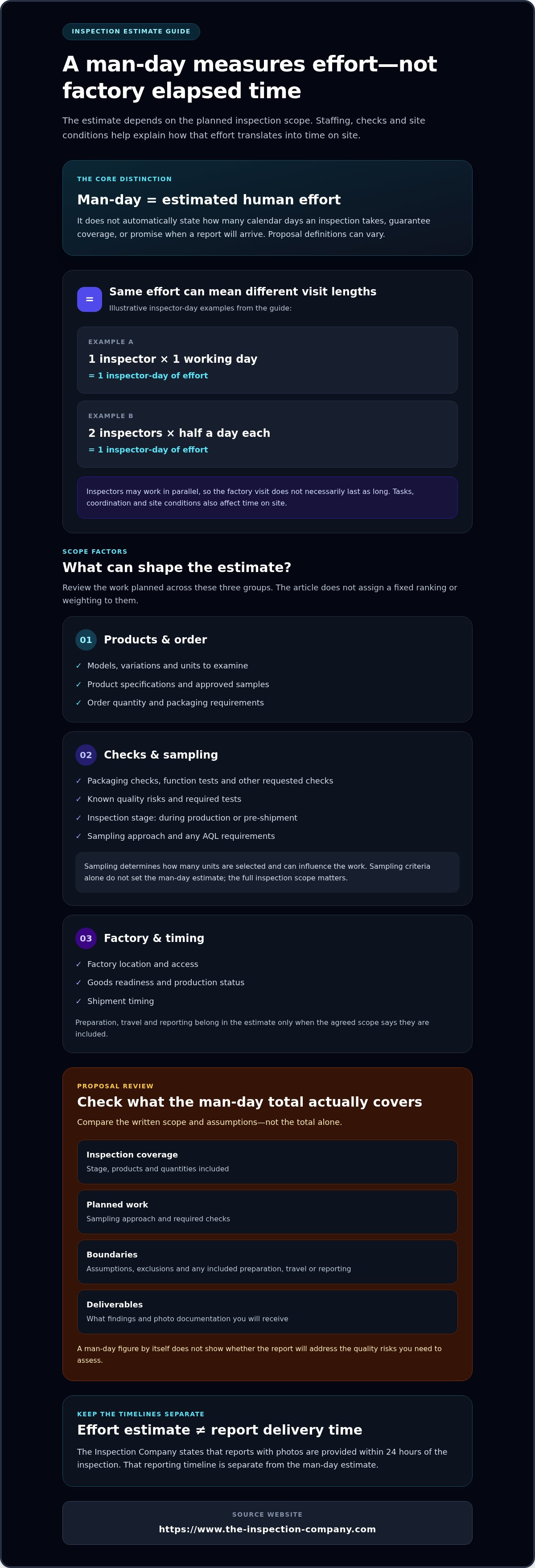
As a simple example, one inspector working one working day represents one inspector-day of effort. Two inspectors working half a day each may also add up to one inspector-day, but the factory visit won’t necessarily last as long. Inspectors may work in parallel, while the tasks, coordination and site conditions affect the time on site.
Total inspector effort and time at the factory are related, but they aren’t interchangeable. This distinction is central to understanding what is a man-day in inspection services and comparing estimates. The same total may represent different staffing plans or scopes. Project reporting also uses man-days to describe labor input, as explained in this guide to man-days in project reporting.
Which inspection-scope details can change the estimate?
An estimate depends on the work planned, not just the order total. Relevant details include:
- How many product models, variations and units need examination
- Packaging checks, function tests or other requested checks
- The inspection stage, such as during production or pre-shipment
- Factory access, goods readiness and the inspection location
A larger order may affect the inspection plan, but product variety and required checks matter as well. For example, an order with several models may call for different checks than a single-model order of the same size. Clear details make the estimate easier to interpret. To discuss a project-specific inspection plan, share your inspection requirements.
How does sampling relate to inspection effort?
A sampling plan determines how many units are selected for examination, so it can influence the work involved. Sampling criteria alone don’t set the man-day estimate. Product variety, packaging, test requirements and factory conditions also shape the effort. Review pre-shipment inspection details alongside your acceptable quality limit sampling criteria to understand the planned checks. The estimate should reflect the full scope, not only the sample quantity.
How Can You Review a Man-Day Estimate for Your Order?
A man-day total is difficult to assess on its own. Compare the written scope and assumptions behind it to understand what work is planned. Don’t treat the number as a standalone measure of inspection quality.
What information helps define an inspection scope?
Give the inspection team a practical brief that covers:
- Product specifications, models and approved samples
- Order quantity and packaging requirements
- Known quality risks and the checks or tests you need
- Inspection stage and sampling criteria, including any acceptable quality limit (AQL) requirements
- Factory location, production status and shipment timing
Specifics matter. Packaging checks or multiple product models, for example, can add tasks that aren’t apparent from order quantity alone. AQL criteria describe sampling expectations, but the complete inspection scope determines the work planned.
What should an inspection proposal make clear?
Check whether the proposal identifies the inspection stage, products and quantities covered, sampling approach, required checks, assumptions and any exclusions. It should also state what you’ll receive, such as findings and photo documentation. The deliverable matters because a man-day figure doesn’t tell you whether the report will address the quality risks you need to assess.
For context on sampling, consult an AQL guide alongside the scope. If you’re planning a final check before shipment, review the pre-shipment inspection process and its purpose. This connects the proposed checks to the decision you need to make.
Before approving the plan, make sure its assumptions match your order and factory conditions. A documented scope makes estimates easier to compare and reduces the risk of mismatched expectations. Share your inspection scope with our team to discuss a practical plan for your order.
How Inspection Man-Days Fit Pre-Shipment and Production Checks
Inspection timing shapes the questions a check can answer. A pre-shipment inspection assesses finished goods before shipment, while a during-production inspection looks for issues while manufacturing is still underway. In either case, man-days describe the planned effort for the agreed scope. They don’t guarantee defect-free goods or determine whether a shipment is approved.
When does a pre-shipment inspection make sense?
A pre-shipment check is useful when you need findings on finished goods before deciding whether they’re ready for release. The scope can specify the products, quantities, samples and quality criteria to examine. A pre-shipment inspection provides a structured basis for reviewing those findings, but the decision remains with the importer. To make the estimate meaningful, align the planned checks with the product risks and the decision you need to make.
When might during-production inspection be useful?
If you want visibility before the order is complete, a during-production inspection can identify issues while production is ongoing. This may give the factory time to address findings before making the remaining goods. The value depends on production status and the agreed checks, so specify what should be examined and which findings need to be reported.
The Inspection Company serves importers purchasing from Asia and tailors inspection scope to project needs. Its photo reports are delivered within 24 hours of the inspection. A clear scope explains the planned work. The man-day figure alone can’t establish the depth or result of a check.
Use your order details, production timing and quality priorities to choose the inspection stage that best fits your risk-control plan. Define the scope and deliverables before the inspection so the planned effort supports a useful decision before shipment.
Make Your Inspection Scope Clear Before Shipment
Understanding what is a man-day in inspection services helps you read an estimate as a measure of planned effort, not a promise about calendar duration or inspection outcome. The scope explains the work: product details, sampling criteria, inspection stage, required checks and reporting deliverables. Compare those written assumptions before drawing conclusions from the man-day total.
A clear inspection plan can focus checks on the risks that matter to your order, whether you need visibility during production or a final review before shipment. The Inspection Company supports importers purchasing from Asia with a team of more than 700 inspectors across key Asian manufacturing hubs. Reports include photos and are delivered within 24 hours of the inspection.
Ready to define a practical scope for your order? Discuss your inspection requirements with our team. A well-defined plan is a practical step toward more informed quality decisions.
Frequently Asked Questions
What is one man-day in inspection services?
A man-day commonly means the work of one person for one working day. Inspection estimates may define the unit differently, so it describes planned effort rather than a guaranteed inspection duration or result. If you’re asking what is a man-day in inspection services, review the scope, assumptions, staffing and deliverables alongside the figure to understand which tasks are included.
How do you calculate man-days for an inspection?
Start with the agreed inspection scope, then estimate the inspector effort needed to complete its tasks. One inspector working one day represents one inspector-day of effort. Multiple inspectors may reduce the time spent at the factory without reducing the total effort in the same way. Product variety, order size, sampling requirements, requested checks and factory conditions can all affect the estimate.
Does one inspection man-day mean the inspector will be at the factory for a full day?
No. A man-day doesn’t necessarily mean one full day on site. It is a unit of estimated person-effort, while the factory visit’s duration depends on staffing and the agreed work. Proposals may treat preparation, travel and reporting differently. Read the stated assumptions to see which activities are included, and don’t interpret the man-day figure as a guaranteed on-site schedule.
What affects the number of man-days needed for a product inspection?
The estimate can depend on the number of product types, order quantity, sampling approach, inspection criteria and requested tests. The inspection stage, factory conditions and location may also affect planning. A clear scope explains how these details shape the planned work. Since the man-day total alone doesn’t show which products or checks are covered, review it alongside the written inspection plan.