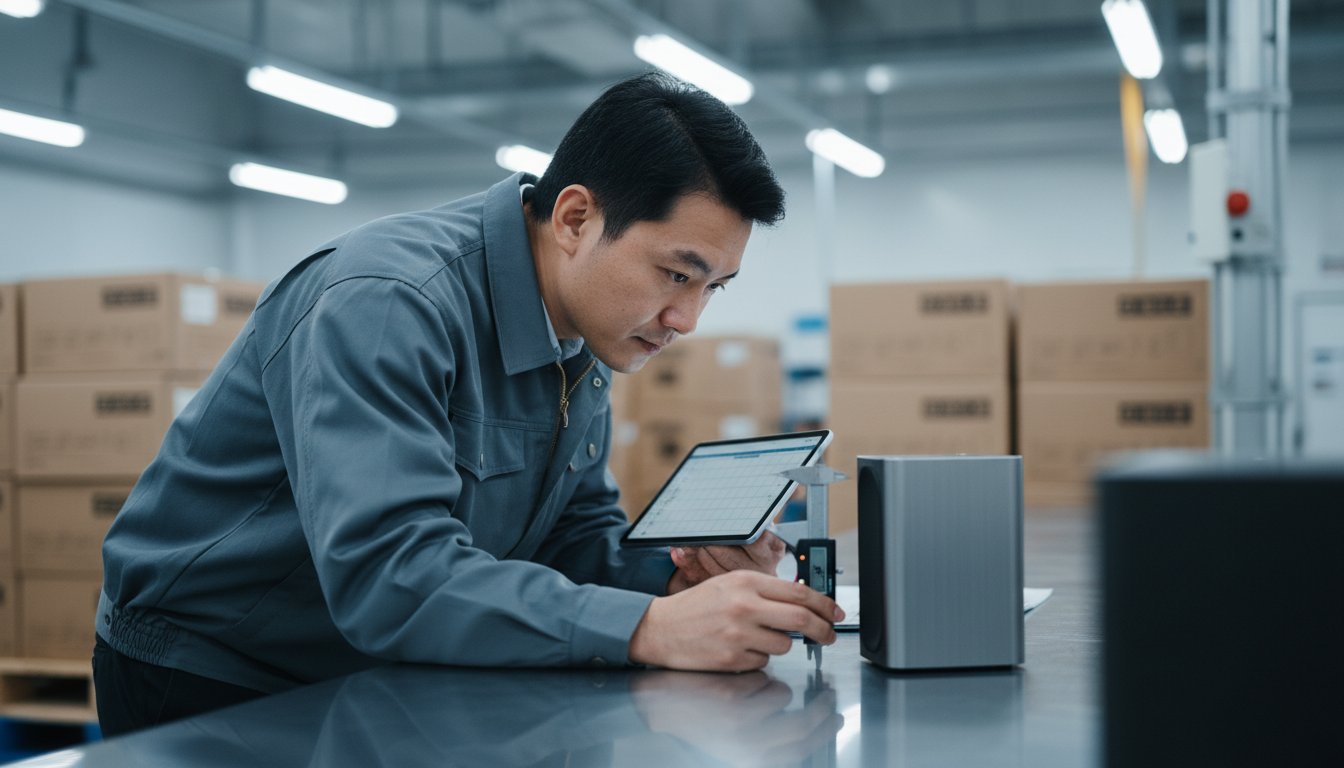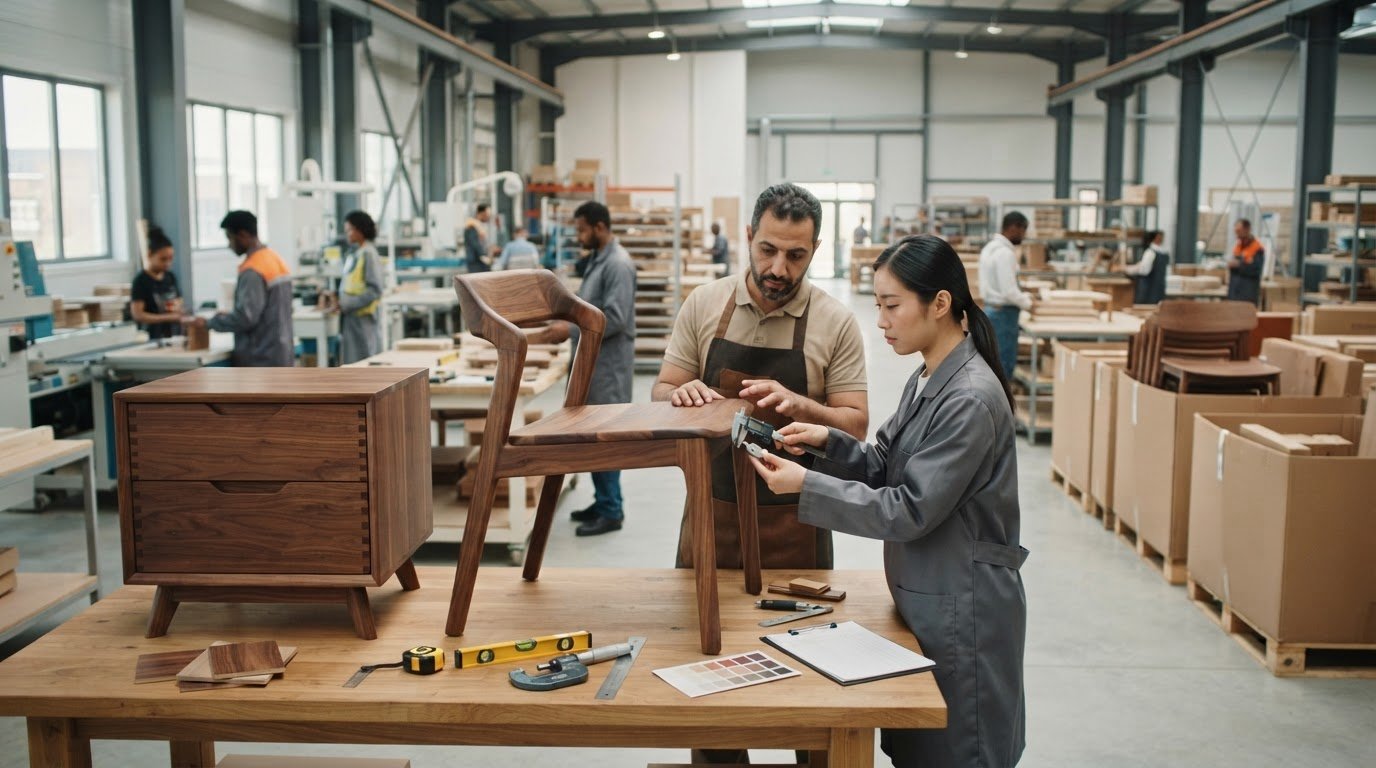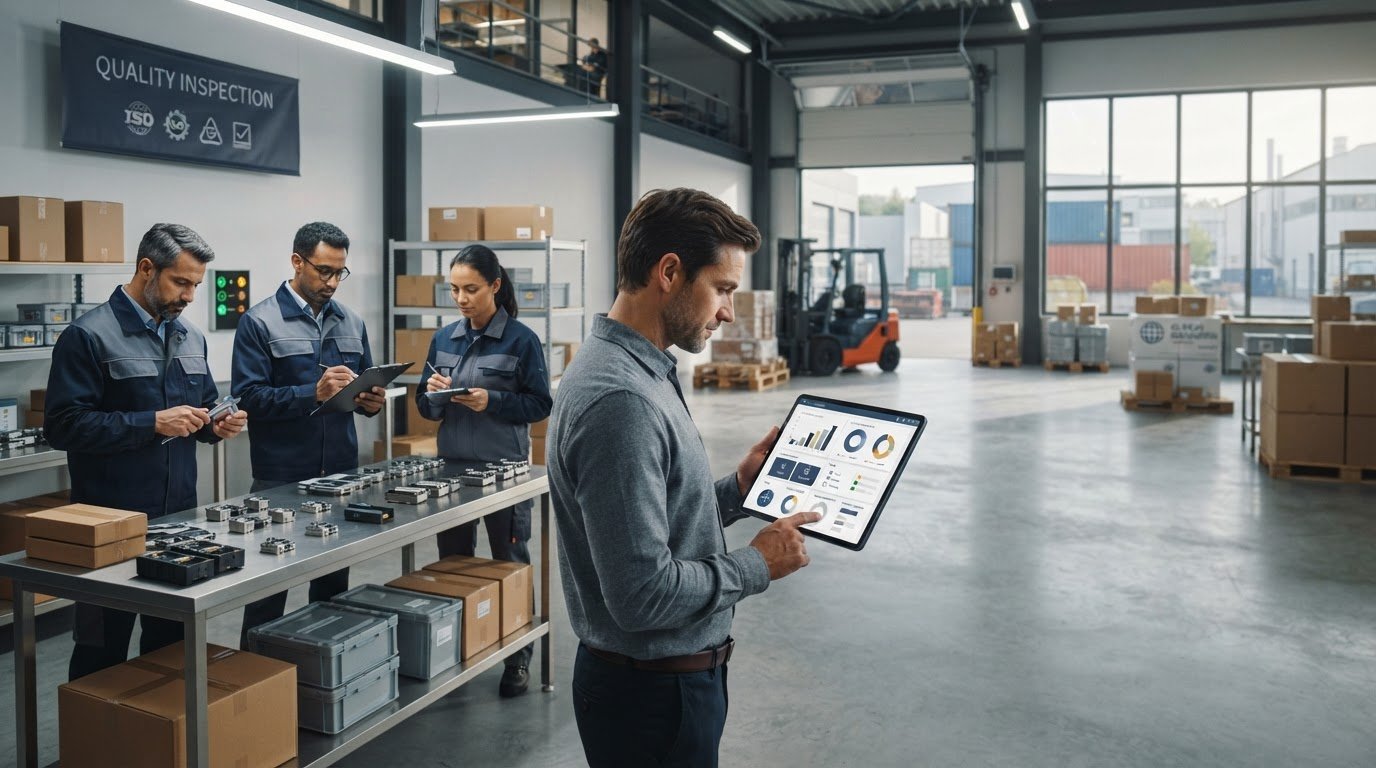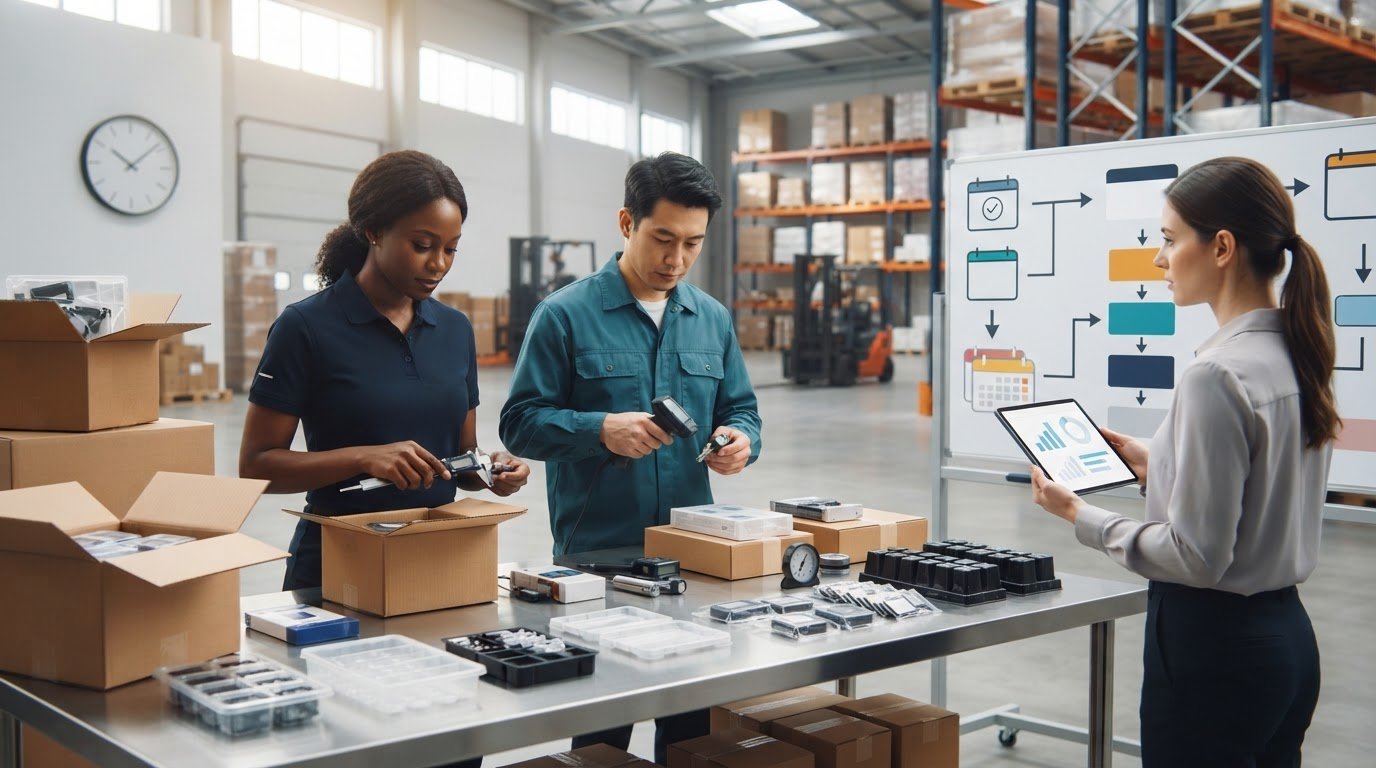

What if your next shipment doesn't just arrive with defects, but gets seized at the border because of a simple filing error? With the CPSC eFiling mandate in effect as of July 8, 2026, the risks of international trade have shifted. You're likely feeling the pressure to avoid unsellable goods and the high costs of shipping defective products. Learning how to choose a quality inspection company is no longer just about catching a minor flaw; it's about protecting your entire supply chain from regulatory and operational failure.
We recognize the frustration caused by a lack of transparency in factory-inspector relationships. You need a partner that acts as a proactive shield against financial loss. This guide provides a reliable framework for vetting QC firms to ensure you receive the detailed, photo-heavy reports required for total shipment control. We'll examine the critical criteria for selecting a partner, including their ability to handle new data requirements and protect your Amazon account health. You'll gain the confidence to approve shipments while knowing your brand reputation is secure.
Key Takeaways
- Identify why a third-party inspection firm serves as a critical shield for your capital, mitigating the terminal financial risks of the "cost of quality."
- Learn how to choose a quality inspection company that utilizes full-time, audited staff to prevent the ethical risks and bribery associated with freelance networks.
- Evaluate potential partners based on non-negotiable benchmarks like ISO/IEC 17020 accreditation and a verified local presence across Asia.
- Streamline your onboarding process by defining clear quality standards and requesting sample reports to verify transparency and photo evidence.
- Protect your brand reputation and Amazon account health by implementing specialized FBA-compliant inspection protocols that catch defects before shipment.
Why Choosing the Right Quality Inspection Company Is Your Best Risk Mitigation Strategy
In international trade, your capital is only as secure as the products it buys. A third-party inspection (TPI) company acts as an independent shield for your capital, ensuring that the goods leaving the factory match the exact specifications you paid for. Relying solely on a factory's internal report is a gamble that often leads to terminal financial losses. While understanding foundational quality control principles is essential, applying them through an external partner is what protects your bottom line from operational friction.
The "cost of quality" (CoQ) isn't merely the price of the inspection service; it's the cumulative cost of rework, shipping returns, and lost customers. In 2026, "factory-guaranteed" quality is a dangerous fallacy. Factories face their own margin pressures and often prioritize shipping speed over product precision. A 3rd party inspection company identifies issues at the source, preventing defective units from ever reaching the port. This proactive approach is vital for maintaining sourcing from asia stability and protecting your brand reputation.
The Role of Independent Verification in 2026
Impartiality is your most critical asset. An internal factory inspector answers to the production manager, whose primary goal is to ship on time regardless of minor defects. An independent partner answers only to you. They act as your "eyes and ears" on the floor, providing a factual, unbiased account of production status. When you evaluate how to choose a quality inspection company, look for firms that maintain a strict distance between the inspector and the factory management.
Avoiding the "Sunk Cost" of Defective Shipments
The financial math is clear. The fee for a professional inspection is a small fraction of the cost of a total shipment rejection or an Amazon account suspension. Once goods are on the water, your leverage disappears completely. A pre-shipment inspection acts as the final gatekeeper before title transfer, ensuring you only pay for compliant products. Learning how to choose a quality inspection company ensures that your investment remains protected against unexpected errors and costly shipping delays.
5 Non-Negotiable Criteria for Evaluating International Product Inspection Companies
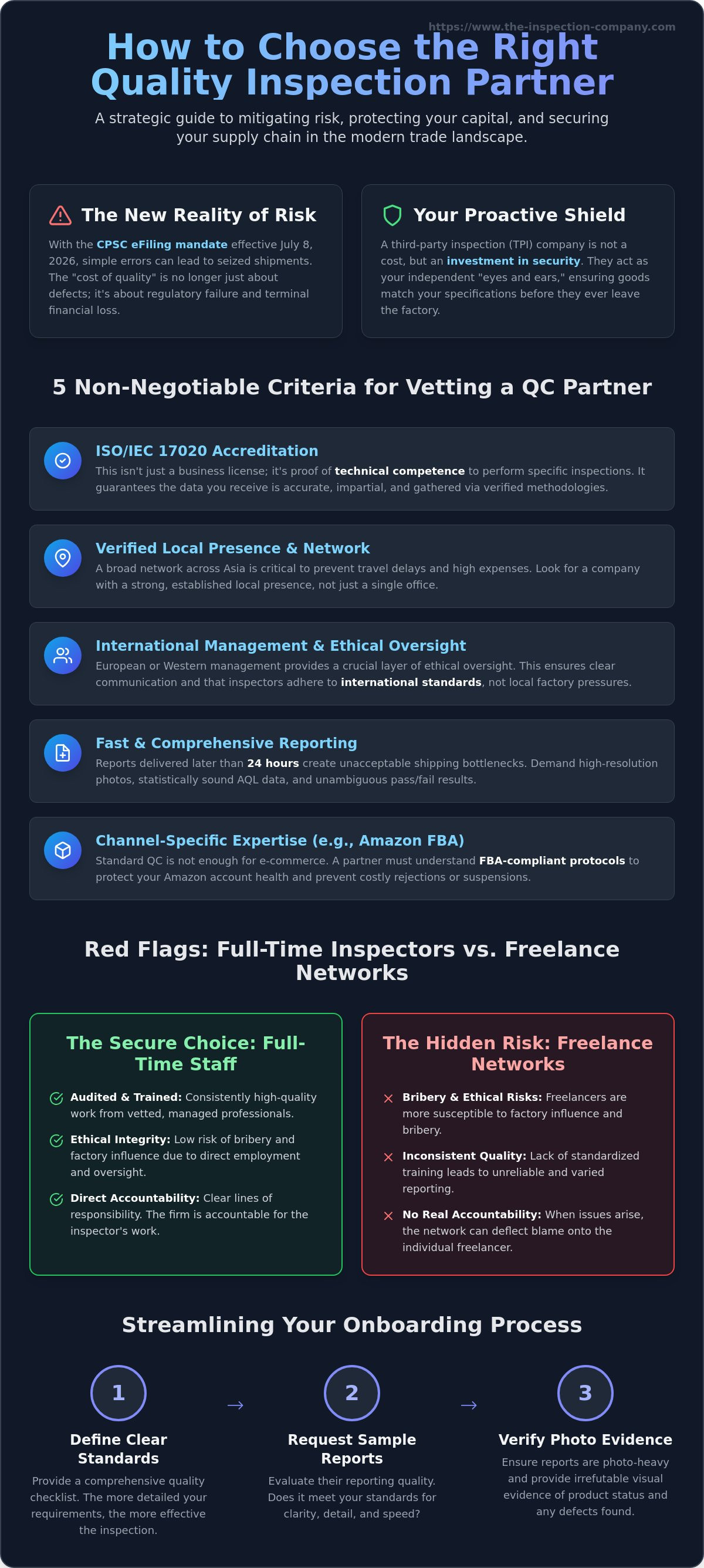
Vetting a partner is the primary way to strengthen your supply chain against operational friction. When deciding how to choose a quality inspection company, look beyond standard business licenses. Accreditation like ISO/IEC 17020 is essential because it proves the firm possesses the technical competence to perform specific inspections. This standard ensures that the data you receive is accurate and gathered through impartial methodologies.
Management and location are equally critical. A china inspection service needs a broad Asian network to prevent travel delays and high expenses. European or Western management provides a necessary layer of ethical oversight. This structure ensures that communication remains clear and that the inspectors on the ground adhere to international standards rather than local factory pressures. If you're unsure which service fits your current production cycle, consult with an expert today to review your requirements.
Technical Expertise and Reporting Standards
Speed is a critical metric in risk mitigation. Any report delivered later than 24 hours creates a bottleneck in your shipping schedule and reduces your window for corrective action. A high-quality report must provide a comprehensive view of the factory floor. It should include high-resolution photos of defects, statistically sound aql data, and unambiguous pass or fail results based on your specific quality checklist.
Channel-Specific Requirements (e.g., Amazon FBA)
Standard quality control often fails to address the rigid requirements of modern e-commerce platforms. If you utilize an amazon fba service, your inspector must verify FNSKU labeling, carton weight limits, and specific packaging durability. When defects are identified, the company should offer product sorting to salvage the compliant portion of your shipment. This specialized knowledge is vital when evaluating how to choose a quality inspection company for high-stakes retail operations.
Red Flags and Hidden Risks: Full-Time Inspectors vs. Freelance Networks
Choosing the wrong partner often stems from a desire to cut upfront costs. However, the "Gig Economy" trap is one of the most dangerous risks in modern quality control. Many firms rely on freelance networks to minimize their overhead. These part-time inspectors lack loyalty to the inspection firm and are far more susceptible to factory bribery. When you consider how to choose a quality inspection company, you must verify that they employ full-time, audited staff. This approach is fundamental to mastering the supplier management process because it ensures that the person on the factory floor is accountable to a rigorous internal code of ethics.
Transparency should be non-negotiable. A dependable partner provides access to a centralized quality platform where you can track inspector certifications and historical performance data. While "cheap" inspection companies appear to save money, they actually increase the risk of receiving unsellable goods. One defective container can wipe out a year's worth of savings from choosing a budget provider. Proactive investment in quality is the only way to prevent terminal financial loss.
Identifying "Conflict of Interest" Red Flags
A major red flag is an inspection company that also offers product sourcing services. This creates a direct conflict of interest. They are unlikely to reject a shipment from a factory they recommended. To protect your interests, choose a firm that remains strictly focused on independent verification. You should also verify any "European Management" claims by checking for business registrations in Hong Kong or Western jurisdictions. If a firm cannot prove its legal standing and management structure, it cannot guarantee the integrity of its reports. This step is vital when deciding how to choose a quality inspection company that you can actually trust.
The Importance of Social and Ethical Audits
Risk mitigation extends beyond the physical product. Under regulatory frameworks like the Foreign Supplier Verification Programs, importers bear the legal burden of verifying their supply chains. A comprehensive factory audit should always precede your first production run to evaluate technical capabilities. Using a social audit ensures your brand isn't tied to unethical labor practices. This level of diligence protects your brand reputation and prevents legal complications at the border. Contact us today to secure your supply chain against these hidden risks.
How to Onboard a Quality Partner: From Inquiry to the First Inspection Report
Once you understand how to choose a quality inspection company, the focus shifts to operational integration. Successful onboarding requires a methodical approach to ensure your specifications are translated into actionable checklists. A failure to define standards early often results in "grey area" defects that factories may refuse to rework. By following a structured four-step process, you eliminate ambiguity and establish a clear path for shipment approval.
- Step 1: Define your quality standard. Use the baseline established in what does pre shipment mean to align your expectations with the factory's capabilities.
- Step 2: Request a sample report. Evaluate the level of detail and photo evidence provided by the firm. A report that lacks high-resolution imagery or specific measurement data is a liability.
- Step 3: Conduct a pre-production inspection. For new suppliers, catching raw material errors early prevents the "sunk cost" of a full production run using incorrect components.
- Step 4: Schedule the pre-shipment inspection. This should occur once 80% of production is finished and packed. It's your final opportunity to identify defects before the title of goods transfers to you.
Managing the Inspection Schedule
Integrate inspection dates directly into your purchase order (PO). This provides legal leverage and ensures the factory understands that shipment is contingent on a passing report. To prevent transit damage or unauthorized product substitution, include container loading supervision as the final step. This ensures that the specific units inspected are the ones actually loaded into the vessel.
Reviewing Your First Report
When you receive your first report, interpret "Pending" or "Fail" results as a tool for negotiation rather than a reason for panic. These results provide the data needed to demand reworks or price adjustments before final payment. You should also use a supplier survey to track long-term factory performance and identify recurring quality trends across multiple shipments. This methodical oversight is the core of how to choose a quality inspection company that adds measurable value to your business.
Take Control of Your Product Quality Today
Protecting your capital requires more than just hope; it demands a systematic approach to risk management. You now understand that the difference between a freelance network and a full-time, audited team is often the difference between a profitable shipment and a total financial loss. By prioritizing European management standards and technical accreditations, you ensure that your quality reports are accurate, impartial, and actionable. This level of diligence is what separates successful importers from those facing terminal operational friction and unsellable goods.
Mastering how to choose a quality inspection company is the first step toward total supply chain visibility. With a network of 700+ professional inspectors across Asia, we provide the localized presence needed to catch defects before they leave the factory floor. Our commitment to 24-hour report turnarounds ensures you have the data to make high-stakes decisions without delaying your shipping schedule. You don't have to navigate these international trade risks alone.
Secure your supply chain with a professional inspection quote today. Build a resilient business by making quality a non-negotiable standard for every shipment.
Frequently Asked Questions
How much does a third-party product inspection typically cost?
Pricing for third-party inspections is generally based on a man-day rate, which covers the inspector's time on-site and the generation of the final report. The total cost depends on the complexity of the product, the location of the factory, and the sample size required by your AQL standards. It is important to view this fee as a preventative investment; the cost of a single day of professional oversight is negligible compared to the financial loss of a rejected container or an Amazon account suspension.
What is the difference between a factory audit and a product inspection?
A factory audit evaluates the supplier's manufacturing capabilities, quality management systems, and ethical standards before you place an order. It determines if the factory is a reliable partner for your business. A product inspection focuses on the physical goods themselves at various stages of production to ensure they match your specific purchase order. Audits vet the facility and its management, while inspections verify the quality and compliance of the actual products you are buying.
Can I use the same inspection company for different countries in Asia?
Yes, utilizing a single partner with a broad geographic footprint across Asia simplifies your supply chain management. When you learn how to choose a quality inspection company, look for a firm with localized teams in major hubs like China, Vietnam, and India. This ensures consistent reporting standards and communication protocols across all your suppliers. It also allows you to centralize your quality data on one platform, providing a holistic view of your regional manufacturing risks.
What happens if the inspection report shows a "Fail" result?
A "Fail" result is a critical signal to stop the shipment and withhold final payment until the factory resolves the identified issues. You should use the detailed photo evidence and data in the report to demand a mandatory rework or a product sorting at the factory's expense. Once the corrective actions are complete, you must schedule a re-inspection to verify that the defects have been eliminated. This process ensures you never pay for non-compliant goods that could damage your brand reputation.
How far in advance do I need to book a pre-shipment inspection?
You should generally schedule your inspection at least 3 to 5 business days before the production is expected to reach 80% completion. This lead time allows the firm to assign a qualified inspector with the specific technical expertise required for your product category. Understanding how to choose a quality inspection company involves finding a partner with a large enough team to handle fluctuating schedules. Always include these inspection windows in your purchase order so the factory is prepared for the auditor's arrival.