

What if the lowest inspection quote doesn’t include the evidence you need to approve a shipment? Hidden fees for quality control services can be hard to spot when proposals describe the work differently or leave assumptions unclear. A low headline fee may not cover the inspection time, travel, repeat visits, or reporting needed to make a confident decision.
It’s reasonable to want a clear budget before production is finished. The key is to compare like-for-like proposals, not just the first number on the page. This guide explains which scope details can affect a quality-control quote, how unplanned visits and additional deliverables can change the final cost, and what to compare before choosing an inspection plan. You’ll be better prepared to match the inspection stage to production status and get the findings you need before goods leave the factory.
Key Takeaways
- Hidden fees for quality control services often stem from unclear assumptions. Distinguish undisclosed charges from project-dependent scope changes.
- Compare proposals using the same product range, quantity, factory location, inspection stage, and timing.
- Separate included deliverables from conditional changes and exclusions to understand what each quote covers.
- Choose inspection timing based on whether your priority is production progress, finished goods, or container loading.
Hidden Fees for Quality Control Services: What a Quote May Leave Unclear
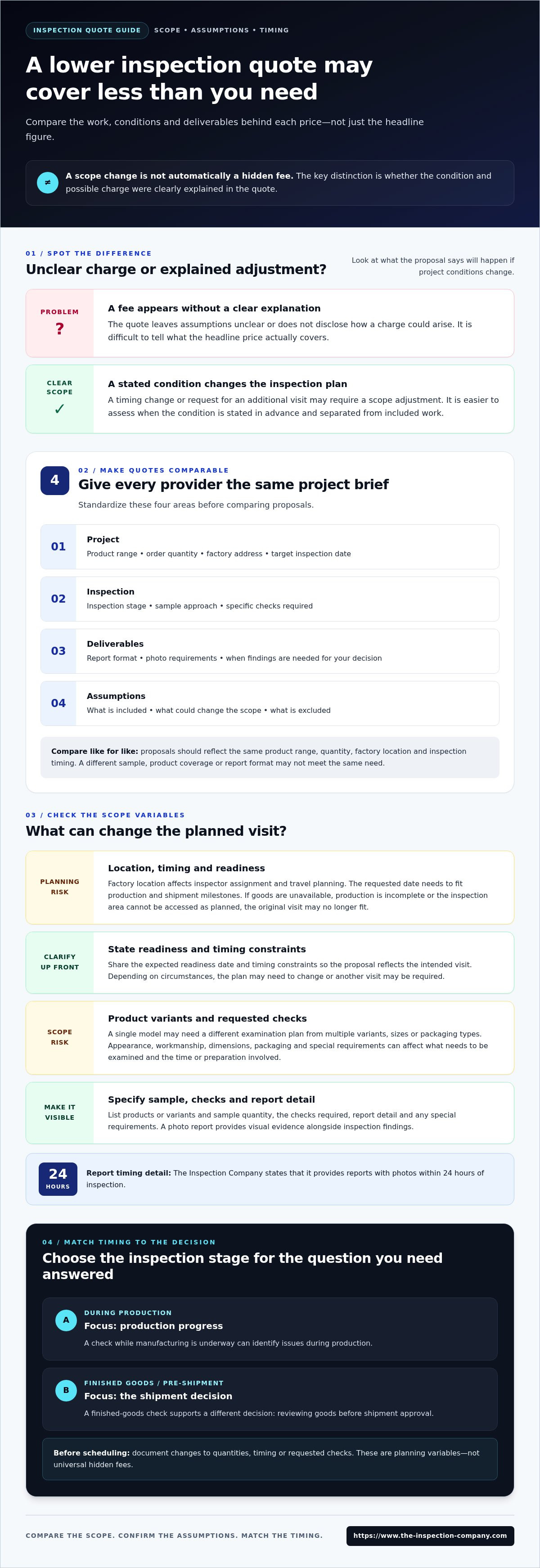
A hidden fee isn’t simply an adjustment because a project’s scope changes. It’s a charge that wasn’t clearly disclosed or explained in the quote. By contrast, a transparent scope adjustment is tied to a stated condition, such as a change in inspection timing or a request for an additional visit. Knowing the difference helps buyers assess hidden fees for quality control services without treating every project-dependent change as an unfair charge.
A headline quote has little meaning on its own. Quality control covers activities used to check whether products meet specified requirements; the What is Quality Control? overview provides useful background. An inspection quote is comparable only when its assumptions are clear. Product quantity, inspection stage, sampling approach, and requested checks can all differ. For example, checking finished goods before shipment supports a different decision from inspecting production progress.
Why two quality-control quotes may not be comparable
Compare the same product range and quantity, factory location, and inspection timing. A proposal based on one visit and a defined sample may cover less than one that assumes broader checks or a different production stage. For shipment-stage checks, the pre-shipment inspection service explains how this inspection fits into a shipment approval decision.
What “included” should mean in an inspection proposal
Look for four details: the inspection location, what the visit covers, the reporting deliverable, and when findings will arrive relative to your decision deadline. The Inspection Company tailors inspection plans to project requirements and provides reports with photos within 24 hours of inspection. Its quality inspection services can be matched to your needs and the shipment’s stage. Keep the core service distinct from project variables such as travel, timing changes, or repeat visits. The quote should state whether these are included or treated as conditional scope changes.
Which Quality-Control Service Quote Details Can Change the Final Scope?
A quote can change when the inspection plan changes, but no single adjustment applies to every factory or project. Location, product range, production status, and scheduling all shape what can be examined and how the visit is planned. The practical rule is simple: inspection quotes can only be compared fairly when their scope and assumptions match.
Location, timing, and readiness assumptions
Factory location can affect inspector assignment and travel planning, while the requested inspection date must fit production and shipment milestones. Readiness matters too. If goods aren’t available, production is incomplete, or the inspection area can’t be accessed as planned, the original visit may no longer fit the project. The plan may need to change or another visit may be required, depending on the circumstances. State the expected readiness date and timing constraints so the proposal reflects the intended visit.
Inspection stage also changes the purpose of the work. A check during manufacturing can identify issues while production is underway; a finished-goods inspection supports a different decision. The during-production inspection service shows how timing relates to production progress and your quality-control priorities.
Deliverables, sampling, and additional checks
Product range is another scope variable. A single model may require a different examination plan from an order with multiple variants, sizes, or packaging types. Compare what each proposal assumes about:
- Products or variants to be checked, and the sample quantity.
- Requested checks, such as appearance, workmanship, dimensions, or packaging.
- Report detail, including whether photos and clear findings are provided.
- Special requirements that need additional inspection time or preparation.
A photo report gives you visual evidence to review alongside inspection findings when deciding whether to approve or reject goods before shipment. The Inspection Company provides reports with photos within 24 hours of inspection. To limit surprises, document changes to quantities, timing, or requested checks before the visit is scheduled. These are planning variables, not universal hidden fees for quality control services.
How to Compare Quality-Control Quotes Without Missing Cost Assumptions
Use one project brief to evaluate every proposal. This makes differences visible and helps you separate the service being quoted from conditional changes, exclusions, and reporting terms. The lowest headline figure may not represent equivalent inspection coverage.
A like-for-like quality-control quote checklist
Standardize the following details before comparing proposals:
- Project: Product range, order quantity, factory address, and target inspection date.
- Inspection: Stage, sample approach, and specific checks required.
- Deliverables: Report format, photo requirements, and when findings are needed for your decision.
- Assumptions: What the quoted scope includes, what could change it, and what is excluded.
Use the same brief for each proposal, then compare the responses against it. For example, a quote covering fewer product variants or a different report format may not meet the same need, even if its headline figure is lower. Note conditional scope changes separately from included work. This helps show whether a potential adjustment is explained in advance or key terms remain unclear, an important distinction when assessing hidden fees for quality control services.
Connect inspection timing to shipment risk
Choose timing based on production status and when you need to make a decision. An earlier check can surface concerns while production is underway; a pre-shipment inspection evaluates finished goods before the shipment decision. These inspections serve different purposes, so don’t treat them as interchangeable line items. Consider inspection planning alongside broader import risks, including the issues discussed in this Asia sourcing risk guide.
Before selecting a proposal, confirm that its scope, assumptions, deliverables, and timing align with your shipment requirements. The inspection requirements discussion is a way to plan a scope suited to your project.
Choose a Quality-Control Plan That Makes Fees and Deliverables Clear
A well-defined inspection plan connects the work in the quote to the decision you need to make. This reduces ambiguity around scope and helps prevent hidden fees for quality control services caused by assumptions that surface only after scheduling. Start with your main risk: production progress, finished-goods quality, or how goods are handled during container loading.
Match the inspection stage to the decision you need to make
If you need to assess finished products before approving shipment, a pre-shipment inspection focuses on goods that are ready for review. If you need visibility into manufacturing progress while work is underway, a during-production inspection is designed for that stage. A container loading inspection is relevant when verifying loading and shipment handling is part of your risk-control plan. These stages answer different questions, so choose based on the decision you need to make, not just the inspection label.
Turn a clear scope into a confident next step
Before scheduling, bring the project details together: product range and quantity, factory location, production or loading status, target timing, requested checks, and the date you need findings to decide on shipment approval. Define the visit scope and report deliverables as well. The Inspection Company tailors inspection plans to project requirements, helping align the work with your priorities. Reports include photos and are delivered within 24 hours of inspection, giving you findings to review as you consider the next step.
Clear assumptions help you understand what the planned visit covers and what a change in readiness or requirements could mean for the scope. That clarity supports a more confident shipment decision before goods leave the factory. The inspection requirements discussion can help you plan an approach suited to your project.
Set Your Inspection Plan Before the Shipment Is at Risk
A clear inspection scope is more than a way to control spending. It gives your team a defined basis for deciding what to do if findings raise concerns, before shipment plans become harder to change. Treat hidden fees for quality control services as a prompt to make assumptions explicit, not as a reason to choose coverage based on the headline quote alone.
For goods purchased across Asia, The Inspection Company’s team of more than 700 inspectors operates across key Asian manufacturing hubs, supporting project planning around the factory and inspection stage. Bring your product details, timing, and shipment decision into the discussion so the plan reflects the risk you need to manage.
Discuss your quality-control inspection requirements and take the next step toward a clear, shipment-focused plan. With the right scope in place, you can move forward with greater confidence.
Frequently Asked Questions
What fees can be excluded from a quality-control inspection quote?
Depending on the proposal, travel, rescheduling, repeat visits, extra checks, or specialized documentation may sit outside the quoted scope. These aren’t automatically hidden fees for quality control services: the key issue is whether the quote identifies them as exclusions or conditional additions. For example, a second visit after products become available may be treated differently from the originally planned inspection. Review exclusions before approving the work.
How can I tell whether a quality-control service quote is transparent?
A transparent quote makes the planned work and its boundaries understandable before scheduling. Check whether it identifies the products covered, inspection purpose, expected outputs, and circumstances that could change the plan. For instance, if a proposal covers one product version but your order includes several, that difference should be apparent. Keep a copy of the agreed scope so you can compare the final service with what was authorized.
Can inspection costs change if the factory is not ready?
Yes, a factory-readiness issue can lead to a revised plan if goods, production records, or access aren’t available for the scheduled inspection. The impact depends on the agreed terms and what needs to happen next. If only part of an order is ready, clarify whether the visit can proceed for that portion or should be rescheduled. Sharing readiness updates early can help avoid a last-minute change in scope.
Is the cheapest quality-control inspection quote the best option?
Not necessarily. A lower quote may cover fewer product versions, checks, or deliverables, leaving gaps that matter to your release decision. Compare what each proposal would let you verify, not just its headline amount. For example, if packaging condition is important for your sales channel, confirm that the inspection plan addresses it. Choose the proposal that fits the risk you need to manage and makes its limits clear.
What should a quality-control inspection report include?
A useful report should let you understand what was examined and what the findings mean for your next decision. Consider whether it records the inspection date and location, products and quantities checked, requested criteria, observed defects, and supporting photos. It should also distinguish findings from items that weren’t examined, so you don’t assume the results cover the entire order. Agree on the reporting detail needed to approve, hold, or reject goods.