

What if a supplier’s refusal to allow inspection is a control failure, not proof that the goods are defective? If you’re asking what to do when a supplier refuses inspection, the immediate concern is clear: products could ship before you’ve verified their condition. Pushing back without first understanding the reason may also strain the relationship or delay delivery.
A refusal is a reason to pause and document, not a verdict on product quality. Your purchase order and contract matter, as do the supplier’s stated reason and the shipment’s status. A calm, evidence-based response can help protect the order while keeping the next step proportionate.
This guide explains how to clarify the refusal, preserve a written record, and review the terms that shape your options. You’ll also learn how to choose a practical next step, from arranging an inspection at the right production stage to addressing shipment timing. An independent inspection can document the condition of accessible goods before shipment, giving you clearer information for your decision.
Key Takeaways
- Distinguish a refusal, delay, limitation, or obstruction before deciding how to respond. None alone proves the goods are defective.
- To decide what to do when a supplier refuses inspection, compare the refusal with your purchase order, inspection terms, production status, and shipment date.
- Keep a written record, clarify the supplier’s reason, and propose a dated resolution based on the order’s actual readiness.
- Match the inspection stage to production: use pre-shipment inspection for finished goods or during-production inspection while manufacturing continues.
Supplier Refuses Inspection: What the Refusal Means, and What It Does Not
An inspection refusal means a supplier declines, delays, limits, or obstructs an inspection the buyer and supplier had agreed to. This may remove your planned opportunity to assess the goods before shipment and leave you with less evidence if a dispute arises. But a refusal alone does not prove defects, fraud, or a failed inspection. Treat it as a control issue to clarify, not a finding about product quality.
Supplier quality checks and buyer-arranged inspections serve different roles. A factory is responsible for its own production controls and checks; a buyer may arrange an independent inspection to assess goods against agreed criteria. As a general reference, What is an Inspection? describes inspection as an examination against requirements. Neither party’s checks replace a clearly agreed inspection scope.
Why might a supplier refuse an inspection?
Some explanations are operational: goods may be unfinished, the required quantity may not be ready, or access and scheduling may be unresolved. Other refusals may reflect disagreement about timing, scope, or criteria. Don’t assume intent from the refusal alone. Ask the supplier to explain the reason in writing and propose an alternative date or arrangement. A specific response helps distinguish a temporary readiness issue from an unresolved disagreement.
What does an independent inspection establish?
An independent inspection records what was accessible and observed against the agreed criteria at the time of inspection. The report can document the sampling performed and the findings, but it doesn’t establish conditions beyond that inspection or prove why a problem occurred. For finished goods being assessed before shipment, a pre-shipment inspection is the relevant stage. The inspection guide explains how this check fits into the order process. If access is refused, the inspection cannot verify inaccessible goods; record the refusal and its circumstances separately from any product findings.
Knowing what to do when a supplier refuses inspection starts with separating documented facts from assumptions. That distinction helps you assess the order and shipment timeline without treating the refusal as evidence of a product defect.
How to Assess the Refusal Against Your Contract and Order Timeline
Before deciding how to respond, compare the refusal with the documents governing the order and the practical status of production. Review the purchase order and quality agreement for the inspection clause, agreed standard, timing, access arrangements, and approval process. Then check whether the supplier’s explanation fits the facts: Are the goods finished in the required quantity? Is packaging ready? How close is the planned shipment date?
Which records should buyers gather first?
Build one dated file so the sequence is easy to follow. Collect the purchase order, product specifications, approved samples, inspection scope, and relevant emails or messages. Record when access was requested, what the supplier said, any alternatives proposed, and any shipment instructions. Separate confirmed facts from assumptions or disputed statements. For example, write “supplier stated 80% complete” rather than treating that figure as independently verified.
- Track each request, response, and proposed inspection date.
- Record production progress, finished quantity, packaging, and shipment updates, including where each update came from.
- Preserve the exact wording of any revised inspection or approval terms.
How should you clarify the supplier’s reason?
Ask one direct question in writing: identify the agreed inspection, summarize the objection, and request the specific information or action needed to resolve it. For example, ask whether the issue is product readiness, access, scope, or timing, and request a workable alternative date if needed. You can discuss rescheduling without agreeing to waive contractual rights. Clear expectations about inspection timing, scope, and access can also help prevent the same issue on future orders.
Contract language and remedies depend on the agreement and applicable circumstances, so don’t treat this review as a legal conclusion. If your rights or the effect of a proposed change are unclear, consult qualified counsel. The Inspection Company provides independent inspections aligned with your production stage and timeline. Request a project-specific quote.
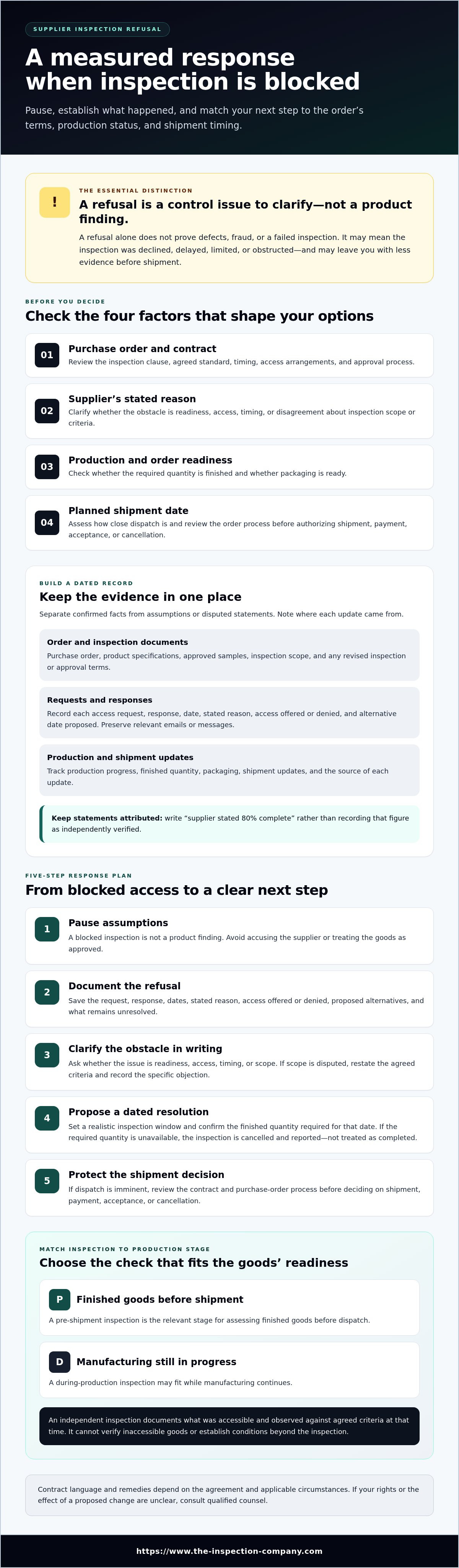
A Practical Response Plan When a Supplier Blocks Inspection
Keep the response measured and time-bound. Work through these steps before deciding whether to change the inspection plan or escalate:
- Pause assumptions. A blocked inspection is not a product finding. Avoid accusing the supplier or treating the goods as approved.
- Document the refusal. Save the request, response, dates, stated reason, access offered or denied, and any proposed alternative. Note what remains unresolved.
- Clarify the obstacle. Ask whether the issue is readiness, access, timing, or disagreement over scope. If scope is disputed, restate the agreed criteria and record the supplier’s specific objection.
- Propose a dated resolution. Set a realistic inspection window and confirm the finished quantity required for that date. If the supplier cannot provide the required quantity, the inspection is cancelled and reported, rather than treated as completed.
- Protect the shipment decision. If dispatch is imminent, review the contract and purchase-order process before authorizing shipment, payment, acceptance, or cancellation. Seek qualified legal advice if the consequences of those choices are unclear.
When should you reschedule or change the inspection stage?
If goods are incomplete, inspecting only the ready portion may not represent the full order. Agree on a later date when the required finished quantity can be presented. If manufacturing is still underway, a during-production inspection can provide a relevant checkpoint, while the finished-goods inspection can be planned for the appropriate stage. Confirm the revised date and quantity in writing.
When should you escalate the issue?
Escalate internally if the supplier won’t explain the refusal, provide a workable date, or allow access consistent with agreed terms. Share the timeline and unresolved points with the decision-makers responsible for quality and purchasing. Keep communication factual. A clear record preserves room for a commercial resolution or contract-specific advice without turning an unanswered request into an unsupported accusation.
The Inspection Company provides independent inspections planned around production status and shipment timing. Discuss your inspection plan with our team.
Arrange an Independent Inspection and Set Clear Next Steps
An independent inspection can document the goods an inspector can access and assess them against the agreed criteria. It provides a snapshot of observed conditions, not proof that a supplier is at fault, and it cannot guarantee access if the supplier blocks entry. Before proceeding, align the inspection scope, date, location, and required finished quantity with the order plan.
Match the inspection stage to production. Choose pre-shipment inspection for finished goods; consider during-production inspection while manufacturing continues. If the supplier cannot provide the required finished quantity on the inspection date, the inspection is cancelled and reported. Don’t treat a partial or cancelled inspection as verification of the full order.
What should buyers prepare to request an inspection?
Share the supplier and factory details, product type, order quantity, production status, location, and target date. Include relevant specifications and agreed inspection criteria, such as the requirements in the purchase order or quality agreement. These details help define a practical scope and identify scheduling or readiness issues early. The Inspection Company charges per man-day, an eight-hour work period. Pricing varies by product type, quantity, and location, so request a project-specific quote.
What evidence and follow-up can buyers expect?
After an inspection, you receive a Quick Report on the inspection day and a detailed, photo-backed report within the next 24 hours. Use the findings to assess the goods against the agreed criteria and determine next steps under the applicable agreement. A report documents inspection observations; it doesn’t decide contractual rights or replace legal advice. The Inspection Company’s quality inspection services include pre-shipment inspection and during-production inspection, so you can match the check to your order stage.
If you’re weighing what to do when a supplier refuses inspection, a clear scope and schedule can help establish a practical path forward. Discuss your inspection requirements.
Make the Next Order Easier to Verify
A supplier’s refusal can expose a gap in the way inspection expectations are set before production begins. For future orders, clarify access, timing, and acceptance criteria in the purchase documents. A clear process gives both sides a shared reference point and makes it easier to address delays before they put shipment decisions under pressure.
If you’re still deciding what to do when a supplier refuses inspection, an independent assessment can help establish documented facts about accessible goods without assuming the supplier is at fault. The Inspection Company’s network includes 700+ inspectors across 25+ countries, and the company is ISO 9001:2015 certified and an ISO/IEC 17020 Accredited Type A Inspection Body.
Set the next step around your production stage and order requirements. Plan an independent inspection for your order.
Frequently Asked Questions
Can a supplier legally refuse an inspection?
It depends on the contract, purchase order, governing law, and circumstances. Review the agreed inspection and access terms before deciding whether the refusal may breach the agreement. Keep the supplier’s written explanation and related communications with your order records. An inspection refusal alone doesn’t establish that the goods are defective or determine your legal rights, so consult qualified legal counsel for advice about your specific situation.
What should I do if my supplier refuses a third-party inspection before shipment?
Record the request and refusal, then ask the supplier to explain the obstacle in writing. Compare the response with your order terms and production schedule, and propose a specific inspection date or practical alternative. If you’re deciding what to do when a supplier refuses inspection, include the order reference and requested inspection scope in your follow-up. Before approving shipment or changing payment arrangements, review the contract and keep a written record of your decision.
Does a supplier refusing inspection mean the products are defective?
No. A refusal isn’t an inspection result, so it doesn’t prove defects or misconduct. It does mean you don’t have the independent findings you requested. For example, if a supplier says the goods aren’t ready, ask which quantity is complete and when the remaining units will be available. Retain the response and consider whether a revised inspection date or another agreed quality-control step can provide useful evidence before shipment.
Can an inspection still take place if the supplier will not cooperate?
Only if the inspector can access the goods and the agreed inspection conditions can be met. An independent inspection provider can plan around the order’s stage, but can’t guarantee access when the supplier refuses it. Before arranging a visit, establish what access is available, where the goods are located, and whether the required finished quantity will be ready. If access remains blocked, don’t treat the inspection as completed.
What if the supplier ships the goods before the inspection happens?
Keep the purchase order and messages showing when you requested inspection, how the supplier responded, and when shipment proceeded. Then review the contract and seek qualified advice before deciding whether to accept or dispute the goods. If they’ve arrived, a post-shipment inspection may help document their condition at that point. It can’t establish what their condition was before shipment or replace the missed pre-shipment assessment.