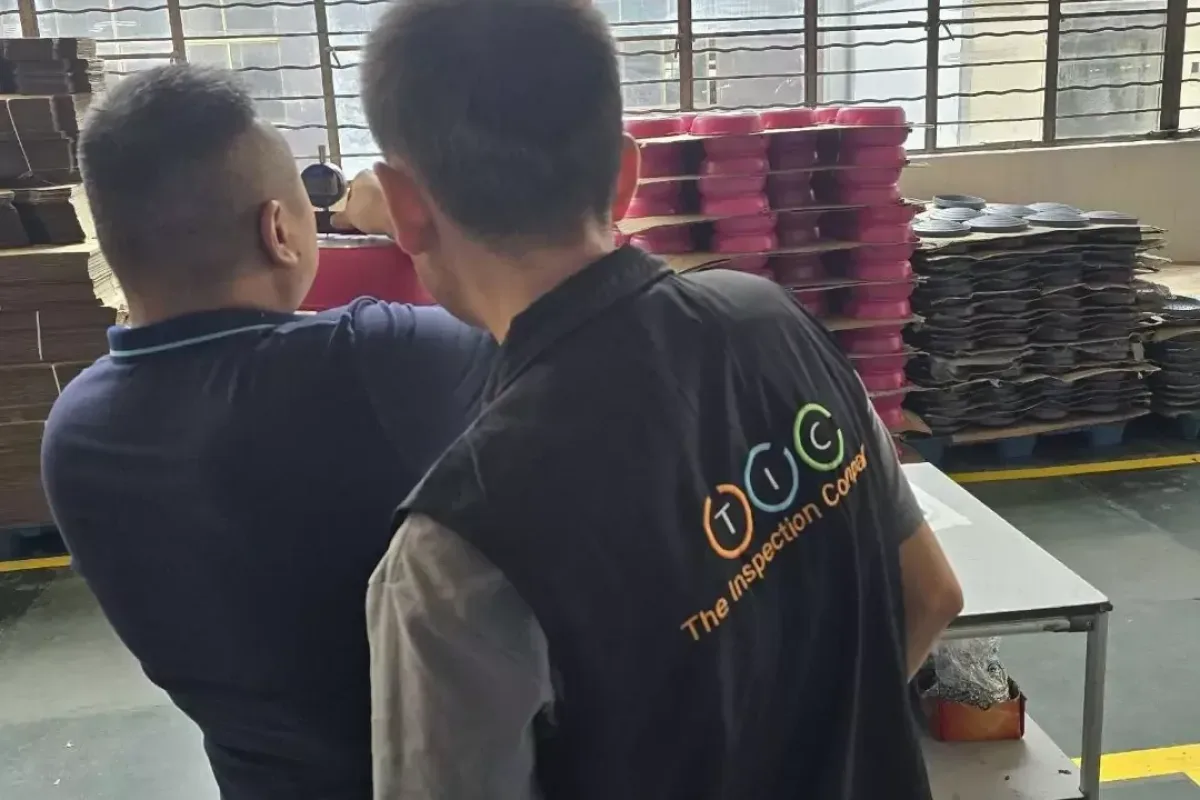
Third-party inspection in China means you hire an independent inspector, paid by you and not by the factory, to check your goods at the supplier before you release the balance payment. The most common job is a pre-shipment inspection done when production is finished and at least 80% of the order is packed: the inspector draws a random sample using ISO 2859-1 (ANSI/ASQ Z1.4) tables, checks quantity, workmanship, measurements, function, labels and packing, and issues a Pass, Fail or Pending report. The steps below show how to set one up so the result is something you can act on.
What a Third-Party Inspection in China Checks
A third-party inspection checks your order against your own documents, not against the factory's idea of acceptable. The inspector works from your purchase order, specification sheet, approved sample and packing instructions. Anything you did not write down is hard to reject later, so most of the useful work happens before the inspector reaches the factory gate.
On a standard consumer goods job, the inspector covers these areas:
- Quantity: finished, packed and unfinished units counted against the PO, and carton count checked against the packing list.
- Workmanship: visual defects on every sampled unit, each graded as critical, major or minor.
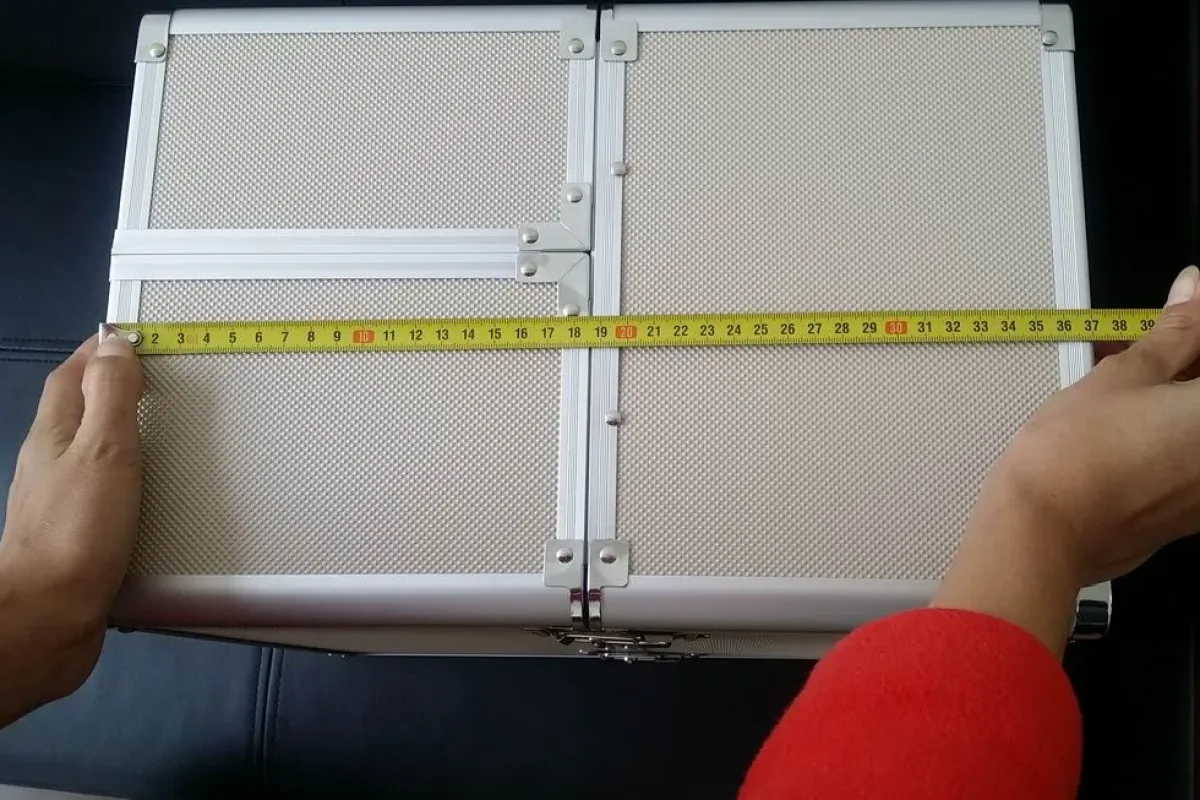
- Specification: dimensions, weight, colour, materials and accessories compared with your spec sheet and the approved sample.
- Function and on-site tests: power-on, assembly, zipper or hinge operation, barcode scanning, carton drop test, depending on the product.
- Packing and marking: retail packaging, shipping marks, labels, warning texts and carton condition.
Laboratory testing is a separate service. Chemical content, flammability and electrical certification need a lab. An inspector can select and seal samples at the factory and send them to a lab, but a factory visit does not replace a test report for regulated products such as toys, cosmetics or mains-powered appliances.
Step 1: Choose the Inspection Stage
The inspection stage decides what you can still fix cheaply. A wrong fabric found before cutting costs a material change. The same wrong fabric found at pre-shipment means remaking finished garments or shipping late. Buyers sourcing from China normally pick from these stages:
For a repeat order of a simple product from a supplier with a clean record, a PSI on its own is usually enough. For a first order with a new factory, a factory audit before you pay the deposit, followed by a during production inspection and a final check, gives you three chances to correct course. If you ship several products in one container, or the goods are easy to swap, add a container loading check.
Step 2: Write a Specification the Inspector Can Measure
A specification is only useful if an inspector can measure it. "Good quality, same as sample" cannot fail anything. "Seat height 450 mm ±5 mm, powder coat RAL 9005, no visible runs at 1 m viewing distance" can. Before you book, send the inspection company:
- PO number, with quantity per item, colour and size
- Specification sheet with dimensions and tolerances
- Photos of the approved or golden sample, and ideally a sealed sample kept at the factory
- Artwork for retail packaging, labels and barcodes
- Packing instructions: units per inner and master carton, carton dimensions, gross weight, shipping marks
- Your defect list with each defect classed as critical, major or minor
- Any on-site tests you want, such as drop test, function test or tape test on printing
The defect list matters more than any other document. A critical defect is a safety or legal problem: an exposed live wire, a sharp edge on a children's product, mould, a missing mandatory warning. A major defect makes the unit unsellable or likely to be returned: a drawer that sticks, a zipper that splits, a device that will not charge. A minor defect is cosmetic and would not make most customers return the product, such as a small scratch on a hidden surface or a loose thread end under 1 cm. Write your borderline cases down, for example "any scratch longer than 5 mm on the front panel is major". Without a list, inspectors grade against general industry norms, which may be looser than your customers expect.
Step 3: Set the AQL Level and Sample Size
AQL (Acceptable Quality Limit) sampling lets the inspector check a random sample instead of every unit and still reach a defensible accept or reject decision. The tables come from ISO 2859-1, which matches ANSI/ASQ Z1.4 used in the US. You choose an inspection level, which sets the sample size, and an AQL value for each defect class, which sets how many defective units are allowed in that sample.
Most consumer goods orders use General Inspection Level II with AQL 0 for critical, 2.5 for major and 4.0 for minor defects. Level I gives a smaller sample for low-risk goods and Level III a larger one for high-value goods. Some buyers tighten major defects to 1.5 for premium products.
Take an order of 3,000 units at Level II. The inspector pulls 125 units at random from cartons across the whole lot. If 8 or more of those units have major defects, the lot fails on majors. If a single critical defect is found, the lot fails regardless of the other counts. Tests that take time or destroy the unit, such as drop tests or detailed measurements, usually use a smaller special level (S-2 or S-3) sample. Our guide to reading AQL tables and acceptance limits walks through the code letters in detail, and the AQL calculator gives you the numbers for your own lot size.
Step 4: Put the Inspection into the Contract and Payment Terms
An inspection clause in your purchase contract is what gets the inspector through the factory gate without argument. The clause should state that you will appoint an independent inspector, at which stages, which AQL levels apply, that the balance is paid only after a Pass report, and that the supplier pays for re-inspection after a failed result. A common structure in China is a 30% deposit with the 70% balance released against a passed pre-shipment report.
Check who is actually making your goods. The business licence name on the contract should match the factory the inspector visits. You can look up a Chinese company's registration on the National Enterprise Credit Information Publicity System, and the contract should forbid subcontracting without your written approval. Inspectors regularly arrive at the listed address to find the goods were made elsewhere and trucked in for packing. If a supplier pushes back on any inspection at all, read our advice on what to do when a supplier refuses inspection before you pay anything more.
Step 5: Book the Inspection and Confirm the Date
Booking a third-party inspection in China needs a product description, the factory address and contact person, the expected inspection-ready date and the documents from Step 2. Inspection companies price by man-day, and the number of man-days depends on the number of styles, the sample size and the tests required. A single-item order of a few thousand units usually fits in one man-day. Ten SKUs in different colours, each needing measurements, may need two.
Book at least 3 to 5 working days ahead, and much earlier in the weeks before Chinese New Year, when factories rush to ship and inspector calendars fill up. Ask the factory to confirm in writing that production is 100% finished and at least 80% packed on the agreed date. A day before the visit, ask for photos of the packed cartons. If the inspector arrives and the goods are not ready, the man-day is normally still charged, and a factory that keeps moving the date is usually telling you production is behind.
The Inspection Company has local inspectors across the main manufacturing hubs, including Shenzhen, Guangzhou, Dongguan, Ningbo, Yiwu, Shanghai, Qingdao and Xiamen, and usually reaches a supplier within 24 to 48 hours of booking. Bookings, checklists and reports sit in one online platform, so you are not chasing details through email threads.
Step 6: What the Inspector Does on Inspection Day
An inspection day at a Chinese factory follows a fixed order, and knowing it helps you spot a report that skipped steps.
Arrival and quantity check
The inspector checks in on site with GPS-tagged photos, then counts the finished and packed goods against your PO and packing list. Cartons for sampling are picked by the inspector from different pallets and rows, often using the square root of the total carton count as a guide. Factory staff do not choose them. Short quantity is recorded at this point, before any unit is opened.
Visual and workmanship check
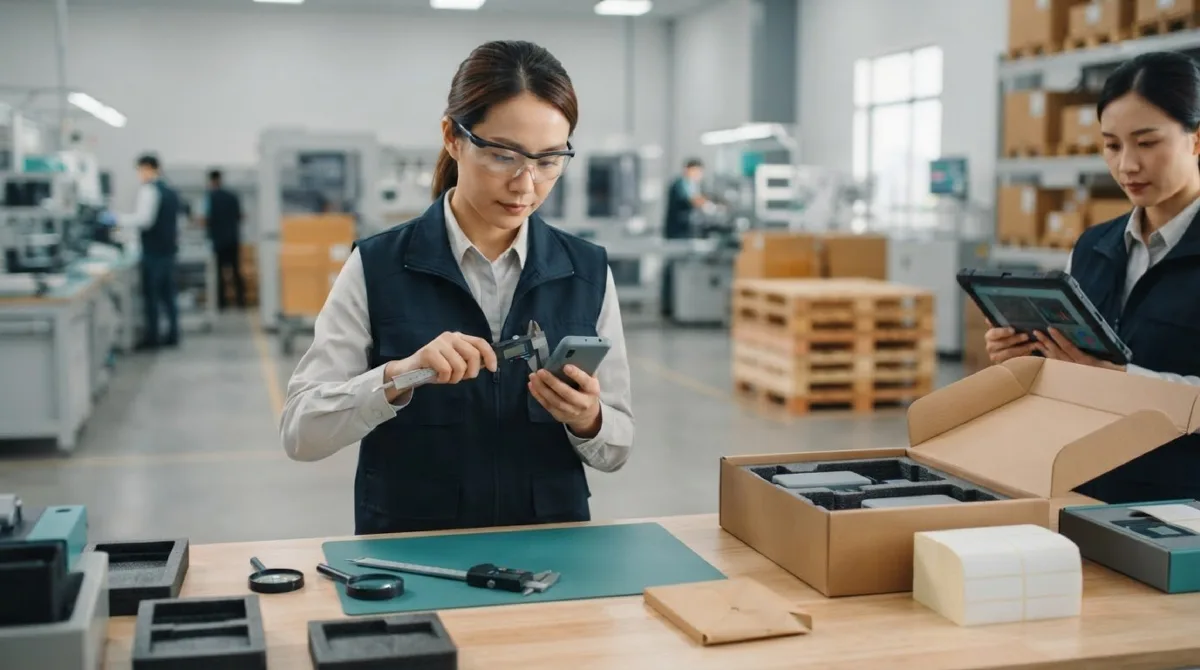
Every unit in the sample is checked visually against your defect list and the approved sample. Defects are counted by class and photographed. A scratched lid, a crooked logo print, glue marks on a shoe upper or an uneven seam on a garment each gets a photo and a classification.
Measurements and on-site tests
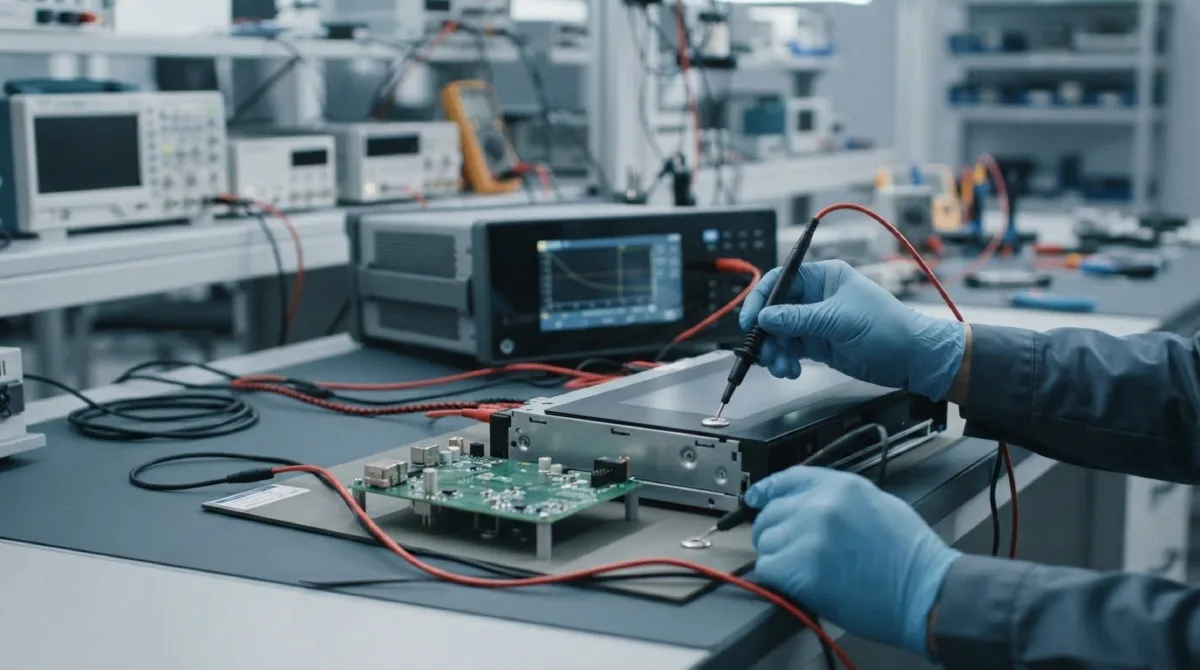
Measurements are taken on a set number of units and recorded against your tolerances. Typical on-site tests include a carton drop test (often to ISTA 1A), barcode scanning, tape adhesion tests on printed logos, colour comparison against the approved sample under a light box, assembly tests on furniture, moisture readings on wooden products and power-on or function tests on electrical goods. Products with a cord and plug can be given a hi-pot test if the factory has the equipment.
Packing, labels and shipping marks
The inspector checks retail packaging, inserts, care and warning labels, country of origin marking, carton marks, gross weight and carton dimensions. For Amazon FBA orders, labels are scanned and checked against the shipment plan. Inspected cartons are then sealed with signed or numbered tape so they cannot be swapped afterwards.
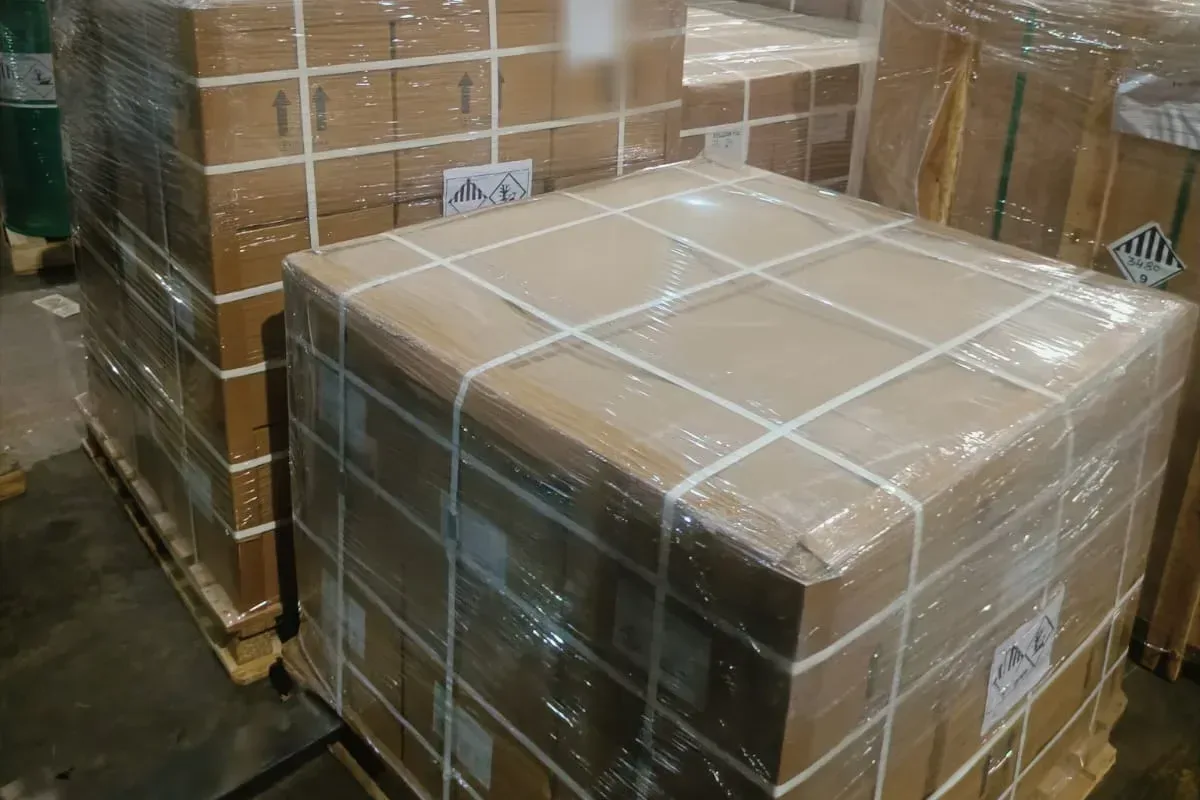
Step 7: Read the Report and Decide
An inspection report should give you enough to decide without a phone call. Our reports arrive within 24 hours of the visit and show the verdict (Pass, Fail or Pending), defect counts by class against the AQL limits, a photo of each defect, measurement tables, test results and the quantity found. Pending is used when the inspector found something your checklist does not cover, such as a new type of defect or a packing change, and needs your decision.
A failed report gives you leverage while the goods and your money are still in China. Your realistic options are:
- Hold and rework: the factory repairs or replaces defective units, then you book a re-inspection. Use this when defects are fixable, such as loose threads, missing labels or wrong carton marks.
- 100% sorting: every unit is checked and defective ones removed. Useful when the defect is easy to see but scattered through the lot.
- Accept with a discount: for minor cosmetic defects you can sell through, agree a price reduction based on the defect rate in the report.
- Reject the lot: for critical defects or material substitution, where rework cannot bring the goods to spec.
Do not accept a factory's word that a problem was fixed. Re-inspect before paying the balance, and keep failed reports on file, since they show you which suppliers need tighter AQL levels or more frequent checks on the next order.
Defects Inspectors Often Find in Chinese Factories
Defects found during inspections in China tend to repeat by type, whatever the product. Knowing them helps you write a better checklist:
- Material substitution: thinner steel tube, lighter fabric weight in GSM, a different plastic resin or cheaper plating than the approved sample.
- Measurement drift: garments outside tolerance on chest width or body length, furniture panels a few millimetres off so hardware will not line up.
- Colour variation: shade differences between dye lots or production batches, often visible only when units from different cartons sit side by side.
- Function failures: devices that do not power on, chairs that wobble, lids that do not close, screws not fully tightened.
- Label and marking errors: missing care labels, wrong barcode, wrong country of origin, missing CE or warning text.
- Packing faults: overfilled cartons that bulge, missing inserts or manuals, weak cartons that fail the drop test, wrong shipping marks.
- Short shipment: fewer units packed than invoiced, or cartons with fewer pieces than the marks state.
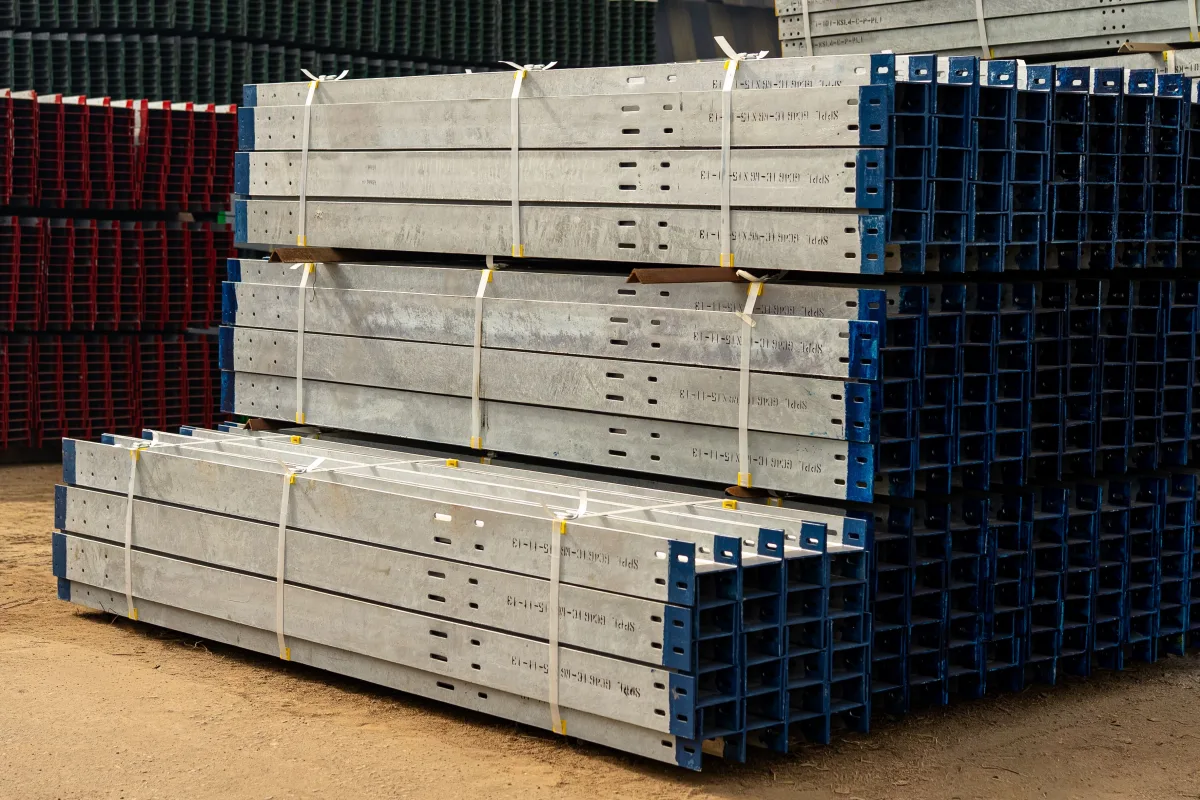
For engineered goods the list is different. Weld quality, coating thickness and material certificates dominate, as covered in our guide to steel structure inspection before shipment.
Keeping the Inspection Independent
An inspection is only worth paying for if the inspector works for you. Factory QC staff and inspectors arranged by the supplier have a reason to pass the goods. Warning signs include reports that always pass, reports with no defect photos, and inspectors the factory staff greet by name every visit.
The Inspection Company has worked since 2007 under European management, applying German QC standards in Asia. Our inspectors take no commissions, gifts or fees from factories, are rotated between suppliers, and record GPS-tagged, time-stamped photos on every job. Each report is reviewed by our QA team against AQL limits and your criteria before it reaches you. To see how this works on your product, book a pre-shipment inspection in China on your next order and compare the report with what your supplier tells you.
If you have an order coming up in China, send us your purchase order, specifications and factory address, and we will recommend the right inspection stage, AQL plan and a man-day quote. Request your free inspection quote here.
Frequently Asked Questions
How much does a third-party inspection in China cost?
Third-party inspections in China are priced per man-day, and the total depends on the product, the number of styles, the sample size and the factory location, so ask for a quote that includes travel and report fees.
How long does a pre-shipment inspection take?
A typical pre-shipment inspection takes one working day at the factory, and The Inspection Company sends the report within 24 hours of the visit.
Can the factory choose which units are inspected?
No, the inspector selects the cartons and units at random from the whole lot, and a factory that insists on handing over its own samples should be treated as a red flag.
Do I need an inspection if my supplier has its own QC team?
Yes, because factory QC reports to production managers who need to ship, while an independent inspector reports only to you and checks against your own specification.
What happens if the factory refuses to let the inspector in?
The inspector documents the refusal in a report, and you should hold the balance payment and enforce the inspection clause in your contract until access is given.
Is an inspection worth it for a small order?
Yes, a small order carries the same defect risk per unit as a large one, and the AQL tables scale the sample size down to fit lots of a few hundred units.