What if the high-quality goods you just approved never actually make it into the shipping container? It's a chilling thought for any importer, yet in 2026, the risk of last-minute product substitution or improper lashing remains high. With 20% of truck out-of-service orders in 2025 resulting from random inspections, the final stage of your supply chain is often the most vulnerable. A professional cargo loading inspection acts as your final fail-safe. This process ensures the exact items you paid for are the ones secured for transport before the doors are sealed.
You've likely felt that knot in your stomach when a shipment arrives with the wrong quantity or significant transit damage. It's frustrating to realize a factory swapped approved stock for lower-quality goods right before departure. This guide explains how a cargo loading inspection provides total transparency and valid proof for insurance claims. We'll explore the 2026 FMCSA cargo securement updates and the 7-point process that confirms your container is structurally sound and ready to withstand the 0.8g forward force requirements of modern transit.
Key Takeaways
- Understand why a cargo loading inspection is the essential final link in logistics security, distinct from standard quality-focused pre-shipment checks.
- Master the 7-point protocol used to verify container structural integrity and ensure proper handling of your goods during the loading process.
- Identify how to prevent last-minute product substitutions and shipping damage through real-time supervision and professional on-site sealing.
- Discover how 24-hour reporting allows you to halt problematic shipments and maintain compliance with updated 2026 cargo securement regulations.
What is Cargo Loading Inspection (CLI) and Why it Matters
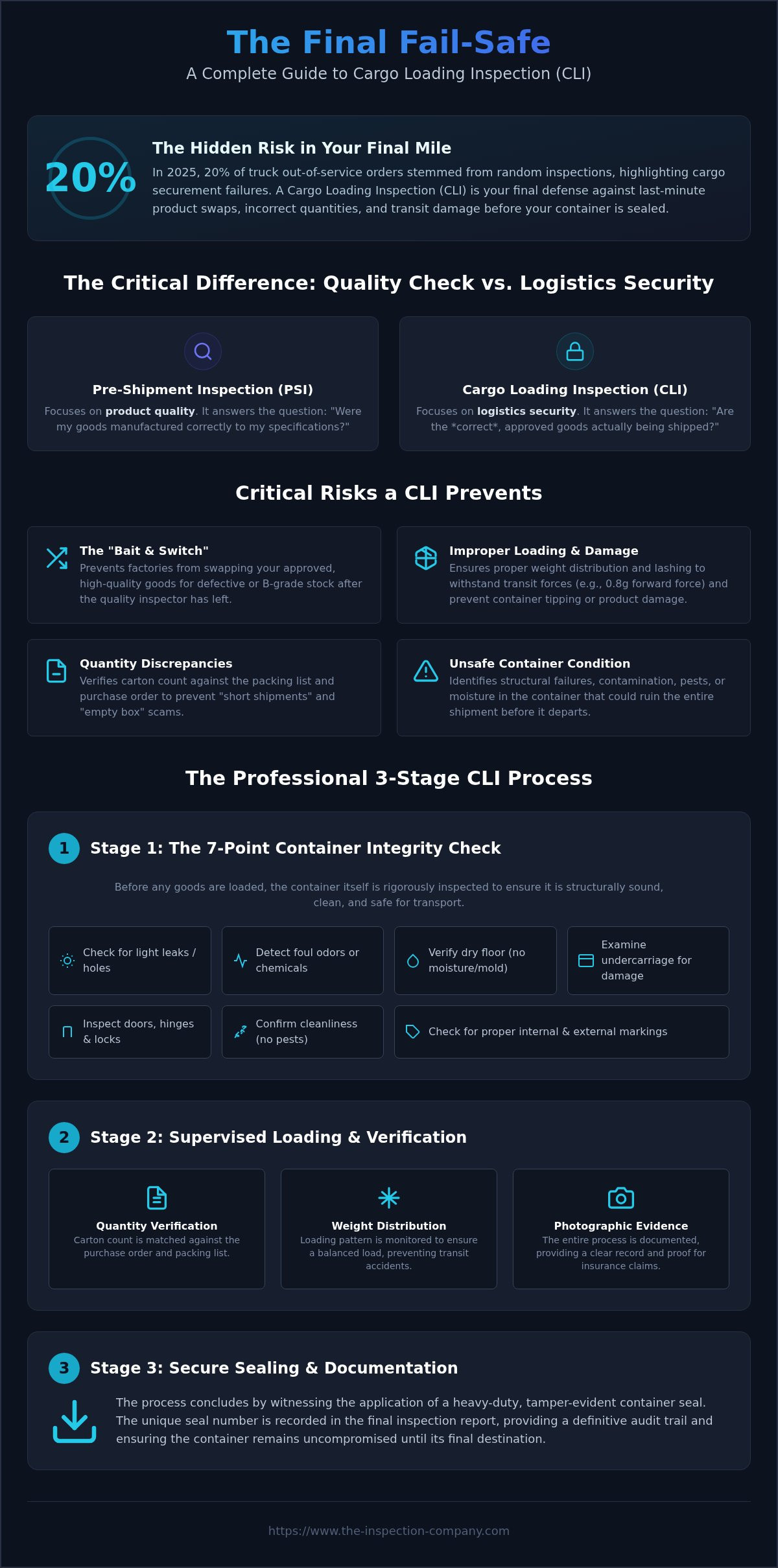
A cargo loading inspection is the final supervision phase where an expert monitors the transfer of goods from the warehouse into the shipping container. It validates that the quantity, condition, and palletization meet your exact requirements. While a Pre-Shipment Inspection focuses on the quality of the product itself, the CLI focuses on logistics security. It's the difference between knowing your goods were made correctly and knowing they've actually been shipped.
Many importers mistakenly assume a successful quality check is the end of the risk cycle. It isn't. Organizations like the National Cargo Bureau (NCB) emphasize that secure cargo handling is vital for preventing maritime losses. Within a comprehensive sourcing from Asia framework, the CLI serves as the ultimate fail-safe against "last-mile" factory errors.
The "Bait and Switch" Risk
Factories sometimes face immense pressure to clear defective or B-grade inventory. Without a cargo loading inspection, they might swap the approved goods for lower-quality stock once the quality inspector leaves the premises. A professional CLI prevents unauthorized product substitution by maintaining a strict chain of custody from the warehouse floor to the container. The presence of a meticulous third-party expert creates a psychological deterrent that keeps suppliers accountable to your standards.
Ensuring Shipping Integrity
This process also eliminates the risk of "short shipments" or "empty box" scams that can plague international trade. We verify that the exact quantity of cartons matches the packing list before the container is locked. By confirming that the container is structurally sound and applying a tamper-evident seal, we provide the transparency you need to manage global logistics with confidence.
The Professional CLI Process: From Container Check to Sealing
The professional cargo loading inspection follows a methodical protocol designed to eliminate human error and factory negligence. It isn't merely a visual check. It's a technical verification of the entire logistics environment. Our inspectors act as your eyes on the ground, ensuring that the transition from the warehouse to the shipping vessel is flawless.
The 7-Point Container Inspection Protocol
Before a single carton is moved, the shipping container itself must be scrutinized. Structural failures or hidden contaminants can ruin an entire shipment before it even leaves the port. Our teams perform a rigorous 7-point check to verify the vessel's condition:
- Checking for light leaks (holes) that indicate structural gaps.
- Detecting foul odors or residual chemicals from previous loads.
- Verifying the floor is dry and free of moisture or mold.
- Examining the undercarriage for damage or instability.
- Inspecting the doors, hinges, and locking mechanisms.
- Confirming the unit is clean and free of pests.
- Checking for proper internal and external markings.
For a detailed checklist of these technical requirements, review our container loading services.
Quantity Verification and Loading Supervision
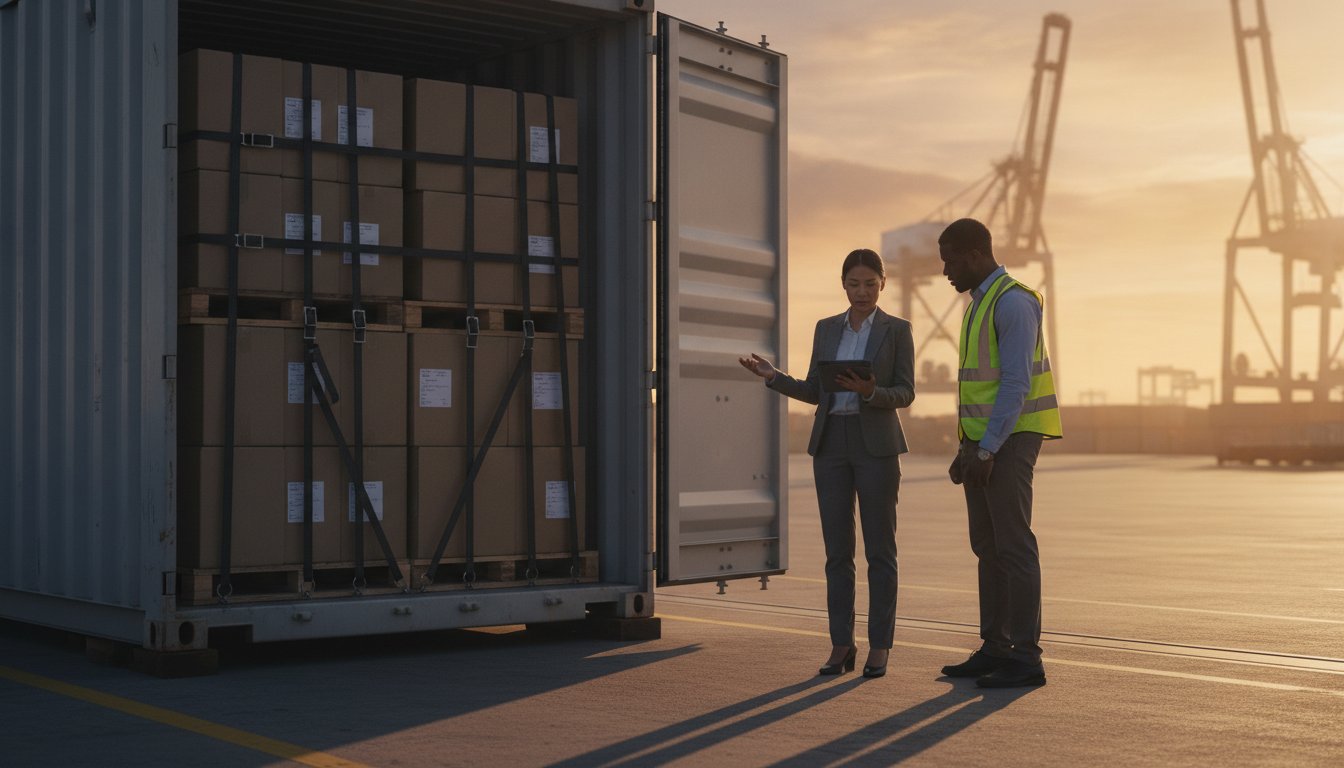
Once the container is approved, the physical loading begins under strict supervision. We verify the final carton count against your purchase order and packing list to prevent short shipments. For LCL orders, we ensure the "First-In, Last-Out" logic is applied correctly to avoid damage during consolidation or unloading. Monitoring weight distribution is equally critical. Unbalanced loads often lead to container tipping or severe transit accidents during sea or road transport. We document the entire loading pattern with photographic evidence, providing you with a clear record of how your investment was handled.
The process concludes by witnessing the application of a heavy-duty, tamper-evident seal. We record the unique seal number in our report to provide a definitive audit trail. This ensures the container remains uncompromised until it reaches its destination. If you need to secure your next shipment, speak with our regional specialists to arrange an on-site visit.
Critical Risks of Skipping Cargo Loading Supervision
Skipping a cargo loading inspection leaves your investment unprotected during the most chaotic phase of the factory cycle. It's the primary window for the "bait and switch" scam, where factories swap approved goods for defective stock after the quality inspector departs. Without third-party photographic evidence, you also lose critical leverage for insurance claims. If a container arrives with collapsed pallets, a professional report settles the dispute before the vessel leaves the berth. It prevents the high cost of product defects that occur when goods are mishandled during this final phase.
Transit Damage and Packaging Failures
"Factory-packed" isn't a guarantee of "shipping-ready." Factory staff often prioritize speed over safety, leading to excessive stacking heights that crush bottom-tier cartons. Uninspected containers may also suffer from "container rain," which is condensation that destroys electronics or textiles. By the time you discover these issues at your warehouse, the factory has already been paid and liability is nearly impossible to prove.
Customs and Compliance Bottlenecks
Documentation errors are a primary cause of port delays and costly fines. If the seal number on your Bill of Lading doesn't match the physical seal on the container, customs officials may flag the shipment for a full inspection. This results in thousands of dollars in demurrage fees. This level of scrutiny is especially vital for Amazon FBA inspections. Amazon has zero tolerance for damaged packaging or labeling errors. A single non-compliant pallet can result in a total warehouse rejection, forcing you to pay for return shipping and expensive re-labeling.
Don't leave your logistics security to chance. A professional cargo loading inspection ensures your goods depart in the condition you expect. Contact our team today to secure your next shipment with expert loading supervision.
Choosing the Right Partner for Cargo Loading Inspection
Selecting an inspection partner isn't just about finding a checklist; it's about securing a reliable presence in the heart of Asian manufacturing. In 2026, a local presence across the 25+ countries where production is concentrated is non-negotiable. You need boots on the ground that understand both international quality standards and local factory dynamics. The Inspection Company (TIC) bridges this gap by combining European management with a network of over 700 local inspectors. This structure ensures that your cargo loading inspection is conducted with a blend of global authority and regional expertise.
To maximize your supply chain protection, you should integrate loading supervision into a broader pre-shipment inspection strategy. While the quality check confirms the product is right, the loading check confirms it actually leaves the factory. Managing these two stages as a cohesive unit eliminates the gaps where most logistics errors occur. It's a proactive investment that prevents the financial friction of receiving damaged or incorrect inventory.
The TIC Advantage: Speed and Transparency
Our proprietary Quality Platform gives you real-time data access, but the true value lies in our speed. Receiving a detailed report within 24 hours of the inspection is critical for making go/no-go decisions before the vessel sails. If a major discrepancy is found, you have the proof needed to halt the shipment immediately. We maintain this reliability through a strict Code of Conduct that ensures all 700+ inspectors operate with total integrity on the factory floor.
Next Steps: Securing Your 2026 Shipments
Protecting your cargo shouldn't be a bureaucratic hurdle. We've streamlined our process so you can book a cargo loading inspection with only 48 hours notice. Before the inspector arrives, inform your supplier that third-party supervision is a mandatory requirement for shipment approval. This sets a professional tone and reduces the likelihood of last-minute errors. To see the level of detail our experts provide, request a sample CLI report today.
Protect Your Global Logistics Investment
Professional loading supervision is the final barrier between a successful delivery and a costly supply chain failure. By validating the structural integrity of the container and witnessing the application of a tamper-evident seal, you eliminate the "last-mile" risks of product substitution and transit damage. We've explored how technical 7-point checks and 24-hour reporting turn chaotic loading sessions into transparent, manageable events. This proactive oversight ensures your goods arrive in the exact condition you approved, maintaining your brand reputation and protecting your insurance leverage.
With 700+ inspectors across Asia operating under strict European management standards, we provide the localized expertise required for high-stakes operations. Our detailed reports are delivered within 24 hours, giving you the power to approve or halt shipments before they leave the factory floor. It's time to take control of your logistics security and eliminate unexpected errors. Secure your next shipment with a professional cargo loading inspection and trade with total confidence in your supply chain's integrity.
Frequently Asked Questions
What is the difference between a Pre-Shipment Inspection and a Cargo Loading Inspection?
A Pre-Shipment Inspection (PSI) evaluates the quality and functionality of products against your specifications. In contrast, a cargo loading inspection focuses on the logistics phase. It ensures that the approved goods are the ones actually placed into the container and that the container is structurally sound. PSI protects you from manufacturing errors, while CLI protects you from shipping damage, quantity errors, and product substitution scams.
How long does a container loading inspection typically take?
The duration depends on the quantity of goods and the factory's efficiency, but it typically takes between three to five hours. Our inspectors arrive at the warehouse before the container to perform the initial 7-point check. They then supervise the entire loading process from start to finish. This time investment is essential for verifying carton counts and ensuring that weight distribution complies with 2026 maritime safety performance standards.
What happens if the inspector finds the container is damaged before loading?
If our inspector identifies structural issues like holes, moisture, or foul odors during the 7-point check, they'll reject the container immediately. You'll receive a notification to request a replacement unit from the shipping line. Loading a damaged container often leads to "container rain" or water ingress that destroys your inventory. Halting the process at this stage prevents a total loss and ensures your goods travel in a secure environment.
Can I use a CLI report to file an insurance claim for transit damage?
Yes, a professional cargo loading inspection report is a vital piece of evidence for insurance claims. It provides photographic proof that the goods were in good condition and palletized correctly before leaving the factory. Without this documentation, insurance companies often argue that the damage resulted from poor packing rather than transit mishandling. Having a verified seal number and loading pattern makes your claim significantly more robust.
Does a cargo loading inspection include checking the quality of the products?
A standard loading supervision doesn't include a full quality check; its primary purpose is to supervise the loading and quantity verification. However, our inspectors do perform a random spot-check of a few cartons to ensure the goods match the approved samples. For a comprehensive quality evaluation, we recommend performing a Pre-Shipment Inspection before the loading date. This two-step approach ensures both manufacturing excellence and logistics security for your shipment.