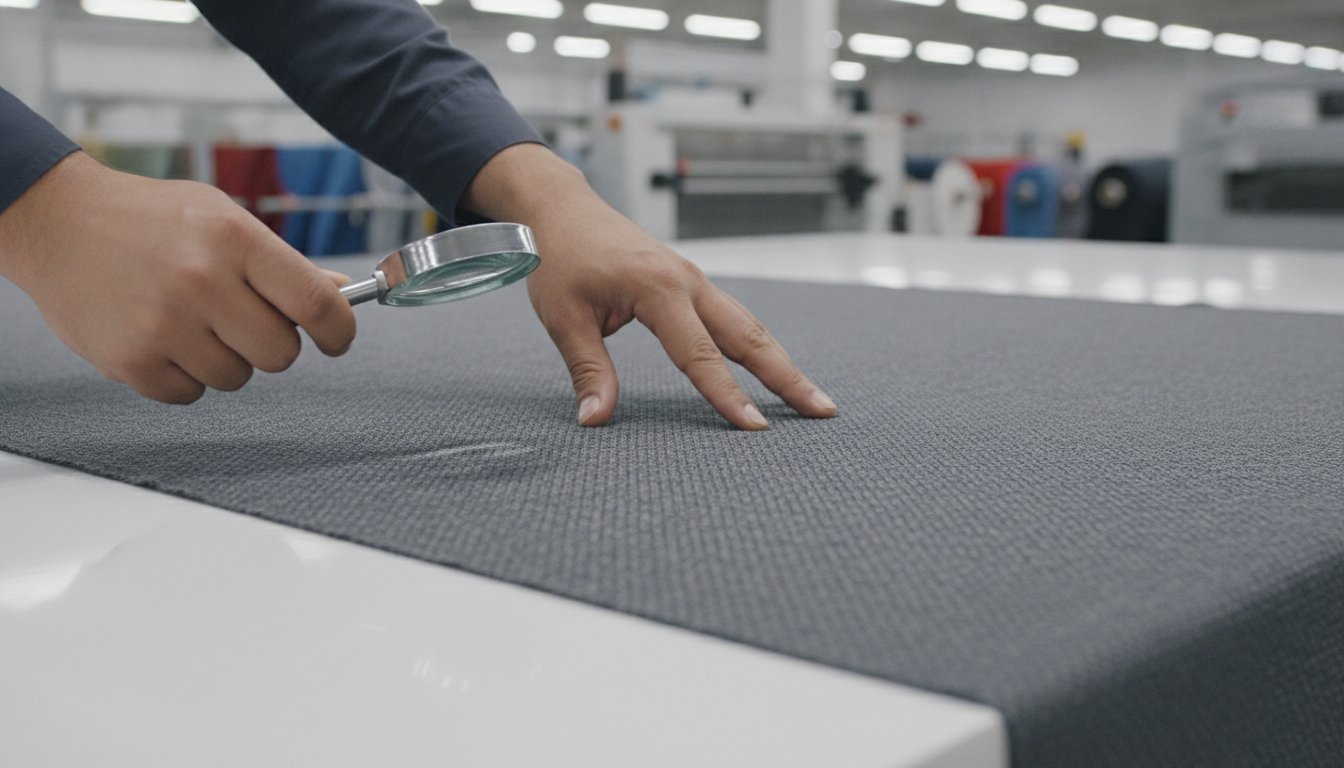

The most dangerous moment for your international supply chain isn't the manufacturing process itself; it's the final 24 hours before the container doors are sealed. You've invested significant capital and time into your product, yet the anxiety of receiving a shipment full of major defects remains a constant threat. It's a high-stakes gamble that no professional importer can afford to take. One oversight in the factory can lead to a surge in customer returns and permanent damage to your brand reputation.
We understand that navigating the technicalities of AQL sampling math and preventing factory manipulation can feel overwhelming. This guide provides the solution. You'll master the exact steps for a final random inspection to secure your supply chain and ensure every unit meets your quality standards. We'll walk you through the updated ISO 2859-1:2026 requirements, the critical 80/100 rule, and the data-driven methods used to convert production chaos into a clear "Go/No-Go" decision. By following this roadmap, you'll gain total control over your inventory before it leaves the factory floor.
Key Takeaways
- Understand why the "80/100 rule" is the non-negotiable standard for ensuring your inspection sample truly represents the entire production batch.
- Master the seven essential steps for a final random inspection to identify critical defects and secure your supply chain before shipment.
- Learn how to use the AQL framework to confidently interpret inspection reports and make objective "Go/No-Go" shipping decisions.
- Identify the three levels of defect classification to prioritize safety and functionality issues that could damage your brand reputation.
- Establish a clear action plan for failed reports, including mandatory factory re-works and secondary sorting protocols to mitigate financial risk.
Understanding Final Random Inspection (FRI) and the 80/100 Rule
A Final Random Inspection (FRI) acts as the definitive quality gate for international trade. It's a specific form of Pre-shipment inspection that occurs when your order is entirely finished. This process isn't just a cursory glance at the goods; it's a data-driven barrier designed to stop defective inventory from reaching your warehouse. For importers, this is the last moment of leverage. Once the goods leave the factory floor and the final payment is released, your ability to demand corrections disappears. Implementing the correct steps for a final random inspection is the only way to mitigate the financial risk of a total shipment loss.
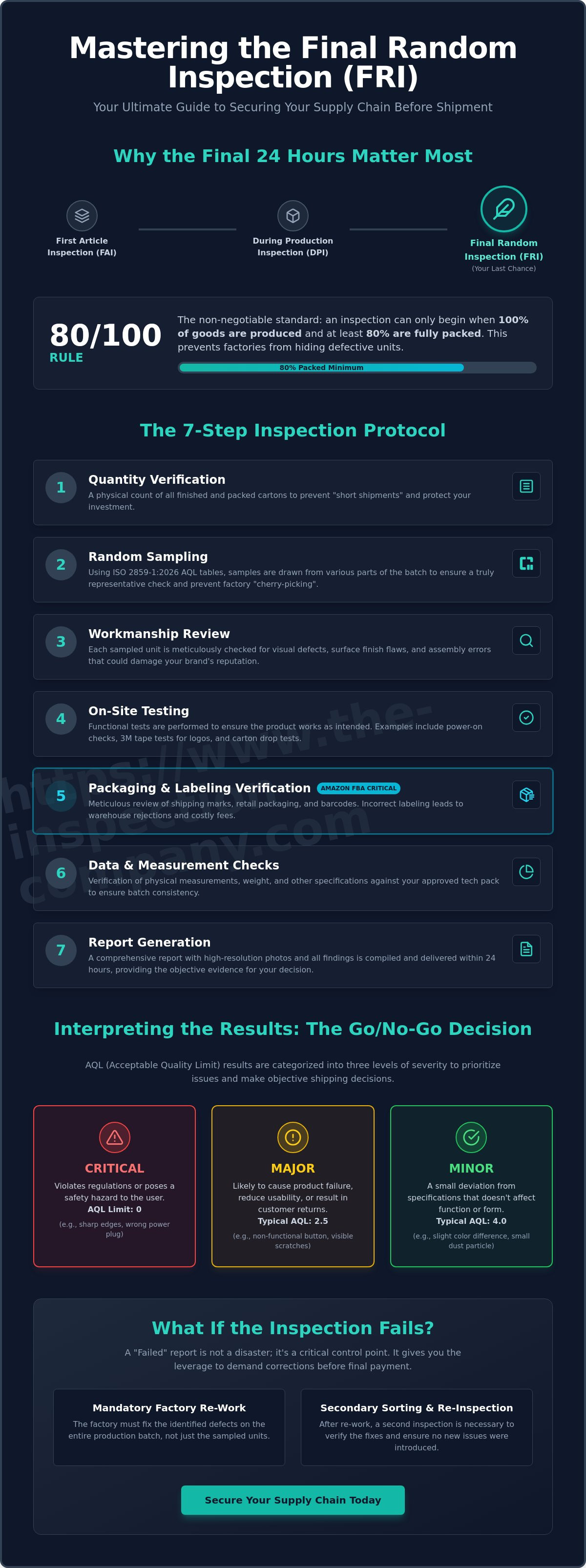
The reliability of this process hinges on the 80/100 rule. This industry standard requires that 100% of the goods are manufactured and at least 80% are fully packed in export cartons. Factories often try to push for earlier inspections to speed up their cash flow. You must resist this. If an inspector only checks a partial batch, the factory could easily hide defective units in the "unfinished" portion of the pile. The 80/100 rule ensures the sample is truly representative of the entire lot, giving you an accurate picture of the overall quality level.
Why Timing is Everything in Quality Control
Precision in timing prevents costly oversights. If you schedule an inspection too early, you miss defects that might emerge during the final assembly or packaging stages. This is why an FRI is distinct from a during production inspection, which focuses on catching errors while the lines are still moving. Waiting until the goods are at the port is equally risky. At that stage, any necessary re-works or sorting become logistically impossible and prohibitively expensive. The FRI happens at the factory, at the exact moment production ends but before the container arrives.
FRI vs. Other Inspection Types
It's helpful to view the quality process as a timeline. A First Article Inspection (FAI) happens at the start to check the prototype. A Container Loading Inspection happens at the very end to verify the quantity and loading process. The FRI sits in the middle as the final safety net for batch consistency, ensuring that the mass-produced units actually match your approved sample. It provides the objective evidence you need to either authorize the shipment or halt the process for necessary corrections.
The 7 Essential Steps for a Final Random Inspection
The execution of an FRI follows a rigorous protocol to ensure no detail is overlooked. These steps for a final random inspection provide a systematic framework to validate your order's integrity before it leaves the factory floor. This methodical approach transforms a massive production batch into a set of manageable, verifiable data points.
- Step 1: Quantity Verification. The inspector performs a physical count of all finished and packed goods. This prevents "short shipments" that lead to inventory gaps and financial friction.
- Step 2: Random Sampling. Using ISO 2859-1:2026 AQL tables, the inspector selects samples from various parts of the batch. This prevents the factory from "cherry-picking" only the best items for review.
- Step 3: Workmanship Review. Every sampled unit is checked for visual defects, surface finishes, and assembly issues. This identifies recurring manufacturing errors that could compromise your brand.
- Step 4: On-Site Testing. The inspector performs functional tests, such as power-on checks or 3M tape tests for logo durability, to ensure the product performs as intended under real-world conditions.
Packaging and Labeling Verification
Step 5 involves a meticulous review of shipping marks, retail packaging, and barcodes. For those utilizing an Amazon FBA inspection, this stage is critical. Incorrect labeling or non-compliant packaging can lead to expensive warehouse rejections and forced removals. We verify that every barcode is scannable and every carton meets specific carrier requirements to avoid these operational bottlenecks and unexpected fees.
Data Recording and Final Report Generation
Step 6 focuses on physical measurements and weight checks. The inspector compares these against your approved specification sheet to ensure batch consistency. Finally, Step 7 is the compilation of the inspection report. This document includes high-resolution photographic evidence of all findings and is delivered within 24 hours. If you have concerns about a specific production run, you can speak with a quality expert to tailor these steps to your specific product requirements.
Interpreting AQL Results and Defect Classification
The Acceptable Quality Limit (AQL) framework provides the mathematical foundation for your quality decisions. It removes subjectivity from the process by establishing clear, statistical boundaries for what constitutes a "Pass" or "Fail". Without this framework, the steps for a final random inspection would lack the authority needed to hold a factory accountable. AQL tables determine the maximum number of defective units allowed in a sample before the entire batch is rejected. This data-driven approach ensures your "Go/No-Go" decision is based on international standards rather than manufacturer promises.
Defects discovered during the inspection are categorized into three distinct levels of severity:
- Critical Defects: These include safety hazards or regulatory non-compliance issues that make the product unsellable or dangerous. There is typically a zero-tolerance policy for critical defects.
- Major Defects: These are functional failures or significant visual flaws that render the product unusable or likely to result in a customer return.
- Minor Defects: These represent small aesthetic imperfections that don't impact the product's function but may still deviate from the original specification.
How to Read an AQL Sampling Table
Reading an AQL table requires intersecting your total lot size with the designated inspection level, usually General Inspection Level II. This intersection reveals a "code letter" that dictates your exact sample size. It's a balance between cost and confidence. You don't need to check every unit, but you must check enough to reach a statistically significant conclusion. For a detailed breakdown of these tables, consult our guide on AQL Explained: The Ultimate Guide to Acceptable Quality Limit.
Common Red Flags During Sampling
Factories sometimes employ tactics to influence the inspection results. A common red flag is "cherry-picking", where the factory presents a specific stack of "perfect" cartons for the inspector to choose from. To ensure pre-shipment inspection integrity, our team insists on selecting cartons from the bottom and middle of the pallets. This prevents the manufacturer from hiding defective units deep within the warehouse. If you're concerned about factory transparency, contact our quality experts to discuss a customized inspection plan for your next shipment.
Beyond the Report: Navigating Results and Next Steps
The report is in your hands. Now, you must act. The technical data provided by the steps for a final random inspection acts as your commercial shield. If the result is a "Pass," the next logical move is a container loading inspection. This prevents the factory from substituting your inspected goods with unverified stock during the loading process. It's the final seal on your quality assurance process that ensures the batch you approved is the batch that actually ships.
If the batch fails, you must adopt a zero-tolerance approach to protect your brand. Demand that the factory conducts a 100% re-work or sorting of the goods. For high-stakes or high-value shipments, independent product sorting ensures that only perfect units reach your customers. Beyond fixing the current batch, require a Corrective Action Plan (CAP). This document forces the supplier to analyze why the failure occurred and what specific changes they'll make to prevent a recurrence in future orders.
Negotiating with Suppliers After a Failure
A failed report is a powerful negotiation tool. Use the documented defects to request price credits or replacement goods before the final payment is released. Mastering the steps for a final random inspection allows you to lead these negotiations from a position of strength. You should also ensure the factory pays for the re-inspection fee. This financial accountability encourages the supplier to take your quality standards seriously from the start of the next production run.
The Importance of Third-Party Authority
Relying on factory-provided photos is a recipe for financial loss and operational friction. Our European management team in Asia bridges the gap between international quality expectations and local manufacturing realities. We provide the meticulous, unbiased oversight needed for high-stakes operations where there's no room for error. Protect your shipment with a professional FRI today and eliminate the uncertainty of offshore production.
Secure Your Supply Chain for 2026 and Beyond
Reliable quality management isn't a luxury; it's a fundamental requirement for international trade security. By mastering the steps for a final random inspection, you've moved from reactive anxiety to proactive control. You now understand that the 80/100 rule and AQL sampling are your primary defenses against financial loss and brand erosion. These protocols ensure that your "Go/No-Go" decisions are backed by statistical truth rather than factory promises. Whether you're approving a perfect shipment or managing a complex factory re-work, you have the data needed to protect your bottom line.
The Inspection Company provides the meticulous oversight and European management standards required to enforce these protocols across Asia. With over 700 certified inspectors on the ground, we deliver detailed photo reports within 24 hours of the site visit. It's time to eliminate the uncertainty of offshore production and secure your inventory at the source. Book your final random inspection with The Inspection Company today to ensure your goods meet your exact specifications before they leave the factory gate.
Frequently Asked Questions
What is the difference between Pre-Shipment Inspection and Final Random Inspection?
Final Random Inspection is a specific type of Pre-Shipment Inspection. While the term pre-shipment covers any quality check performed before goods leave the factory, an FRI specifically requires that production is 100% finished. It relies on mathematical sampling to ensure the units checked are a true representation of the entire batch. It's the most common method used by importers to authorize final payments.
How much does a final random inspection typically cost in Asia?
Costs for an inspection in Asia are generally billed as a daily rate per inspector, often referred to as a man-day. The total price depends on the factory's geographic location and the time required to complete all technical steps for a final random inspection. You should look for all-inclusive rates that cover travel and report generation to avoid hidden administrative fees or unexpected expenses after the job is done.
Can I perform a final random inspection myself if I visit the factory?
You can visit the factory, but performing an objective, technical inspection requires specialized training and calibrated tools. Professional inspectors follow standardized AQL protocols that are difficult to replicate without experience. A neutral third party also provides a necessary buffer against factory pressure. Manufacturers often find it easier to manipulate a buyer's emotions than a professional's data-driven checklist.
What happens if the factory refuses to allow an inspector on-site?
A refusal is a critical red flag that usually suggests the factory is hiding significant defects or production delays. This action typically constitutes a breach of your purchase order terms. If a supplier blocks access, you should immediately halt all pending payments and demand a formal explanation. Transparent, reliable manufacturers understand that third-party oversight is a standard part of international trade and will cooperate with the process.
How many products are actually checked in a final random inspection?
The sample size is determined by your total order quantity and the chosen AQL level. For example, if you've ordered 3,500 units, an inspector might check 125 or 200 individual pieces to reach a statistically significant conclusion. This method allows you to gain a high level of confidence in the batch quality without the prohibitive cost of checking every single unit in the shipment.