A third-party inspection in Turkey for garments and home textiles is an on-site check of your finished goods against the tech pack, approved sample and packing list, done by an inspector who works for you and not for the factory. On clothing it covers measurements, stitching, shade, trims, labels and packing. On towels, bedding and curtains it adds fabric weight, fill weight, dimensions and set completeness, and most buyers book it as a pre-shipment check, with a during-production visit on first orders.
Turkey (Türkiye) is close to European buyers, works with short lead times and handles small repeat orders well. Those strengths also shape what goes wrong on the factory floor, so the checklist for a Turkish textile supplier differs in places from one written for a factory in Bangladesh or China.
Where Garments and Home Textiles Are Made in Turkey
Turkish textile production sits in a handful of clusters, and the location of your supplier affects inspection travel, timing and the type of product the factory knows best.
- Istanbul (Merter, Zeytinburnu, Bağcılar, Güngören, Esenyurt): cut-and-sew garments, women's fashion, knitwear and a dense network of small sewing workshops.
- Tekirdağ (Çorlu, Çerkezköy): dye houses, fabric finishing and larger knitting plants that supply Istanbul garment makers.
- Bursa: woven fabrics, curtain and upholstery fabric, bed linen.
- Denizli (including Buldan): towels, bathrobes, peshtemals and bed linen.
- İzmir and the Aegean region: garments, denim and cotton.
- Gaziantep and Kahramanmaraş: yarn, denim fabric, nonwovens and machine-made carpets.
The Inspection Company has inspectors in Istanbul, İzmir, Ankara and other major hubs, and can usually reach a supplier within 24 to 48 hours. For a mill outside the big cities, such as a towel producer in Denizli, send the full factory address when you request a quote and ask whether travel is included in the man-day price. You can see the full scope of our work in the country on our Türkiye inspection services page.
What Makes Turkish Textile Orders Different to Inspect
Turkish suppliers are often chosen for speed and flexibility. Each of the points below follows from that, and each changes how the inspection should be planned.
Short runs and tight shipping windows
Orders of a few hundred to a few thousand pieces per style are common, and many ship within weeks of fabric arrival. Packing often finishes the evening before the truck arrives. If you book the final inspection too early, the inspector finds 40% of the goods packed and cannot draw a valid sample. Book only when the factory confirms production is complete and at least 80% is packed in export cartons.
Sewing sent out to workshops
Many Istanbul suppliers cut in-house and send sewing to outside workshops, known locally as fason production. One style can be sewn in two or three places. The result shows up as cartons of the same style with different stitch density, different thread shades or different seam allowances. An inspector who opens only the first ten cartons on the pallet will miss it. Ask for the sample to be drawn from as many cartons as practical, and ask the supplier in writing which workshops sewed your order. A factory audit before the first order tells you how much of the work is done in-house.
Many small dye lots
Short runs mean fabric is dyed in small batches, sometimes at different dye houses in Çorlu or Bursa. Shade variation appears between body and sleeve panels cut from different rolls, between garments in the same carton, and between the pillowcase and the sheet in a bedding set. Shade checks therefore carry more weight on Turkish orders than on long, single-lot runs.
Road transport to Europe
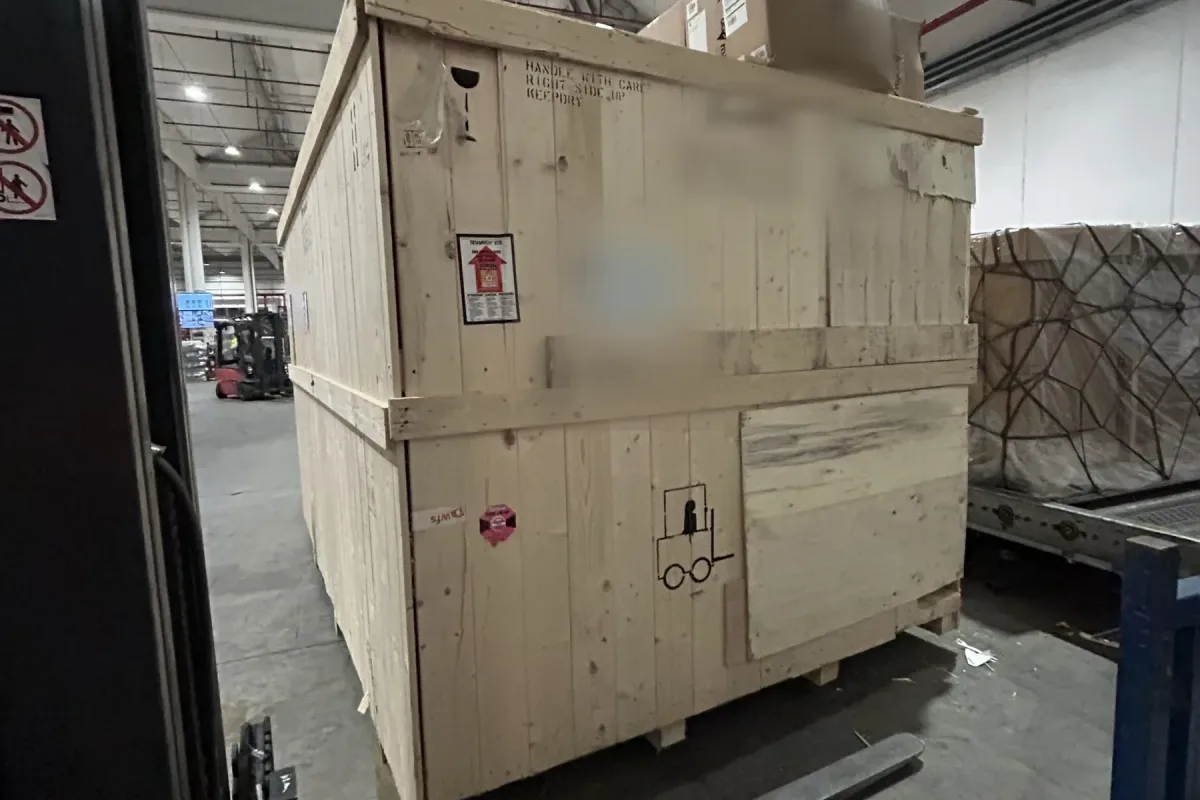
A large share of orders to EU countries leaves by truck rather than sea container. The loading check then covers the trailer: floor condition, tarpaulin or box body condition, how the cartons are stacked and the seal number written on the documents.
Bayram holidays
Factories close for Ramazan Bayramı and Kurban Bayramı, and the public holiday is often extended to nine days. The dates move about 11 days earlier each year. Production in the week before the holiday is rushed, and goods packed in that week deserve a full inspection rather than a waiver.
What a Garment Inspection in Turkey Checks
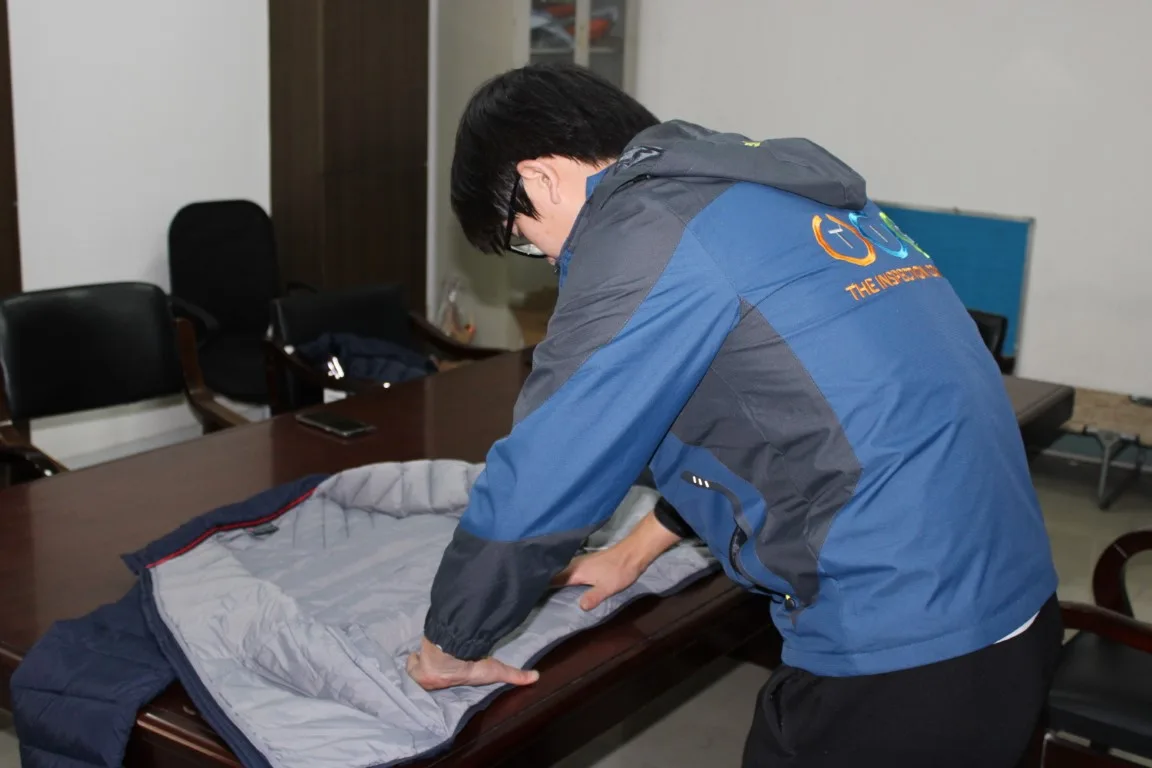
A garment inspection follows your tech pack and approved sample. A typical checklist for a Turkish cut-and-sew order looks like this:
- Quantity and packing status: total quantity per style, colour and size against the purchase order, with the share packed in cartons.
- Measurements: a measurement sample, often five pieces per size and colour or as your spec states, measured flat against the size chart. Many size specs allow ±1 cm on chest, waist, hip and body length and ±0.5 cm on smaller points such as neck drop or cuff opening. If your spec has no tolerances, the inspector has nothing to judge against.
- Workmanship: stitches per inch against spec, open or skipped seams, puckering on side seams and zips, raw edges, uneven hems, loose threads, needle holes and oil spots.
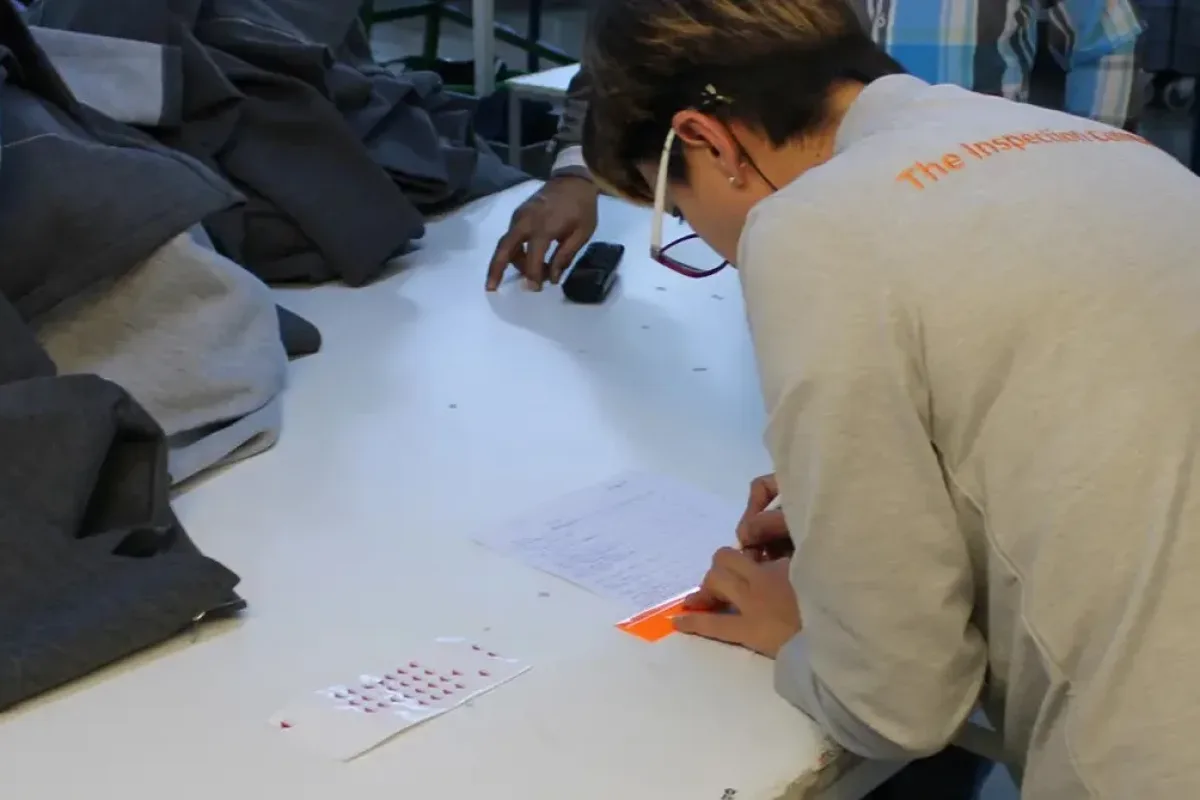
- Shade: pieces compared to the approved sample and to each other in a light box under D65 daylight, with a second light source if your spec names one. Panels within one garment are checked as well.
- Trims and function: zips run up and down several times, buttons and snaps pulled at the force your spec sets (90 N is a common figure), drawcords checked for length and secure ends, rivets checked for sharp edges.
- Print and embroidery: position measured from the high point shoulder or centre front, tape test on print adhesion, a stretch test on prints over knit fabric for cracking.
- Labels and tags: fibre content, care symbols, country of origin, size label, hangtag price and barcode scanned against the purchase order.
- Needle detection: where your buyer requires it, a check that the factory's detector is calibrated and that packed goods pass through it.
- Packing: fold, polybag size and warning text, size ratio per carton, carton marks, carton dimensions and gross weight, and a carton drop test.
Our garment inspection services page lists the checks by category for woven garments, knitwear and outerwear.
Denim from İzmir and the southeast
Denim needs a few extra checks. Leg twist shows when the side seam moves towards the front of the leg; it comes from fabric torque and is measured at the hem. Washed denim is sorted into shade groups after laundry, so the inspector checks that one carton holds one shade group and that garments match the approved wash standard. Shank buttons and rivets get a pull test, and the inside of the waistband is checked for sharp rivet backs.
Knitwear and jersey
Single jersey T-shirts and polos often show spirality, where the side seam twists around the body after washing. A wash test on a few pieces, followed by re-measuring, catches both spirality and shrinkage beyond spec. Necklines are stretched by hand to check recovery, and rib collars on polos are checked for waviness.
Defects Found Most Often on Turkish Garment Orders
The defects below are the ones that most often push a Turkish garment lot over its AQL limit. Most trace back to the points described above.
- Shade difference between front and back panels, or between garments in one carton.
- Measurements out of tolerance on one size only, usually the largest or smallest, because the grading was done in a rush.
- Different stitch density or thread shade between cartons sewn in different workshops.
- Care labels showing the wrong fibre content after a fabric substitution.
- Print or embroidery a few centimetres off position on part of the lot.
- Wrong size ratio inside cartons, or carton marks that do not match the packing list.
- Stains from chalk, oil or handling, and loose threads left after a hurried final trim.
Home Textile Inspection in Turkey: Towels, Bedding and Curtains
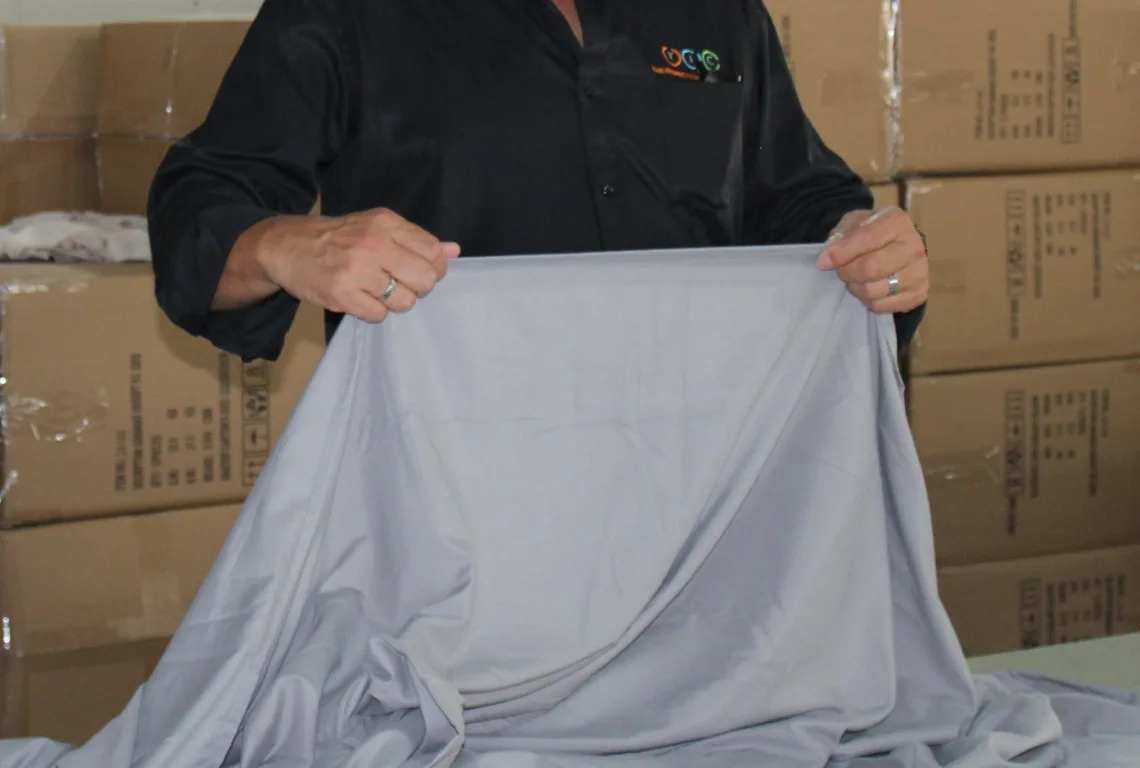
Home textiles are sold as sets and judged by touch and weight as much as by appearance. The inspection therefore includes more weighing and measuring than a garment check. The checks listed on our home textile inspection page apply here, with these product details.
Towels and bathrobes from Denizli
- GSM: the inspector weighs whole towels and divides by the measured area. Buyers commonly accept ±5% against the stated GSM. A 500 GSM bath towel weighing out at 450 GSM is a major defect, and the customer feels it.
- Dimensions: length and width against spec, measured after the towel has rested flat.
- Border and hem: dobby border straight and parallel to the hem, hem stitching closed at both ends, hanging loop secure.
- Pile: pulled loops, bald patches, uneven pile height.
- Shedding and colour bleed: rubbing the towel with a dark cloth for lint, and a wet rub with a white cloth for colour transfer.
- Absorbency: a drop of water placed on the pile should sink in quickly; your spec can set a limit in seconds.
Bed linen, duvets and pillows
- Thread count: counted with a pick glass, warp plus weft threads per square inch. Counting multi-ply yarns as several threads inflates the figure, so the inspector reports how it was counted.
- Fitted sheets: pocket depth and elastic around the full edge or corners only, as specified.
- Duvet covers: closure type, number and spacing of buttons or press studs, zip function.
- Set completeness and shade: each set holds the right pieces, and the pillowcases match the sheet and duvet cover in shade.
- Duvets and pillows: finished weight against spec, quilting or channel stitching straight and closed, fill spread evenly when checked by hand, no fibre or feather coming through the casing.
Curtains from Bursa
- Size: width and drop against spec, hems straight along the full width.
- Headings: eyelet spacing and secure fit, header tape gathering evenly, no rust marks on metal rings.
- Pairs: both panels in a pair match in shade and pattern position.
- Blackout lining: held up to a light source to find pinholes or thin areas in the coating.
Fabric faults found at this stage are expensive, because the fabric has already been cut. On larger programmes, a roll check at the mill using the 4-point system, described on our fabric inspection page, moves that risk earlier.
AQL Settings for Garment and Home Textile Orders
Most garment and home textile buyers inspect at General Inspection Level II under ANSI/ASQ Z1.4 (equivalent to ISO 2859-1), with these limits: critical defects 0, major defects 2.5, minor defects 4.0. Critical defects cover safety issues such as a broken needle in a garment or small parts on children's clothing. Major defects are those a customer would return the product for. Minor defects are small deviations that do not affect use.
For home textile sets, agree before the inspection what one unit is. If a bedding set of one duvet cover and two pillowcases counts as one unit, a shade mismatch between the pillowcases is one defective unit. If each piece counts separately, the lot size triples and so does the sample size. You can check other lot sizes with our AQL calculator.
Which Inspection Stage to Book in Turkey
The right stage depends on how well you know the supplier and how much of the risk sits in the fabric.
- Pre-production inspection: checks fabric, yarn, filling and trims before cutting. Worth booking for towel orders, where yarn count and greige weight decide the final GSM, and for any order with a new fabric supplier.
- During production inspection: done when 20% to 50% of the goods are sewn. On a first order with an Istanbul supplier that subcontracts sewing, this is the visit that catches a workshop problem while most of the order can still be corrected.
- Pre-shipment inspection: the final AQL check on finished, packed goods before you pay the balance. Our pre-shipment inspection service is the minimum most buyers book on every Turkish order.
- Loading inspection: confirms carton count, condition and seal on the container or truck trailer. Useful on mixed loads and on consolidated trucks where your cartons share space with other shippers.
A common pattern is a during-production check plus a pre-shipment inspection on the first two or three orders, then pre-shipment only once the supplier has a clean record. The same staged approach is set out for other countries in our guides to third-party inspection in Vietnam and third-party inspection in China.
Labelling Checks for EU and UK Buyers
Labelling errors are cheap to fix at the factory and expensive at the border or in a marketplace listing. An inspector checks what is printed on the goods against your spec and the applicable rules. Lab tests are a separate step.
- Fibre content: in the EU, textile labels must use the fibre names and percentages set by Regulation (EU) No 1007/2011. The inspector confirms the label matches your spec and flags a label that changed after a fabric substitution.
- Care symbols: checked against the care instructions in your spec, including wash temperature and whether tumble drying is allowed.
- Certification claims: where a hangtag carries an OEKO-TEX or organic cotton claim, the inspector records the certificate number and checks it against the copy the supplier provided. Whether the fabric actually meets the standard is a lab question.
- Origin and size labels: origin marking present and correct, size labels matching the size in the polybag and on the carton.
Actual fibre composition, colourfastness, pH and restricted substances need a lab. Our sample testing service can draw samples during the inspection so the tested goods are the goods that ship.
How to Prepare for a Third-Party Inspection in Turkey
Most inconclusive reports come from missing information, not from the inspection itself. Before you book, check that you can tick each point:
- The tech pack, size chart with tolerances and bill of materials are sent with the booking.
- An approved, signed sample is held at the factory, and you send photos of it to the inspection company.
- Your defect list says what counts as critical, major and minor for this product.
- For sets, the unit of inspection is defined.
- The factory has confirmed in writing that production is complete and at least 80% is packed on the inspection date.
- The factory knows the inspector needs a light box, a scale, a table and access to the warehouse.
- You know which workshops sewed the order.
- Your purchase contract states what happens after a failed inspection: rework, re-inspection at the supplier's cost or price discussion.
The Inspection Company works only for the buyer and takes no commission from suppliers. Inspections are run to German QC standards under European management, and our geo-tracking records when the inspector checked in and out of the factory. You get a quick result on the day and a photo-backed report with a pass, fail or pending verdict within 24 hours, which leaves time to hold the truck if the lot fails.
If you are placing a garment or home textile order in Turkey, send us your tech pack, order quantity and factory address for a free quote, and we will propose the inspection stage, AQL settings and man-days that fit the order.
Frequently Asked Questions
How much does a third-party inspection in Turkey cost?
Inspections are priced per man-day. The number of man-days depends on product type, quantity, number of styles and factory location; most single-style garment or towel orders need one man-day. We confirm price and availability within a few hours of your request.
How quickly can an inspector reach a factory in Turkey?
In Istanbul, İzmir, Ankara and other major hubs, an inspector can usually be at the factory within 24 to 48 hours of booking. For towns such as Denizli or Uşak, send the full address so the date can be confirmed with the quote.
Can you check goods that leave Turkey by truck instead of container?
Yes. The loading inspection covers truck trailers in the same way as containers: trailer condition, carton count and condition, stacking and the seal number on the documents.
What AQL should I use for towels and bed linen?
Most buyers use General Level II with AQL 0 for critical, 2.5 for major and 4.0 for minor defects. Define whether a set or a single piece counts as one unit before the inspection, because it changes the sample size.
Does the inspector test fibre content or OEKO-TEX compliance on site?
No. The inspector checks labels and certificate numbers against your documents. Fibre content, colourfastness and chemical tests are done by a lab on samples drawn during the inspection.
When will I receive the inspection report?
You receive a quick result on the day of the inspection and the full photo-backed report within 24 hours.