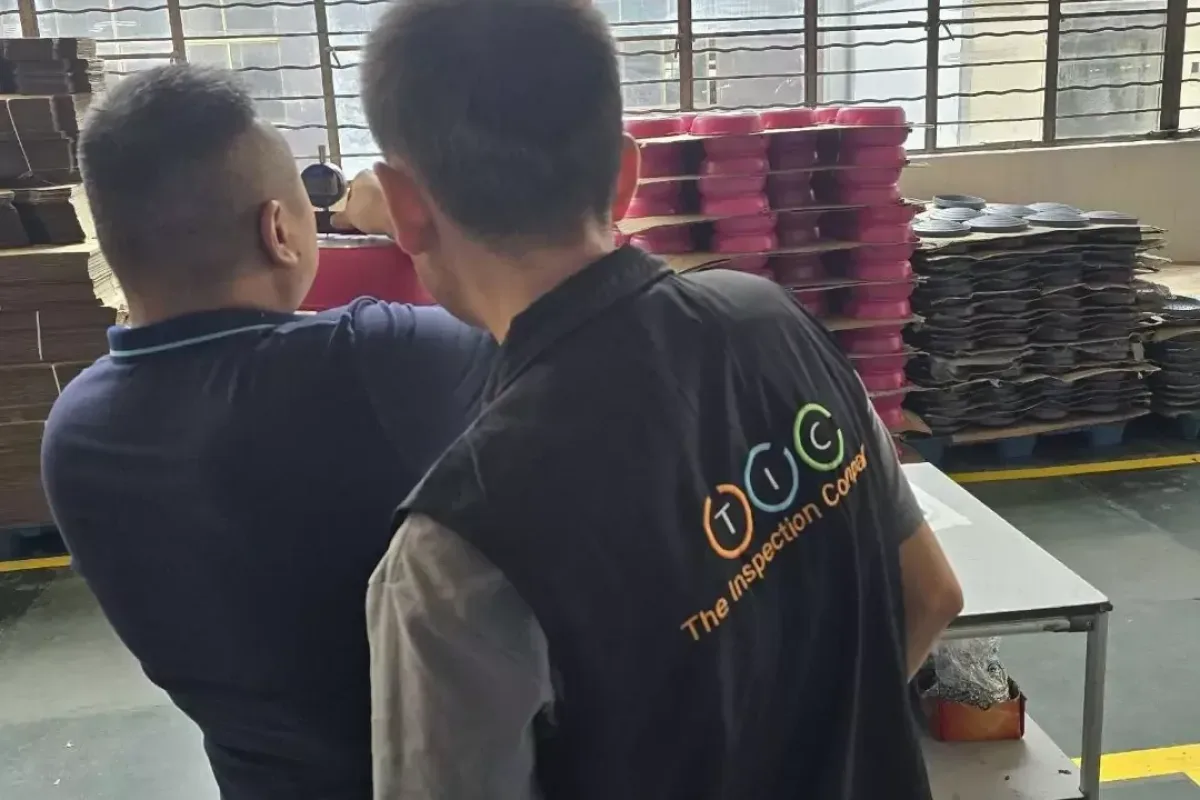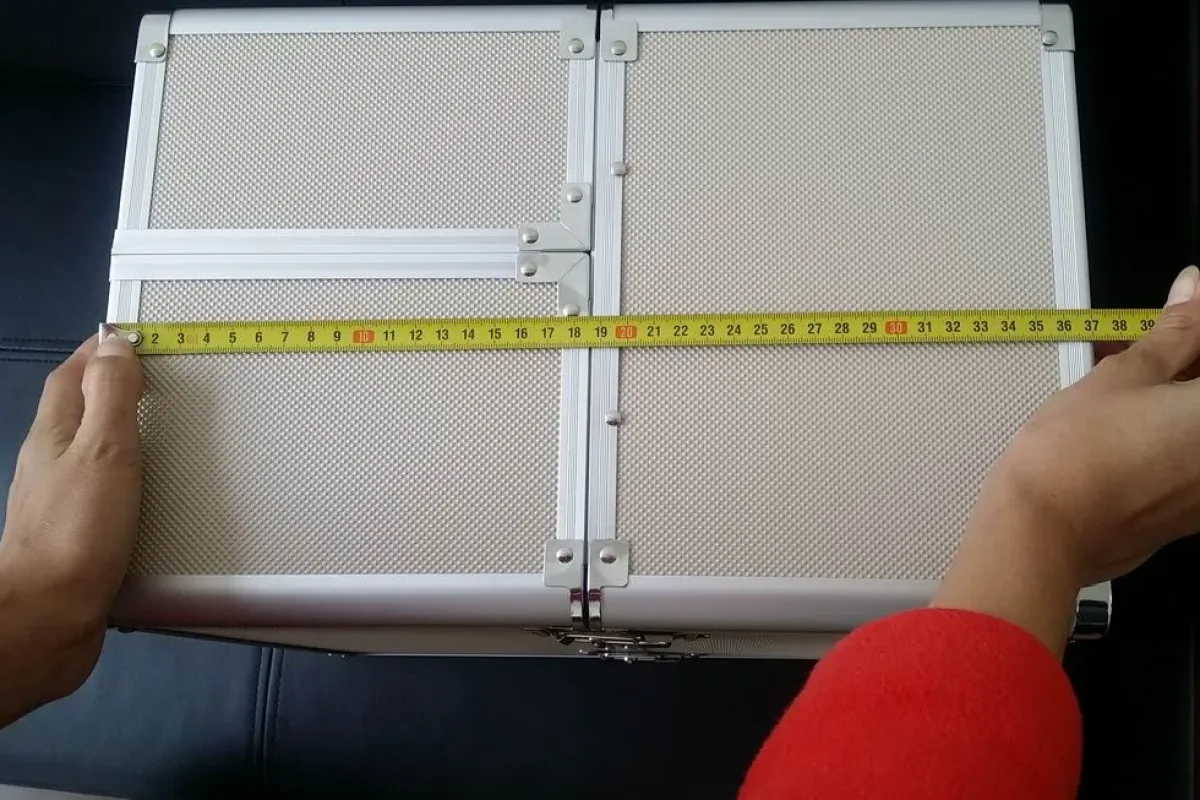
A third-party inspection in Vietnam is an on-site check of your goods by an inspector who works for you and is paid by you, carried out at the factory before you release payment or shipment. For furniture, garments and footwear, the inspector draws a random sample, measures and tests it against your specification and approved sample, and uses AQL sampling to give a pass, fail or pending result. Below you will find what gets checked on each product, the defects that come up most often in Vietnamese factories, and how to set up the inspection so the report gives you a clear decision.
What a Third-Party Inspection in Vietnam Covers
Third-party inspections in Vietnam follow the same production stages as anywhere in Asia. You can book one stage or combine several, depending on how well you know the supplier and how much the order is worth.
For most orders the pre-shipment inspection of finished goods is the minimum. It is your last chance to find a problem while the goods are still at the factory and the balance payment is still in your hands. The earlier stages exist because some defects, such as the wrong fabric or wet timber, cannot be fixed once the whole order has been made from them.
Independence matters more than the inspector's job title. A factory's own QC staff, or a sourcing agent paid a commission on the order, has a reason to pass a borderline lot. An inspection is independent when you book and pay for it, and the inspection company takes no money from the supplier.
Where Furniture, Garment and Footwear Factories Are in Vietnam
Vietnam's furniture, footwear and garment factories are concentrated in the south, around Ho Chi Minh City, Binh Duong, Dong Nai and Long An. Central Vietnam has garment plants around Da Nang and outdoor wood furniture makers around Quy Nhon. The north, around Hanoi and Hai Phong, is better known for electronics but also has a large garment base.
Vietnam merged many provinces in 2025, and Binh Duong is now part of Ho Chi Minh City. A supplier's registration documents may therefore show a different province from the one they quote by email. When you book, give the inspection company the full street address, the industrial park name and a contact person at the factory, so the inspector arrives at the production site and not at a sales office in the city.
Defect Causes That Come Up Often in Vietnamese Factories
Most defects found in Vietnam are the same as elsewhere: wrong measurements, poor finishing, damaged cartons. Four causes appear often enough that your checklist should address them directly.
- Humidity. The north has a damp spring from roughly February to April, and the south has a rainy season from about May to October. Wood, rattan, leather and cotton absorb moisture, and goods sealed damp in polybags can grow mould during several weeks at sea.
- Materials from China. A large share of fabric, trims, zippers, sole components and hardware is imported from China. When a delivery is late, some factories substitute a local or cheaper material without telling you.
- Hidden subcontracting. Busy factories pass sewing, sanding, painting or packing to smaller workshops that nobody has audited. Warning signs include your style not running on any line, or finished goods arriving at the factory already packed.
- Labour turnover after Tet. Many workers do not return to the same factory after the Lunar New Year. Lines run with new operators for several weeks, and stitching and finishing defects tend to rise.
Our guide to sourcing from Vietnam covers supplier vetting, document checks and payment terms in more detail.
Furniture Inspection in Vietnam: What the Inspector Checks
Furniture inspections in Vietnam concentrate on wood moisture, finish, assembly and packing, because those faults turn into claims once a container is opened at destination. Vietnamese furniture is mostly solid wood such as acacia, rubberwood and eucalyptus, panel furniture in MDF or particleboard, rattan and natural fibre pieces, and outdoor sets.
Wood moisture and cracking
Wood moisture is the first thing to measure on Vietnamese furniture. The inspector takes moisture meter readings on several pieces drawn from different cartons and records each reading in the report. Indoor furniture is typically specified at 8% to 12%. Wood packed above about 12% shrinks once it dries in a heated home, which opens joints, splits table tops and loosens veneer. On outdoor acacia and eucalyptus, the inspector also looks for open cracks at the end grain and for oil finishes that have not cured before packing, which leave sticky surfaces and stained cartons.
Finish, colour and surface defects
Finish is checked against a signed colour panel under a defined light source, usually D65 daylight. The inspector compares shade and gloss, and looks for runs, orange peel, sanding marks, tool marks and glue squeeze-out at joints. On sets such as a dining table with six chairs, every piece in the sampled set is compared side by side, because colour and grain mismatch between pieces of one set is one of the most frequent findings. Rattan and woven pieces are checked for weave consistency, loose ends and white or green mould spots.
Assembly, stability and moving parts
Assembly is tested using only the hardware, tools and instructions packed in the carton. If a screw is missing or a pre-drilled hole is out of position, your customer will hit the same problem at home. Assembled chairs, tables and cabinets are placed on a flat surface and checked for rocking; your specification should give a limit, for example a maximum of 2 mm. Drawers are opened and closed fully, doors are checked for even gaps and sag, and casters and hinges are worked through their full range.
Packing and container loading
Furniture takes much of its damage in transit, so packing deserves as much attention as the product. The inspector checks corner and edge protection, carton grade against your spec and carton markings against the packing list, then runs a carton drop test to the procedure written in your specification. Wooden pallets and crates must be heat-treated and stamped to ISPM 15 for most destination markets. During loading, the container is checked for holes, a wet floor and odours, and desiccant bags or poles should be fitted before the doors close.
Findings that most often fail a furniture lot in Vietnam:
- Moisture readings above the specified limit
- Wobbling legs on assembled chairs and tables
- Shade or grain mismatch between pieces of one set
- Veneer lifting or chipped edge banding
- Missing fittings, dowels or assembly instructions
- Weak corner protection, or cartons that do not match the packing list
The full checklist by material is on our furniture inspection services page.
Garment Inspection in Vietnam: Measurements, Shade and Workmanship
Garment inspections in Vietnam measure a sample across the whole size run and check workmanship, shade, trims and labels against your tech pack and approved sample. A garment can look right on a hanger and still be 2 cm out at the chest, which a photo from the supplier will never show.
Measurements across the size run
The inspector measures a set number of pieces per size at the points of measure on your size chart, typically chest, body length, sleeve length, waist, hip and inseam. Each reading is compared with the chart and its tolerance, for example chest width 56 cm ±1 cm. A size chart without tolerances leaves the inspector no basis for a decision, so add them before production starts. Garments are measured laid flat and unstretched, which matters most for knitwear.
Workmanship and shade
Workmanship checks cover open or skipped seams, puckering, uneven hems, crooked plackets, loose threads, needle holes and machine oil stains. Shade is compared with the approved swatch under D65 light, both between garments in the lot and between panels of the same garment. Panel shading happens when the parts of one garment are cut from different fabric rolls, and it is a common reason for a garment lot to fail. Print and embroidery placement is measured from a fixed reference point such as the high point shoulder.
Trims, labels and safety checks
Zippers are run over their full length several times, snaps and buttons are pulled, and drawcords are checked for length and secure ends. Care labels must match the actual fibre content and the labelling rules of the destination market, with the correct country of origin. Children's garments usually need needle detection on every piece before packing. Colour fastness, shrinkage and fabric weight, for example 180 g/m² ±5%, need laboratory testing, which you can arrange through sample testing before bulk production starts.
Folding and carton packing
The last part of a garment inspection checks folding, polybags, hangtags and barcodes, and opens cartons to confirm the size and colour assortment matches the packing list. In the rainy season, damp cartons, condensation inside polybags and a musty smell are worth recording with photos. Our garment inspection services page lists checks by category for woven garments, knitwear and outerwear.
Footwear Inspection in Vietnam: Bonding, Sizing and Pairing
Footwear inspections in Vietnam focus on sole bonding, sizing, pairing and appearance. Most of Vietnam's shoe factories are in the south, and many produce athletic and casual shoes where the upper is cemented to the sole unit.
Bond strength is checked in two ways. The inspector flexes each sampled pair and pulls by hand at the toe and heel to look for any opening between upper and sole. Where your checklist includes it, one or more pairs are pulled apart in a destructive test and the bond is judged against your specification. Visible sole separation is normally classed as a major defect, and several pairs showing it in one lot point to a cementing or pressing problem on the line.
Pairing and sizing checks catch faults that customers notice the moment they open the box:
- Left and right shoes compared for colour, height, toe shape and stitching line
- Both shoes in a box confirmed as the same size and a true left and right
- Size marking on the shoe, the box label and the carton matching each other
- Insole or outsole length measured against the size spec on pairs pulled across the size run
Appearance checks look for glue overspill on the upper, uneven stitching on overlays, scuffs, colour mismatch between upper, sole and trims, and loose or sharp eyelets and buckles. Shoeboxes are opened to look for mould on leather and textile linings and to confirm silica gel sachets are packed where specified. Crushed shoeboxes are a frequent cause of damage claims, so carton strength and stacking height are worth adding to a container loading check. The footwear inspection services page sets out the checklist by shoe type.
Setting AQL Levels for Vietnamese Orders
Pass or fail at the pre-shipment stage is normally decided with the sampling tables in ISO 2859-1, which match ANSI/ASQ Z1.4. The usual setting for furniture, garments and footwear is zero critical defects, AQL 2.5 for major defects and AQL 4.0 for minor defects, at general inspection level II. An order of 5,000 pieces falls in the 3,201 to 10,000 lot size range, code letter L:
For a new Vietnamese supplier, tightening major defects to AQL 1.5 for the first few orders gives a stricter check. Agree the levels in writing with the factory before production, together with a defect list that classes each defect as critical, major or minor. For furniture the counting unit is usually pieces or sets, and for footwear it is pairs, so state the unit in your purchase order. Our guide to AQL table calculation explains how to find the sample size and acceptance numbers for any lot size.
Which Inspection Stages Each Product Needs
The right combination of stages depends on where each product usually goes wrong. This table is a starting point for orders with a supplier you have not used before.
Once a supplier has passed several orders in a row, many buyers drop to a pre-shipment inspection only. Keep a during production inspection for orders made in February and March, when post-Tet turnover puts new operators on the lines, and for any order where the factory has changed its material source.
Preparing for an Inspection in Vietnam
An inspection report is only as useful as the documents behind it. Send the inspection company these before the booking date:
- The specification or tech pack with dimensions and tolerances
- Photos of the approved sample, with an instruction to the factory to keep the signed golden sample on site for the inspector
- The purchase order quantity and the packing list
- AQL levels and your defect classification
- Label, barcode and shipping mark artwork
- Any on-site tests you want: moisture readings, drop test, pull test, needle detection
- The confirmed production schedule and the full factory address
Book the pre-shipment inspection for when the factory confirms that 100% of the goods are finished and at least 80% are packed. If the factory is still sewing or packing on the day, the inspector cannot draw a fair random sample and you may end up paying for a re-inspection. Avoid the last few days before Tet, when factories rush to finish. If a factory pushes back or keeps moving the date, read our guide on what to do when a supplier refuses inspection before you release any payment.
The Inspection Company has inspected in Vietnam since 2007, with local inspectors in Ho Chi Minh City, Hanoi, Da Nang and Hai Phong, so a booking usually reaches the factory within 24 to 48 hours. Management is European and inspections follow German QC standards. The inspector's check-in and check-out at the factory are geo-tracked, we take no commission from suppliers, and you receive a quick report on the inspection day and the full photo-backed report with a pass, fail or pending result within 24 hours. Coverage details are on our Vietnam inspection page.
What Happens After a Failed Inspection
A failed inspection gives you a documented reason to hold the balance payment. The usual options are rework followed by a re-inspection at the supplier's cost, 100% sorting of the lot to remove defective units, or a price reduction if the defects are cosmetic and the goods can still be sold. Write these terms into the purchase contract before production: your right to inspect at any stage, the AQL levels that apply, and who pays for a re-inspection. On FOB terms you control the booking with your forwarder, so the goods stay at the factory until you have read the report.
To book a third-party inspection in Vietnam, send us the factory address, product details and order quantity through our quotation form, and we will recommend the inspection stages for your furniture, garment or footwear order and quote a fixed man-day price.
Frequently Asked Questions
How much does a third-party inspection in Vietnam cost?
Most inspections in Vietnam are priced per man-day, and the total depends on the product, the order quantity and the factory location. Send the details for a free quote, which is usually confirmed within a few hours.
How quickly can an inspector reach a factory in Vietnam?
With local inspectors in Ho Chi Minh City, Hanoi, Da Nang and Hai Phong, The Inspection Company can usually reach a Vietnamese factory within 24 to 48 hours of booking.
What moisture content should furniture from Vietnam have?
Indoor furniture is typically specified at 8% to 12% wood moisture content. Put the limit in your specification so the inspector can fail readings above it.
Can sole bonding be checked without destroying the shoes?
Yes. Flexing and hand-pulling at the toe and heel do not damage the pair. A full pull test destroys the sampled pair, so it is only done when your checklist includes it.
When should I book the pre-shipment inspection?
Book it when 100% of the goods are produced and at least 80% are packed. Avoid the final days before Tet, when factories rush production and packing.