Damaged shipping container risks come down to a short chain of events: a roof pinhole, a torn door gasket, a wet floor or a bad stow lets water, impact or theft reach your goods, and the loss lands on your margin because insurers, carriers and suppliers all have contract terms that limit what they pay. You reduce the risk by checking the container before loading, supervising how the cargo goes in, recording the seal and keeping evidence that shows where the damage started.
A dry container with a sound roof costs nothing extra. Finding out at destination that it was neither costs a share of the margin on the whole order, and the figures below show why that share is larger than most buyers expect.
Where Damaged Shipping Container Risks Start
Damaged shipping container risks start with the box itself. Containers stay in the global pool for many years and pass through many depots, so the unit that arrives at your factory gate can carry damage from earlier voyages. The faults inspectors find most often are these:
- Roof punctures and pinholes, often near the corner castings or where another container has been set down hard on top. Rain and condensation drip straight onto the top tier of cartons.
- Worn or torn door gaskets that let rain and spray in at the door end, which is also where the load is least protected.
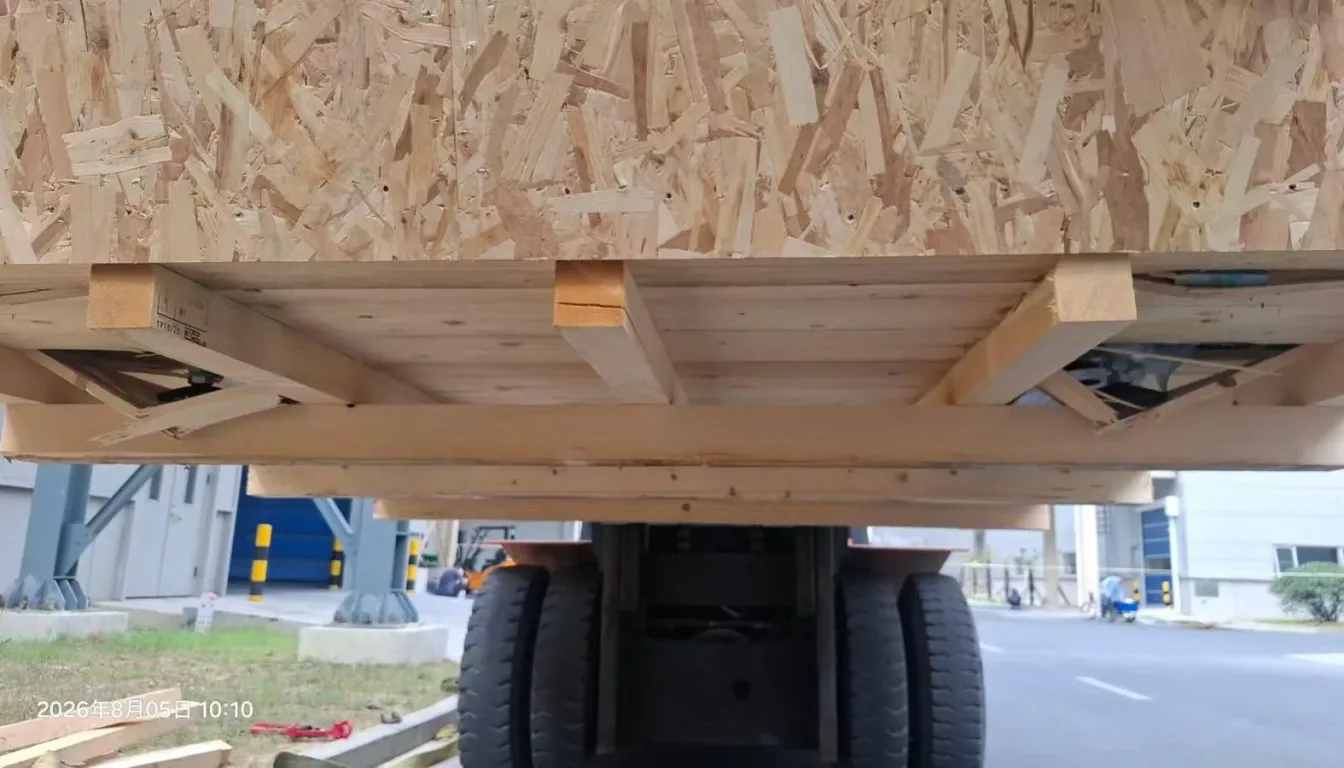
- Floor damage: broken or delaminated plywood boards, protruding nails, oil stains and soft spots that forklift wheels can push through.
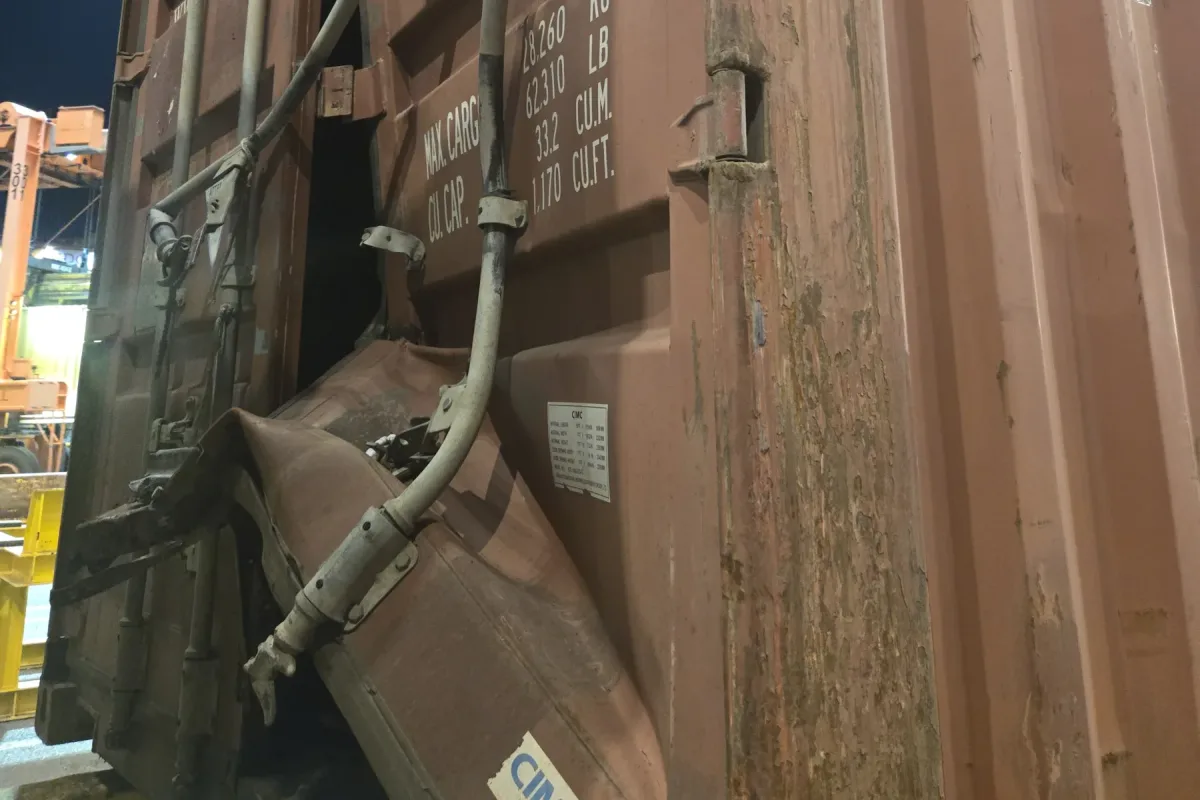
- Side panel holes, cracked welds and rust that has eaten through the steel.
- Residue and odour from a previous load such as chemicals, fish or fertiliser, which can transfer into textiles, food packaging and corrugated board.
- Bent locking bars and damaged cam keepers, which make the doors hard to close properly and easier to open without breaking the seal.
Some of these faults are visible from the yard. Others only show from inside with the doors closed, which is why a container that looks fine from the outside can still let daylight through a roof hole no bigger than a pen tip.
The second source of risk is how cargo goes into a sound container. A clean, dry box still causes damage if heavy cartons sit on light ones, if a wide gap is left at the door end without bracing, or if cartons are loaded in the rain. Loading faults are covered further down because they sit behind many of the disputes about who pays.
How a Damaged Container Turns Into Lost Margin
Damage from a leaking or faulty container cuts margin harder than the damaged percentage suggests. By the time the doors open at destination, you have paid for the goods, the ocean freight, the duty and the inland haulage on every carton, including the ones you can no longer sell.
A damaged container also brings costs that rarely appear in the original landed cost calculation:
- Sorting labour to separate sound cartons from wet or crushed ones, and repacking into new master cartons.
- Disposal fees for goods that cannot be sold, which applies quickly to food, cosmetics and anything showing mould.
- Extra storage, demurrage or detention while the container is held for a surveyor.
- Replacement stock, often sent by air to meet a delivery date.
- Retailer chargebacks or penalties for short or late delivery.
- Staff time spent on claim files, emails and supplier negotiation.
The example below uses round, illustrative numbers to show the effect. The figures are not taken from a real shipment.
In this example, damage to 12% of the cartons removes about 47% of the gross margin. The only way to win part of it back is a successful claim against an insurer, a carrier or the supplier.
Why Cargo Claims Rarely Cover the Full Loss
Cargo claims for container damage rarely cover the full loss because every party that might pay has terms that limit or exclude its liability. You need to know these limits before the damage happens, because they decide what evidence you have to collect at origin.
Cargo insurers
Most marine cargo policies, including those written on the Institute Cargo Clauses, exclude loss caused by insufficient or unsuitable packing or preparation of the goods. If the insurer's surveyor concludes that the cartons were damp when loaded, or that the stow was poor, the claim can be reduced or refused. Under Incoterms 2020, a seller shipping CIF only has to buy minimum cover (Institute Cargo Clauses C), which covers a short list of major perils and leaves out rainwater damage and most handling damage. CIP requires the wider Clauses A cover.
Ocean carriers
On a full container load, the carrier receives a sealed box and issues a bill of lading marked "said to contain" or "shipper's load, stow and count". It has never seen your cargo. Under the Hague-Visby Rules, carrier liability is capped at 666.67 SDR per package or 2 SDR per kilogram of gross weight, whichever is higher. If the bill of lading lists "1 container" instead of the number of cartons, the whole container can count as one package. Claims are time-barred after one year, and concealed damage should be notified to the carrier in writing within three days of delivery.
Suppliers
Under FOB or FCA, risk passes to you at origin, and the supplier will say the goods left the factory in good order. If the factory stuffed the container, accepted a damaged unit or loaded wet cartons, you can recover from the supplier, but only with proof of the loading condition. Our guide to root cause analysis of cargo damage shows the damage patterns that point to packing, loading or transit.
The party that pays is usually decided by three pieces of evidence: what the container and cargo looked like at loading, which seal went on, and which seal came off at destination.
What an Inspector Checks on the Empty Container
The empty container check is the cheapest point to remove damaged shipping container risks, because a faulty box can still be rejected and swapped at the depot before a single carton goes in. Inspectors and security programmes such as the US CTPAT supply chain security programme use a seven-point walk-through:
- Outside and undercarriage: dents, holes, cracked welds and damaged corner castings.
- Doors inside and outside: hinges, locking bars, cam keepers, gaskets and the seal fixture.
- Right side wall: holes, patches and rust from inside and outside.
- Left side wall: the same checks as the right side.
- Front wall: interior and exterior lengths are compared, because a shorter interior or a front wall that looks newer than the rest can hide a false compartment.
- Ceiling and roof: dents, holes and signs of patch repairs.
- Floor: clean, dry, sound boards, no protruding nails, no oil stains and no odour.
Two further checks catch what the walk-around misses. For the light test, the inspector stands inside with both doors closed and looks for daylight; any point where light gets in will let water in. The inspector also confirms the CSC (Convention for Safe Containers) safety approval plate is present and valid, and notes the maximum gross weight marked on the doors so the load can be checked against it. Weather and loading-area conditions go into the report as well: rain during loading, an uncovered loading bay, standing water on the dock or cartons stored on a damp floor.
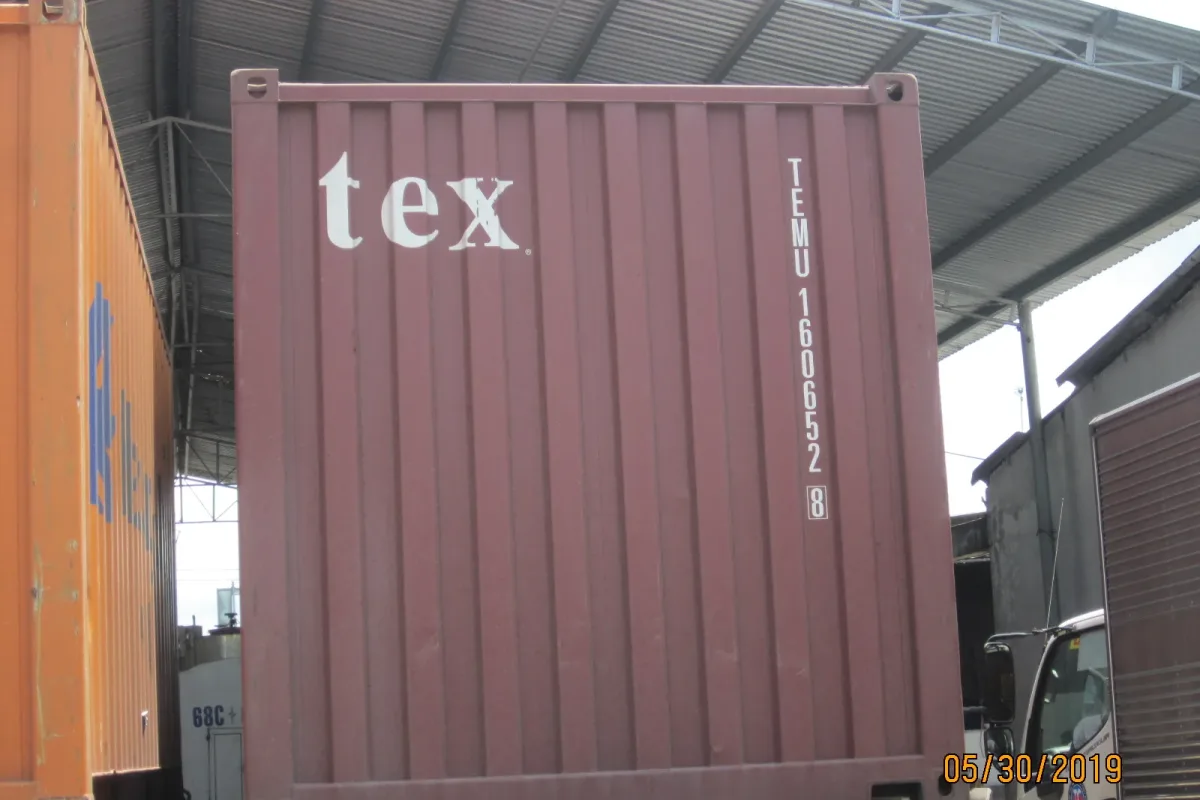
Loading Mistakes That Damage Cargo in a Sound Container
Loading mistakes turn a sound container into a damaged shipment, and they are hard to argue about later because the evidence disappears once the doors close. These are the faults an inspector watches for during stuffing:
- Heavy cartons on light ones. Cartons of glassware or small appliances crushed under bags of hardware. The loading plan should put heavy and strong cartons at the bottom.
- Gaps without dunnage. Empty space between stacks or at the door end lets cargo shift with the vessel's motion. Gaps should be filled with airbags, timber bracing or other dunnage, and the door end secured so the last row cannot fall against the doors.
- Pallet overhang. A carton carries most of its stacking strength in its corners and edges. When those hang over the pallet edge, they lose support and crush.
- Wet or weak cartons. Corrugated board that has absorbed moisture in a humid warehouse loses much of its compression strength. Cartons with visible water marks or soft corners should be repacked before loading.
- Container rain. Damp goods, wet pallets and day-night temperature swings at sea produce condensation that drips from the roof. Kiln-dried pallets, desiccants and container liners reduce it on humid routes and in the rainy season.
- Uneven weight. All the heavy goods at one end or one side stress the container and make it unstable during lifting. The total must stay within the maximum gross weight on the doors, and under SOLAS rules the verified gross mass has to be declared before the container is loaded on the vessel.
- Rough handling. Cartons thrown or dropped, and forklift tines pushed through the bottom row.
For a step-by-step method of checking stacking, securing and quantity while loading is still in progress, see our guide on how to verify a container is loaded correctly.
Seal Numbers, Photos and the Evidence Trail
The seal number and container number tie the condition at loading to the condition at arrival. A high-security bolt seal meeting ISO 17712 should be applied in front of the inspector, and both numbers should match the booking and the bill of lading. If they do not match, correct the documents before the container leaves.
Photos should follow the load from start to finish: the empty container, the cargo at roughly a quarter, half and fully loaded, the right door closed, the left door closed and the seal in place. If the seal found at destination matches the one recorded at origin and the photos show dry, well-stacked cargo, the damage happened after loading. If the seal number differs, check first whether customs opened the container for examination and applied its own seal, which will appear in the customs records. If it did not, you may be looking at tampering or theft.
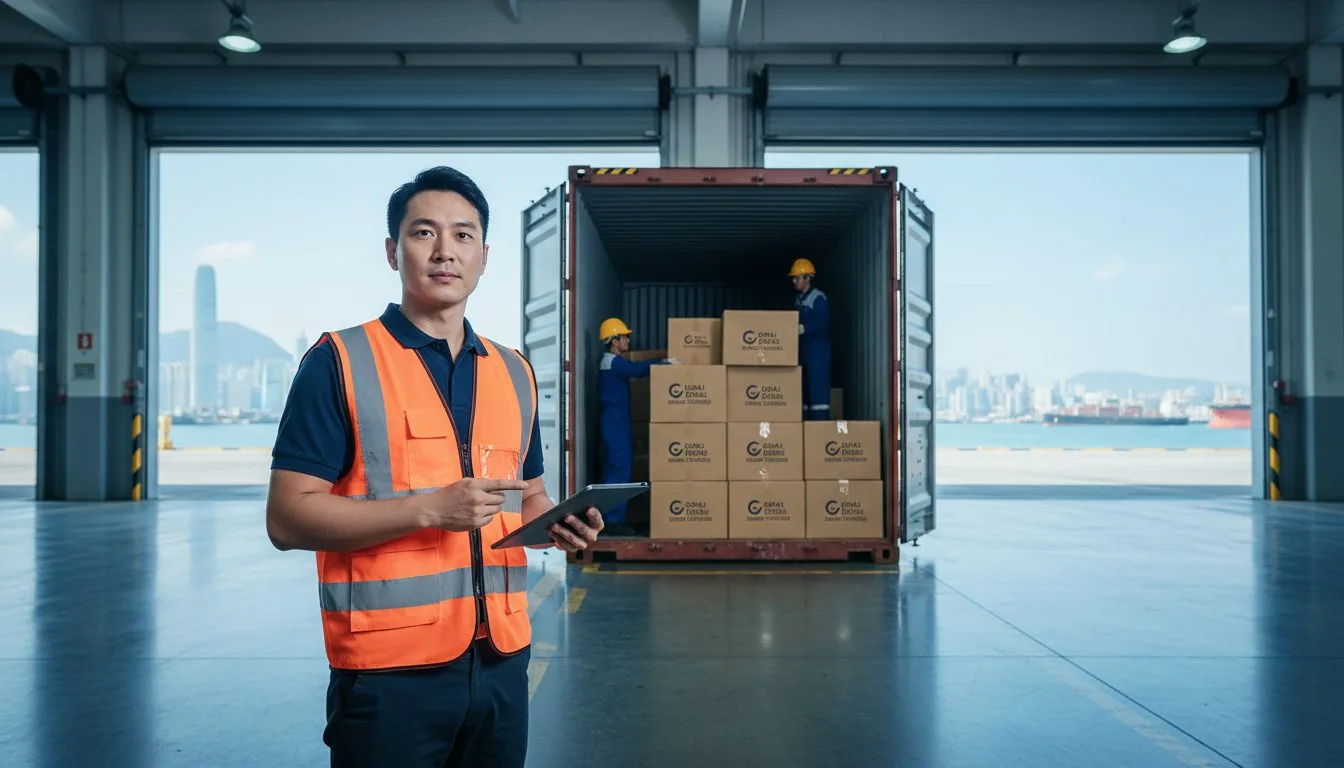
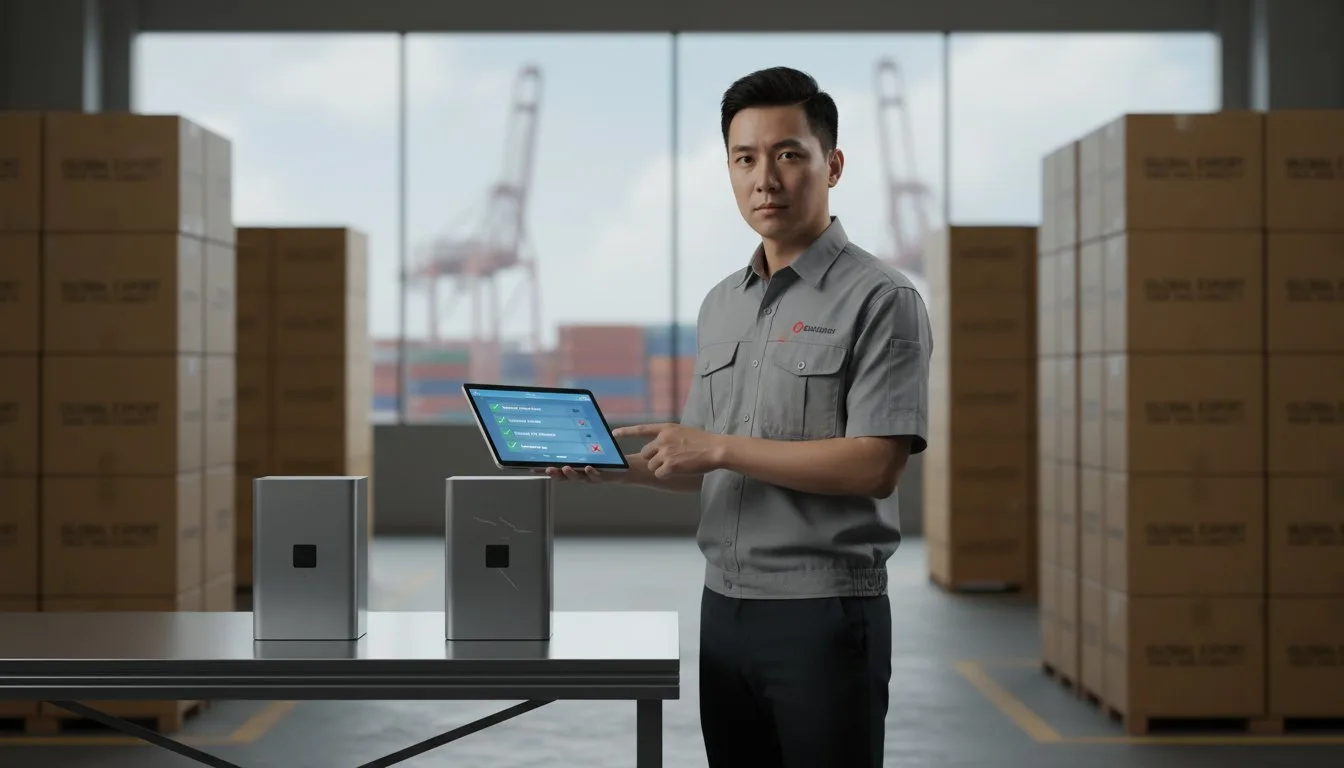
At The Inspection Company, a container loading inspection follows that sequence. The inspector checks the container condition, records weather and warehouse conditions, counts the cartons against the packing list, opens random cartons to confirm product, assortment and labelling, supervises the loading and witnesses the sealing. Our 685+ inspectors in Asia work to German QC standards under European management, and the report with container and seal numbers and photos is ready within 24 hours, so you can approve or hold the shipment. One limit is worth knowing: the report records the seal applied in the inspector's presence, and nobody at origin can control the container once it leaves the loading site.
What to Do When a Damaged Container Arrives
A damaged container on arrival needs a fixed sequence of actions, because the first hours decide whether a claim survives. Follow these steps:
- Check the seal number against the bill of lading and your loading report before the doors are opened.
- Photograph the container exterior, especially dents, holes and rust, and the seal itself.
- Open the doors and photograph the cargo as first seen, then each stage of unloading.
- Stop unloading if the damage is severe, so a surveyor or inspector can see the load as it arrived.
- Write specific exceptions on the delivery receipt, such as "top tier wet under roof dent, 30 cartons stained, 6 pallets collapsed at door end". A note that only says "subject to inspection" carries little weight.
- Send written notice to the carrier, the forwarder and your insurer straight away, and within three days for concealed damage on ocean shipments.
- Keep the damaged goods and packaging until every party has examined them or agreed in writing to disposal.
- Move wet goods to dry storage and separate sound cartons, because insurers expect you to stop the loss from growing.
- Book an independent post-shipment damage inspection to document the extent and likely cause of the damage.
Where part of the stock can be saved, product sorting and rework separates sellable units from damaged ones and reduces the amount written off. Our guide to transit damage claims lists every document a claim file needs.
Cutting Damaged Shipping Container Risks on the Next Order
Damaged shipping container risks drop most when you set requirements before production ends, instead of reacting after arrival. These measures cost little and remove the most common causes:
- Write container requirements into the purchase order: clean, dry, odour-free, no light leaks, valid CSC plate, ISO 17712 seal and loading photos sent before departure.
- Specify the export packaging: carton board grade, inner protection, pallet type and maximum stacking height, then check them during the pre-shipment inspection, including carton drop tests.
- Agree a loading plan that sets stacking order, dunnage and bracing, and desiccants or liners for humid months.
- Add a right-to-inspect clause so the factory accepts that a third-party inspector may supervise loading and pause it if a container is unfit.
- Book loading supervision where the risk is highest: first orders with a new supplier, high-value or fragile goods, orders with many SKUs, and shipments in the rainy season.
- Track damage by supplier and trade lane, so repeat problems point you to a packaging change, a different forwarder or a corrective action plan.
For a full on-site checklist covering the container, the cargo and the sealing, see our container loading inspection checklist.
If you ship high-value, fragile or moisture-sensitive goods from Asia, request a quote for a container loading inspection on your next order, or contact our team to agree a container and loading checklist with your supplier before the goods are packed.
Frequently Asked Questions
What are the main damaged shipping container risks for importers?
The main risks are water entering through roof holes or worn door gaskets, cargo crushed or shifted by poor stowage, contamination from odours or residue of a previous load, and theft through damaged doors or tampered seals. Each one can make goods unsellable and leave you with a claim that is hard to prove.
How can I check a shipping container for holes before loading?
Use the light test: stand inside the container with both doors closed and look for daylight in the roof, walls and door edges. Any point where light comes through will let water in, and the container should be replaced before loading starts.
Will cargo insurance pay for damage from a leaking container?
It depends on the cover and the cause. All-risks cover (Institute Cargo Clauses A) usually responds to water entering through a container damaged in transit, but most policies exclude loss caused by poor packing or preparation, and minimum cover (Clauses C) does not cover rainwater damage.
Who is responsible if the factory loaded goods into a damaged container?
If the factory stuffed the container and accepted a unit with visible holes, wet floors or odour, the loss is generally the supplier's responsibility. You need loading photos or an inspection report showing the container condition at origin to make that claim stick.
How quickly must I report container damage to the carrier?
Note visible damage on the delivery receipt at the time of delivery. Under the Hague-Visby Rules, concealed damage on ocean shipments should be reported in writing within three days, and claims are time-barred after one year. Your insurance policy may set its own deadlines.
Does a container loading inspection guarantee the cargo arrives undamaged?
No. A container loading inspection confirms the container condition, quantity, loading method and seal at origin, and gives you evidence for any later claim. It cannot control what happens to the container after it leaves the loading site.