The container doors open and the problem is obvious. The rear pallets have collapsed, the bottom cartons are crushed and there is a tide mark of water staining halfway up the stack. Within hours the emails start. The supplier insists the goods left the factory perfectly packed. The freight forwarder blames the carrier. The carrier blames the packaging. Your insurer asks for proof before it pays anything.
Every damaged shipment raises the same question: was it packing, loading or transit? The answer decides who pays, whether your claim succeeds and how you stop it happening again. This guide explains how professional importers and inspectors carry out a root cause analysis of cargo damage. It covers the physical clues that point to each cause, the evidence you need, and how independent third-party inspection turns a dispute into a decision.
Why Root Cause Matters More Than the Damage Itself
Damaged goods are a loss. Damaged goods with no proven cause are usually a permanent loss. Each party in your supply chain has a reason to deny responsibility, and each has a contract or policy clause that supports that position:
- Cargo insurers commonly exclude loss caused by insufficient or unsuitable packaging, and loss caused by the inherent nature of the goods.
- Carriers are liable for damage during their custody, but only within limits set by international conventions. They will reject claims where the packaging was inadequate or the damage was pre-existing.
- Suppliers will argue that goods left the factory in good order and that anything found at destination must have happened in transit.
Without a credible root cause, every door stays closed. With one, you know exactly which door to knock on. This is why root cause analysis sits at the heart of supply chain risk management. It decides whether a loss is recovered, and it gives you the data you need for product quality improvement on the next order.
The Three Suspects: Packing, Loading and Transit
Most cargo damage on shipments from Asia comes from one of three stages, and sometimes from a combination of them. Each leaves a different signature on the goods, the packaging and the container.
1. Packing Failure: The Problem Started at the Factory
Packing failures happen when the export packaging was not strong enough, not suitable for the product or not prepared correctly. The goods may have looked fine when the cartons were sealed, but they were never going to survive a long sea voyage with multiple handling points.
Common packing causes include:
- Master cartons made from lighter board than specified, or with too few flutes for the stacking load
- Missing or inadequate inner protection, such as foam corners, dividers, polybags or void fill
- Overfilled cartons that bulge, or underfilled cartons that collapse under weight
- Cartons stored in a humid warehouse before loading, which loses much of their compression strength
- Weak or broken pallets, pallet overhang, or missing stretch wrap and corner boards
- Products with high moisture content packed without desiccants or moisture barriers
Typical signs of a packing failure: damage is spread evenly through the container rather than concentrated in one area. Bottom-tier cartons are crushed uniformly by the cartons above them. Products show internal scuffing or breakage even where the outer carton looks intact. The same damage appears across several shipments from the same supplier regardless of carrier or route.
2. Loading Failure: The Problem Happened at the Container Door
A product can pass every quality check and still arrive unsellable if it is loaded badly. Loading failures happen in the final hours before the container is sealed, often under time pressure and often without anyone from the buyer's side present.
Common loading causes include:
- Heavy cartons stacked on top of light or fragile ones
- Gaps left in the load without dunnage, airbags or bracing, which lets cargo shift during the voyage
- No lashing or securing at the door end
- Uneven weight distribution or overloading of one side of the container
- Cartons loaded in the rain, or a container accepted with holes, a damp floor or a strong odour
- Rough handling by forklifts or loading crews
Typical signs of a loading failure: damage is concentrated in specific zones, especially near the doors or where gaps were left. Stacks have shifted or toppled in a consistent direction. There is no dunnage where it should be. Fragile cartons are crushed beneath heavier ones while identical cartons elsewhere are fine. Water damage traces back to a container defect that was already visible at origin.
3. Transit Failure: The Problem Happened on the Way
Transit damage happens after the container leaves the factory gate. It may occur on the road to port, at the terminal, at sea, during transhipment or during final delivery and unloading.
Common transit causes include:
- Dropped or impacted containers during crane or straddle carrier handling
- Heavy weather at sea, causing violent vessel motion
- Water entering through a container damaged in transit
- Severe temperature swings that cause "container rain", where condensation drips from the roof onto cargo
- Seal tampering, pilferage or theft
- Forklift punctures and mishandling during unloading at destination
Typical signs of a transit failure: the container itself shows new dents, holes or structural damage. The seal number does not match the number recorded at loading. Damage looks like a single impact, for example one corner of the load crushed while the rest is untouched. Forklift tine holes appear in cartons that were intact at loading. Goods are missing despite a verified count at origin.
Reading the Evidence: Damage Patterns and Likely Causes
No single clue proves a root cause. Experienced inspectors look at how the damage pattern, the container condition and the documents fit together. The table below summarises the patterns most often seen in post-arrival investigations.
The Grey Zones
Some damage does not fit neatly into one category. Container rain is the classic example. Moisture can come from goods, wooden pallets or cartons that were damp when loaded, which is a packing or loading issue. It can also come from extreme day-night temperature swings during the voyage, which is a transit issue. In practice, many losses have combined causes. A weak carton may have survived a careful voyage but failed after a hard landing at transhipment.
In these cases the value of independent evidence becomes clear. A report that records weather conditions, container dryness and carton condition at loading lets an investigator rule out causes one by one rather than guess.
Building the Evidence Chain from Factory to Warehouse
Root cause analysis works backwards from the damage, but the evidence that proves it must be collected forwards, starting at the factory. Strong cases rest on three links in the chain.
Link 1: Proof of Product and Packaging Condition at Origin
A pre-shipment inspection verifies that finished goods meet your specifications using AQL sampling based on ISO 2859 tables. For root cause purposes, its most important outputs are often the packaging checks: carton dimensions and markings, packing method, inner protection and carton drop tests. If the inspection shows packaging met your specification, a supplier cannot easily be blamed for transit damage. If it shows packaging was weak and was approved anyway, you know where the problem began.
Link 2: Proof of Loading Condition and Container Integrity
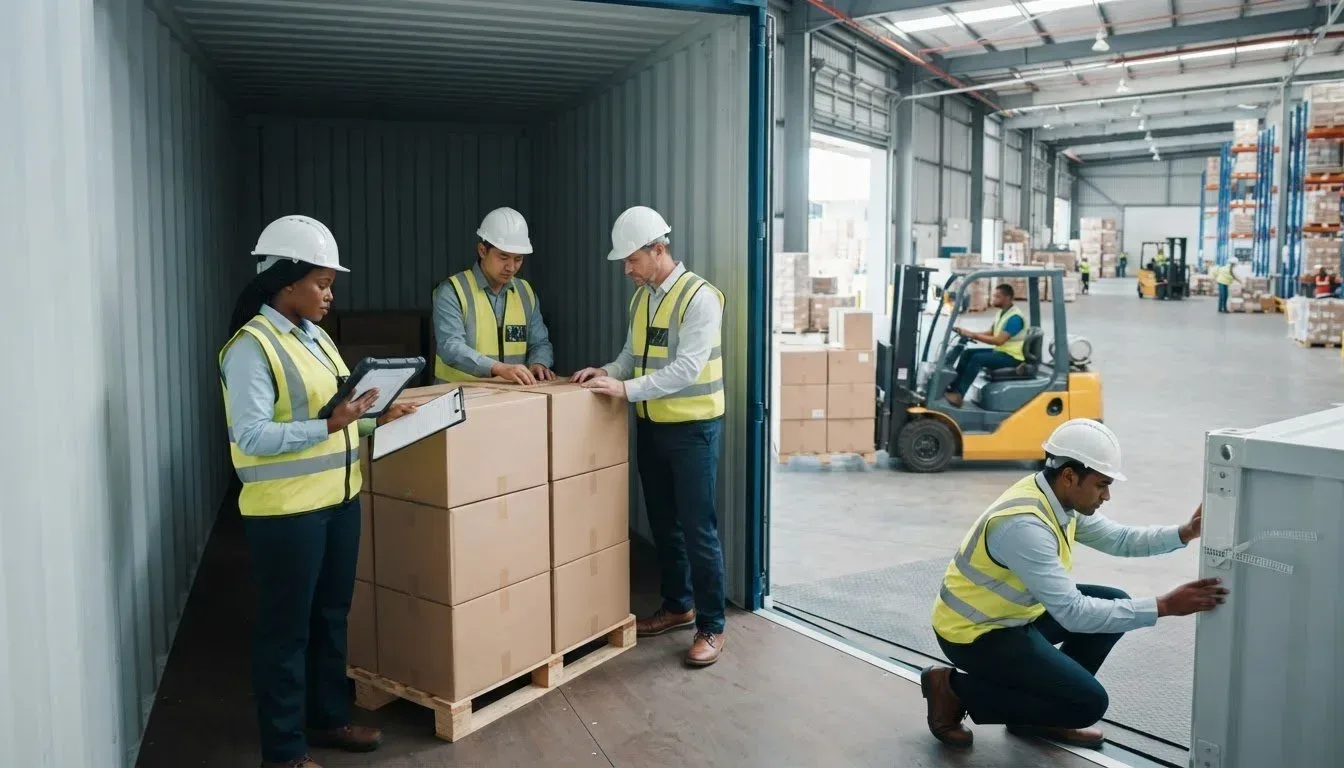
This is the link most importers are missing, and it is the one that most often settles disputes. A container loading inspection documents the container before loading, checking for holes, cracks, moisture and odours. It also records weather and warehouse conditions, verifies quantity against the packing list, supervises stacking and securing, and witnesses the sealing of the doors. The container number and seal number are recorded with photographic evidence.
If the seal at destination matches the seal recorded at origin, and the loading photos show sound cartons properly stacked and braced, damage found at arrival almost certainly happened in transit. We explore this further in our article on cargo condition reports as the importer's shield against transit risk.
Link 3: Proof of Arrival Condition
The final link is captured at your receiving dock. Before the doors open, check the seal number against the Bill of Lading and your loading report. Photograph the container exterior, the seal, the cargo as first seen and each stage of unloading. Write specific exceptions on the delivery receipt, such as "6 pallets collapsed at door end, 40 cartons crushed", rather than a vague "subject to inspection". Keep damaged goods and packaging until all parties have had the chance to examine them.
Timing matters. Under the Hague-Visby Rules, concealed damage on ocean shipments should typically be notified to the carrier in writing within three days. Insurance policies have their own notice and mitigation requirements. Our guide to documenting transit damage claims and getting paid sets out the full claim file in detail.
How a Professional Root Cause Investigation Works
When damage is found at destination, the question "what happened?" needs a neutral, professional answer. Internal photos and statements from your own warehouse staff are easy for a carrier or supplier to dismiss. An independent report is much harder to argue with.
Through our post-shipment damage inspection service, The Inspection Company follows a structured seven-step process:
- Review of shipping documents. The Bill of Lading, packing lists and any handling records are reviewed to understand the transit path and the initial condition of the goods.
- Visual inspection of packaging. Containers, pallets and boxes are examined for tears, dents, moisture exposure and signs of mishandling.
- Inspection of the goods. Units are unboxed and examined for physical damage, and inspectors assess whether internal packaging failed to protect them.
- Identification of the damage cause. Vibration, temperature, humidity, inadequate securing and mishandling during loading or unloading are all considered.
- Comparison with loading conditions. Where a loading report exists, current condition is compared with condition at loading to establish whether the damage happened in transit or already existed.
- Reporting and documentation. Time-stamped, high-resolution photos, measurements, quantity verification and an analysis of the likely root cause are compiled into a clear report.
- Recommendations for improvement. Practical guidance is given on packaging, handling and shipping processes to prevent repeat damage.
Step five is where the evidence chain pays off. An inspector who can compare arrival condition with an independent loading record can usually separate packing, loading and transit causes with confidence. Without that record, conclusions rely more heavily on damage patterns alone. This is why the most reliable approach combines origin and destination inspections, as explained in our comparison of pre-shipment and post-shipment inspection.
Matching the Root Cause to the Right Recovery Route
Once the cause is established, direct your claim to the party actually responsible.
- Transit damage: claim against your cargo insurer, who will usually pursue the carrier through subrogation, or claim directly against the carrier within its liability limits and time bars. Check your Incoterm to confirm who carried the risk at the time. Our guide to Incoterms, risk and quality control explains where risk transfers under each rule.
- Packing failure: insurers often exclude this, but it is a strong basis for a supplier claim, especially if packaging specifications were written into the purchase order. Propose a concrete remedy such as a credit note, replacement goods or reimbursed rework costs.
- Loading failure: responsibility depends on who stuffed the container. Factory-loaded containers point to the supplier. Consolidator-loaded containers point to the forwarder or warehouse operator.
- Pre-existing defects: this is a supplier quality issue, not a transit claim. A pre-shipment inspection report is your best defence against a supplier relabelling production defects as shipping damage.
Where goods can be saved, product sorting and rework services can separate sound units from damaged ones and reduce the overall loss. Insurers generally prefer documented rework over a total write-off when it makes economic sense. When the evidence points to the factory, our framework for negotiating with suppliers after a failed QC works equally well for packaging-related losses.
Turning Root Cause Findings into Prevention
Recovering money is important, but the best outcome is not having to claim at all. Every root cause report is data. Over several shipments, patterns emerge that point to the most effective fixes:
- Recurring packing failures call for tighter carton specifications, minimum board grades, compression and drop testing at pre-shipment inspection, and approved packaging samples.
- Recurring loading failures call for written loading plans, mandatory dunnage and bracing, rules on stacking order, and a container loading inspection on every high-value or fragile shipment.
- Recurring transit damage on a lane calls for a discussion with your forwarder about carriers, routing, transhipment ports or container liners and desiccants for humid seasons.
- Damage linked to one supplier calls for corrective action plans and closer monitoring, tracked through supplier KPIs.
This is where quality assurance and logistics meet. Fixing packaging and loading at origin is almost always cheaper than fighting claims at destination. It also protects something harder to recover than money: your relationship with customers who expected their goods on the shelf.
Why Importers Trust The Inspection Company
The Inspection Company has helped overseas buyers, local buying offices and factories with independent quality control Asia services since 2007. Our mission is simple: help you avoid buyer's risk and improve the quality of goods sourced from Asia, with independent evidence you can act on.
- European management and German QC standards. Our operations are led by European management, and our inspections follow German quality control standards, with AQL sampling based on ISO 2859 tables. Read more about our commitment to quality standards.
- Coverage at origin and beyond. With 685+ Asia-based inspectors and an on-the-ground presence in 25+ countries, including China, Vietnam, India, Bangladesh, Indonesia and Türkiye, we can document goods where they are packed and loaded.
- A complete evidence chain. Pre-shipment inspection, container loading inspection and post-shipment damage inspection reports work together as one consistent record, which makes root cause conclusions defensible.
- Fast reporting. Reports are typically delivered within 24 hours, with time-stamped photographic evidence, so you can act before vessels sail or notice deadlines pass.
- Client-centric service. Close client contact, flexible scheduling, fast action and clear communication are central to how we work. Inspection scope is tailored to your products, risk profile and budget, whether you run a small e-commerce brand or manage dozens of suppliers for a large retailer.
Professional inspection does more than settle a single dispute. It protects your investment, supports compliance with destination-market requirements and safeguards the brand reputation you have worked hard to build. This is buyer risk avoidance in practice.
Facing damaged cargo, or want to stop the next container arriving the same way? Contact The Inspection Company to discuss a tailored plan, from container loading supervision at origin to independent root cause assessment on arrival, and get the evidence you need to protect your goods and recover your losses.
Frequently Asked Questions
How can I tell if cargo damage was caused by packing, loading or transit?
Look at the damage pattern alongside the evidence. Even crushing across the whole load usually points to packing, damage concentrated in zones or stacks shifted in one direction points to loading, and container damage, seal mismatches or single-impact damage points to transit. An independent inspection compares these clues with loading records to confirm the cause.
Why is a container loading inspection so important for root cause analysis?
It records the container condition, stacking method, quantity and seal number before departure, with photographic evidence. If the seal matches at destination and the loading photos show sound, well-secured cargo, damage found on arrival almost certainly happened in transit.
Will my insurer pay if the damage was caused by poor packaging?
Often not, because many cargo policies exclude loss caused by insufficient or unsuitable packaging. In that case, an independent report identifying packaging failure gives you a solid basis to recover the loss from your supplier instead.
What is container rain, and who is responsible for it?
Container rain is condensation that forms inside a container and drips onto cargo. It can result from damp goods, pallets or cartons at loading, or from temperature swings during transit, so responsibility depends on evidence of loading conditions and moisture control measures.
How quickly should I arrange a damage inspection after arrival?
As soon as possible, ideally before unloading continues or damaged goods are moved. Carriers and insurers have strict notice deadlines, and preserving the cargo as it arrived gives the inspector the clearest evidence of the root cause.
Should the buyer or the supplier pay for the inspection?
The buyer usually commissions and pays for the inspection so the inspector stays independent and works only in the buyer's interest. Reasonable inspection costs can often be included in the insurance or supplier claim.