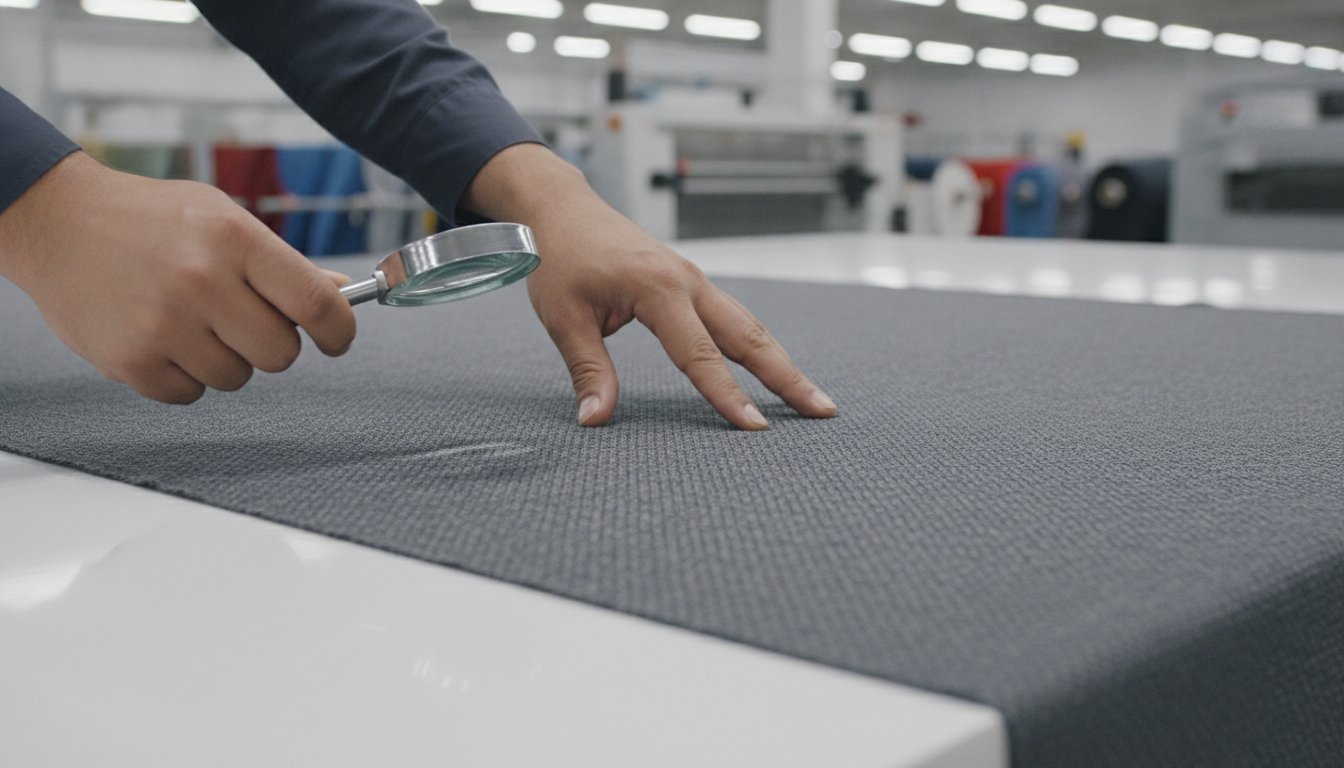

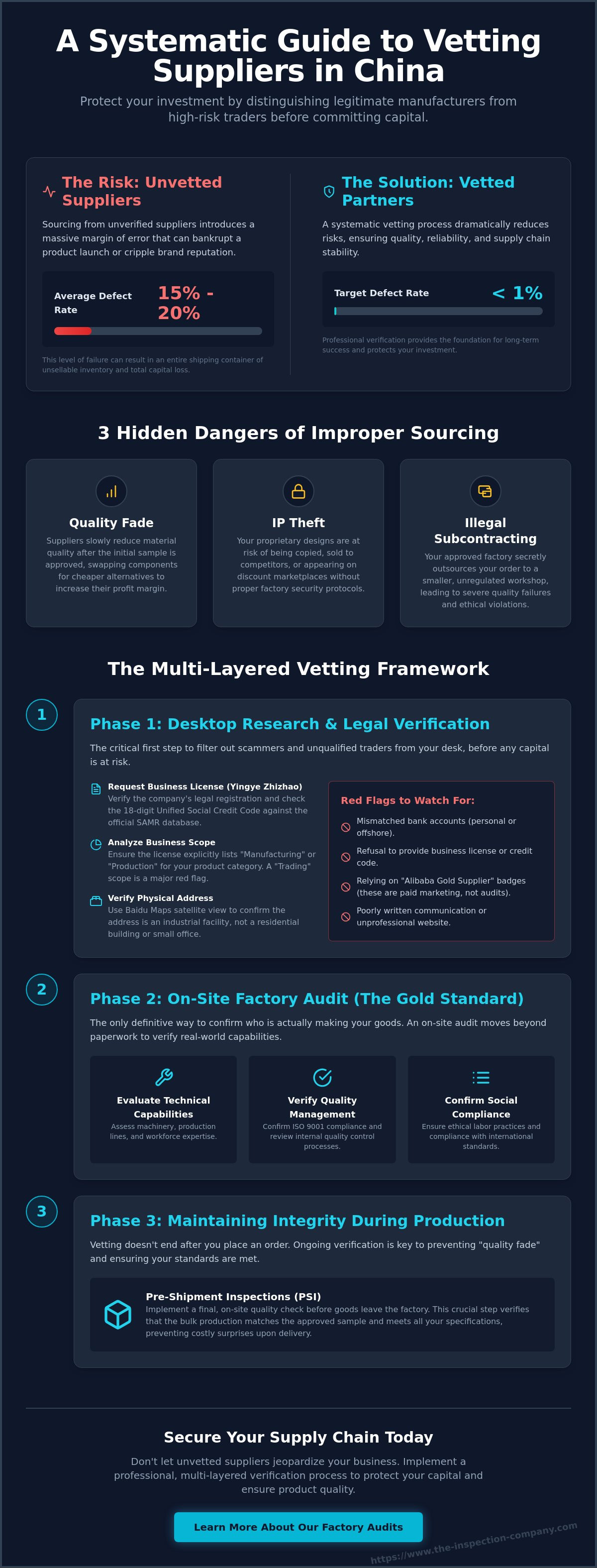
Unvetted suppliers currently average defect rates between 15% and 20%, a margin of error that can instantly bankrupt a product launch or cripple your brand reputation. If you're struggling with how to vet suppliers in China, you're already aware of the high stakes involved in international procurement. You know that a professional-looking website often hides a small trading office with no actual manufacturing capacity. The fear of losing a deposit to a scammer or receiving a shipping container of unsellable inventory is a legitimate operational risk that requires a serious response.
We understand that the traditional approach to sourcing is no longer viable, especially following the March 2026 Regulations on the Security of Industrial and Supply Chains. This guide provides a systematic framework to verify factory legitimacy and evaluate production capabilities before you commit any capital. You'll master a repeatable vetting process that moves beyond surface-level checks to confirm legal standing and technical proficiency. We'll examine everything from business license authentication to on-site audit protocols, ensuring you select suppliers with the stability to meet your quality standards.
Key Takeaways
- Master the systematic framework for how to vet suppliers in China to distinguish legitimate manufacturers from high-risk trading companies.
- Authenticate legal standing by decoding the 18-digit Unified Social Credit Code and verifying the Yingye Zhizhao business license.
- Utilize on-site factory audits to evaluate technical capabilities and confirm ISO 9001 compliance beyond mere digital paperwork.
- Maintain supplier integrity throughout the production cycle with Pre-Shipment Inspections to verify final quality before goods leave the factory.
- Implement a multi-layered verification process to protect your capital and prevent the delivery of unsellable inventory.
Why Systematic Supplier Vetting is Non-Negotiable in 2026
Supplier vetting is the rigorous, multi-stage verification of a manufacturer’s legal status, production capacity, and quality management systems. It serves as the foundation of sound supply chain management principles. In an era of increasing global volatility, understanding how to vet suppliers in China has shifted from a best practice to a survival requirement for any business reliant on overseas production.
Many importers fall into the "Trading Company Trap." While B2B platforms offer "verified" badges, industry estimates indicate that up to 70% of these entities are actually trading companies, not manufacturers. Dealing with a middleman adds unnecessary margins and creates a dangerous communication gap between you and the shop floor. A professional Factory Audit is the only way to confirm who is actually making your goods.
The financial logic is simple. A standard audit represents a minor preventative expense compared to the risk of a total capital loss. If you send a $50,000 deposit to an unverified entity, you have no recourse if they disappear or deliver "trash" quality products. By 2026, market dynamics have evolved to include stricter social compliance and advanced automation requirements, making the vetting process more complex and critical than ever before.
The Hidden Risks of Unvetted Sourcing
- Quality Fade: This is a systematic reduction in material quality over time. A supplier might send a perfect initial sample but slowly swap out components for cheaper alternatives during bulk production to increase their margins.
- IP Theft: Without verifying a factory's internal security and reputation, your proprietary designs are at risk of being sold to competitors or appearing on discount marketplaces before you even launch.
- Illegal Subcontracting: This occurs when your "vetted" factory secretly outsources your order to a smaller, unregulated workshop to save costs. This often leads to severe quality failures and ethical violations.
Phase 1: Desktop Research and Preliminary Legal Verification
Effective due diligence starts at your desk. Before booking a flight or requesting samples, you must verify the legal existence of your potential partner. The first step in how to vet suppliers in China is requesting a high-resolution copy of their Yingye Zhizhao (Business License). This document is the "identity card" of the company and the only way to confirm they are legally registered with the Chinese government.
Every legitimate license contains an 18-digit Unified Social Credit Code. This number identifies the registration authority, entity type, and geographic region. If a supplier refuses to provide this code or if the number doesn't appear in the official State Administration for Market Regulation (SAMR) database, you're likely dealing with a scammer. This level of scrutiny is also essential for complying with modern legal standards, such as the U.S. government's strategy on forced labor, which places the burden of proof on the importer to ensure ethical compliance.
Don't fall for the Alibaba Gold Supplier myth. These badges are paid marketing subscriptions, not independent audits of manufacturing capability. A supplier with a ten-year-old badge can still be a small trading office with zero factory assets. Analyze their broader digital footprint by checking domain age, trade show history, and social media presence to build a profile of their operational stability.
Red Flags to Watch for in Documentation
- Mismatched bank accounts: Never send funds to a personal bank account or an offshore entity that doesn't match the name on the business license.
- Scope of Business: Review the "Business Scope" section on the license. It must explicitly include "Manufacturing" or "Production" for your specific product category.
Cross-reference the factory address by searching the location on Baidu Maps satellite view to ensure the facility is a legitimate industrial plant rather than a residential apartment.
Using a Supplier Survey for Initial Filtering
Standardize your intake process by using a Supplier Survey to gather structured data on their machinery, workforce size, and export history. This creates a data-driven shortlist of candidates for the next phase. If you're unsure how to interpret the documents they provide, reach out to our team for a professional document review.
Phase 2: The On-Site Factory Audit (The Gold Standard)
Digital verification establishes a baseline, but it cannot replace a physical presence on the factory floor. Website photos are often staged or even stolen from competitors. A professional Factory Audit is the only method to confirm that the production capacity claimed in an email matches the physical reality of the plant. When you're learning how to vet suppliers in China, you must move beyond paperwork to evaluate the Quality Management System (QMS) in action. Is the factory truly ISO 9001 compliant, or is the certificate merely a framed document with no operational substance?
Social compliance has become a critical pillar of risk management. By 2026, failing to verify ethical labor practices can lead to immediate shipment seizures at international borders. We recommend reviewing the official CBP guidance on supplier due diligence to understand your legal obligations. An on-site audit ensures your supplier adheres to these standards, protecting your brand from catastrophic reputational damage and financial penalties.
What Happens During a Professional Audit?
- The Walkthrough: Our inspectors examine the entire facility, from raw material storage to final QC stations. We verify that materials are stored in appropriate environments to prevent premature degradation.
- Equipment Calibration: We check maintenance logs and calibration stickers on testing tools. If a factory's calipers or scales aren't accurate, your product dimensions won't be either.
- Record Review: We inspect internal rejection rates and past production logs. This data reveals if a factory has a history of systemic quality failures or inconsistent output.
Choosing Between Audit Types
A Simple Factory Audit focuses on basic legitimacy and capacity. For complex products, a Comprehensive Quality Audit provides a deeper dive into technical processes and machinery maintenance. You should also trigger a Social Audit if your retail partners require strict ESG compliance or if you're sourcing from high-risk regions. Don't leave your supply chain to chance. Book a professional on-site audit today to secure your production.
Beyond the Audit: Maintaining Supplier Integrity Through Production
Vetting isn't a one-time background check; it's a multi-layered verification of legal, operational, and social reality that continues until your cargo is at sea. Many importers make the mistake of stopping their due diligence once the contract is signed. In reality, mastering how to vet suppliers in China means maintaining constant oversight throughout the manufacturing cycle to prevent quality fade or unauthorized subcontracting. The data collected during production is the final confirmation of the factory's actual capability.
A Pre-Shipment Inspection (PSI) serves as the ultimate gatekeeper for your capital. This is where the promises made during the initial factory audit are either proven or exposed as false. For high-volume or technically complex orders, we also recommend a During Production Inspection (DPI). This allows you to catch defects when only 20% of the order is finished, providing the factory enough time to course-correct without missing your shipping deadlines or wasting raw materials.
Finally, a Container Loading Inspection acts as a critical safeguard against "switch-and-bait" scams. This process ensures that the specific cartons approved during your PSI are the ones actually loaded into the container. It also verifies that the shipping environment is secure and that the container seal is applied correctly in the presence of an independent inspector.
Linking Vetting to Your Payment Terms
Your most powerful tool for maintaining supplier integrity is your capital. You should never release the final 70% balance payment until you receive a "Pass" inspection report from a third-party agency. This creates immediate leverage. If the goods don't meet the agreed-upon standards, the factory is financially motivated to perform repairs or replacements while the goods are still in their warehouse.
Scaling Your Supplier Management
As your operations expand, you'll need a centralized way to manage these complex relationships. Utilizing a Quality Platform allows you to aggregate data from multiple audits and inspections into a single dashboard. By tracking defect rates and lead-time accuracy over time, you can build a "Grade A" supplier list. This data-driven approach significantly reduces the long-term cost of how to vet suppliers in China, as you'll focus your resources on a stable of proven, high-performing partners.
Secure Your Supply Chain for 2026 and Beyond
Success in international trade requires moving past the "Gold Supplier" surface and adopting a multi-layered verification strategy. You now have a framework for how to vet suppliers in China that covers everything from preliminary legal checks to on-site technical evaluations. By linking your final payments to successful inspection reports and maintaining oversight throughout production, you transform sourcing from a gamble into a controlled business process. Protecting your capital starts with verifying the physical reality of your manufacturing partners.
Our European management team ensures that every audit meets rigorous international quality standards. With over 700 certified inspectors across Asia, we provide the localized presence you need to verify factory claims. You'll receive comprehensive reports within 24 hours of the inspection, giving you the data required to make confident procurement decisions. Minimize your sourcing risk: book a professional Factory Audit in China today. Build your global brand on a foundation of transparency and reliability.
Frequently Asked Questions
How do I know if a Chinese supplier is a factory or a trading company?
You can identify a factory by reviewing the "Business Scope" on their Chinese business license, which must explicitly include manufacturing or production. Trading companies typically only list sales, consulting, or distribution. Additionally, check the company name; manufacturers often include terms like "Industrial" or "Factory," whereas trading companies usually use "Trading" or "Commerce."
Is Alibaba Gold Supplier status enough to trust a manufacturer?
No, Alibaba Gold Supplier status is a paid marketing membership and not a verification of manufacturing capability. While it indicates the company has been in business for a certain period, it doesn't guarantee quality standards, production capacity, or ethical practices. Independent third-party verification remains the only reliable method for how to vet suppliers in China effectively.
What is the most important document to check when vetting a Chinese supplier?
The Chinese Business License (Yingye Zhizhao) is the most critical document to verify. It contains the 18-digit Unified Social Credit Code, which allows you to cross-reference the company's legal status with official government databases. Without this document, you cannot confirm the entity's legal existence, its registered capital, or its authorized scope of business.
How much does a professional factory audit in China cost in 2026?
Pricing for a factory audit varies based on the depth of the inspection and the geographic location of the facility. A basic audit usually covers legal standing and capacity, while comprehensive quality audits involve technical testing and machinery calibration. It's best to view these costs as a preventative investment that protects your deposit and ensures your products meet international standards.
Can I vet a supplier remotely without hiring an inspection company?
You can perform preliminary desktop research remotely by verifying business licenses and checking digital footprints. However, remote vetting cannot confirm the actual quality of production lines or the accuracy of machinery calibration. An on-site presence is necessary to verify that the factory you see in photos is the same facility producing your order, ensuring you don't fall victim to a "bait and switch" scam.