
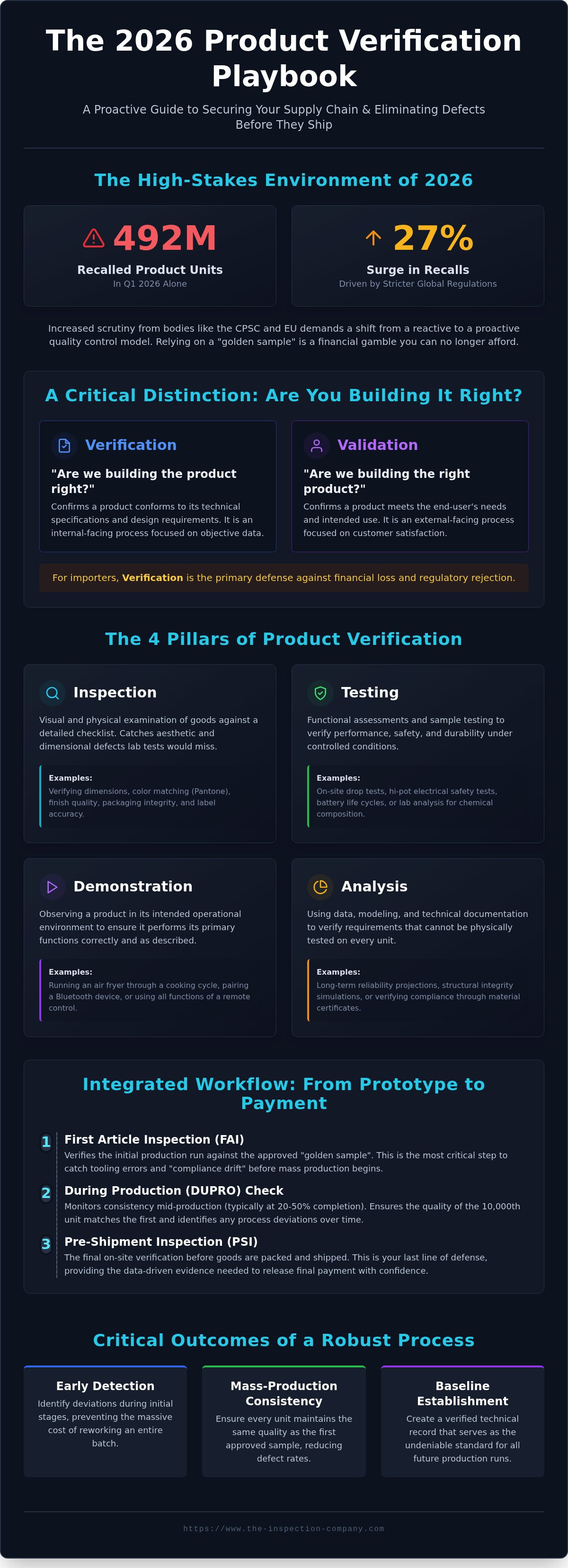
In the first quarter of 2026, the number of recalled product units in the US surged by 27%, reaching a staggering 492 million units. You've likely felt the mounting pressure as regulatory bodies like the CPSC and the EU tighten their grip on import documentation and safety standards. It's a high-stakes environment where a single shipment of unsellable goods can cripple your margins and your reputation. You understand that relying on a "golden sample" is a gamble you can't afford to take. To protect your investment, implementing a rigorous product verification process is no longer optional; it's the only way to ensure your mass-produced items actually match your approved prototypes.
This guide will help you master the essential steps of on-site verification to catch defects before they leave the factory floor. We'll provide a clear roadmap for auditing production and verifying technical specifications so you can release final payments with absolute confidence. You'll learn how to navigate the 2026 regulatory landscape, from CPSC eFiling mandates to the EU's new packaging rules, while significantly reducing your defect rates. We're moving from a reactive model to a proactive system of total quality control.
Key Takeaways
- Modern product verification has evolved from simple end-of-line checks into an integrated lifecycle approach to meet the stricter 2026 global regulatory landscape.
- You'll learn how to implement a robust product verification process using the four industry-standard methods: inspection, testing, demonstration, and analysis.
- Discover how to eliminate "compliance drift" with Asian suppliers by utilizing First Article Inspections and During Production checks to catch errors early.
- Understand why independent, third-party inspections provide the only unbiased safeguard for your supply chain, ensuring goods meet specifications before you release final payments.
What is the Product Verification Process in Modern Manufacturing?
In the high-stakes environment of global trade, the product verification process is the formal, technical procedure used to confirm that a manufactured good conforms exactly to its design requirements and technical standards. While many suppliers treat quality as a final check, the 2026 manufacturing environment demands an integrated lifecycle approach. Verification isn't just a hurdle at the end of the line; it's a series of strategic checkpoints that bridge the gap between a digital prototype and the physical shipment arriving at your warehouse.
It's vital to distinguish between Verification and validation. Verification focuses on "building the product right" by checking it against technical specifications. Validation asks if you've "built the right product" for the end user's needs. For importers, verification is the primary defense against catastrophic financial loss. Skipping this step often leads to customs rejections under the 2026 CPSC eFiling mandates or immediate Amazon account suspensions due to unacceptable defect rates.
The Core Objectives of Verification
The primary goal is risk mitigation through data-driven evidence. By implementing a consistent product verification process, you achieve three critical outcomes:
- Early Detection: Identifying manufacturing deviations during the initial stages prevents the massive cost of reworking an entire batch.
- Mass-Production Consistency: Ensuring the 10,000th unit off the line maintains the same quality as the first approved sample.
- Baseline Establishment: Creating a verified technical record that serves as the standard for all future production runs.
Why Importers Face Unique Verification Challenges
Importers operate at a significant disadvantage because of the distance gap. You can't simply walk onto the factory floor in another country to check progress. This creates a dangerous reliance on "paper compliance," where a supplier provides documents that may not reflect the physical reality of the goods. In an era where recall units have surged by 27% in early 2026, relying on a supplier's self-reporting is a critical risk. True verification requires independent, on-site eyes to verify that the physical goods match the technical data provided in your regulatory filings.
The 4 Primary Methods of Product Verification
Selecting the right product verification process depends on the complexity of your goods and the specific risks associated with your category. Industry standards generally recognize four distinct methods to confirm that a product meets its technical requirements. While high-stakes sectors often follow NASA's Product Verification Process for aerospace components, these same four pillars provide a reliable framework for consumer goods manufacturing.
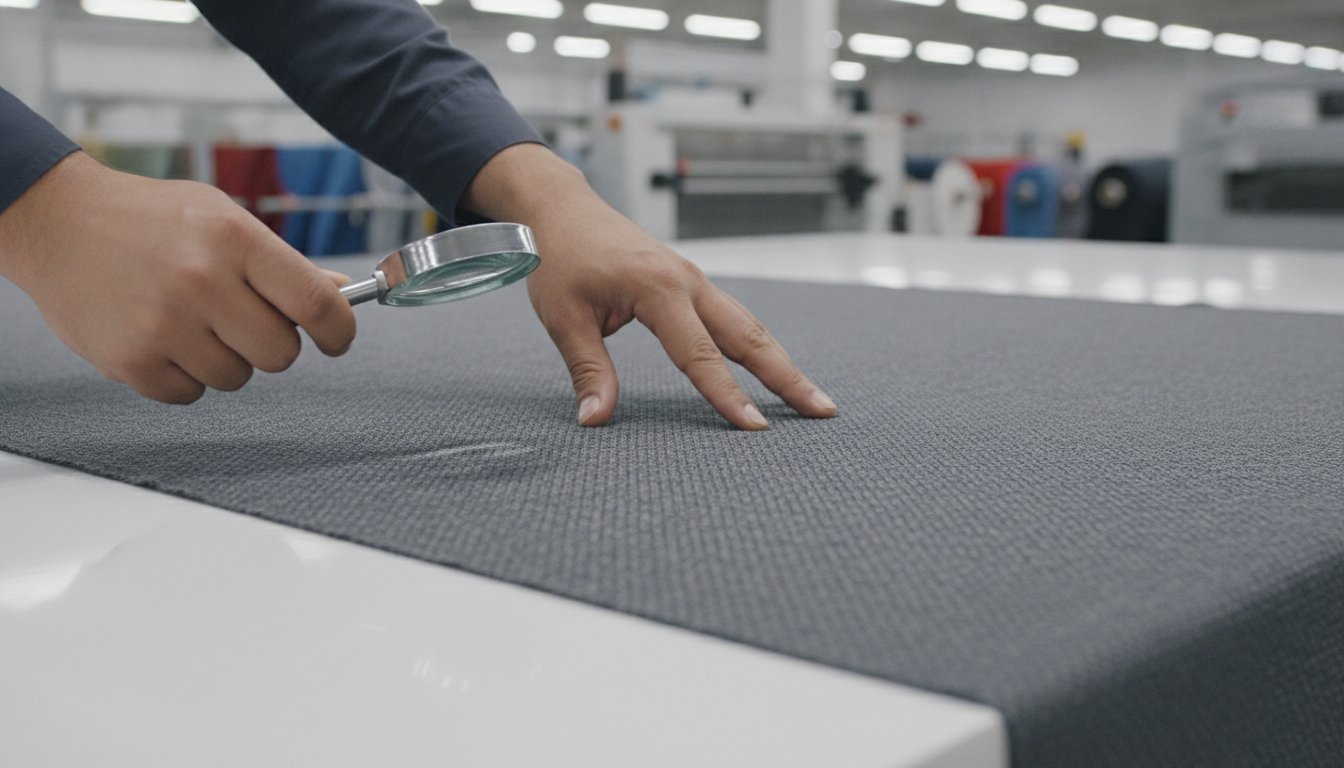
- Inspection: This is the visual and physical examination of goods. It relies on a rigorous pre-shipment inspection checklist to verify dimensions, color, finish, and packaging.
- Testing: This involves functional assessments and sample testing to verify performance. Examples include battery life tests, tensile strength checks, or chemical composition analysis in a lab.
- Demonstration: Unlike testing, which often pushes a product to its limits, demonstration involves observing the product in operation to ensure it performs its primary functions exactly as intended.
- Analysis: This method uses data, modeling, and technical documentation to verify requirements that can't be physically tested on every unit, such as long-term reliability projections or structural integrity simulations.
Applying Verification Methods to Consumer Goods
Visual inspection is often underestimated, yet it catches aesthetic defects that a lab test would ignore. A functional test might confirm an air fryer works, but only a physical inspection reveals a mismatched plastic housing or a scratched display. On-site testing during a factory visit is equally vital. Simple procedures like drop tests or hi-pot safety tests provide immediate, transparent feedback on build quality before the goods leave the factory floor.
Determining Which Method to Use
Effective verification requires a balance between cost and rigor. You don't need lab testing for every single unit in a 10,000-piece order. Instead, professionals use the AQL (Acceptable Quality Limit) to define a statistically significant sample size. This approach provides a high level of confidence while keeping inspection costs manageable. If you're unsure which method fits your current production run, it's often best to consult with a technical expert to design a custom verification plan.
Executing the Product Verification Process with Asian Suppliers
Managing a product verification process across Asian manufacturing hubs requires more than just a digital checklist. It demands a physical presence at critical production milestones. While NASA's systems engineering guide to product verification provides a high-level framework for technical compliance, importers must adapt these stages to the realities of the factory floor to prevent "compliance drift."
The Danger of the 'Golden Sample'
A common mistake is trusting the "Golden Sample." This perfect prototype, often hand-crafted by the supplier's best engineers, rarely reflects the reality of a high-speed mass production run. You must conduct a first article inspection to verify the very first unit off the line. This physical check prevents a "bait and switch" scenario where a supplier might substitute inferior materials to save costs once the mass production run begins.
Verification must continue through these subsequent phases:
- During Production (DUPRO): Catching errors when 20% to 30% of the goods are finished. This is the most cost-effective time to identify and fix systemic defects.
- Pre-Shipment Inspection (PSI): The final gatekeeper. This confirms that the final batch meets your quantity and quality specifications before you release the final payment.
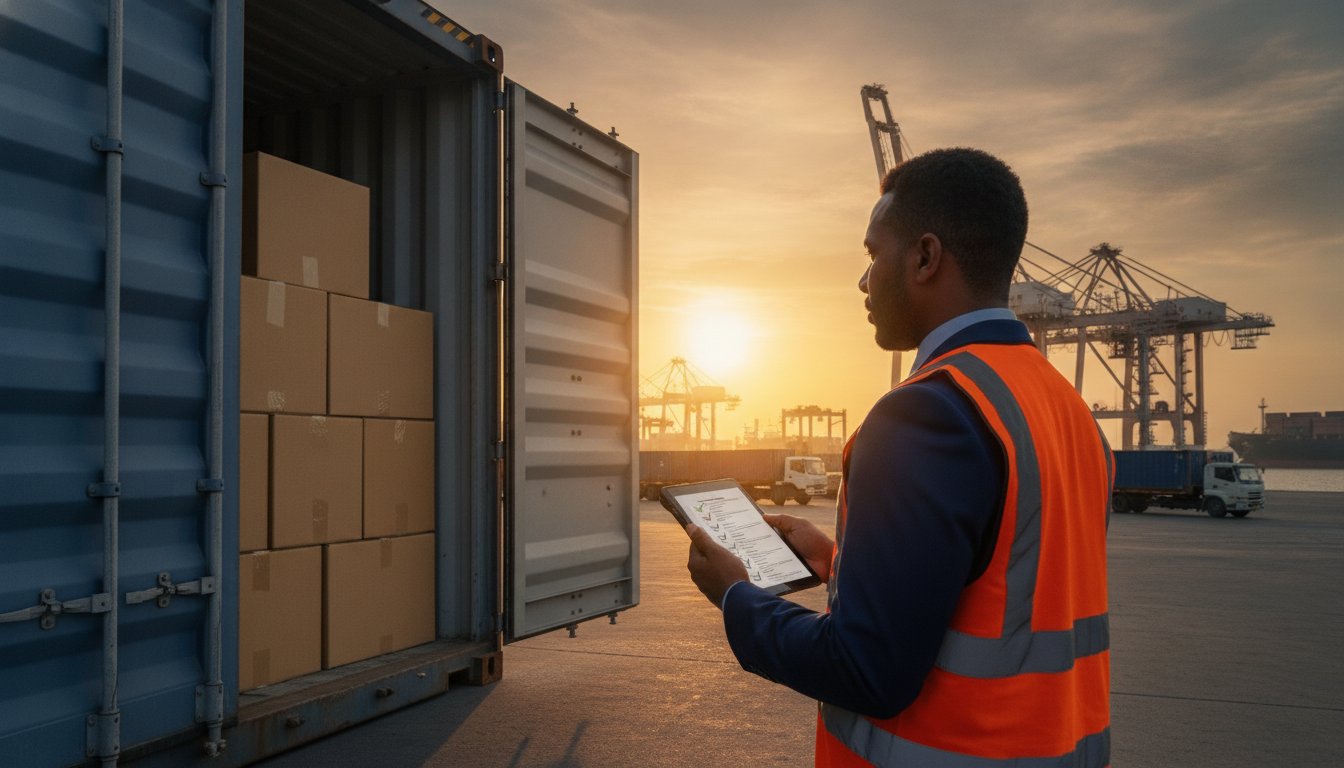
- Container Loading: This final step ensures that the specific cartons verified during inspection are the ones actually placed on the vessel, preventing last-minute inventory swaps.
Amazon FBA Specific Verification
For e-commerce brands, the product verification process is an essential account health strategy. An Amazon FBA inspection focuses heavily on FNSKU labeling, carton weight accuracy, and packaging compliance. Even a minor labeling error can lead to entire shipments being rejected at the fulfillment center, causing stockouts and damaging your seller metrics. If you're ready to secure your next production run, contact our regional experts for a custom on-site verification plan.
Integrating Verification into Your Quality Control Workflow
Successful importers don't treat the product verification process as an isolated event. Instead, they embed it into a "Compliance First" workflow that begins long before the first unit is made. Relying on a factory's internal quality report is a clear conflict of interest. To get an accurate, technical picture of your production, you need a 3rd party inspection company to act as your unbiased eyes on the ground. These independent reports provide the objective data necessary to hold suppliers accountable and negotiate corrective actions before goods leave the port.
In 2026, managing sourcing from Asia requires real-time visibility and proactive risk management. Modern verification isn't just about catching errors; it's about using on-site data to predict where a supplier might fail next. By integrating these results into your broader quality management system, you transform a simple inspection into a strategic asset that protects your profit margins.
Closing the Loop: What Happens After Verification?
When you receive a verification report, the "Pass" or "Fail" result is only the beginning of your decision-making process. If a shipment fails due to minor, non-systemic defects, you may need to demand product sorting to remove defective units rather than rejecting the entire batch and delaying your launch. This level of granular data allows you to refine your supplier management process. Over time, you can rank your factories based on their actual performance data, rewarding those that maintain high standards and phasing out those that consistently underperform.
Final Recommendation for Importers
A robust product verification process is an investment in your brand's long-term survival. The cost of an inspection is negligible compared to the financial ruin of a major recall or a permanent Amazon account suspension. Quality is the foundation of trust between you and your customers. Don't leave your reputation to chance. Secure your supply chain and verify your production today; contact our experts.
Securing Your Supply Chain for 2026 and Beyond
Mastering the product verification process is the most effective way to eliminate the anxiety of international sourcing. Relying on a "golden sample" is a high-risk strategy that often leads to costly recalls or warehouse rejections. By integrating on-site inspections and technical testing into your workflow, you take control of your production quality before the goods leave the factory floor.
At The Inspection Company, we provide the physical oversight you need to bridge the distance between your office and the production line. With over 700 inspectors stationed throughout Asian manufacturing hubs, we deliver detailed reports within 24 hours. Our European management ensures that your goods meet international quality standards, giving you the confidence to approve final payments without hesitation.
Secure your shipment and verify your product quality; Book an inspection now.
Protecting your brand reputation starts with verified data. You have the tools to build a resilient, compliant supply chain; now it's time to put them into action.
Frequently Asked Questions
What is the difference between product verification and validation?
Verification confirms that your goods meet the technical drawings and specifications provided to the factory. It's a technical check against a defined list of requirements to ensure the product was built correctly. Validation, however, ensures the final product actually solves the end user's problem or meets their functional expectations. Verification is the essential first step to ensure you aren't paying for defective or non-compliant inventory.
Can my factory perform the product verification process internally?
While most factories have their own Quality Control (QC) teams, relying on them for the final product verification process is a significant risk. Internal teams often face pressure to meet shipping deadlines, which can lead them to overlook minor defects or material substitutions. An independent, third-party inspection provides an unbiased technical report, ensuring that the physical reality of your goods matches your design standards without factory interference.
How much does a professional product verification inspection cost?
The cost of a professional inspection typically depends on the location of the factory and the complexity of the verification methods required. Factors such as the number of man-days needed to sample the batch and the specific technical tests performed will influence the total fee. Most importers find that this cost is a negligible fraction of the shipment value, acting as a preventative investment against the much higher financial losses of recalls.
What happens if my products fail the verification process?
If a batch fails verification, you should immediately halt the shipment and withhold final payment until a corrective action plan is implemented. You have the leverage to require the supplier to perform 100% product sorting to remove defective units or rework the batch to meet the agreed-upon standards. This data-driven approach ensures you only receive sellable inventory, preventing the arrival of unsellable goods at your warehouse.
Is product verification mandatory for Amazon FBA sellers?
Amazon doesn't strictly mandate third-party inspections, but they do hold sellers legally responsible for product safety and labeling compliance. In 2026, failing to execute a rigorous product verification process can lead to immediate account suspension if goods arrive with incorrect FNSKU labels or fail safety standards. Verification is the only way to protect your seller metrics and avoid the high costs of Amazon warehouse rejections and inventory disposal fees.