That perfect prototype sitting on your desk is a marketing tool, not a production guarantee. Many importers live with the constant fear of a "bait and switch" where a factory uses inferior materials once the high-volume work begins. It's a valid anxiety when you lack a physical presence in the factory to verify the machinery and setup. Rigorous sample checking before mass production is the only proactive way to transform that initial prototype into a legally binding quality benchmark.
You understand that releasing the first deposit is the point of no return, and you need total confidence that your capital is protected. This guide explains how to secure your supply chain by mastering sample verification and pre-production inspections to avoid devastating manufacturing errors. We will detail the process of establishing a "Golden Sample" and verifying that raw materials meet the latest industry standards, including the rigorous risk management focus found in the ISO 9001:2026 update. This methodical approach ensures your factory is truly ready before the first unit rolls off the line.
Key Takeaways
- Define the "Golden Sample" as your legally binding quality benchmark to prevent material substitution once production begins.
- Understand why sample checking before mass production represents the final opportunity to verify raw materials and machinery calibration before committing significant capital.
- Learn how to establish critical tolerances for measurements and colors to ensure consistency between the prototype and the final manufactured units.
- Discover how a Bill of Materials (BOM) cross-check identifies hidden component discrepancies that factory self-reporting often overlooks.
- Identify the advantages of professional oversight in providing the transparency needed to release deposits and start production with confidence.
What is Sample Checking Before Mass Production?
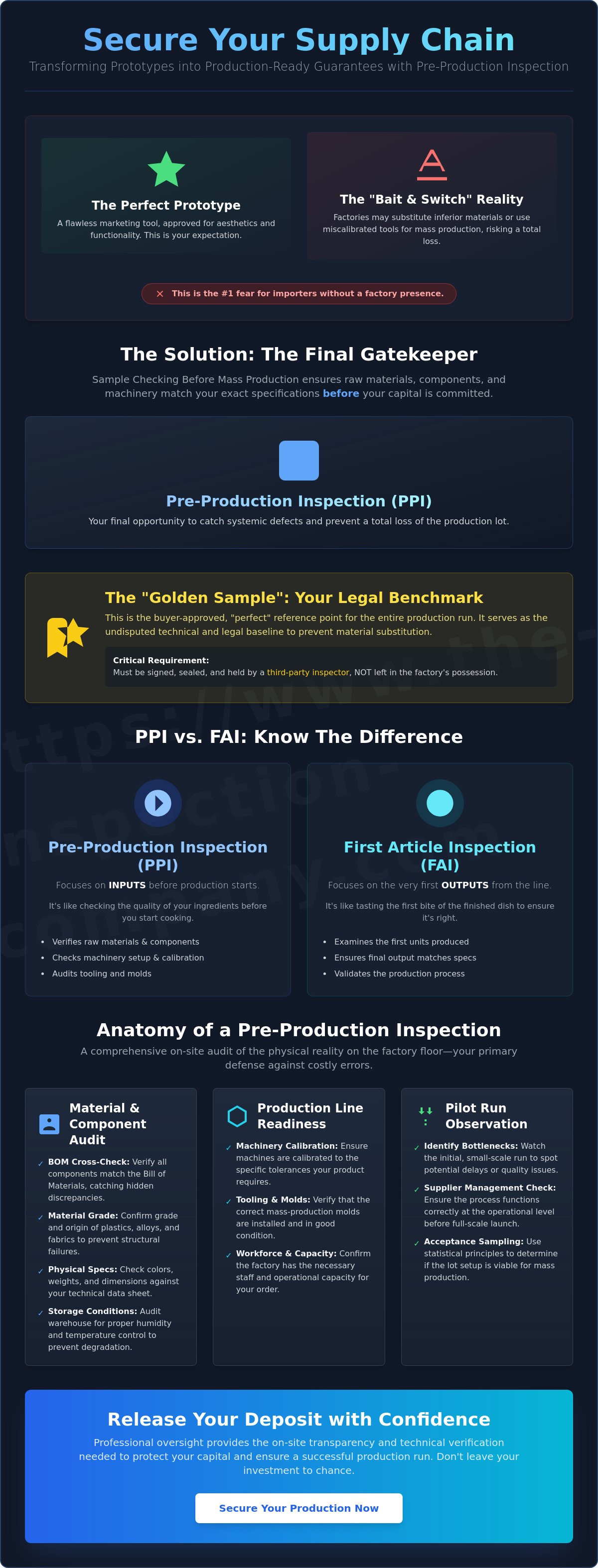
The transition from product development to the factory floor is the most volatile stage of the international supply chain. For many importers, this phase represents the "point of no return" because once the machinery starts, your capital is tied to the physical output. Rigorous sample checking before mass production acts as the final gatekeeper. It ensures that the raw materials, specific components, and manufacturing setup match your approved specifications exactly.
There's a critical difference between a development sample and a production-ready sample. While a development sample focuses on aesthetics and functionality, a production-ready sample proves that the factory can replicate your design at scale with the available machinery. This verification process uses the principles of Acceptance sampling to validate that the inputs meet quality thresholds before thousands of units are processed. Implementing a pre-production inspection (PPI) allows you to catch systemic defects, such as incorrect plastic resins or miscalibrated tooling, that would otherwise lead to a total loss of the production lot.
The Role of the Golden Sample
The Golden Sample represents the "perfect" reference point approved by the buyer. To be effective, this sample must be signed, sealed, and held by your third-party inspector rather than left in the factory's possession. This prevents "bait and switch" scenarios where a factory might use a different material grade during the actual run. The Golden Sample serves as the technical and legal baseline for the entire production run.
PPI vs. FAI: Understanding the Difference
Importers often confuse these two stages, but they serve different risk mitigation goals. A PPI focuses on the inputs, checking raw materials and machinery setup before the line moves. In contrast, a First Article Inspection (FAI) examines the very first units coming off the line to ensure the final output matches the intent. Think of PPI as checking the ingredients and FAI as tasting the first bite of the finished product.
The Anatomy of a Pre-Production Inspection: What We Verify
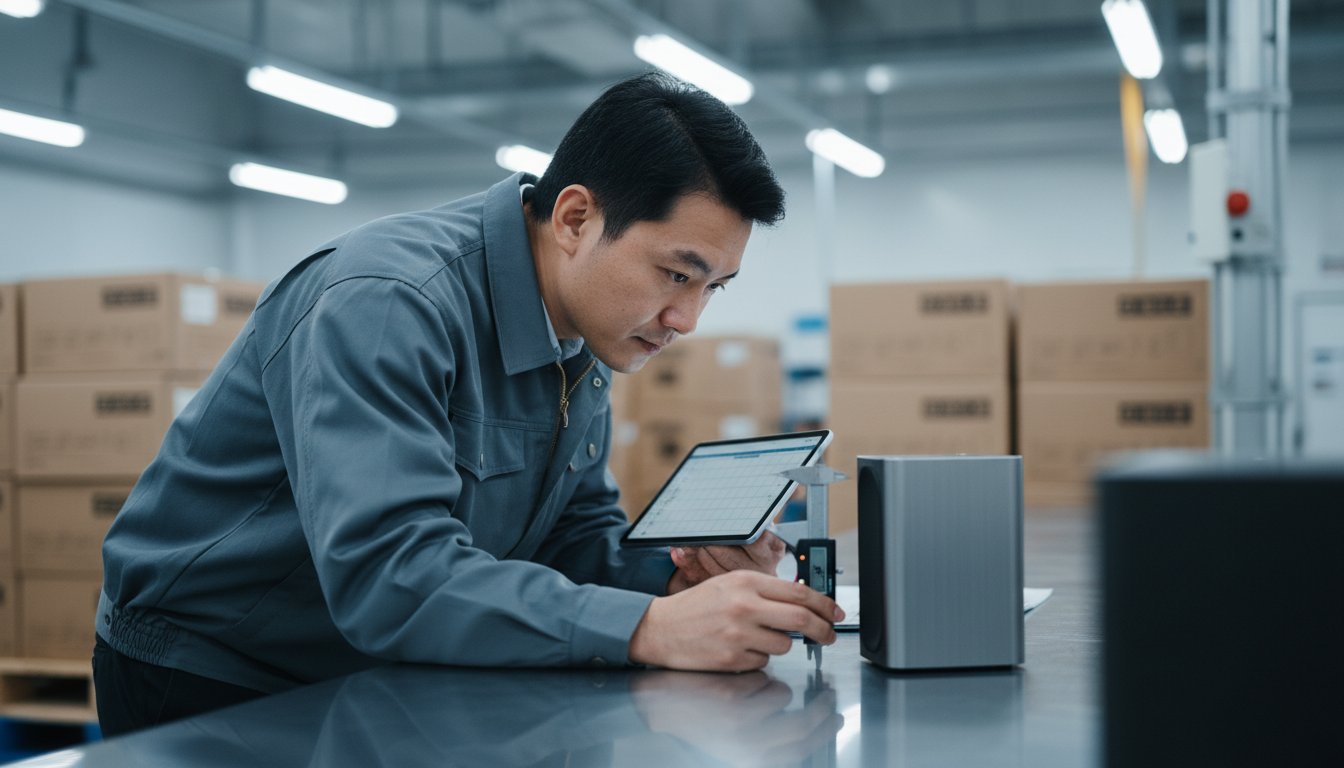
A successful pre-production inspection goes beyond paperwork. It requires an on-site presence to audit the physical reality of the factory floor. While many factories provide digital photos, these don't reveal the actual quality of the raw materials or the state of the tooling. Rigorous sample checking before mass production ensures that the components sitting in the warehouse actually match the specifications of your Golden Sample. This physical verification is your primary defense against the "bait and switch" tactics that often occur once a deposit is paid.
Verification begins with the raw materials. Factories sometimes substitute cheaper plastics or recycled alloys to increase their margins. We verify the grade and origin of these materials to prevent structural failures later. Equally important is the machinery check. We ensure that mass production molds are correctly installed and that machines are calibrated to the specific tolerances required for your order. Addressing the machinery setup phase is a critical step that many internal quality controls overlook, yet it's where most systemic defects originate.
Observing a pilot run helps identify potential bottleneck risks before the full line starts. We watch the first units to ensure the supplier management process is functioning correctly at the operational level. This methodology relies on the statistical principles of acceptance sampling to determine if the lot setup is viable. If you have concerns about your factory's current readiness, reach out to our team for a technical consultation.
Material and Component Auditing
We perform a detailed check of colors, weights, and dimensions against your technical data sheet. It isn't just about the specs; it's about storage. Materials must be kept in controlled conditions to prevent degradation from humidity or temperature fluctuations. We audit the warehouse environment to ensure your components remain in peak condition before they hit the assembly line.
Production Line Readiness
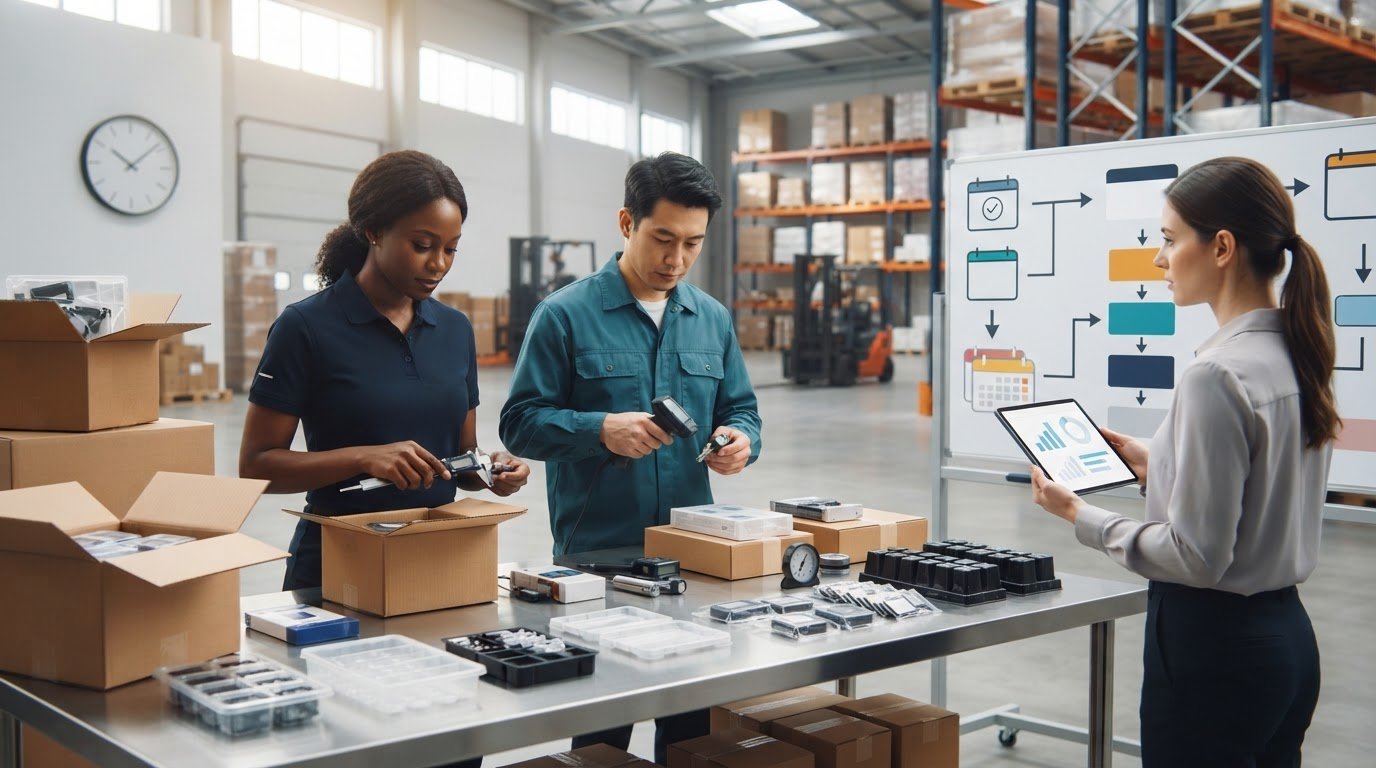
Does the factory have the actual capacity and workforce to meet your shipping deadline? We verify the available labor and ensure that every station has clear Work Instructions (WIs) derived from the approved sample. Without these instructions, workers rely on memory, which leads to variation and costly errors across thousands of units.
A Technical Checklist for Comparing Samples to Mass Production
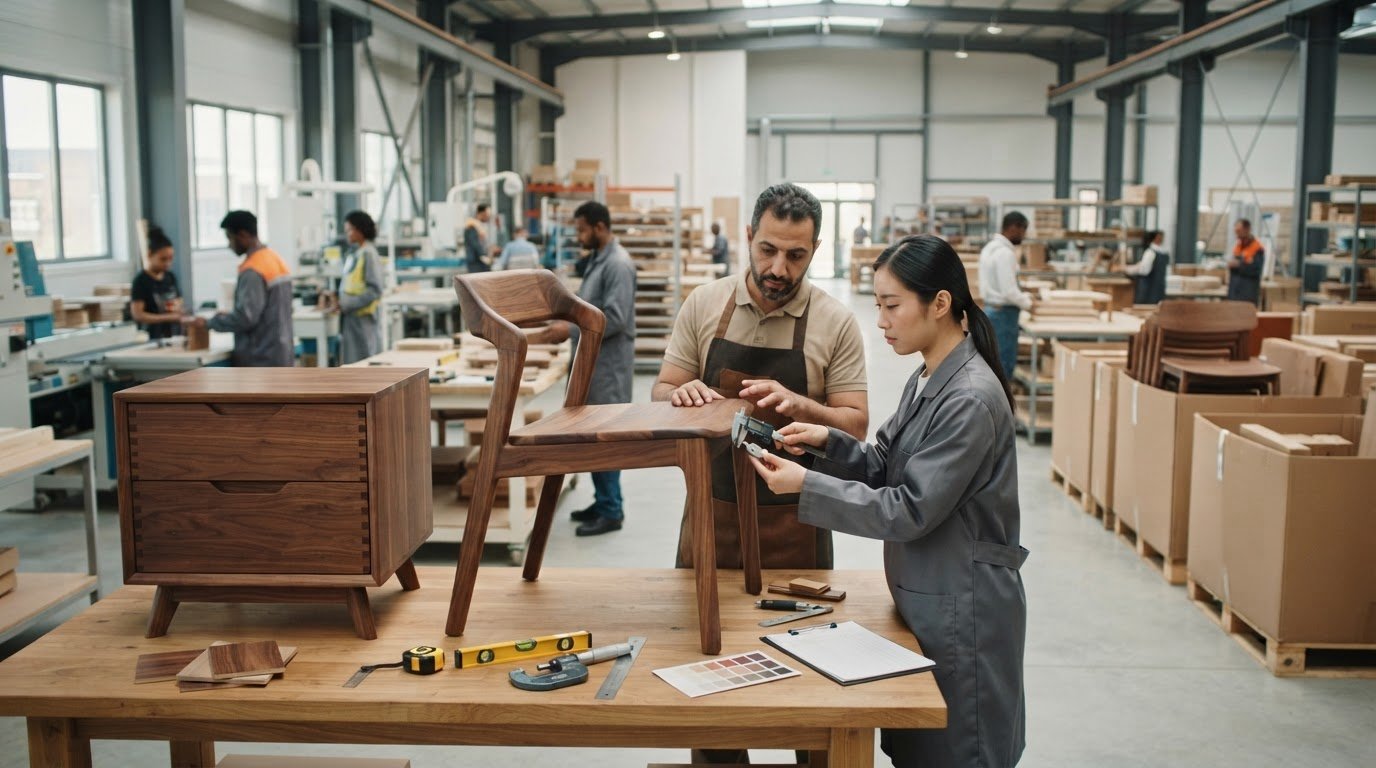
Establishing a technical framework for comparison is the only way to move beyond subjective "looks good" approvals. While the Golden Sample provides the visual target, your technical data sheet provides the measurable boundaries. Effective sample checking before mass production requires defining critical tolerances for every key attribute. For instance, a dimension deviation of +/- 0.5mm might be acceptable for a plastic housing but catastrophic for a precision gear. You must define what "close enough" means for measurements, weights, and Pantone color matches before the factory begins the full run.
A rigorous Bill of Materials (BOM) cross-check is the next step. We physically disassemble the production-ready sample to compare every internal component against your technical specifications. This identifies if a factory has substituted a high-grade capacitor with a generic alternative or changed a metal alloy to save costs. We also perform functional stress tests on the sample to ensure it performs under pressure. This includes reviewing product defects identified in previous production cycles to verify that specific engineering corrections have been successfully implemented. To secure your next order with a professional technical audit, contact our team to schedule an inspection.
Setting Acceptable Quality Limits (AQL)
We apply AQL standards even at the sample stage to categorize potential issues. Critical defects are those that pose safety risks or legal non-compliance, resulting in immediate rejection. Major defects affect functionality or significantly reduce marketability, while minor defects are aesthetic issues that don't impact use. Differentiating these early prevents the factory from downplaying systemic errors as mere "minor variations."
Packaging and Labeling Verification
Your quality benchmarks must extend to the exterior. We verify that the sample packaging actually protects the product during simulated drop tests and vibration. For e-commerce sellers, we perform a strict check of barcode readability and labeling compliance to meet Amazon FBA requirements. Incorrect labeling at the mass production stage leads to expensive re-work and warehouse rejection fees.
Why Professional Oversight is Essential Before Mass Production Starts
Relying on a factory's internal quality control is a high-stakes gamble. Internal teams often face immense pressure to meet shipping deadlines, which leads them to overlook systemic issues during the setup phase. Professional sample checking before mass production provides an objective lens that factory self-reporting cannot offer. Our European management structure bridges the technical and cultural gap, ensuring that international quality standards are enforced on the factory floor without compromise. This oversight transforms a vulnerable supply chain into a controlled, transparent operation.
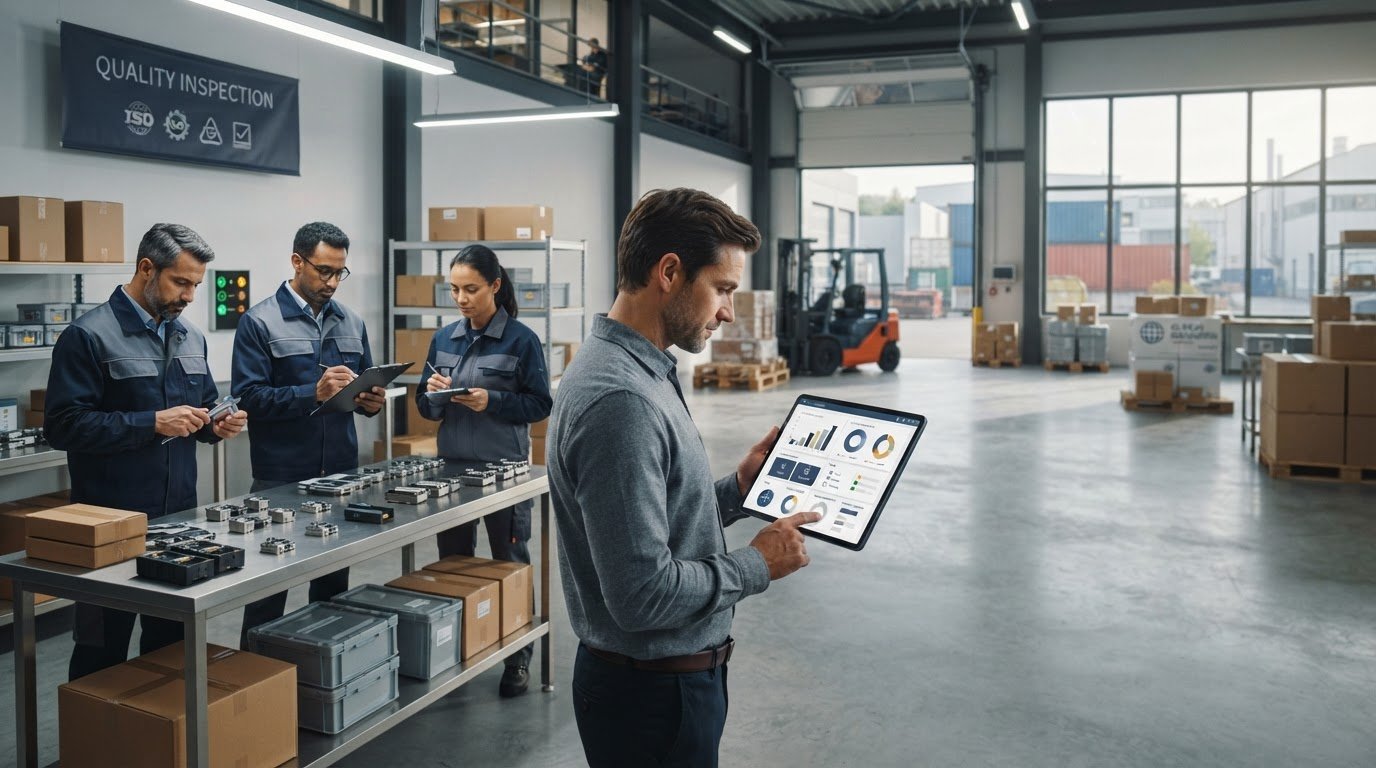
Transparency is maintained through digital platforms that deliver detailed reports within 24 hours. This speed allows you to make informed decisions without stalling the production timeline. While on-site inspections verify the assembly process, specialized sample testing in a laboratory setting ensures that the chemical and physical properties of your materials meet regulatory safety standards. Combining these two methods creates a comprehensive security layer for your investment, ensuring that what you designed is exactly what the factory produces.
Avoiding the "Bait and Switch"
Independent inspectors act as your physical presence to prevent factories from swapping approved components for inferior ones mid-run. Identifying a 10% defect rate during the sample checking before mass production phase is a manageable technical hurdle that can be corrected immediately. Discovering that same defect rate after thousands of units arrive at your warehouse is a financial catastrophe. Preventative oversight ensures that the Golden Sample remains the standard throughout the entire manufacturing cycle, protecting your brand's reputation and your bottom line.
Securing Your Supply Chain in Asia
The Inspection Company maintains a robust presence in major manufacturing hubs across China, Vietnam, and India. Our localized teams understand the specific operational risks inherent to these regions and apply meticulous standards to every audit. Before you commit your capital to a full production run, you should contact a professional inspection company to verify your factory's readiness and secure your supply chain.
Securing Your Manufacturing Future
Transitioning from a prototype to a full production line shouldn't be a leap of faith. By implementing rigorous sample checking before mass production, you establish a technical baseline that holds your factory accountable. You've learned how to define critical tolerances and the importance of an independent BOM cross-check to prevent material substitution. These proactive steps ensure that your capital is invested in quality rather than wasted on defective inventory that arrives too late to fix.
The Inspection Company provides the transparency you need through a network of 700+ qualified inspectors across Asia. With European management present in the region since 2007, we understand the complexities of international trade and deliver detailed inspection reports within 24 hours. Don't wait for hidden defects to appear at your warehouse. Secure your production run; book a Pre-Production Inspection today to move forward with absolute certainty. Your supply chain deserves the protection of a seasoned expert.
Frequently Asked Questions
What is the difference between a prototype and a Golden Sample?
A prototype is a proof of concept used for design and functionality testing during the development phase. In contrast, a Golden Sample is the final, production-ready version that serves as a legally binding quality benchmark for the entire order. It represents the exact material, color, and finish that the factory must replicate during mass manufacturing. While a prototype helps you refine the idea, the Golden Sample protects your investment during the actual run.
Can I skip the pre-production inspection if I trust my supplier?
Trust is a valuable business asset, but it isn't a substitute for physical verification on the factory floor. Even reliable suppliers can experience staff turnover, machinery wear, or pressure from other clients that leads to unintentional errors. Performing sample checking before mass production ensures that your specific requirements are understood by the current workforce and that the machinery setup is correct before you release your deposit.
What happens if the sample fails the pre-production inspection?
If a sample fails, the factory must identify the root cause of the non-conformity and implement corrective actions before the production line starts. This process might involve recalibrating machinery, sourcing higher-grade raw materials, or updating work instructions for the staff. You shouldn't allow production to proceed until a new sample is verified against your technical specifications to avoid mass-scale defects and financial loss.
How much does a sample checking service typically cost for importers?
The cost for sample checking before mass production varies based on the factory location, the complexity of the product, and the specific laboratory tests required. Most industry professionals view this as a preventative investment rather than a simple expense. It is significantly more cost-effective to identify a systemic material issue during a pre-production inspection than to manage a total loss once the goods have been shipped.
How long does a pre-production inspection take on-site?
A standard pre-production inspection typically takes one man-day to complete on-site at the factory. This timeframe allows the inspector to audit raw material storage, verify machinery calibration, and observe a pilot run of the first few units. More complex products or large-scale factories with multiple production lines may require additional time or multiple inspectors to ensure a comprehensive technical audit of the entire manufacturing setup.