

Self-reported factory capacity is rarely an engineering fact; it is marketing. Every importer understands the financial anxiety of wiring a major production deposit, only to wonder if an overseas vendor truly owns the machinery shown on their digital profile. Without boots on the ground, suppliers frequently exaggerate daily output or quietly outsource critical production to unvetted downstream workshops. Scheduling an independent supplier capability audit eliminates this operational gamble before your capital is at risk.
You already know that relying on supplier assurances often leads to delayed lead times, hidden defects, and painful balance sheet losses. Discover how an on-site supplier capability audit verifies machinery maintenance, workforce competency, and genuine production capacity before you commit to large-scale manufacturing runs. This guide provides the complete framework to inspect physical facilities, evaluate real factory throughput, and secure your supply chain with complete operational clarity.
Key Takeaways
- Discover why digital supplier profiles mask operational deficits, and how an on-site supplier capability audit provides physical verification before you transfer production deposits.
- Learn the primary technical checkpoints used during audits, including machinery calibration logs, operating capacity metrics, and raw material traceability protocols.
- Master the end-to-end evaluation process, from establishing baseline technical parameters to enforcing Corrective Action Plans that eliminate manufacturing bottlenecks.
- Protect supply chain continuity by deploying independent third-party inspectors across manufacturing centers to eliminate unannounced subcontracting risks and vendor bias.
What is a Supplier Capability Audit and Why Do Overseas Buyers Need One?
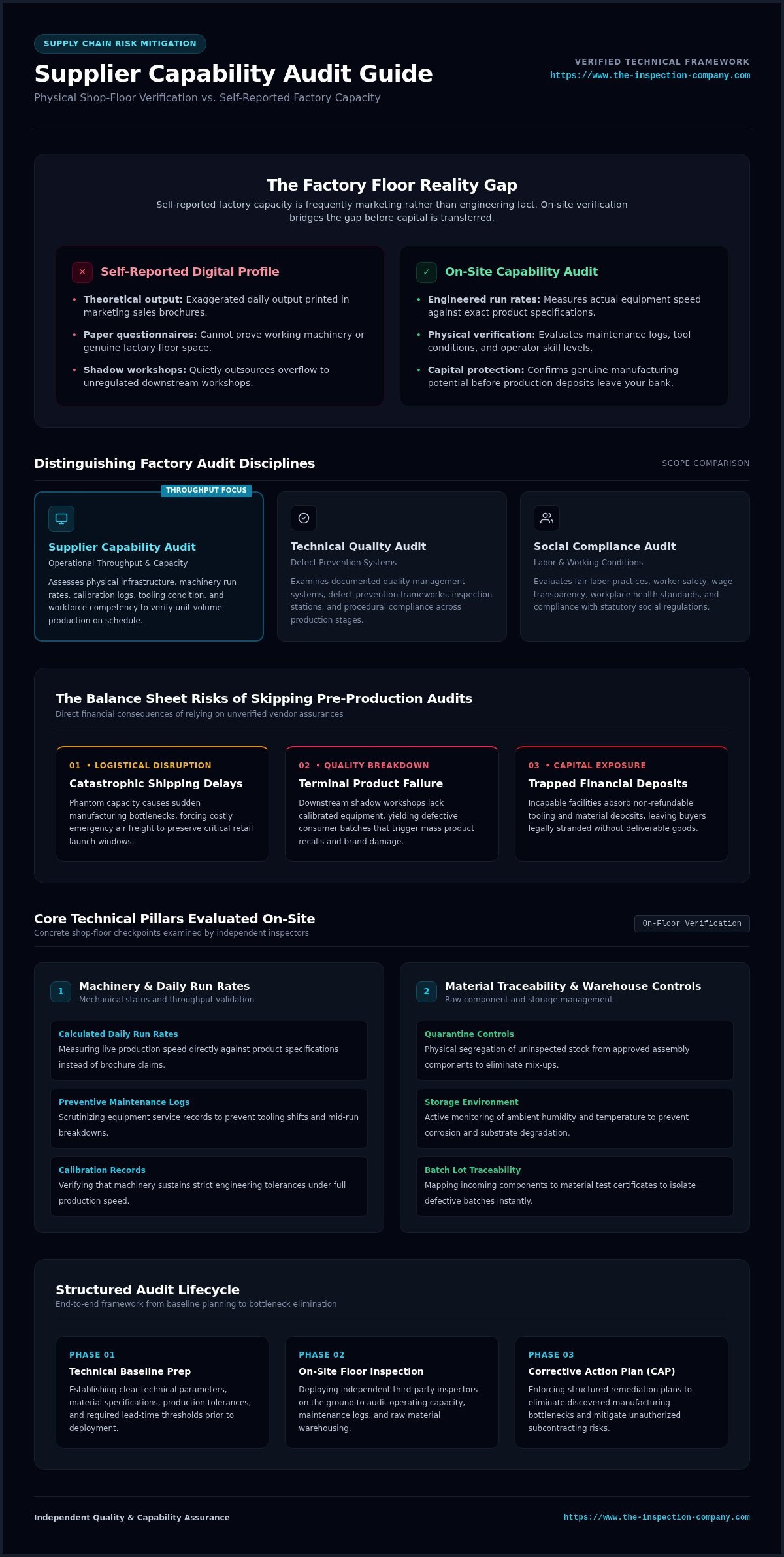
A supplier capability audit is an on-site, technical evaluation of a factory's true manufacturing potential. While digital platforms and vendor self-assessments present polished profiles, they often conceal critical operational constraints. Paper-based questionnaires cannot verify working machinery or genuine floor space. When demand exceeds an unvetted facility's actual capacity, suppliers frequently resort to unauthorized subcontracting, offloading your production to unregulated shadow workshops. Conducting physical factory audits serves as preventative insurance, securing your capital before non-refundable tooling and inventory deposits leave your bank account.
Capability Audits vs Quality and Social Compliance Audits
Importers often conflate operational capacity reviews with other factory evaluations. While a technical quality audit examines documented defect-prevention frameworks and a social audit evaluates working conditions, a capability assessment zeroes in on operational throughput. It assesses physical infrastructure: machine run rates, tooling conditions, and operator skill levels. This critical review determines whether the factory can technically manufacture your unit volume on schedule.
The True Cost of Skipping Pre-Production Factory Vetting
Foregoing physical evaluation introduces severe balance sheet risks that far exceed short-term administrative savings:
- Catastrophic shipping delays: Phantom capacity causes sudden production bottlenecks, forcing expensive emergency air freight to protect retail launch windows.
- Terminal product failure: Shadow workshops lack calibrated machinery, resulting in sub-standard consumer batches that trigger product recalls and brand erosion.
- Trapped financial deposits: Incapable facilities absorb initial cash deposits, leaving buyers legally stranded without deliverable goods.
Core Technical Pillars Evaluated During an On-Site Factory Capability Audit
A rigorous supplier capability audit replaces optimistic vendor estimates with concrete shop-floor data. Much like the federal acquisition framework requires an objective assessment of the offeror's ability before awarding public contracts, commercial importers must audit technical competence on the ground. Independent inspectors examine calibration records, operator skills, and testing infrastructure to verify whether a facility can sustain required tolerances under full production speed.
Machinery, Tooling, and Actual Throughput Verification
Audit personnel inspect operating machinery directly against your product specifications. They calculate genuine daily run rates instead of accepting theoretical numbers printed in sales brochures. Crucially, inspectors scrutinize preventive maintenance logs to verify that equipment undergoes regular servicing and scheduled calibration. Skipping these mechanical checks invites sudden breakdowns, uncalibrated tooling shifts, and costly mid-run stoppages.
Material Traceability and Warehouse Quality Management
Production consistency depends entirely on raw material integrity. Technical evaluations inspect how incoming components are handled, segregated, and tracked across every stage:
- Quarantine controls: Uninspected stock must be physically separated from approved assembly inventory.
- Storage conditions: Warehouses must manage ambient humidity and temperature to prevent corrosion or substrate degradation.
- Batch lot traceability: Every component must map to a material test certificate to isolate defective batches instantly.
Securing clear evidence across these technical pillars protects your initial capital outlay. If you want to verify your vendor's shop-floor reality, consult an inspection specialist before authorizing your next production run.
Capability Audits: From Preparation to Corrective Action
Executing a reliable supplier capability audit requires a structured roadmap before boots touch the factory floor. Importers must establish clear technical parameters tailored to their product complexity, lead times, and materials. Much like trade agencies utilize an Exporter Assessment Questionnaire to benchmark readiness, our pre-audit phase demands business licenses, machinery inventories, and factory layout plans from the vendor. This upfront document review prevents wasted site visits and exposes administrative red flags immediately.
Developing Custom Assessment Checklists for Your Product
Generic audit templates fail because technical vulnerabilities vary across product categories. Tailored checklists target exact production bottlenecks, such as surface finishing stations or automated soldering cells. The protocol must also mandate physical verification of specialized technician certifications and dedicated tooling jigs required for your specific product geometry.
Interpreting Audit Findings and Structuring Corrective Actions
Once on-site operational walk-throughs and staff interviews conclude, technical observations are categorized by operational severity:
- Fatal risks: Inadequate machinery, systemic subcontracting evidence, or forged licenses; grounds for immediate vendor disqualification.
- Critical bottlenecks: Missing maintenance logs or insufficient testing equipment that threaten delivery schedules and product integrity.
- Minor inefficiencies: Sub-optimal floor workflows or localized labeling gaps that allow for monitored remediation.
Never remit production down payments based on promises of future improvements. Demand a formal Corrective Action Plan (CAP) with measurable milestones and photographic proof of implementation. If you need experienced technical teams to verify factory compliance before releasing funds, schedule an on-site audit to protect your investment.
Why Independent On-Site Audits Secure Asian Supply Chains in 2026
Managing manufacturing relationships across Asia requires impartial oversight. Sourcing agents often face inherent conflicts of interest, collecting commissions from the very factories they claim to evaluate. Deploying an independent supplier capability audit eliminates these compromises. Backed by European management standards and more than 700 certified field inspectors stationed directly across Asian manufacturing hubs, The Inspection Company delivers detailed technical reports within 24 hours of site departure. This rapid turnaround maintains your procurement momentum while establishing an objective baseline for downstream quality control.
Eliminating Middleman Deception and Factory Brokering
A persistent threat in overseas procurement involves trading intermediaries presenting themselves as original equipment manufacturers. An on-site capability review exposes these arrangements through methodical legal and physical cross-checks:
- Corporate documentation: Cross-referencing local business licenses with facility registrations and tax filings.
- Premises lease validation: Auditing facility lease contracts and utility accounts directly to verify true site control.
- Operational integration: Confirming whether the management team works directly for the factory entity rather than an outside broker.
Building Long-Term Sourcing Resilience with Objective Data
Standardized capability scores provide the data points needed to compare competing vendors across regional manufacturing hubs. Rather than relying on subjective vendor pitches, procurement teams gain quantifiable insights into maintenance compliance, throughput stability, and workforce retention. These baseline audit results integrate directly into future inspection protocols, ensuring production remains consistent across every batch. To eliminate hidden vulnerabilities and secure your capital upfront, book a professional factory audit before transferring your next supplier deposit.
Protect Your Capital With Objective Manufacturing Verification
Wiring production deposits based solely on unverified supplier claims remains an unnecessary operational gamble. A rigorous supplier capability audit replaces optimistic digital profiles with verifiable ground truth. By physically evaluating machinery maintenance, workforce competencies, and actual daily throughput on the factory floor, you ensure your partners can meet delivery schedules without compromising product quality.
Operating under European management with over 700 qualified inspectors deployed across Asian manufacturing centers, The Inspection Company delivers comprehensive technical audit reports featuring high-resolution photo evidence within 24 hours of inspection. These rapid, objective insights empower your procurement team to eliminate unauthorized subcontracting risks and enforce targeted corrective actions before production begins.
Don't let hidden factory constraints jeopardize your shipping deadlines or brand reputation. Secure your supply chain with a comprehensive factory audit from The Inspection Company and scale your overseas production with total confidence.
Frequently Asked Questions
What is the primary difference between a supplier capability audit and a pre-shipment inspection?
A supplier capability audit takes place before you commit capital or award contracts, evaluating physical factory capacity, machinery condition, and workforce competence. In contrast, a pre-shipment inspection occurs at the end of the production cycle when at least 80% of goods are finished and packed. The audit validates whether a factory can build your product; the inspection confirms whether the completed batch meets your quality specifications.
Can a supplier capability audit prevent unauthorized factory subcontracting?
Yes, an on-site audit directly prevents unapproved outsourcing by establishing the facility's genuine maximum daily throughput. Field inspectors calculate machine run rates, verify active shift staffing, and examine ongoing client orders. If a factory accepts order volumes that exceed its physical machinery capacity or floor space, our European-managed audit teams identify the deficit immediately, stopping the vendor from quietly routing your orders to unregulated shadow workshops.
How long does a thorough on-site supplier capability audit take to complete?
A standard technical facility audit typically requires one full business day on-site for small to medium-sized manufacturing plants. Complex multi-building facilities or high-precision industrial operations may require two days. Once the on-site walkthrough, equipment reviews, and documentation cross-checks wrap up, The Inspection Company compiles all technical findings and high-resolution photo evidence, delivering a comprehensive audit report directly to your team within 24 hours.
What happens if a promising supplier fails specific sections of a capability audit?
Failing specific non-critical criteria doesn't require immediate vendor abandonment. Instead, buyers issue a targeted Corrective Action Plan (CAP) that outlines required remediations, such as recalibrating testing equipment, organizing raw material staging, or formalizing maintenance logs. The supplier must document these fixes with photographic evidence or undergo a focused re-audit before you release production down payments. Fatal deficiencies, like systemic subcontracting or falsified business registrations, warrant immediate disqualification.
Is an on-site capability audit necessary if a supplier holds ISO 9001 certification?
Yes, because an ISO 9001 certificate only confirms that a management system exists on paper; it doesn't guarantee operational capacity or equipment maintenance. Some overseas suppliers purchase accredited certificates without adhering to standard protocols during daily operations. A physical supplier capability audit confirms whether the factory actively applies those quality frameworks on the shop floor, validating operational machinery, actual employee skills, and realistic delivery capacity for your specific product.