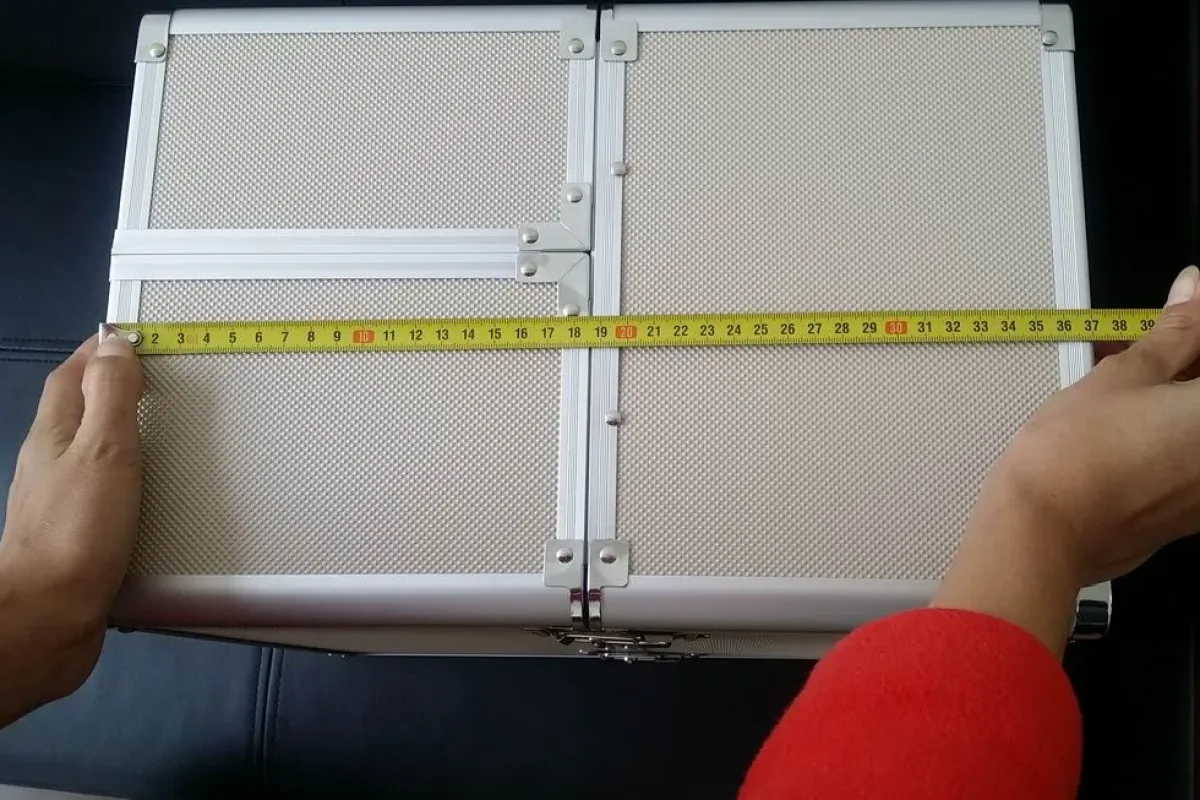

A third-party inspection in Italy is an on-site check of your furniture, appliances or tools by an inspector you hire and pay, carried out at the Italian factory before you release payment or shipment. The inspector draws a random sample using AQL tables, checks it against your specification and approved sample, and reports a pass, fail or pending result. This guide covers what gets checked on each product type, the defects that come up most often, and how to set up the inspection so the report gives you a clear decision.
What a Third-Party Inspection in Italy Covers
Third-party inspections in Italy follow the same production stages used anywhere else. You can book a single stage or combine several, depending on how well you know the supplier and the value of the order.
For most orders the pre-shipment inspection of finished goods is the minimum. It is the last point where the goods are still at the factory and the balance payment is still yours to hold. The earlier stages exist for faults that cannot be fixed once the whole order has been built, such as the wrong foam density in a sofa run or an incorrect motor in an appliance batch.
Why Italian Production Still Needs an Independent Check
Italian production has a strong reputation, and many buyers skip inspection because of it. Reputation does not replace a check of your specific lot. The faults inspectors find in Italy are rarely about a lack of skill. They come from how production is organised.
- Subcontracting inside the districts. Italian furniture and tool production is organised in industrial districts where a brand-name factory often passes cutting, lacquering, upholstery or machining to smaller workshops (terzisti). The work can be good, but nobody has checked whether the subcontractor follows your specification.
- Imported components. Motors, PCBs, power cords, hinges, slides, fasteners and tool blanks are frequently bought from Asia or Eastern Europe and assembled in Italy. A component change between your sample and bulk production is a common source of non-conformity.
- Hand finishing. Hand-applied stains, waxes, patinas and leather finishes vary from piece to piece by design. Without an agreed range of acceptable variation, a buyer and a factory can disagree about whether a lot passes.
- The August shutdown. Many Italian factories close for two to three weeks around mid-August. Orders are rushed out in July, and production restarts in September with lines that need time to settle.
- Export markings. A factory that mainly sells in Italy may ship with Italian-only manuals, EU plugs on an order for the UK, or labels that lack the details your market requires.
Independence matters as much as the check itself. An inspection is independent when you book and pay for it, and the inspection company takes no money from the supplier. A factory's own QC staff or an agent paid commission on the order has a reason to pass a borderline lot.
Where Furniture, Appliance and Tool Makers Are in Italy
Italian manufacturing for these three product groups is concentrated in the north and centre, with one large furniture cluster in the south. Furniture is made in Brianza in Lombardy, across Veneto, in the chair district around Manzano in Friuli Venezia Giulia, in Marche around Pesaro, and in the upholstered furniture district on the border of Puglia and Basilicata around Altamura and Matera. Large and small appliances come mainly from Marche around Fabriano, Friuli around Pordenone, and Veneto. Hand tools, power tool accessories and garden tools are produced across Lombardy, Emilia-Romagna, Veneto and Piedmont.
When you book, give the full street address of the production site and a contact person who speaks with the inspector on the day. A supplier's registered office in Milan or Treviso is often not where your goods are made or packed.
Furniture Inspection in Italy: What the Inspector Checks
Furniture inspections in Italy concentrate on finish, upholstery, assembly and packing. Italian furniture orders often include high-gloss lacquer, veneered panels, leather upholstery and mixed materials, and each fails in its own way.
Wood, veneer and panels
Wood moisture is measured with a moisture meter on several pieces drawn from different cartons, and each reading goes into the report. Indoor furniture is typically specified at 8% to 12%. Veneered panels are checked for lifting at the edges, bubbles, sanding through the veneer and grain direction against the approved sample. Edge banding is checked for chips, gaps and glue lines. If you sell in the US, ask the inspector to confirm that composite wood panels carry the TSCA Title VI or CARB labelling your importer needs, and that the certificates match the board supplier.
Lacquer, colour and surface finish
Finish is compared with a signed colour panel under D65 daylight. Gloss can be measured with a gloss meter at 60°, which only works if your specification states a target, for example 30 gloss units ±5. Inspectors look for orange peel, runs, dust inclusions, sink marks over joints and uneven sheen between parts of one piece. Where agreed, a cross-cut adhesion test to ISO 2409 is done on a spare panel or a hidden area. For hand-finished pieces, agree photos of the lightest and darkest acceptable piece before production so the inspector has a range to judge against.
Upholstery and leather
Upholstered pieces are checked for seam straightness, stitch density, puckering, pattern alignment across cushions and back panels, and colour match between cushions cut from different hides or rolls. Leather is checked for scars, insect bites and wrinkles in visible areas; your specification should state which zones of the piece may show natural marks. Foam density and filling weight can be checked against the specification, for example 30 kg/m³ seat foam, by weighing a cut sample if the factory supplies one.
Assembly, stability and moving parts
Assembly is done using only the hardware, tools and instructions packed in the carton. Assembled chairs, tables and cabinets are placed on a flat surface and checked for rocking against a stated limit, for example 2 mm. Drawers are opened fully under load, doors are checked for even gaps and sag, and soft-close hinges and slides are cycled several times. Recliner and sofa-bed mechanisms are worked through their full range.
Packing
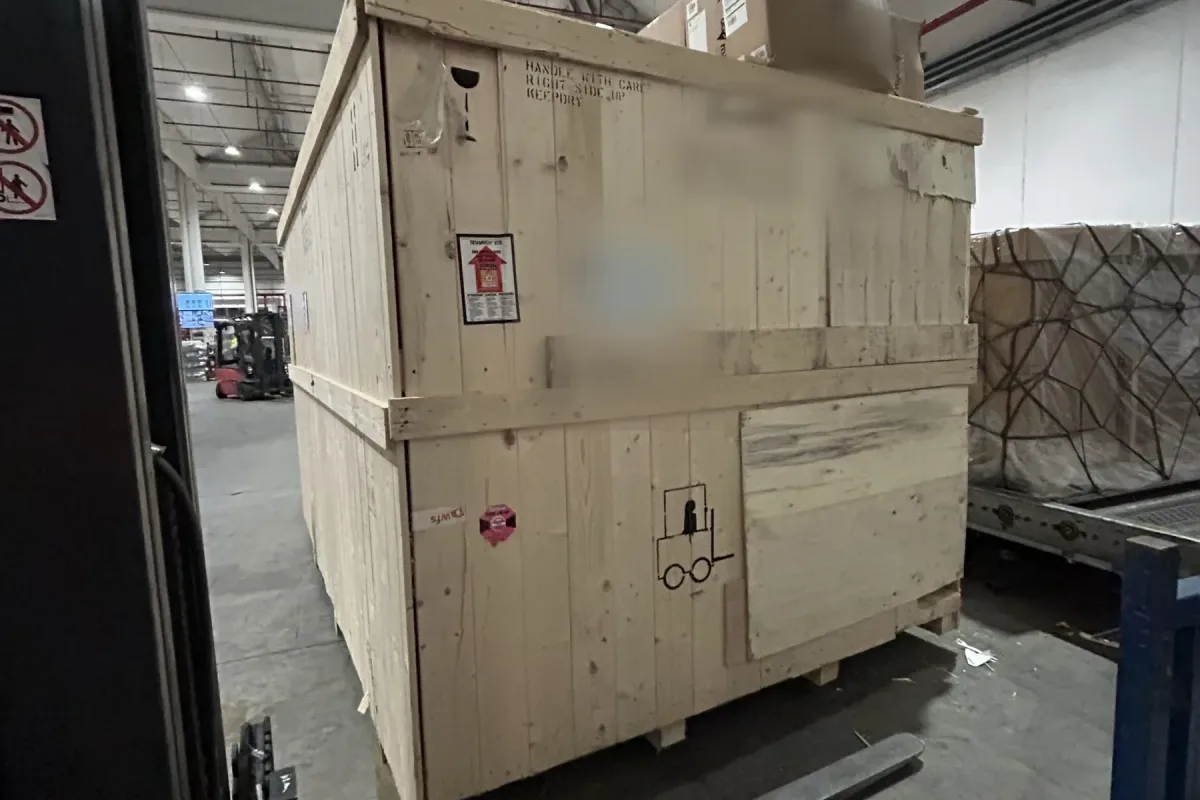
Packing gets as much attention as the product, because bulky furniture takes most of its damage in transit. The inspector checks corner and edge protection, carton grade, carton markings against the packing list, and runs a carton drop test to the procedure written in your specification. Wooden crates and pallets for export outside the EU usually need ISPM 15 heat treatment and stamping.
Findings that most often fail an Italian furniture lot:
- Shade, sheen or grain mismatch between pieces of one set
- Dust inclusions, orange peel or polishing marks on high-gloss lacquer
- Wobbling legs on assembled chairs and tables
- Misaligned patterns or puckered seams on upholstery
- Missing fittings, Allen keys or assembly instructions in the required language
- Weak corner protection or cartons that do not match the packing list
The full checklist by material is on our furniture inspection services page.
Home Appliance Inspection in Italy: Function, Markings and Contents
Home appliance inspections in Italy run the finished units, check the electrical details against the destination market and confirm everything that should be in the box is there. Appliances are electrical products, so a defect that reaches the consumer is a liability and recall risk as well as a return.
Function and run tests
Sampled units are powered on and run through every operating mode on the specification: speeds, temperatures, programmes and timers. A run test, typically 15 to 30 minutes for small appliances and longer for ovens or washing machines if agreed, shows excessive noise, vibration, heat build-up, leaks or units that stop. Inspectors shake units to listen for loose internal parts and check that displays, buttons and indicator lights respond correctly.
Plugs, voltage and rating labels
The plug type, cord length, cord cross-section and rated voltage must match the destination market. Italian factories make for many markets at once, so a UK order may arrive with EU plugs or a US order with 230 V motors if nobody checks. The rating label is compared line by line with the specification: model number, voltage, frequency, power, protection class and manufacturer details. Some buyers ask the inspector to witness the factory's own hi-pot and earth continuity tests on the production line or to repeat them with a portable tester. An inspection is an on-site check, so full laboratory safety testing is arranged separately through sample testing.
EU markings on the product and packaging
For appliances sold in the EU, the inspector checks the CE mark, the crossed-out wheeled bin symbol for WEEE, and, for regulated categories such as refrigerators, washing machines, dishwashers, ovens and range hoods, an energy label of the correct version with a QR code that links to the EPREL product database. Under the General Product Safety Regulation (EU) 2023/988, the product or its packaging must show the manufacturer's name, postal and electronic address, and a type, batch or serial number, with safety information in the language of the country where it is sold.
In-box contents
Opened cartons are checked for attachments, filters, spare parts, user manuals in the required languages and warranty cards. A manual supplied only in Italian is a frequent finding on export orders. The full list of appliance checks is on our home appliance inspection services page.
Tool Inspection in Italy: Hand Tools, Power Tools and Garden Tools
Tool inspections in Italy combine dimensional checks, material checks and function tests. A spanner that looks perfect can still be 0.3 mm oversize across the jaws, and a drill can pass a visual check while running well below its rated speed.
Hand tools
Spanners and sockets are gauged across the flats against the opening tolerances in ISO 691 or your own drawing. Pliers are checked for jaw alignment, cutting edge closure and smooth pivot action. Hardness can be checked with a portable Rockwell tester against your specified range on a sample piece, because the test leaves a mark. Plating and coating are checked for peeling, rust spots, uneven chrome and pitting, and markings such as size, steel grade (for example Cr-V) and brand are checked for legibility and position. Handles are pulled and twisted to confirm they are fixed.
Torque wrenches and measuring tools
Torque wrenches are checked on a calibrated torque tester at several points across the range. Click-type wrenches under ISO 6789 are typically held to ±4% of the set value. Calipers, rules and levels are checked against reference gauges, and the factory's calibration certificates for its own test equipment are reviewed.
Power tools
Power tools are run under no load, and the no-load speed is measured with a tachometer against the rating label. Inspectors check switch function, speed control, direction reversal, chuck run-out, guard fitting and brake action where the tool has one. Cordless tools are checked for battery fit and charging indication, and the battery packs need a UN 38.3 test summary for transport. CE marking, rating labels and warning symbols are checked on every sampled unit, and the technical file should reference the EN 62841 series for hand-held electric tools.
Garden tools
Garden tools such as shears, loppers and pruners are checked for blade sharpness on a paper or rod test, blade closure without gaps, spring return and handle fixing. Long-handled tools are checked for straightness and secure head fixing, since a loose head is a safety defect.
Destination-Market Requirements to Verify During Inspection
Destination-market requirements decide what the inspector checks on labels and packaging, and they change with where your goods are sold, not where they are made. A short summary of the most common checks:
The European Commission's CE marking guidance lists which product groups need the mark. Furniture and hand tools generally do not carry it, so a CE mark on a plain spanner is a sign the factory is unsure of the rules.
Setting AQL Levels for Italian Orders
Pass or fail at the pre-shipment stage is normally decided with the sampling tables in ISO 2859-1, which match ANSI/ASQ Z1.4. The usual setting is zero critical defects, AQL 2.5 for major defects and AQL 4.0 for minor defects, at general inspection level II. Italian furniture and tool orders are often smaller than Asian ones, so the sample sizes are smaller too:
For high-value furniture where every piece is expensive, some buyers ask for a 100% visual check of finish on top of AQL sampling for everything else. For appliances, function tests are often run on a smaller special sample, such as level S-4, so that time goes into longer run tests. State the counting unit in your purchase order: pieces or sets for furniture, units for appliances, pieces or kits for tools. Our AQL calculator gives the sample size and acceptance numbers for any lot size.
Which Inspection Stages Each Product Needs
The right combination of inspection stages depends on where each product usually goes wrong. This table is a starting point for a supplier you have not used before.
Once a supplier has passed several orders in a row, many buyers move to a pre-shipment inspection only. Keep a during production inspection for orders produced in July and September around the August shutdown, and for any order where the factory has changed a component supplier.
Preparing for an Inspection in Italy
An inspection report is only as useful as the documents behind it. Send the inspection company these before the booking date:
- The specification or drawings with dimensions and tolerances
- Photos of the approved sample, with an instruction to keep the signed sample at the factory for the inspector
- The purchase order quantity and packing list
- AQL levels and a defect list that classes each defect as critical, major or minor
- Label, rating plate, manual and shipping mark artwork for the destination market
- Any on-site tests you want: moisture readings, gloss, drop test, run test duration, torque or speed checks
- The confirmed production schedule and the full address of the production site
Book the pre-shipment inspection for when the factory confirms that 100% of the goods are finished and at least 80% are packed. If the factory asks to move the date repeatedly or refuses access, read our guide on what to do when a supplier refuses inspection before you release any payment. Avoid booking in the first half of August, and check public holidays such as 25 April, 1 May, 2 June and local patron saint days, which close factories in some towns.
Buyers who source the same product lines from both Italy and Asia should use one specification and one defect list for both, so reports can be compared directly. Our guides to third-party inspection in China and furniture inspection in Vietnam use the same stages and AQL settings described here.
The Inspection Company has carried out independent inspections since 2007, with European management, a European branch in Germany and inspections run to German QC standards. We take no commission from suppliers, the inspector's check-in and check-out at the factory are geo-tracked, and you receive a quick report on the inspection day and the full photo-backed report with a pass, fail or pending result within 24 hours. Our network is strongest in Asia and covers select European countries, so send us your Italian factory location and we will confirm availability before you book.
To book a third-party inspection in Italy, send us your factory address, product details and order quantity through our quotation form, and we will confirm inspector availability, recommend the inspection stages for your furniture, appliance or tool order, and quote a fixed man-day price.
Frequently Asked Questions
How much does a third-party inspection in Italy cost?
Most inspections are priced per man-day, and the total depends on the product, order quantity and factory location. Send the details for a free quote, which is usually confirmed within a few hours.
Do Italian-made appliances need a CE mark?
Yes, home appliances sold in the EU must carry the CE mark, and the inspector checks it together with the WEEE symbol, rating label and, for regulated categories, the energy label.
Can an inspector judge hand-finished furniture fairly?
Yes, if you agree an acceptable range in advance, for example photos of the lightest and darkest acceptable finish. Without that range, the inspector can only compare with a single approved sample.
Does an on-site inspection include electrical safety testing?
An inspection covers function tests and marking checks on site, and can include witnessing the factory's hi-pot and earth continuity tests. Full laboratory safety testing is arranged separately.
When should I avoid booking an inspection in Italy?
Avoid the first half of August, when many factories close for the summer shutdown, and check national and local public holidays before confirming the date.