

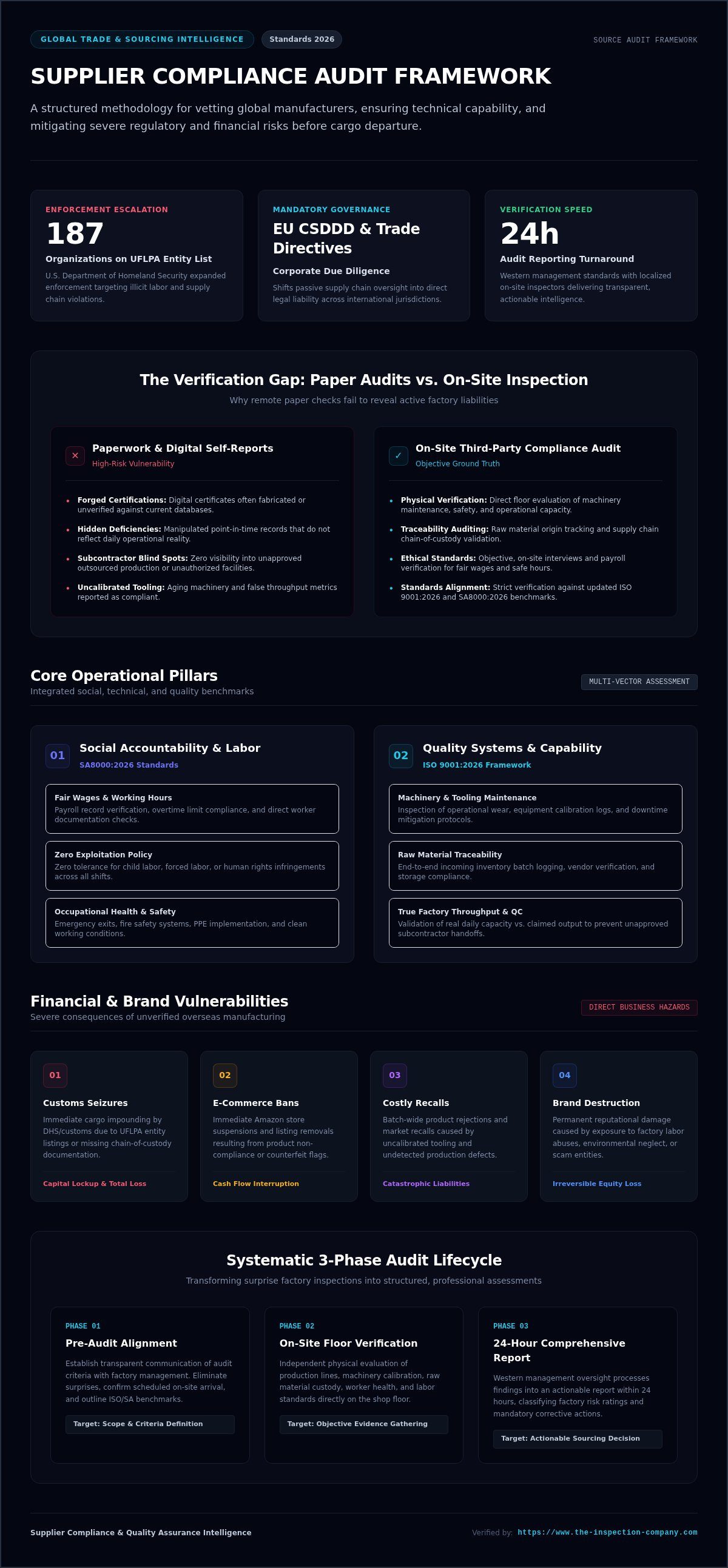
Did you know that as of August 2026, the U.S. Department of Homeland Security has expanded the UFLPA Entity List to include 187 organizations? For modern importers, this isn't just a statistic; it's a direct threat to your bottom line. You likely feel the constant pressure of navigating shifting international trade laws while trying to avoid the financial ruin of a customs seizure or a brand-damaging ethics scandal. Implementing a proactive supplier compliance audit is the only way to mitigate these risks and gain true visibility into your factory's daily operations.
This process isn't an administrative hurdle. It is a strategic investment that safeguards your brand from factory scams, child labor, and regulatory failures. This guide provides a bulletproof framework for vetting manufacturers and ensures your partners align with the latest ISO 9001:2026 and SA8000:2026 standards. We'll explore how on-site verification and independent inspections eliminate blind spots, giving you total control over your global supply chain before your cargo ever reaches the port.
Key Takeaways
- Understand why an independent on-site evaluation is critical for navigating today's intensified global supply chain regulations.
- Identify the essential operational pillars of a robust framework that balances ethical workplace standards with technical manufacturing capacity.
- Master the steps to execute a professional supplier compliance audit by establishing clear communication and rigorous criteria for factory management.
- Discover how localized expertise and Western management standards eliminate supply chain anxiety through transparent, 24-hour reporting.
What is a Supplier Compliance Audit and Why is it Critical?
A supplier compliance audit is an independent, on-site evaluation of a manufacturer's operational, ethical, and legal adherence. It isn't just a formality; it's a vital safeguard for your capital. Global supply chain regulations, including the EU Corporate Sustainability Due Diligence Directive (CSDDD), have intensified compliance requirements, transforming passive oversight into a significant legal liability. Relying on digital dashboards or self-reported data is a gamble that often leads to operational friction.
This systematic approach builds upon the foundational principles of a quality audit, ensuring every manufacturing process aligns with international benchmarks. Evaluating production facilities directly prevents catastrophic product recalls, customs delays, and sudden legal liabilities that can bankrupt a business. Third-party validation bridges the geographic and cultural gaps between international buyers and overseas factories, providing transparency that remote communication cannot match.
The Shift from Basic Vetting to Comprehensive Compliance
Simple paperwork checks are no longer sufficient to guarantee factory legitimacy. Substandard manufacturers often forge certifications or manipulate digital records to hide deficiencies. Evolving international trade standards, such as the ISO 9001:2026 update, now shape modern manufacturing mandates that require physical verification. You need to see the factory floor to verify actual production capacity and safety standards. Point-in-time digital certificates don't reflect the daily reality of a factory's operations.
The High Financial Cost of Overlooking Supplier Vulnerabilities
Non-compliant factories trigger expensive cargo rejections and Amazon store suspensions that halt your cash flow. If customs officials seize your goods due to labor violations, the resulting brand destruction is often permanent. You can mitigate these entry risks early by mastering the broader supplier management process. A professional factory audit ensures your partners remain assets rather than liabilities, protecting your investment from the start.
Key Components of a Robust Supplier Compliance Framework
A holistic compliance framework must evaluate multiple operational pillars simultaneously to protect your business. Relying on a single metric creates dangerous blind spots that unethical manufacturers can easily exploit. A professional supplier compliance audit integrates social, technical, and environmental assessments into a single, actionable report. This approach ensures you aren't just buying a product, but partnering with a stable, legal entity capable of meeting your long-term demands.
Social Accountability and Ethical Labor Practices
Protecting your brand from reputational crises requires verifying fair wages, safe working hours, and proper environmental health protocols on-site. The U.S. Department of Labor provides a comprehensive labor due diligence system that highlights the necessity of identifying labor abuses early. You can't rely on factory management's verbal assurances. Executing a formal social compliance audit provides the objective evidence needed to prove your supply chain is free from forced labor and exploitation.
Quality Management Systems and Technical Capability
Ethical alignment is only half the battle; your supplier must also possess the technical capacity to deliver quality goods. This involves evaluating factory machinery maintenance, raw material traceability, and strict adherence to the latest quality standards. Independent verification safeguards your brand from hidden operational liabilities, such as aging equipment or lack of calibrated testing tools, which cause production delays. To ensure long-term production consistency across Asia, scheduling a professional factory audit is essential for vetting a manufacturer's true throughput and QC protocols. If you're unsure which assessment fits your current sourcing stage, contact our regional experts for a tailored risk evaluation.
Step-by-Step: How to Execute a Supplier Compliance Audit
Executing a structured supplier compliance audit requires precise coordination before, during, and after the factory visit. Many importers face delays because they treat the audit as a surprise inspection rather than a professional assessment. Establishing transparent communication regarding audit criteria with factory management ensures all parties understand the specific performance benchmarks from the start. Documenting every operational deficiency ensures clear accountability and legal protection for your procurement team, creating a verifiable paper trail for your records.
Pre-Audit Planning and Custom Checklist Development
You must define the audit scope based on your specific product category, destination market, and local regulatory mandates. A generic approach won't work for specialized industries like electronics or medical devices. Establish clear parameters for what constitutes critical, major, and minor non-compliance issues to avoid ambiguity during the reporting phase. Utilizing resources like the U.S. Department of Labor's SourcingStrong framework helps you align your internal checklists with global labor standards, ensuring your vetting process is legally defensible.
On-Site Evaluation and Corrective Action Plans
The site visit involves conducting physical walkthroughs, reviewing internal documentation, and conducting confidential worker interviews safely. These interviews are essential for uncovering hidden labor issues that management might try to obscure. After the inspection, don't just walk away with a list of problems. You must develop a binding Corrective Action Plan (CAP) to systematically fix supplier deficiencies with firm deadlines for remediation. It's a proactive way to turn a failing factory into a reliable partner. Learn how to coordinate these steps seamlessly when sourcing from Asia to maintain total control over your production quality. To secure your next production run with a professional on-site expert, contact our regional inspection team for immediate assistance.
Mitigating Global Sourcing Risks with The Inspection Company
The Inspection Company eliminates supply chain anxiety through rigorous, independent quality control across Asia. We understand that international trade involves high stakes and thin margins. Relying on a factory's self-assessment is a liability you can't afford. By combining European management standards with deep local expertise, we provide transparent, uncompromised factory oversight. This localized presence ensures that your supplier compliance audit isn't just a checklist, but a thorough examination conducted by professionals who understand regional manufacturing nuances.
Importers receive clear, objective data to make critical shipping decisions before goods leave the factory floor. You shouldn't have to guess if your cargo meets regulatory requirements. Our meticulous approach transforms vague factory promises into hard facts. This clarity allows you to halt production or shipping if defects are found, preventing the financial friction of customs seizures or retail rejections.
Over 700 Inspectors Deployable Across Major Asian Hubs
Our extensive network of over 700 professional inspectors ensures rapid deployment across major manufacturing hubs. Whether your factory is in a remote industrial zone or a major city, we have the reach to cover it. You don't have to wait weeks for results. Importers access comprehensive, photo-verified inspection reports within 24 hours of the on-site visit via our advanced digital quality platform. This speed is essential for maintaining your production schedule while ensuring total compliance.
Secure Your Production and Partner with Confidence
Investing in preventative audits saves you thousands of dollars in defective inventory and wasted shipping fees. It's a strategic move that forestalls long-term complications. A failed supplier compliance audit caught early is a minor correction; a failed shipment caught at the port is a disaster. Protect your supply chain from costly compliance failures by contacting The Inspection Company today to secure your next manufacturing run.
Protect Your Brand with Proactive Oversight
A successful import strategy relies on moving past simple paperwork to physical, on-site verification. By establishing a robust framework that covers both social ethics and technical capacity, you eliminate the blind spots that lead to defective inventory and brand damage. Implementing a professional supplier compliance audit is a preventative investment that protects your capital from the high costs of operational friction. It's the difference between a secure shipment and a costly customs rejection.
The Inspection Company provides European management standards combined with a network of over 700 professional inspectors across key Asian hubs. We deliver detailed, photo-verified reports within 24 hours of the inspection, giving you the clarity needed to make critical shipping decisions with total confidence. Don't let manufacturing errors derail your business goals. Secure your supply chain and book a supplier compliance audit today to ensure your manufacturers meet the highest international standards. You deserve a partner who values transparency as much as you do.
Frequently Asked Questions
What is the primary purpose of a supplier compliance audit?
The primary purpose of a supplier compliance audit is to independently verify a manufacturer's operational capabilities, quality management systems, and ethical standards. It serves as a critical risk mitigation tool that ensures your partners align with international trade laws and your specific brand requirements. By conducting these on-site evaluations, importers eliminate the blind spots that often lead to severe financial losses, customs seizures, or damaging brand scandals.
How long does it take to receive a factory compliance report?
You will receive a detailed digital report within 24 hours of the on-site factory visit. The Inspection Company utilizes an advanced digital platform to deliver photo-verified findings quickly, allowing you to make informed shipping decisions without delaying your production schedule. This rapid turnaround is essential for maintaining supply chain speed while ensuring that every manufacturer adheres to your established quality and safety benchmarks before goods leave the floor.
Can a supplier compliance audit prevent product defects before shipping?
A supplier compliance audit prevents defects by evaluating the factory’s machinery maintenance, raw material traceability, and internal quality control protocols. While a product inspection checks the items themselves, an audit ensures the manufacturing system is capable of producing consistent quality. By identifying systemic weaknesses early, you can implement corrective actions that stop defects from occurring during mass production, ultimately saving thousands of dollars in rejected inventory.
What happens if a manufacturer fails a compliance audit?
If a manufacturer fails an audit, the importer typically issues a formal Corrective Action Plan (CAP) to address specific deficiencies. This plan outlines required improvements with strict deadlines for remediation. If the factory cannot or will not meet these standards, it signals a high risk for future production. In such cases, the audit provides the objective data necessary to terminate the partnership before experiencing a catastrophic supply chain disruption.
How often should an importer audit their overseas suppliers?
Importers should conduct a supplier compliance audit at least once a year for existing partners or whenever a new manufacturer enters the supply chain. High-risk regions or factories producing complex goods may require more frequent oversight. Regular auditing ensures that standards don't slip over time and that the supplier remains compliant with evolving international regulations like ISO 9001:2026, protecting your business from unexpected legal liabilities.
What is the difference between a quality inspection and a compliance audit?
The main difference lies in the scope of the evaluation. A quality inspection focuses on the physical attributes of the products at specific production stages. Conversely, a supplier compliance audit examines the factory's entire management system, labor practices, and legal standing. While inspections catch faulty goods, audits verify the manufacturer's long-term ability to operate ethically and technically, providing a broader layer of protection for your global sourcing operations.