

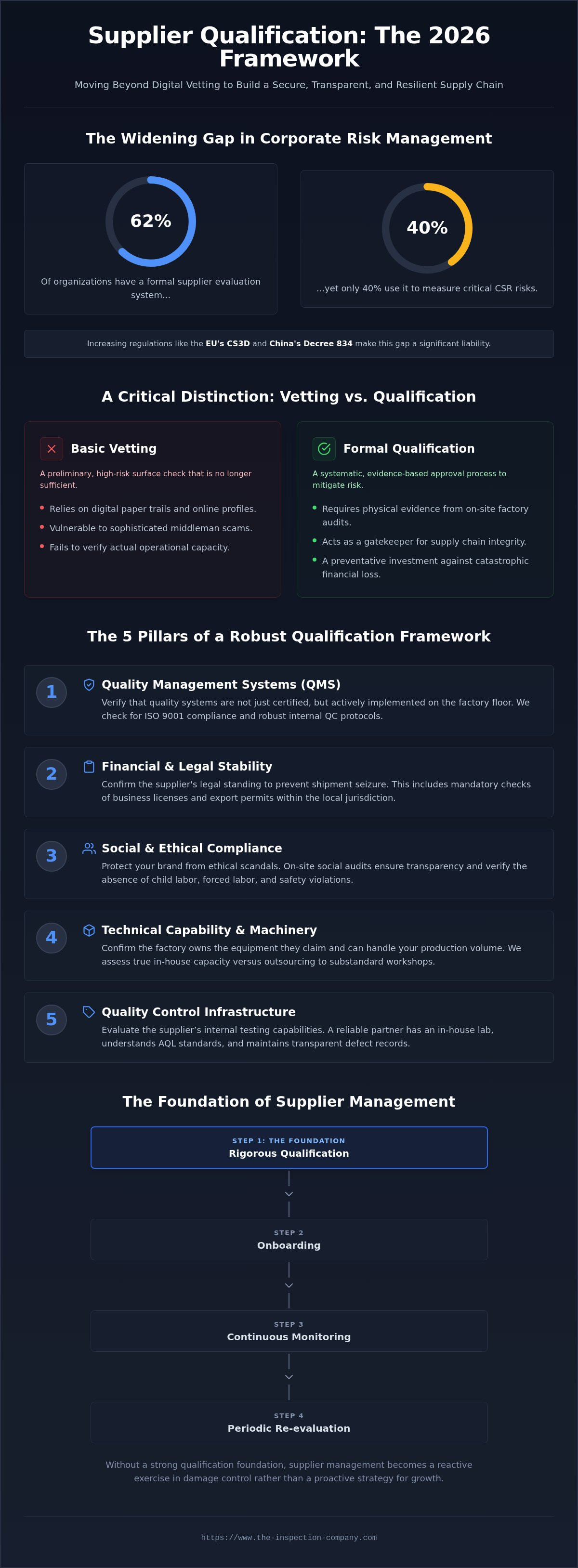
According to the 2026 ObsAR barometer, 62% of organizations have a formal evaluation system, yet only 40% use it to measure critical Corporate Social Responsibility risks. In a landscape where China's Decree 834 now mandates stricter supply chain security, relying on a digital paper trail is no longer enough. You likely understand the frustration of receiving a substandard shipment or realizing a supplier misrepresented their factory's true capabilities. These operational errors don't just cause delays; they lead to significant financial loss and damage your brand's reputation. Implementing a rigorous supplier qualification process is the only way to gain the visibility you need into overseas operations.
This 2026 guide provides a repeatable framework to vet, audit, and approve manufacturing partners with confidence. You'll learn how to move beyond basic documentation to secure physical evidence of compliance and quality. We'll examine the systematic steps required to lower defect rates and build a secure, transparent supply chain. By the end of this article, you'll have the tools to transform your sourcing from a high-stakes gamble into a controlled, professional operation that safeguards your investment.
Key Takeaways
- Understand the critical distinction between basic supplier vetting and formal qualification to eliminate high-risk partners early in the procurement cycle.
- Implement a structured supplier qualification process that prioritizes Quality Management Systems (QMS) and verified operational capacity over unverified online profiles.
- Discover the systematic steps for executing on-site audits in Asia to confirm that a manufacturer’s machinery and workforce can meet your specific production requirements.
- Prevent "quality fade" and operational friction by establishing post-qualification protocols that ensure consistent standards throughout the entire manufacturing lifecycle.
What is the Supplier Qualification Process?
The supplier qualification process is the systematic evaluation of a potential manufacturer’s production capacity, quality management systems, and ethical standards. While many importers confuse this with basic vetting, the two are distinct stages of risk management. Vetting is a preliminary surface check of business licenses or online profiles. In contrast, qualification is a formal approval stage that requires physical evidence gathered through a factory audit to confirm a factory's ability to meet specific technical requirements. This Supplier evaluation acts as the critical gatekeeper of supply chain integrity, ensuring only verified partners enter your production ecosystem.
Viewing this process as a preventative investment is essential for long-term profitability. The cost of a professional on-site audit is negligible when compared to the catastrophic financial loss of a rejected container, a product recall, or a total shipment failure. By identifying operational red flags before a deposit is paid, you maintain control over your capital and protect your brand's reputation from the fallout of substandard goods. It's a proactive measure that eliminates the guesswork often associated with international sourcing.
The 2026 Shift: Why Digital Vetting is No Longer Enough
In 2026, relying on a digital paper trail is a liability. Sophisticated middleman scams on B2B platforms have become more prevalent, where trading companies pose as factories using stolen imagery. Additionally, new ESG regulations like the EU's Corporate Sustainability Due Diligence Directive (CS3D) require deeper transparency beyond the first tier. You need boots on the ground to verify that a supplier’s environmental and social claims match reality.
Qualification vs. Supplier Management
Qualification serves as the indispensable foundation for the broader supplier management lifecycle. It's the first step in a repeatable chain: qualification, onboarding, continuous monitoring, and periodic re-evaluation. Without a rigorous initial check, management becomes a reactive exercise in damage control rather than a proactive strategy for growth. Establishing these standards early ensures your supply chain remains resilient against unexpected operational friction.
The 5 Pillars of a Robust Supplier Qualification Framework
A robust supplier qualification process relies on five critical pillars that prioritize physical reality over digital promises. These pillars provide the framework needed to mitigate operational friction and protect your capital from unverified manufacturers.
- Quality Management Systems (QMS): We evaluate ISO 9001 compliance and internal QC protocols. It's not enough to see a certificate; we verify that these systems are active on the factory floor.
- Financial and Legal Stability: Checking business licenses and export permits in the local jurisdiction is mandatory. This prevents your goods from being seized due to a supplier's lack of legal standing.
- Social and Ethical Compliance: 2026 regulations demand transparency. Ensuring no child labor or safety violations occur via a social audit protects your brand from ethical scandals.
Technical Capability and Machinery
You must verify that the factory actually owns the equipment they claim to possess. It's common for middlemen to use photos of high-tech facilities while outsourcing your order to substandard workshops. We assess "hidden" capacity by calculating how much of their output is truly handled in-house versus outsourced. Verifying workforce skill levels and machinery maintenance schedules ensures they can handle your production volume without technical failures.
Quality Control Infrastructure
A supplier’s internal testing capabilities often dictate the final product quality. We determine if they maintain an in-house lab or rely on external facilities, which can cause delays. A reliable partner demonstrates a deep understanding of AQL standards and keeps transparent records of past defect history. If you need assistance evaluating a complex facility, you can consult our technical team for a tailored assessment.
Step-by-Step: Executing the Qualification Process in Asia
Executing a supplier qualification process in Asian manufacturing hubs requires a methodical approach that accounts for regional operational risks. A standardized sequence ensures that your procurement team moves from broad market research to specific, data-backed approval. This methodical path includes:
- Step 1: Preliminary Desktop Vetting: Review Alibaba profiles, export history, and local business licenses to filter out obvious trading companies.
- Step 2: The Supplier Survey: Issue a self-assessment questionnaire to gather data on their production capacity and internal quality systems.
- Step 3: Risk-Based Classification: Determine the depth of scrutiny needed based on your order value and product complexity.
- Step 4: On-Site Factory Audit: This is the physical verification stage where an inspector confirms all claims on the factory floor.
- Step 5: Corrective Action Plan (CAPA): Address any non-conformities found during the audit before granting final approval.
Navigating the "On-Site" Reality
Photos provided by suppliers are often misleading or stolen from other facilities. You cannot trust a digital gallery to represent true factory conditions. Utilizing independent China inspection services provides the unbiased eyes needed on the ground. This physical presence ensures that the factory you pay is actually the one performing the work, preventing the common trap of unauthorized subcontracting.
Shortlisting and the Weighted Scorecard
Use a weighted scorecard to compare multiple suppliers objectively. Assign numerical values to QMS performance, technical capacity, and social compliance. Immediate red flags, such as forged ISO certificates or a refusal of on-site access, should trigger instant disqualification. This data-driven approach removes emotional bias from your sourcing decisions. To secure your supply chain today, contact our regional experts for a comprehensive audit plan.
Post-Qualification: Maintaining Quality Throughout Production
Completing the initial supplier qualification process is a significant milestone, but it isn't a permanent guarantee of excellence. You must guard against "quality fade," a common industry phenomenon where a manufacturer gradually reduces material quality or skips critical QC steps to increase their margins over time. This often happens due to rising raw material costs or high labor turnover within the factory. Maintaining a secure supply chain requires shifting your strategy from one-time approval to continuous performance monitoring.
- Mandatory Follow-ups: Integrate Pre-Shipment Inspections (PSI) as a non-negotiable requirement for every batch before final payment.
- In-Process Oversight: Utilize During Production Inspections for high-complexity orders to catch errors while they are still correctable.
- Annual Re-qualification: Conduct yearly factory audits to re-verify the supplier's Quality Management System (QMS) and financial stability.
Closing the Loop with Container Loading
The final risk in the production cycle occurs at the loading dock. A Container Loading Inspection ensures that the specific goods qualified during PSI are actually the ones loaded and secured for transit. This step prevents unauthorized product substitution or damage due to poor stacking. We recommend using a weighted scorecard to track supplier performance over time. This data allows you to make re-qualification decisions based on objective defect rates and lead-time accuracy rather than anecdotes.
Scaling with Confidence: Amazon FBA Considerations
For Amazon FBA sellers, the qualification process must extend to specific packaging and labeling compliance. Amazon's strict requirements for barcodes and carton marking mean a factory's inability to follow precise SOPs can lead to costly rejections or account suspensions. Integrating these requirements into your supplier’s standard operating procedure ensures that your scaling efforts aren't hampered by avoidable administrative errors at the fulfillment center. Proactive monitoring transforms a qualified supplier into a long-term strategic partner.
Securing Your Supply Chain for 2026 and Beyond
Mastering the supplier qualification process is no longer just a procurement best practice; it's a fundamental requirement for operational security in 2026. You've seen how physical on-site verification exposes the gap between digital profiles and factory reality. From evaluating technical capacity to ensuring ethical compliance, a structured framework protects your capital from the hidden risks of international trade. Remember that approval is only the first step. Ongoing monitoring through targeted inspections ensures your standards remain consistent as your production scales and global regulations evolve.
Don't leave your supply chain to chance. With a team of 700+ local inspectors across Asia and ISO-certified management, we provide the transparency you need to source without fear. You'll receive detailed reports within 24 hours, giving you the speed and accuracy required for high-stakes decisions. Secure your supply chain with a professional Factory Audit from The Inspection Company. We're ready to help you build a resilient, transparent, and profitable future.
Frequently Asked Questions
How long does the typical supplier qualification process take?
A thorough qualification usually requires two to four weeks from initial contact to final approval. While preliminary desktop vetting takes only a few days, scheduling an on-site factory audit and reviewing the resulting data adds time. At The Inspection Company, we deliver detailed reports within 24 hours of the site visit. This rapid turnaround helps you finalize your supplier qualification process without causing significant delays to your production schedule.
What is the difference between a supplier audit and supplier qualification?
A supplier audit is a specific event where an inspector physically evaluates a factory’s quality systems, machinery, and social compliance. In contrast, the qualification process is the entire framework used to evaluate and formally approve a partner. The audit provides the objective evidence required for the final decision. Think of the audit as the technical test and qualification as the formal certification that allows a manufacturer to enter your supply chain.
Can I qualify a supplier without visiting the factory in person?
You don't need to fly to Asia yourself, but you shouldn't qualify a partner based solely on digital documents. Online profiles and self-reported surveys are often misleading or incomplete. Utilizing a third-party team with over 700 local inspectors across Asia provides the necessary on-site verification. This physical presence ensures that the factory actually owns its equipment and follows the safety protocols it claims to have in place.
Is supplier qualification a legal requirement for international importers?
While requirements vary by industry, 2026 regulations like China's Decree 834 and the EU’s Corporate Sustainability Due Diligence Directive make formal vetting more critical. These laws require importers to have greater visibility into their supply chains to mitigate security and human rights risks. Implementing a rigorous supplier qualification process protects your business from legal liabilities, financial penalties, and the risk of having substandard shipments seized at customs.
What are the most common red flags during the qualification process?
Major warning signs include a supplier’s refusal to allow an on-site audit, inconsistent business licenses, or forged ISO certificates. If the production capacity claimed in a survey doesn't match the machinery seen on the factory floor, it's a clear indicator of potential subcontracting. Other red flags include poor record-keeping and a lack of dedicated quality control staff. Spotting these issues early prevents costly operational friction and long-term financial loss.