
What if your next shipment isn't a container of sellable inventory, but a six-figure liability that could trigger an immediate Amazon account suspension? You've likely felt that specific anxiety after wire-transferring a balance payment to an overseas factory, simply hoping your asia quality control measures were sufficient to catch critical defects. It's a common fear because the stakes in international trade have never been higher. Receiving a container of defective or unsellable goods doesn't just hurt your bottom line; it can derail your brand's reputation in a matter of days.
Implementing a robust strategy for on-the-ground oversight is no longer a luxury; it's a fundamental requirement for risk mitigation in 2026. This guide explores how professional inspections and factory audits protect your margins and prevent shipping disasters before they leave the port. You'll discover how to gain total visibility into your production cycle and secure the data-driven confidence needed to approve or reject shipments. We'll preview the essential steps to turn your supply chain into a secure, transparent asset that withstands regional regulatory shifts and communication barriers.
Key Takeaways
- Identify why the "distance gap" between buyers and factories remains the leading cause of sourcing failure and how to mitigate it with a professional risk-management framework.
- Learn how professional asia quality control functions as a strategic financial shield, providing a critical "kill switch" before you release final payments for defective goods.
- Secure your investment by vetting factory legitimacy and production capacity through rigorous audits before any capital is committed to a new supplier.
- Leverage digital reporting tools and 24-hour turnaround times to make rapid, data-driven decisions that protect your brand’s reputation and bottom line.
The Critical Role of Asia Quality Control in Global Sourcing
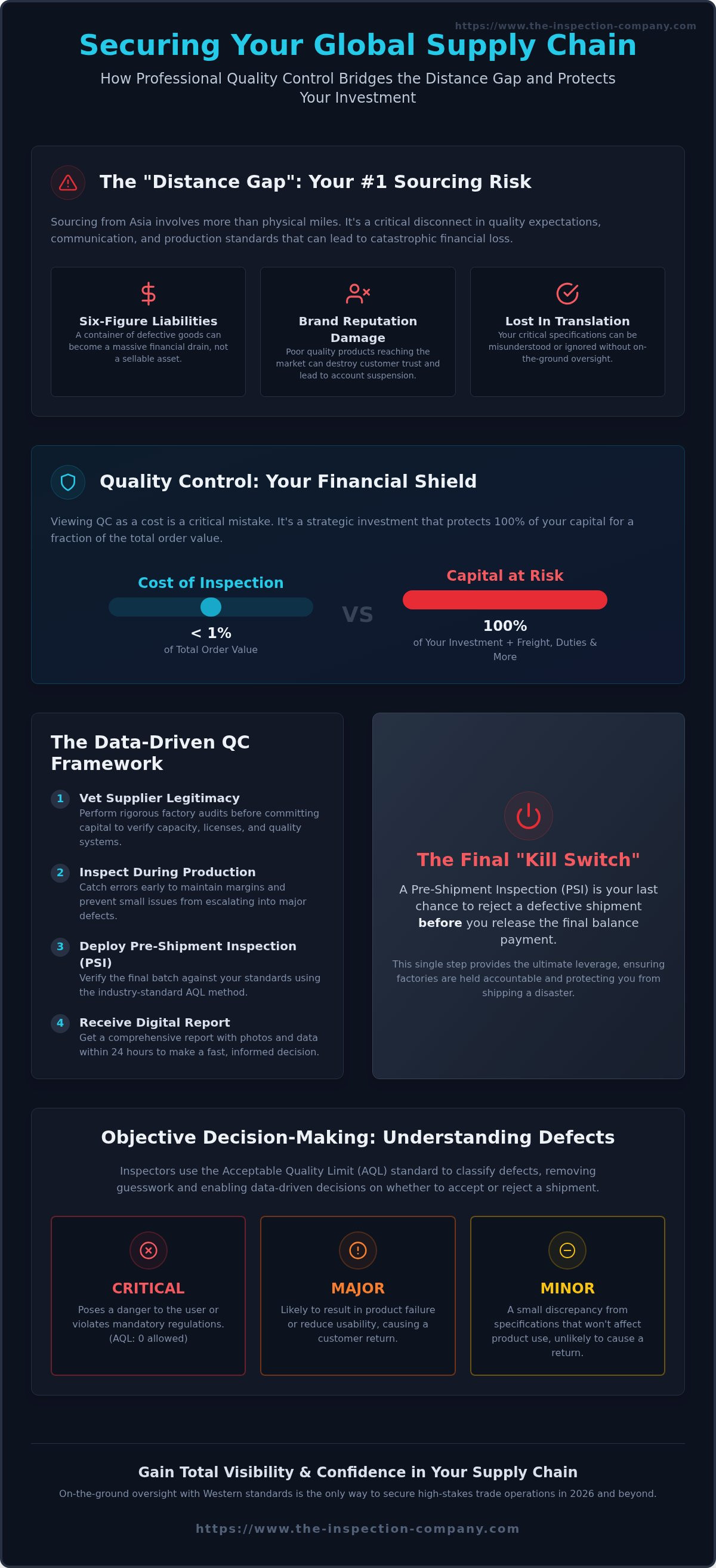
In 2026, sourcing from the East requires more than just a purchase order; it demands a comprehensive risk-management framework. The "distance gap" between Western buyers and Asian factories remains the primary cause of sourcing failure. This gap isn't just physical miles. It's a disconnect in quality expectations, production standards, and communication protocols. Asia quality control is the systematic verification of product standards at the source to prevent downstream financial loss.
The manufacturing landscape is shifting rapidly. While China remains a dominant force, markets like India and Vietnam are growing quickly. India is projected to see the quickest growth in the regional testing and inspection market through 2031. This expansion introduces new complexities and varied regulatory hurdles for importers. Effective asia quality control ensures that regardless of the country of origin, your goods meet the exact specifications required for your market. Without on-the-ground oversight, you're essentially gambling with your brand's reputation and capital. Standardized Quality control (QC) protocols are the only way to maintain consistency across multiple regions.
The Value of Local Presence with Western Standards
Remote oversight is an operational illusion. With over 700 professional inspectors across the region, localized teams understand cultural nuances and factory floor dynamics that remote buyers simply miss. They identify subtle warning signs in production before they escalate into container-sized disasters. By combining regional presence with European management standards, importers bridge the gap between Western expectations and Asian production reality. This meticulous approach provides the transparency needed for secure, high-stakes trade operations. Learn more about our team and approach to see how we manage these regional risks. Our team acts as your eyes and ears, ensuring your specifications aren't lost in translation.
Why Quality Control is a Strategic Investment, Not a Cost
Many importers view asia quality control as an expense line item. This is a fundamental misunderstanding of supply chain finance. When a shipment arrives with critical defects, the costs escalate far beyond the unit price. You're paying for ocean freight, customs duties, warehouse storage, and eventually, the disposal of unsellable inventory. Worst of all is the damage to your brand reputation and potential Amazon account suspension. The investment in a single inspection is often less than 1% of the total order value but protects 100% of the capital. Professional asia quality control provides more than a report; it provides the data necessary for long-term survival.
A Pre-Shipment Inspection (PSI) serves as your final "kill switch." It's your last opportunity to halt a shipment before you release the final balance payment. Beyond the data, regular inspections create a psychological layer of accountability. Factories that know a professional third party will verify their work are significantly less likely to cut corners on raw materials or production speed. This proactive approach helps to mitigate supply chain disruptions by establishing a culture of compliance from the start.
Preventing Product Defects Before They Leave the Factory
Catching errors early is essential for maintaining margins. Inspectors categorize issues into critical, major, and minor defects to determine if a lot meets your standards. Understanding these categories is vital for any professional buyer; you can read more in our guide on Understanding Product Defects. Using the industry-standard AQL (Acceptable Quality Limit) table allows you to make objective, data-driven decisions on whether to accept or reject a batch. This removes the guesswork from your procurement process. If you're ready to secure your next production run, reach out to our expert team today for a consultation on your specific needs.
Core Services: Selecting the Right Inspection for Your Production Stage
Effective asia quality control requires a multi-layered approach tailored to your specific production timeline. Deploying the wrong service at the wrong time leaves gaps in your oversight. Explore our full range of Asia inspection services to understand how each tool mitigates specific operational risks throughout the manufacturing cycle.
Supplier Vetting and Factory Audits
Vetting a supplier's legitimacy and capacity before sending a deposit is the most critical step in a secure supplier management process. A Factory Audit provides a transparent look at their quality management systems and production history. We also evaluate social and environmental compliance. This protects your brand from ethical scandals that could lead to consumer backlash or legal complications in 2026.
The Power of During Production (DUPRO) Inspections
Catching systematic errors early is significantly cheaper than attempting to fix them after production finishes. A During Production Inspection typically occurs when 20% to 50% of your order is complete. This allows you to identify issues while they are still fixable. DUPRO prevents "mass-defect" scenarios in high-volume orders, ensuring that a simple machine miscalibration doesn't ruin an entire container of goods.
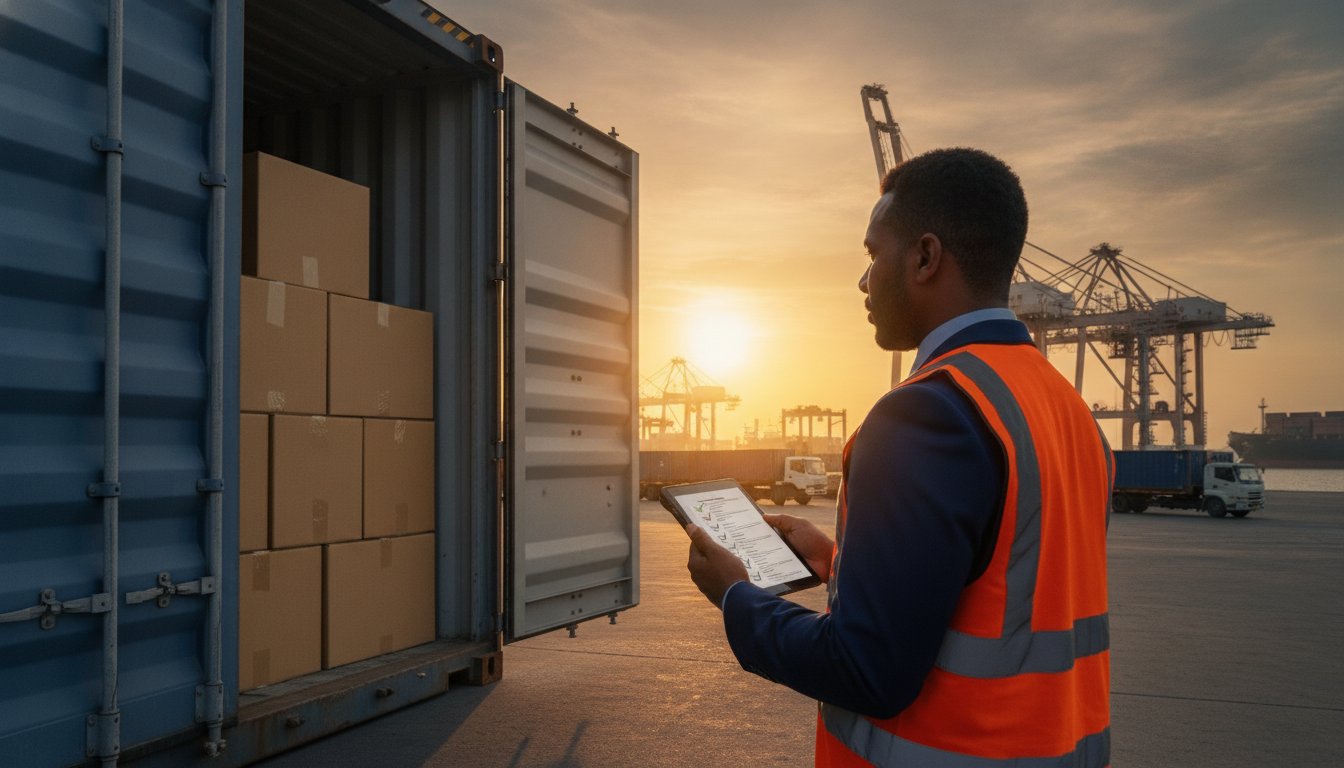
The Pre-Shipment Inspection (PSI) acts as the final verification of quality, quantity, and packaging. It's the industry standard for making a final "Pass/Fail" decision. To finish the process, a Container Loading Inspection (CLI) ensures the right goods are loaded into the container securely to prevent transit damage and short-shipment disputes. Contact our team today to discuss which inspection stage is right for your upcoming shipment.
Optimising Your Asia QC Strategy for 2026
In 2026, speed is a competitive necessity. Leveraging digital tools through our quality platform allows for 24-hour reporting and instant decision-making. You shouldn't wait days for data while your cargo sits at the port. An effective asia quality control strategy relies on a precise inspection checklist. This document must cover functional tests, aesthetic standards, and strict packaging requirements. It's also vital to integrate QC results directly into your supplier contracts to ensure you maintain financial leverage if standards aren't met.
The "TIC Advantage" lies in our pan-Asian coverage. With over 700 professional inspectors on the ground, we provide consistent reporting across multiple countries. This ensures your standards remain identical whether you're sourcing from China, Vietnam, or India. Having a single, reliable partner simplifies your oversight and reduces the administrative friction of managing multiple regional agencies.
Specialized Quality Control for Amazon FBA Sellers
Amazon sellers face unique risks. Strict labeling and packaging requirements mean even a minor oversight can lead to rejected shipments at the warehouse. Use specialized Amazon FBA inspections to protect your seller account. These targeted checks prevent "Customer Returns" and "Product Not as Described" flags that destroy your listing's ranking. Don't risk your account health by skipping on-the-ground verification.
Moving Toward a Risk-Free Sourcing Model
Successful importers are transitioning from reactive "firefighting" to proactive quality management. Instead of resolving disasters after they occur, you should build a system that prevents them. This shift requires a reliable partner to manage on-the-ground risks across the region. You can explore deeper strategies in our guide on Sourcing from Asia. Professional asia quality control isn't just about catching errors; it's about building a resilient, predictable supply chain that supports your brand's growth.
Securing Your Supply Chain for a Profitable 2026
Success in global sourcing no longer depends on finding the lowest price, but on maintaining the highest standards through every production phase. We've explored how a strategic approach to asia quality control transforms potential liabilities into predictable assets. By shifting from reactive troubleshooting to proactive oversight, you protect your margins and safeguard your brand's reputation on platforms like Amazon. The "distance gap" is no longer an excuse for failure when data-driven inspections provide total visibility into your factory's operations.
Our European-managed team offers the localized presence you need to manage regional risks effectively. With over 700 professional inspectors across all major Asian hubs and detailed reports delivered within 24 hours, you gain the rapid insights required for confident decision-making. Don't leave your capital to chance. Secure your next shipment with a professional Asia quality inspection and build a resilient supply chain that supports your long-term growth. Your inventory is your most valuable investment; it's time to treat it that way.
Frequently Asked Questions
Why do I need an inspection company if I trust my supplier?
Trust is not a substitute for objective data. Even the most reliable suppliers can face internal staff turnover, machine wear, or raw material shifts that negatively affect output quality. Third-party asia quality control provides an unbiased assessment that internal factory teams cannot offer due to production pressures. By verifying standards on-site, you remove the risk of receiving a container of defective goods despite a long-standing relationship.
How quickly can I get an inspection report from an Asian factory?
Speed is critical for maintaining your supply chain's momentum. You should expect to receive a comprehensive inspection report within 24 hours of the inspector finishing their work at the factory. This rapid turnaround allows you to make immediate decisions based on facts. Having the data in hand quickly ensures you can either approve the shipment for loading or demand immediate corrective actions without causing significant delays.
What happens if the factory fails the quality inspection?
A failed inspection acts as your "kill switch" for the shipment. You should immediately share the report with your supplier and demand a corrective action plan to address the identified defects. Depending on your contract terms, the factory may need to sort or rework the goods at their own expense. We recommend a follow-up re-inspection to verify that all issues are resolved before you release the final balance payment.
Is Asia quality control expensive for small-to-medium businesses?
Professional oversight is a preventative investment that protects your total capital. While costs vary by region, the price of a single man-day inspection is typically less than 1% of the total order value. For small-to-medium businesses, this small fee prevents catastrophic financial losses from unsellable inventory or expensive returns. Viewing asia quality control as a strategic shield rather than a cost ensures your growth isn't derailed by production errors.
Can an inspection company help with Amazon FBA specific requirements?
Specialized inspectors are trained to verify strict Amazon FBA compliance. This includes checking FNSKU labels, carton weight limits, and master case dimensions to prevent warehouse rejections. Catching these errors at the source prevents "Product Not as Described" flags and protects your seller account from suspension. Professional verification ensures your goods are ready for immediate intake at any Amazon fulfillment center, maintaining your listing's ranking and performance and avoiding account penalties.