A laboratory test report is not a guarantee that your entire shipment is safe. While a design might pass safety standards in a controlled lab, the thousands of units currently being packed on the factory floor often tell a different story. You've worked hard to build your brand, and the fear of a sudden product recall or an Amazon account suspension is a constant weight. It's a valid concern because even a minor production error in a large batch can lead to catastrophic financial loss and regulatory rejection at the border.
Mastering toy quality inspection is your primary defense against these operational risks. By implementing rigorous on-site protocols, you can identify hidden defects before they leave the facility. This guide provides a methodical roadmap for importers to achieve full compliance with US and EU standards in 2026. We'll examine the specific physical tests, chemical checks, and labeling requirements that ensure a defect-free shipment. You will gain the peace of mind that comes from knowing your goods are safe before you authorize that final payment.
Key Takeaways
- Learn why lab tests aren't enough to protect mass production and how on-site verification acts as your brand's ultimate firewall.
- Navigate complex safety standards like ASTM F963 and EN71 to ensure seamless market entry and full regulatory compliance.
- Master a comprehensive toy quality inspection checklist to identify workmanship defects and assembly errors before you authorize final payment.
- Discover how professional on-site oversight and 24-hour reporting prevent supply chain bottlenecks and help you avoid expensive product recalls.
Why Toy Quality Inspection is Your Brand’s Ultimate Firewall
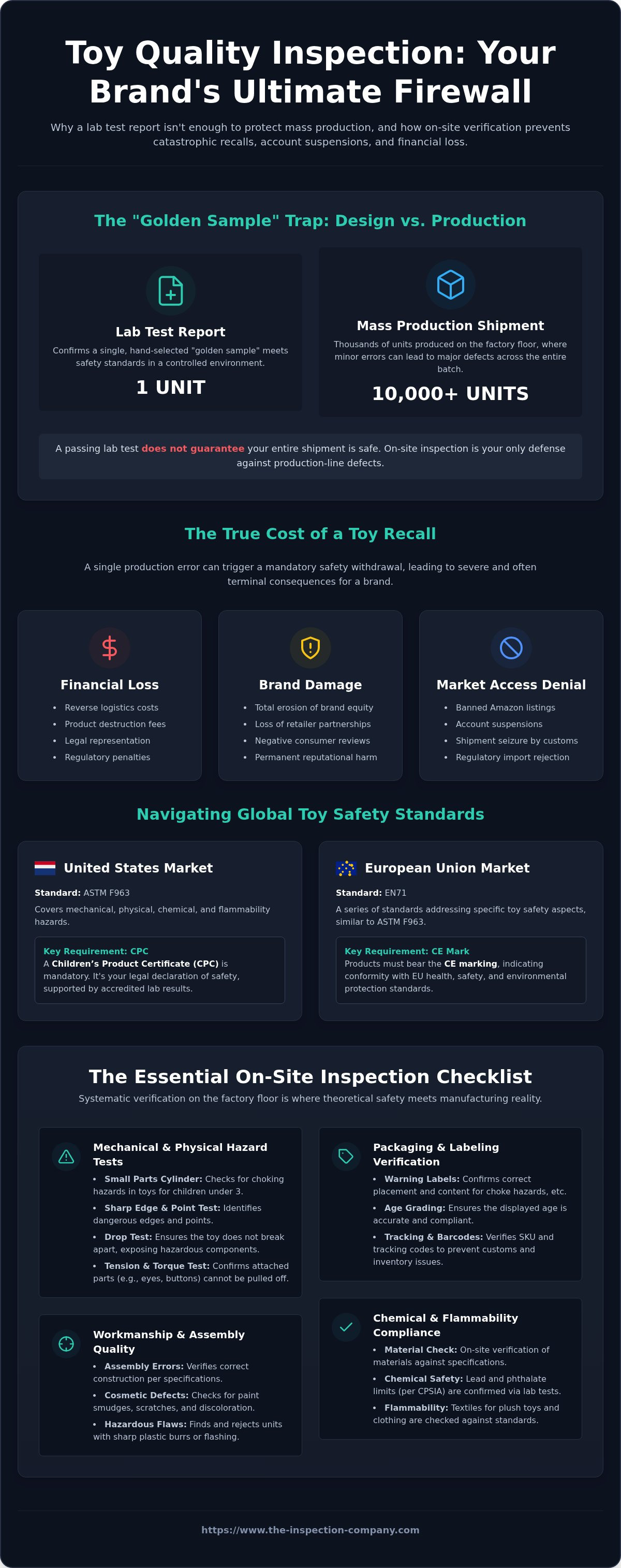
A toy quality inspection is the systematic verification of a product's safety, functionality, and regulatory compliance on the factory floor. It's a proactive strategy designed to mitigate risk before goods enter the supply chain. Many importers fall into the 'Golden Sample' trap. They rely on laboratory results from a single unit the factory hand-selected for testing. This is a dangerous oversight. Lab tests confirm a design is safe, but they don't guarantee that the 10,000 units in mass production are identical to that sample.
The financial and reputational stakes are immense. A single production error can result in banned Amazon listings or catastrophic lawsuits. Without on-site oversight, you risk receiving a shipment riddled with hidden defects like sharp burrs or insecure battery compartments. A Pre-Shipment Inspection (PSI) serves as your final gatekeeper. It provides the transparency needed to catch errors while the goods are still in the manufacturer's hands, ensuring you only pay for compliant products.
The True Cost of a Toy Recall
A product recall is often a terminal event for small to mid-sized brands. The direct financial impact is immediate and severe. You must account for:
- Reverse logistics and international shipping expenses.
- Documented product destruction and disposal fees.
- Legal representation and potential regulatory penalties.
Indirect costs are equally damaging. You face a total erosion of brand equity and the loss of hard-won retailer partnerships. In the 2026 consumer market, 'Recall Risk' is the measurable probability that a manufacturing failure will trigger a mandatory safety withdrawal, causing permanent damage to a brand's reputation and market viability.
Navigating Global Toy Safety Standards: ASTM F963 and EN71
Compliance isn't a suggestion; it's a market entry requirement. Importers must distinguish between the ASTM F963 standard for the US and the EN71 standard for Europe. While they share core safety goals, their specific testing parameters and documentation vary. For US market entry, you must provide a Children’s Product Certificate (CPC). This document acts as your legal declaration of safety, supported by accredited lab results. Age-grading is the critical first step in any toy quality inspection. It determines which specific tests apply, as toys for toddlers face significantly higher scrutiny than those for older children. If your product includes electronics, ensuring RoHS compliance is vital to restrict hazardous substances in internal components.
Mechanical and Physical Property Testing
Physical hazards are the leading cause of toy-related injuries. On-site inspectors perform a toy quality inspection using a 'Small Parts Cylinder' to identify choking hazards in products designed for children under three. Sharp edges and points are also rigorously examined. After a series of drop tests, the product must not splinter or expose dangerous parts. For plush items, tension and torque tests are performed on attached components like eyes or buttons to ensure they won't detach under force. You can request a custom checklist to ensure these mechanical risks are fully managed.
Chemical and Flammability Compliance
Chemical safety focuses on invisible risks. Under CPSIA guidelines, strict limits are placed on lead and phthalate content. Flammability standards are also applied to textiles used in plushies or doll clothing to prevent rapid fire spread. While on-site checks catch physical defects, professional sample testing in an accredited third-party lab is the only way to confirm chemical compliance. This dual approach of on-site inspection and lab validation creates the most robust safety net for your brand.
The Essential On-Site Toy Inspection Checklist
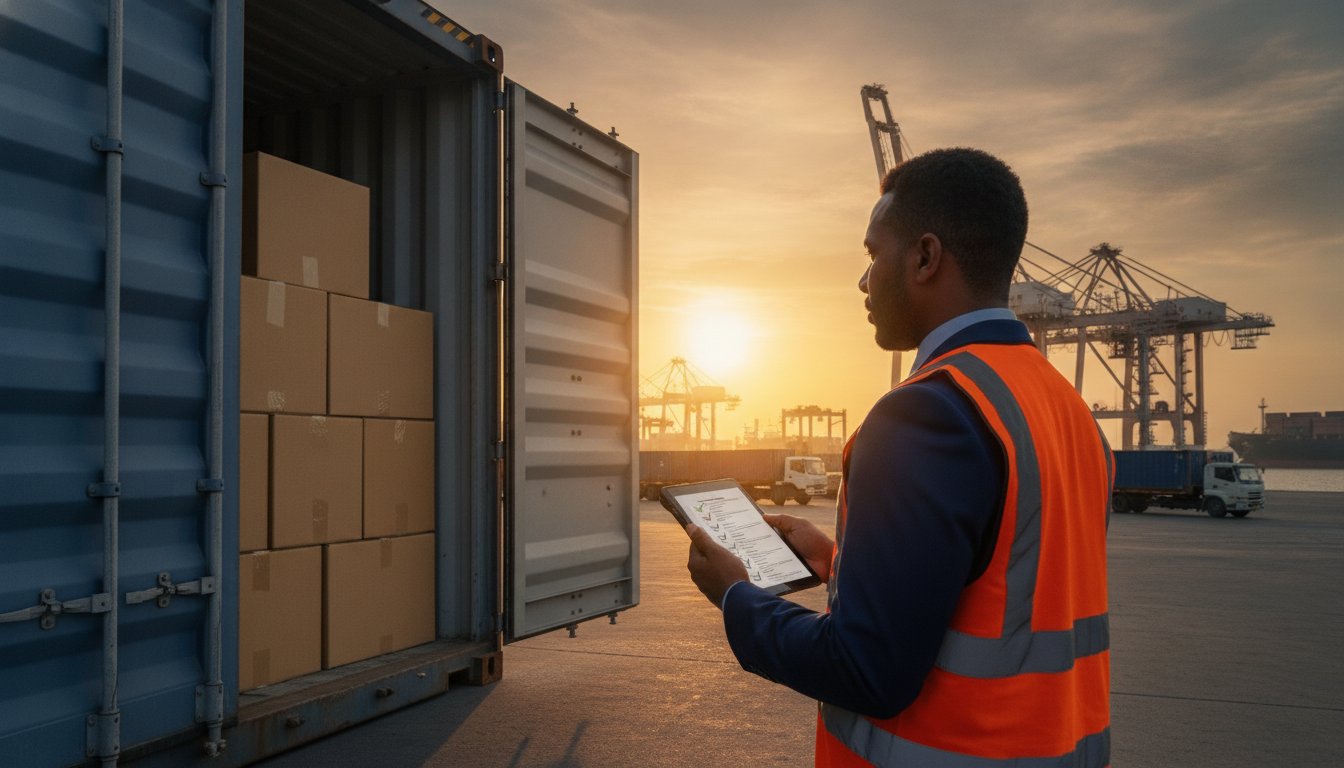
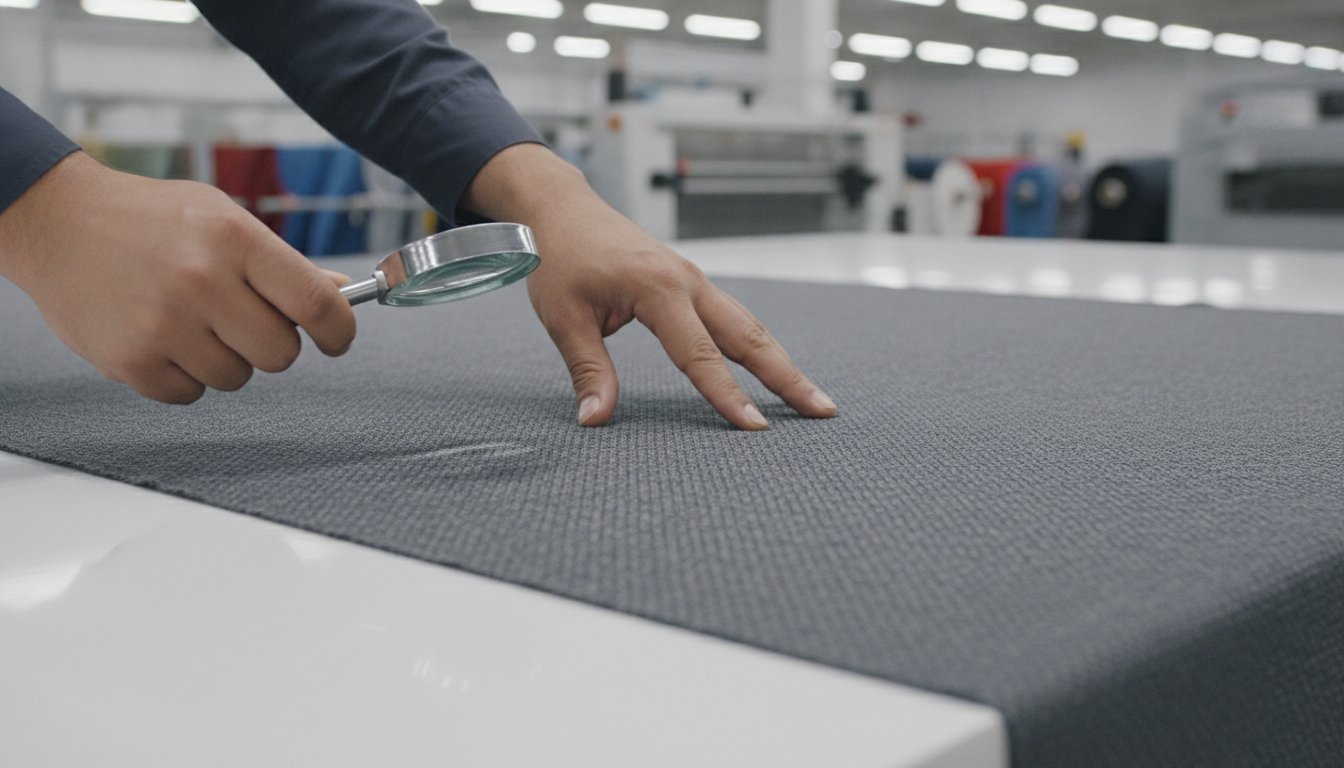
On-site verification is where theoretical safety meets manufacturing reality. While lab testing validates your design, a toy quality inspection on the factory floor ensures every unit produced matches that standard. Inspectors examine workmanship to identify assembly errors, paint smudges, and hazardous plastic burrs. They also verify quantity and assortment. This step confirms the correct SKUs are in the right cartons, preventing costly inventory discrepancies upon arrival.
Packaging and labeling require meticulous attention. Every box must display accurate warning labels, age grading, and tracking barcodes. If these details are incorrect, customs may seize the shipment. You can schedule an on-site inspection to verify these critical checkpoints before your goods leave the factory.
On-Site Function and Durability Tests
Physical tests simulate the rough handling toys endure in the real world. Key procedures include:
- Drop test: Dropping the toy from a standard height to ensure it doesn't shatter into sharp fragments.
- Abuse testing: Bending and twisting components to confirm no small parts detach and become choking hazards.
- Battery check: Verifying voltage levels and ensuring battery compartments are secured with screws to prevent child access.
Amazon FBA Specific Requirements
Selling on Amazon adds another layer of complexity. Failure to meet their strict standards results in warehouse rejections. A specialized Amazon FBA inspection covers:
- Suffocation warning labels on all polybags with openings larger than five inches.
- FNSKU barcode placement and readability for seamless scanning.
- Strict compliance with carton weight and dimension limits.
Securing Your Production with The Inspection Company
The Inspection Company (TIC) provides a unique operational advantage by blending European management standards with a network of over 700 inspectors across Asia. This structure eliminates the "black box" effect often found in regional quality control. You get the meticulous oversight of a seasoned partner combined with deep local knowledge. Speed is essential in international trade; our team guarantees report delivery within 24 hours. This rapid turnaround ensures that your toy quality inspection results arrive in time to make critical shipping decisions without causing supply chain bottlenecks.
A professional pre-shipment inspection is your most effective tool for identifying product defects before final payment is released. For example, a toy brand recently avoided a 10,000-unit disaster when our inspectors discovered a batch utilized non-compliant adhesive, even though the factory provided a passing lab report for the initial sample. TIC's on-site verification caught the error at the source, saving the brand from a total financial loss and a potential recall.
Transparency Through Our Quality Platform
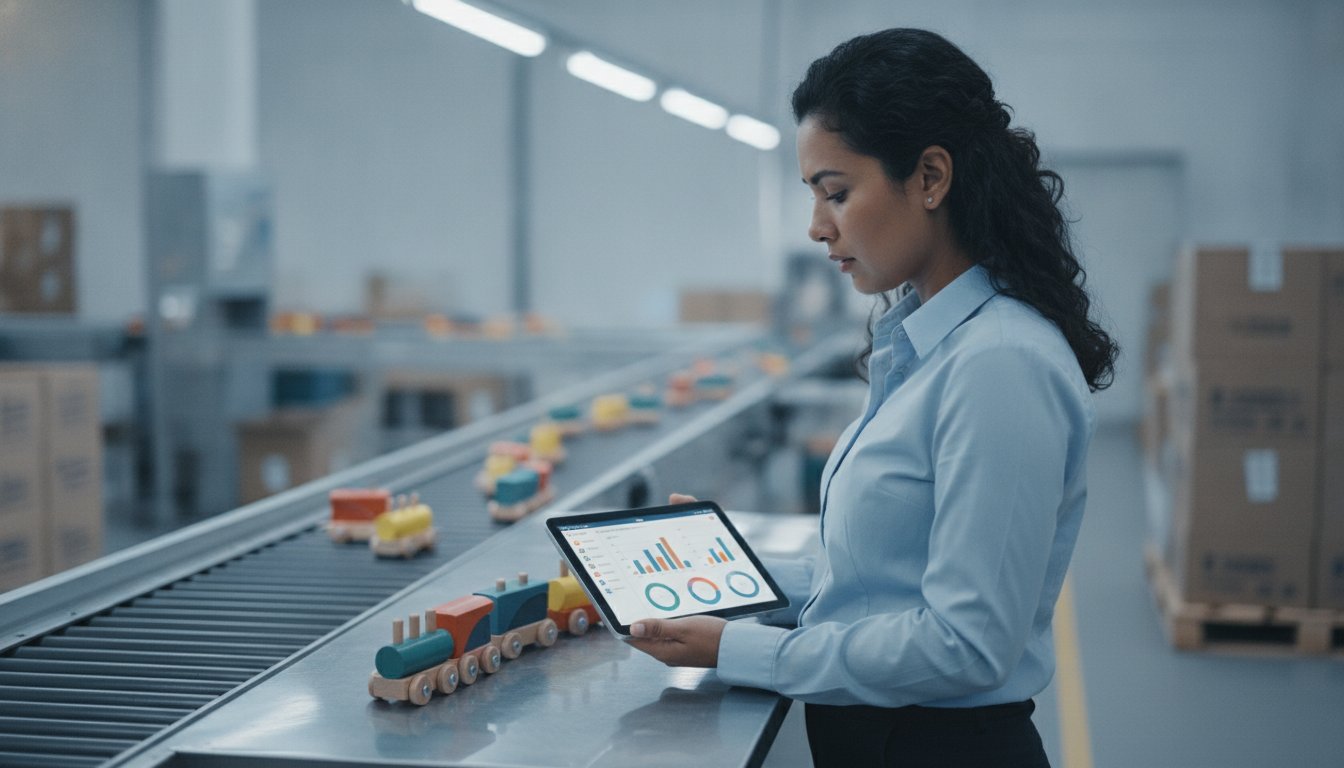
Our digital quality platform gives you a direct window into the factory floor. You don't have to guess about the state of your production. The platform provides:
- Real-time access to inspection data and high-resolution photo evidence of your goods.
- Data tracking to monitor supplier performance over multiple production cycles.
- Direct communication channels with the inspection team for custom requirements.
Getting Started: Your Risk-Free Inspection
Securing your shipment is a straightforward process. You can book a toy quality inspection in under five minutes through our online portal. For those establishing new partnerships, we recommend conducting a factory audit before placing your first order. This preventative step ensures the supplier has the physical capacity and compliance standards to meet your specific needs. Contact our toy safety experts today to secure your shipment.
Securing Your Future in the Global Toy Market
Mastering the nuances of ASTM F963 and EN71 is only the first step. True security comes from active oversight on the factory floor. By moving beyond lab samples and implementing a rigorous checklist, you protect your customers and your Amazon seller status. A methodical toy quality inspection isn't just a procedural hurdle; it's a vital investment in your brand's longevity. The Inspection Company provides the infrastructure needed to manage these high-stakes risks. With European-managed quality standards and over 700 certified inspectors across Asia, we deliver the transparency you require. You'll receive detailed reports within 24 hours, giving you the power to authorize payments based on facts rather than hope.
Secure your toy shipment today - Get a quote from our inspectors. Taking control of your supply chain now ensures your products remain safe, compliant, and profitable in 2026.
Frequently Asked Questions
What is a Children’s Product Certificate (CPC) and do I need one?
Yes, if you're importing toys into the United States, a Children’s Product Certificate (CPC) is a mandatory requirement. This document serves as your legal declaration that the shipment complies with all applicable safety standards, such as ASTM F963. It's based on passing results from a CPSC-accepted laboratory. Failing to provide a valid CPC can result in immediate seizure of your goods by US Customs.
How many toys from my shipment will be inspected?
The number of units checked during a toy quality inspection follows the internationally recognized AQL (Acceptable Quality Level) sampling standard, typically ISO 2859-1. For a production batch of 10,000 units, an inspector might pull a random sample of 200 to 315 items. This statistical approach ensures that the sample accurately represents the quality of the entire shipment without checking every single box.
What are the most common defects found during toy inspections?
Physical hazards are the most frequent issues identified. These include sharp plastic burrs from poor molding, loose small parts that pose choking risks, and insecure battery compartments. We also frequently find aesthetic defects like paint smudges or incorrect logo placement. Identifying these workmanship errors during a toy quality inspection prevents you from shipping products that could damage your brand reputation or lead to safety complaints.
Can I use my factory's internal QC reports instead of a third-party inspection?
While factories provide internal reports, relying solely on them creates a significant conflict of interest. Manufacturers are naturally incentivized to meet shipping deadlines and minimize waste, which can lead them to overlook minor defects. A third-party inspection offers an unbiased, objective evaluation of your goods. Independent oversight is the only way to ensure that the factory's production truly matches your safety and quality specifications.
How long does a typical toy quality inspection take?
A standard on-site inspection typically requires one full man-day to complete. This timeframe allows the inspector to perform random sampling, physical safety tests, and packaging verification. The total duration varies based on the batch size and the complexity of the product's electronic or mechanical components. Once the physical check is finished, you'll receive a comprehensive report within 24 hours to help you make an immediate shipping decision.