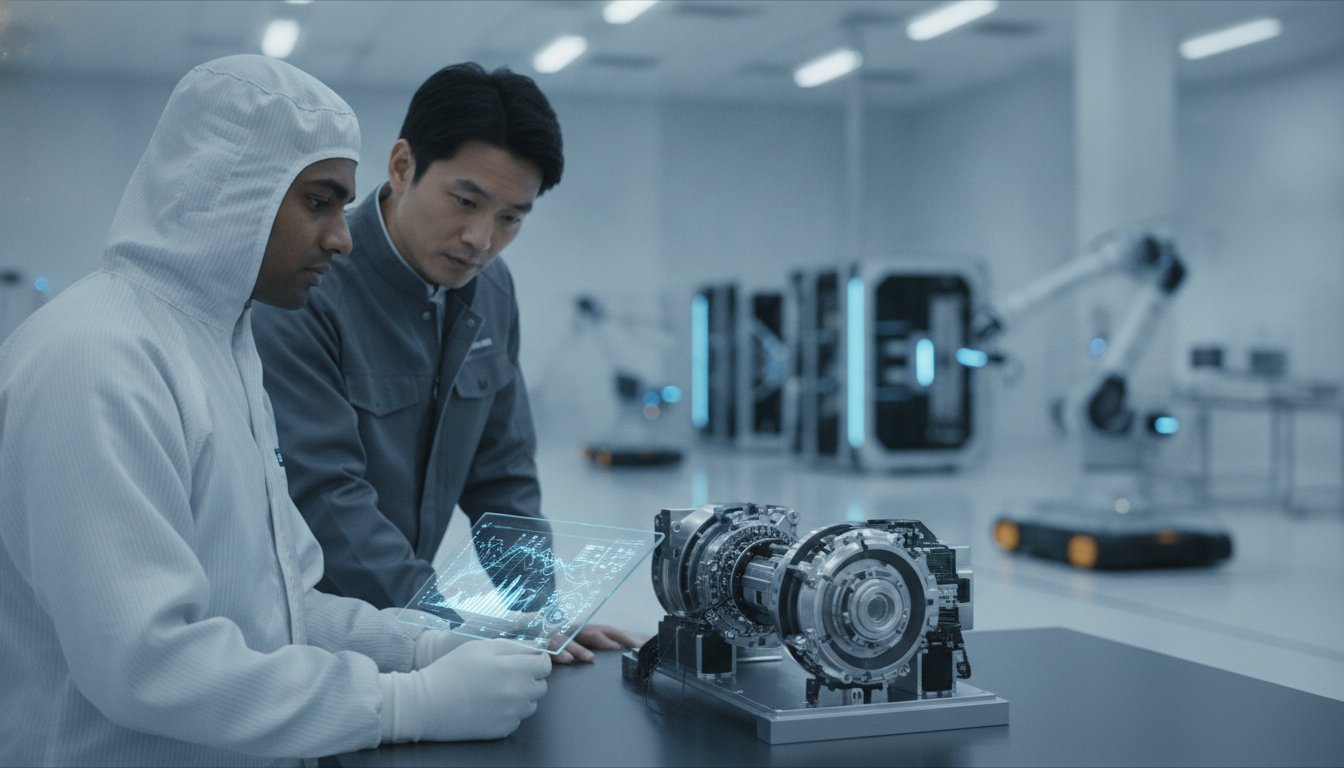

What if the "state-of-the-art" facility you toured via video call is actually a rented showroom, and your deposit is currently funding a trading company with zero manufacturing assets? It's a valid fear that keeps many procurement managers awake at night. This uncertainty is exactly why a professional factory audit China is no longer optional; it's a fundamental requirement for risk mitigation. You've likely felt the anxiety of losing capital to an unreliable supplier or felt overwhelmed by complex regulations. Trust isn't a strategy; verification is.
This guide demonstrates how to secure your supply chain by establishing "auditable manufacturing" standards before you sign a contract. You'll learn how to verify actual production capacity and ensure compliance with international quality standards. We'll provide a clear Go/No-Go decision framework to help you eliminate sourcing risks and protect your brand from systemic quality failures. By the end of this article, you'll have the methodical tools needed to turn manufacturing uncertainty into a controlled, transparent operation.
Key Takeaways
- Move beyond unreliable digital badges by conducting a factory audit China to verify a supplier's physical infrastructure and actual workforce.
- Establish "auditable manufacturing" standards that ensure full traceability and compliance with international ISO quality management systems.
- Master the on-site evaluation process by defining your quality non-negotiables and setting firm expectations during the auditor's opening meeting.
- Leverage detailed audit findings as a strategic negotiation tool to secure better terms and fix production gaps before releasing payment.
Why a Factory Audit in China is Non-Negotiable in 2026
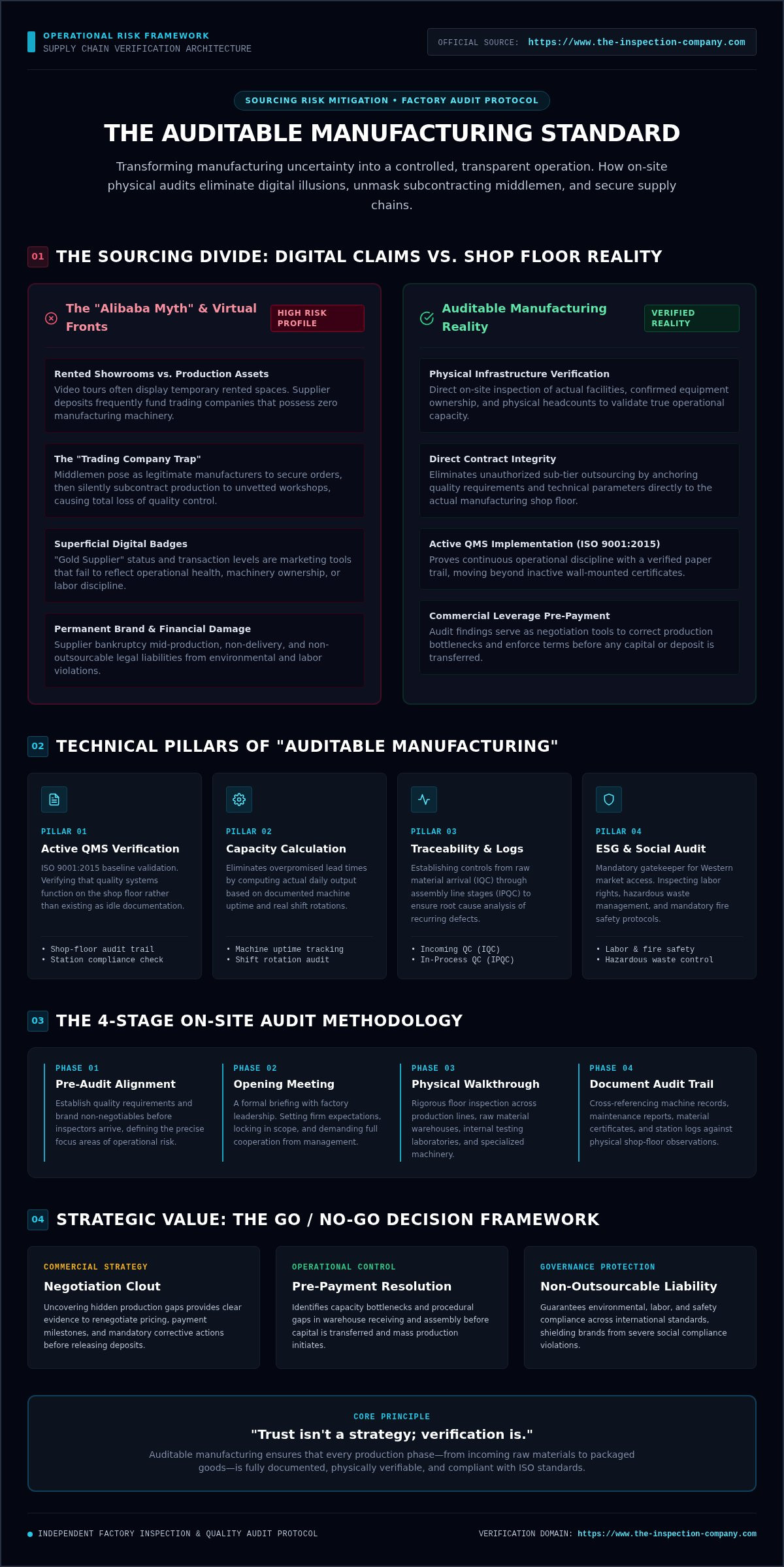
A factory audit China is a comprehensive on-site evaluation of a supplier’s physical facilities, quality systems, and workforce capabilities. In the 2026 market, where factory closures and "ghost" facilities are increasing, relying on digital profiles is a high-stakes gamble. The common "Alibaba Myth" suggests that a "Gold Supplier" badge or a high transaction level guarantees manufacturing excellence. It doesn't. These badges are often marketing tools that fail to reflect current operational health, technical capacity, or actual ownership of the production line.
Verification is the only antidote to the "Trading Company Trap." Middlemen frequently pose as manufacturers to secure orders, only to subcontract production to unvetted workshops. This adds unnecessary costs and creates a total loss of quality control. By mastering the supplier management process, you transform vetting from a hurdle into a strategic competitive advantage. A formal quality audit establishes a baseline of trust that no digital certificate can match, ensuring your partner possesses the specific machinery required for your order.
The Hidden Risks of Skipping Supplier Vetting
Skipping on-site verification exposes your business to catastrophic financial loss, including total non-delivery or supplier bankruptcy mid-production. Beyond the balance sheet, your reputation is at stake. Brand damage from social compliance failures or environmental violations is often permanent and legally complex. You can't outsource your liability. The financial impact of a single failed production run is devastating compared to the minimal investment required for a preventative factory audit China.
The Technical Pillars of Auditable Manufacturing
True "auditable manufacturing" (auditierbare fertigung) isn't a marketing slogan. It's a technical state where every production step, from raw material arrival to final packing, is documented and verifiable. While ISO 9001:2015 serves as a baseline for a Quality Management System (QMS), a professional factory audit China investigates if the factory actually implements these standards on the shop floor. Many facilities hold certificates but lack the discipline to maintain them. We look for the "audit trail" that proves consistent quality and accountability.
Production capacity verification is equally critical. Suppliers often overpromise on lead times to secure a deposit, only to reveal they lack the machinery or manpower for your volume. An audit calculates actual daily output based on machine uptime and shift rotations. You can explore the specific technical criteria we use through our factory audit services. A thorough factory audit China identifies these bottlenecks before they disrupt your supply chain.
Traceability and Documentation Standards
Traceability begins in the warehouse. We evaluate Incoming Quality Control (IQC) procedures to ensure raw materials aren't contaminated or substandard. In-Process Quality Control (IPQC) then maintains these standards during assembly. Without robust logs at each station, your manufacturing isn't auditable. This lack of documentation makes it impossible to identify the root cause of defects later, leading to recurring quality issues.
Social and Environmental Compliance
Western markets now demand strict ESG adherence. A social audit is no longer optional; it's a mandatory gatekeeper for modern market access. We verify labor rights, fire safety protocols, and hazardous waste management systems. Protecting your brand from social compliance scandals is a vital part of risk mitigation. If you have concerns about a potential partner's ethical standing, reach out to our team for a preliminary assessment before placing your order.
Navigating the On-Site Factory Audit Process
Successful auditing starts long before our inspectors arrive at the gates. You must define your specific quality requirements and non-negotiable standards to ensure the auditor focuses on your brand's unique risks. Once on-site, the process begins with a formal opening meeting. This isn't a social call; it's where we set clear expectations with factory management and confirm the day's scope. A transparent factory audit China requires immediate cooperation from the supplier's leadership team to be effective.
The physical inspection involves a methodical walkthrough of production lines, raw material warehouses, and internal testing labs. We verify if the machinery matches the factory's technical claims. Simultaneously, we perform a rigorous document review. This process involves cross-referencing business licenses, export permits, and certification validity with official government databases to ensure the entity is legally compliant and authorized to trade internationally.
The Examination Steps: What Auditors Look For
We scrutinize machine maintenance logs and calibration records for all precision equipment. If a machine isn't calibrated, your product dimensions won't be consistent across batches. We also evaluate worker competency by observing the production floor and reviewing training records. A factory is only as reliable as the personnel operating the machinery; high staff turnover often signals underlying management instability.
Interpreting the Audit Report
Our reports categorize findings into Critical, Major, and Minor non-conformities. A "Critical" finding, such as child labor or falsified licenses, results in an immediate fail and a "No-Go" recommendation. A "Passed" audit is only valid if it includes a Corrective Action Plan (CAP) that addresses identified gaps with specific, verifiable deadlines. To ensure your supplier meets these rigorous standards, contact our expert team today to schedule your factory audit China.
Leveraging Audit Results for Strategic Advantage
A completed report is more than a final grade; it's your most powerful negotiation tool. When a factory audit China reveals operational inefficiencies or missing certifications, you have the objective data needed to demand better payment terms or price concessions. Our unique model combines European management with a network of over 700 local inspectors to ensure your specific quality requirements aren't lost in translation. This hybrid approach provides the cultural nuance needed to push for factory improvements while maintaining the rigorous standards your brand requires.
To build a truly closed-loop quality system, you must integrate these initial findings with a pre-shipment inspection. This strategy ensures that the technical improvements promised after the audit are actually reflected in the finished goods. With our reports delivered within 24 hours, you gain a critical speed advantage in 2026, allowing you to make rapid, data-driven decisions that prevent costly shipping errors before they leave the province.
Negotiation Tactics Based on Audit Findings
Use the "Conditional Pass" as leverage. You can condition your contract on specific equipment upgrades or the implementation of new testing protocols. By establishing "Quality Gates" at production milestones where weaknesses were identified, you force the factory to maintain auditable standards. Don't release final deposits until the Corrective Action Plan is verified through a follow-up visit or a during-production check.
Securing Your Supply Chain for 2026
Shift your perspective from one-off vetting to ongoing supplier performance management. In a volatile manufacturing market, yesterday's successful audit doesn't guarantee tomorrow's quality. Consistent oversight ensures your supplier remains a reliable asset rather than a liability. If you're ready to secure your production and eliminate sourcing risks, contact The Inspection Company for a professional factory audit in China today.
Secure Your Supply Chain with Auditable Manufacturing
Securing your manufacturing operations in 2026 requires more than a digital verification; it demands a physical presence on the factory floor. By implementing a rigorous factory audit China, you transition from hopeful procurement to controlled, auditable manufacturing. You now understand that verifying a supplier's actual capacity and traceability systems is the only way to eliminate the "Trading Company Trap" and prevent catastrophic financial loss. These audits provide the objective data necessary to negotiate better terms and enforce quality gates throughout the production cycle.
The Inspection Company provides the oversight you need to mitigate risk effectively. With European management standards and a network of over 700 professional inspectors across Asia, we ensure your quality requirements aren't lost in translation. We deliver detailed reports within 24 hours, giving you the speed advantage required to make critical "Go/No-Go" decisions before your capital is at risk. Don't leave your brand's reputation to chance when you can invest in certainty.
Secure Your Production: Book a Professional Factory Audit
Frequently Asked Questions
How long does a factory audit in China typically take?
A standard factory audit China typically requires one full business day on-site for a single auditor to complete. Larger manufacturing complexes or specialized facilities with multiple production lines may necessitate two days for a thorough evaluation. Once the on-site work is finished, you'll receive a comprehensive report with photos and findings within 24 hours. This rapid turnaround allows you to make urgent procurement decisions without delaying your supply chain.
What is the difference between a factory audit and a pre-shipment inspection?
A factory audit evaluates the supplier's overall capability, quality systems, and legal standing before you place an order. In contrast, a pre-shipment inspection focuses strictly on the finished goods' quality, quantity, and packaging once production is at least 80% complete. While the audit confirms the factory is capable of "auditable manufacturing," the inspection verifies that your specific shipment meets all technical specifications before leaving the province.
Can I conduct a factory audit remotely in 2026?
Remote audits are insufficient for high-stakes manufacturing because video calls can easily hide operational flaws and safety violations. Effective risk mitigation requires a physical presence on the factory floor to verify machinery, documentation, and working conditions in person. We utilize our network of over 700 professional inspectors across Asia to provide on-the-ground verification. This ensures that what you see in a report reflects the factory's actual physical reality.
What happens if my Chinese supplier fails the audit?
If a supplier fails, you'll receive a report detailing critical non-conformities such as falsified licenses or child labor. In these cases, we typically recommend a "No-Go" decision to protect your capital. For less severe failures, you can issue a Corrective Action Plan (CAP). This document requires the factory to fix specific gaps within a set deadline. A follow-up visit then verifies these improvements before you release any deposits.
Do I need to inform the factory before the audit takes place?
You should inform the factory in advance to ensure that management, production logs, and business licenses are available for review. While unannounced visits are possible for social compliance, a standard factory audit China requires cooperation to access restricted testing labs and maintenance records. Proper scheduling ensures the auditor can conduct a methodical walkthrough without being blocked by "unavailable" staff or locked storage areas during the evaluation.