

What good is a strong supplier audit score if the same defects and delays keep returning? Supplier problems often become visible only after production is disrupted, while the evidence behind them sits across inspection reports, delivery records, and audit findings. A supplier performance audit can help identify where reliability is breaking down, but findings matter only when they lead to verified action.
This guide explains how to assess supplier performance against clear criteria, gather relevant evidence, and turn gaps into corrective actions with owners, deadlines, and follow-up checks. You’ll also learn how to bring fragmented records into a consistent supplier scorecard and document decisions about supplier development or continued use. When internal records leave important questions unanswered, an independent factory audit can add on-site evidence to support your assessment, without replacing ongoing performance monitoring.
Key Takeaways
- Use a supplier performance audit to assess results against buyer requirements, not general impressions or assurances.
- Compare documented quality and delivery records with process observations and staff interviews to build a more reliable picture.
- Turn each finding into a documented corrective action with an owner, deadline, and follow-up verification.
- Choose internal reviews, supplier self-assessments, or independent on-site audits based on risk, supplier history, and the evidence you need.
What Is a Supplier Performance Audit, and What Should It Reveal?
A supplier performance audit is a structured assessment of a manufacturer’s results and operating practices against your requirements. It uses evidence such as quality records, delivery data, documented procedures, and observed processes. An audit captures what the evidence shows at a particular point in time, not a guarantee of future performance. As part of supplier evaluation, it helps buyers judge whether current quality, delivery, process control, and capability support continued use or supplier development.
An audit isn’t the same as selecting a supplier, inspecting a product, or conducting a social-compliance audit. Supplier selection compares potential partners; product inspection checks goods against requirements; social-compliance audits examine workplace practices. A factory audit can assess supplier capabilities and quality management systems. Learn more about the scope of factory audit services.
Which supplier performance risks should an audit examine?
Start with recurring problems and examine whether the supplier’s controls are designed to prevent them. Look for:
- Repeated defects that may point to ineffective process controls and result in rejected or reworked goods.
- Missed delivery commitments that can disrupt production schedules or stock availability.
- Process instability, such as inconsistent methods, that can make output unpredictable.
- Corrective actions that remain open or fail to prevent recurrence, allowing known issues to persist.
When is an audit more useful than routine monitoring?
Consider an audit after repeated nonconformities, a material process change, or an unexplained decline in quality or delivery. A scorecard shows what is changing in reported results. An audit investigates how and why by examining the evidence and practices behind those results. Use them together: monitoring flags a concern, and an audit can test whether the supplier’s controls address it. Findings should inform sourcing decisions, not replace ongoing tracking.
How to Assess Supplier Performance With Evidence, Not Assumptions
Set the audit criteria before reviewing the supplier. Use product specifications, purchase requirements, agreed delivery expectations, and the supplier’s documented quality procedures to define acceptable performance. For each measure, record the reporting period, data owner, and calculation method. For example, clarify whether a defect rate counts units rejected at inspection, customer complaints, or both. Without consistent definitions, comparisons between suppliers can mislead.
A sound audit conclusion draws on records, observed practices, and staff accounts, because each source can confirm or challenge the others. Compare quality and delivery records with what you observe on the production floor and what responsible staff say about the controls in place. The Victorian Government’s Supplier Performance Scorecard Template can help organize measures, but clear definitions are still essential.
Which performance indicators belong in the audit?
Choose indicators tied to buyer requirements, such as defect and nonconformity trends, delivery reliability, and responsiveness to corrective actions. Set a consistent measurement period and agree how each indicator is calculated before comparing suppliers. Check the source records behind each summary score. A delivery figure, for instance, is more useful when its due-date basis and data source are clear.
How can an audit test supplier capability?
Compare production capacity with the work assigned, process controls with documented procedures, and personnel competence with assigned responsibilities. Review quality-management records to see whether controls are used and issues are tracked. At Asian manufacturing sites, an on-site factory audit can provide direct evidence of supplier capabilities and quality systems. Explore independent factory audit support as one input to your ongoing scorecard, not as a prediction of future results.
How to Turn Audit Findings Into Corrective Actions and Follow-Up
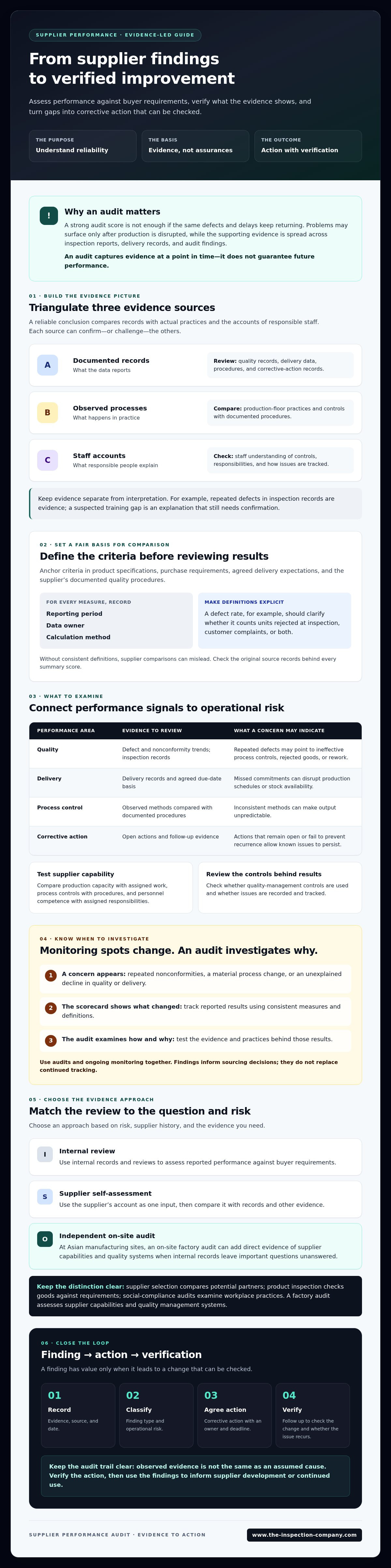
A finding has value only if it leads to a change that can be checked. In a supplier performance audit, keep observed evidence separate from interpretation. For example, “three inspection records show the same assembly defect” is an evidence-based finding. “Staff lack training” is a possible explanation that needs confirmation.
Move each finding through a controlled sequence:
- Record the evidence, source, and date.
- Classify the finding by type and operational risk.
- Agree on a corrective action that addresses the underlying cause.
- Assign a responsible owner and a completion deadline.
- Verify implementation and check whether the issue recurs.
What should a useful supplier audit report include?
Document the audit scope, evidence reviewed, objective findings, and any limits on what could be verified. For each finding, record the supplier’s agreed action, responsible owner, and follow-up date. Keep unresolved risks visible rather than implying they’re closed. This gives decision-makers a clear basis for tracking progress and deciding whether further review is needed. Apply the same ownership and follow-up principles across your wider supplier management process.
How should buyers verify corrective-action effectiveness?
Check that the action addresses the documented cause, not just the visible symptom. If a process change is intended to prevent a recurring defect, look for evidence that the revised control is in use, then review later records for recurrence. Set follow-up according to the finding’s risk. A follow-up audit can examine whether process controls changed; an additional during-production or pre-shipment inspection can help check product quality at a relevant stage. Neither replaces ongoing monitoring.
Need independent evidence to check a supplier’s corrective actions? Discuss your audit verification needs.
Choosing an Audit Approach for Suppliers in Asia
Choose an approach based on the evidence you need and the resources available. Internal reviews can compare supplier data with your requirements, while self-assessments gather information directly from the manufacturer. Either approach may need independent verification when you can’t confirm claims from records alone. An independent on-site audit can provide direct evidence of factory capabilities and quality systems. Match the scope of a supplier performance audit to product risk, supplier history, and buyer requirements. It informs decisions, but can’t guarantee future performance.
When does an independent factory audit make sense?
Consider an independent visit when you need to assess capabilities or quality systems on site, particularly when important controls are difficult to verify remotely. The Inspection Company’s factory audit services assess supplier capabilities and quality management systems. If your requirements also cover workplace practices, a social compliance audit addresses social criteria. Define the questions and evidence you need before selecting the audit scope.
How can inspections complement supplier audits?
Audits assess supplier systems and practices; product inspections examine goods against requirements at defined production stages. For example, a pre-shipment inspection provides evidence about finished goods before shipment, while audit findings can help shape what to monitor in later orders. The Inspection Company also offers during-production and pre-shipment inspections, with reports and photos provided after inspection. Use audits and inspections together with your broader sourcing risk assessment. Neither guarantees future results, but each can contribute useful evidence to supplier decisions.
Need help defining an appropriate scope? Discuss your supplier audit requirements with The Inspection Company.
Make Supplier Findings Count Beyond the Audit
A supplier performance audit is most useful when it connects documented evidence to clear actions and follow-up. Set criteria from your requirements, compare records with what happens on site, and distinguish verified findings from assumptions. Then assign corrective actions, owners, and deadlines, and check whether the underlying issue is resolved rather than simply marked complete.
Independent factory audits can add on-site evidence about supplier capabilities and quality management systems, while inspections help assess products at defined production stages. Neither guarantees future results, but together with your own performance records, they can support more consistent decisions about supplier development and continued use.
The Inspection Company has a team of over 700 inspectors operating across key Asian manufacturing hubs. For help defining an appropriate audit scope, discuss your supplier audit requirements. Clear evidence and verified follow-through can help you manage supplier risk with greater confidence.
Frequently Asked Questions
What is a supplier performance audit?
A supplier performance audit is a structured review of a supplier’s results and operating controls against agreed requirements. It may examine quality records, delivery performance, production processes, and corrective-action handling. The findings help buyers identify risks and decide what follow-up is appropriate. Because an audit reflects evidence available within its scope at the time of assessment, it can’t guarantee that performance will remain consistent afterward.
How often should you audit a supplier?
There’s no single schedule that suits every supplier. Set audit frequency according to product risk, supplier history, buyer requirements, and previous findings. Consider an earlier review if production processes change, performance declines without explanation, or the same issue recurs. Between audits, track relevant quality and delivery data so you can spot changes and decide whether closer verification is needed.
What should a supplier performance audit checklist include?
A useful checklist should specify the audit scope, agreed requirements, evidence sources, quality and delivery criteria, process controls, and responsible contacts. Include space to record objective findings, supporting evidence, corrective-action owners, and follow-up dates. Tailor the checklist to the product and supplier. A generic template can provide a starting point, but it may miss controls or risks that matter to your requirements.
What is the difference between a supplier audit and a product inspection?
A supplier audit assesses the manufacturer’s capabilities, processes, and management systems. A product inspection checks goods against defined requirements at a particular production stage or before shipment. Buyers may use both forms of evidence: an audit helps assess how work is managed, while an inspection provides information about the products themselves. Neither should be treated as a substitute for the other.
Can a supplier performance audit guarantee better supplier performance?
No. An audit provides evidence about the supplier’s performance and operating conditions within the agreed scope and at the time of assessment. Its value depends on the evidence available and what happens next. Agree corrective actions, assign owners, and verify whether changes address the underlying issues. Continue monitoring results and use suitable product inspections to check goods at relevant production stages.