

What if the goods leaving your factory aren’t the goods you approved? A pre-shipment check can confirm products before dispatch, but loading is the final opportunity to catch a wrong item, short quantity, damaged packaging, or unsuitable container. A practical container loading inspection checklist helps you verify the shipment as it goes into the container, not just what was checked earlier.
You need confidence that the order matches the shipping documents and that handling or container-condition issues are identified before the doors are sealed. This guide provides a step-by-step checklist for verifying shipment identity and quantity, checking packaging and loading practices, assessing container condition, and recording the seal. It also explains how a Container Loading Inspection differs from a Pre-Shipment Inspection and customs clearance, and when independent on-site supervision can add useful oversight. Clear checks before dispatch can reduce avoidable errors and give you a more reliable record of what happened during loading.
Key Takeaways
- Use a container loading inspection checklist to compare product identity and quantity with the purchase order, packing list, and shipping instructions.
- Inspect the empty container for damage, moisture, contamination, or unusual odors before loading begins.
- Track loading, reconcile counts, and document discrepancies with their location, condition, quantity, and supporting evidence.
- Consider independent on-site supervision when shipment value, sensitivity, complexity, or dispute history makes added oversight useful.
Container Loading Inspection Checklist: What to Verify Before Loading Starts
A correct order can still be mishandled at dispatch. Workers may select the wrong cartons, quantities may differ from the documents, or packaging damage may go unnoticed as goods are loaded. Use a container loading inspection checklist to compare the shipment with buyer-approved requirements before loading begins. This check supports shipment accuracy, but it doesn’t replace customs, destination-market, or product-compliance review.
Prepare documents and shipment identifiers
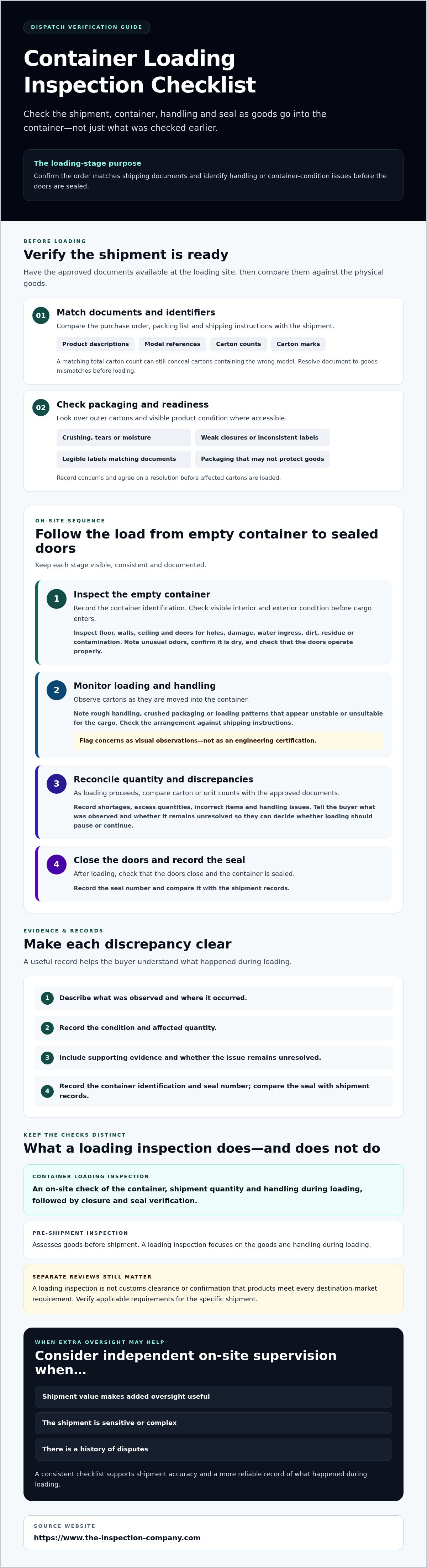
Have the purchase order, packing list, and shipping instructions available at the loading site. Compare product descriptions, model references, carton counts, and carton marks across the documents and against the physical goods. A matching total carton count, for example, may still conceal cartons containing the wrong model. Resolve any mismatch between the packing list and the goods before loading, rather than carrying an unclear discrepancy into dispatch. The Intermodal container is a standardized unit used in freight transport, so accurate shipment and container identification help keep records clear.
Check packaging and readiness
Look over outer cartons for crushing, tears, moisture, weak closures, or inconsistent labels. Confirm labels are legible and match the shipment documents and buyer-agreed requirements. Check visible product condition where accessible, and flag damage or packaging that may not protect the goods during handling. Record concerns and agree on a resolution before loading the affected cartons.
For a closer product-focused check before dispatch, see the Pre-Shipment Inspection guide. A Pre-Shipment Inspection assesses goods before shipment; a Container Loading Inspection focuses on the goods and handling during loading. Neither is customs clearance or confirmation that products meet every destination-market requirement. Keep those reviews separate and verify the applicable requirements for the specific shipment.
How to Inspect a Shipping Container and Supervise Loading Step by Step
A Container Loading Inspection is an on-site check of the container, shipment quantity, and handling during loading, followed by verification of closure and sealing. Use a consistent sequence: inspect the empty container, monitor loading, reconcile the count, then check the closed doors and record the seal details. A container loading inspection checklist keeps each stage visible and documented.
Inspect the empty container before loading
Before cargo enters, record the container identification and inspect its visible interior and exterior. Check the floor, walls, ceiling, and doors for holes, damage, signs of water ingress, dirt, residue, or contamination. Note unusual odors, confirm the container is dry, and check that the doors operate properly. Consider whether any condition could affect the specific cargo. The International Maritime Organization’s Convention for Safe Containers (CSC) provides background on container safety requirements; a visual loading check doesn’t replace a technical assessment.
Monitor loading and reconcile the shipment
Observe cartons as they are moved into the container. Note rough handling, crushed packaging, or loading patterns that appear unstable or unsuitable for the cargo. Check that cartons are arranged in line with the shipping instructions, and flag concerns without presenting a visual observation as an engineering certification.
As loading proceeds, compare carton or unit counts with the approved documents. Record any shortage, excess, incorrect item, or handling issue, including what you observed and whether it remains unresolved. Give the buyer clear information to help decide whether loading should pause or continue.
After loading, check that the doors close and the container is sealed. Record the seal number and compare it with the shipment records. For independent on-site oversight, learn more about Container Loading Inspection or ask about inspection arrangements.
How to Document Discrepancies, Seals, and Loading Evidence
A discrepancy is useful only when the buyer can understand what happened and decide what to do next. Use the container loading inspection checklist to create a factual record, not to assume why an issue occurred or who is responsible.
Create an actionable discrepancy record
For each issue, note the date and time, its location in the shipment or container, the observed condition, and the affected quantity. Add clear photographs where available, showing both the issue and enough context to identify where it occurred. For example, write “three cartons with crushed lower corners near the container doors” rather than “some cartons damaged.”
Keep observations separate from recommendations and buyer decisions. State what you saw, identify any uncertainty, and record who was notified and what decision was made. If loading can be paused safely, pause it while the responsible parties review the issue. Notify the buyer and relevant on-site contacts, preserve the evidence, and obtain a clear decision before proceeding where possible.
If an independent inspection is involved, confirm in advance which photographs, loading records, and seal details the specific report includes. Don’t assume every report contains the same evidence.
Verify the closure record
After the container is closed and sealed, record the seal identifier alongside the container reference. Compare both details with the shipment records, and document any mismatch before dispatch. A seal number identifies the closure recorded at loading, but it doesn’t by itself prove the contents, regulatory compliance, or uninterrupted custody after the inspection.
Clear records support follow-up without overstating what was verified. For independent oversight of loading evidence and shipment closure, contact The Inspection Company about Container Loading Inspection.
When to Use a Container Loading Inspection Instead of Relying Only on a Checklist
A buyer’s container loading inspection checklist is useful for internal preparation, but it depends on someone at the factory completing the checks and reporting concerns accurately. Independent on-site supervision adds an impartial observer who can monitor loading, verify quantity and handling, check container condition, and confirm sealing. Choose the level of oversight based on shipment risk and the evidence you need, not a fixed value threshold.
Choose the right control point for the risk
A checklist may be sufficient when your team can oversee loading and resolve discrepancies directly. Consider independent supervision for high-value or sensitive goods, complex shipments, or orders with a history of quantity or handling disputes. Before arranging an inspection, clarify its scope and the evidence the report will include. See the Container Loading Inspection service details for information about the loading-stage checks offered.
This inspection records observations at dispatch. It doesn’t establish that every product is defect-free, verify all product requirements, or replace customs, destination-market, or legal compliance review.
Coordinate loading inspection with product inspection
Product condition and loading are different control points. A Pre-Shipment Inspection checks products before shipment against agreed criteria; a Container Loading Inspection observes shipment identity, quantity, handling, container condition, and closure as goods are dispatched. If you need product verification before loading, consider a Pre-Shipment Inspection as a separate check. The two checks can provide visibility at distinct stages, but neither replaces applicable compliance review.
Decide what you need verified, who will review any discrepancy, and what evidence matters for your shipment. If independent loading oversight may help, discuss your shipment requirements and inspection plan with a provider before dispatch.
Make Your Next Dispatch More Verifiable
A reliable container loading inspection checklist helps you confirm shipment details, assess container condition, observe handling, and record concerns before dispatch. Match the goods to approved documents, document discrepancies clearly, and verify the seal details after closure. Together, these steps create a stronger record of what left the factory.
For shipments where impartial on-site oversight matters, Container Loading Inspection adds checks of quantity, handling, container condition, and secure sealing. The Inspection Company has a team of over 700 inspectors across key Asian manufacturing hubs. The service focuses on loading-stage observations; it doesn’t replace product-compliance or customs review.
Discuss your container loading inspection requirements to consider the right oversight for your shipment. With clear checks and a documented dispatch, you can move forward with greater confidence.
Frequently Asked Questions
What should a container loading inspection checklist include?
A container loading inspection checklist should cover shipment identity, quantity, packaging, container condition, loading practices, and closure records. Compare product descriptions, model references, carton counts, and marks with the purchase order, packing list, and shipping instructions. Check packaging and labels against buyer-agreed requirements, and record visible damage or discrepancies. Include space to note the container identification, seal details, and evidence collected during loading.
What does a container loading inspection verify?
A Container Loading Inspection verifies loading-stage details, including shipment quantity and handling, container condition, and secure sealing. An inspector can observe whether goods appear to match the approved shipment records and document visible concerns as loading proceeds. The inspection provides evidence of observed conditions at that stage. It doesn’t confirm every product is defect-free or establish customs clearance or full regulatory compliance.
When should I arrange a container loading inspection?
Consider arranging a Container Loading Inspection when independent observation would help manage shipment risk. It may be useful for high-value or sensitive goods, complex loads, or shipments with recurring quantity or handling disputes. The inspection needs to take place during loading to observe dispatch activities, so coordinate the plan with the factory and confirm the intended scope and report evidence before the goods are loaded.
Is a container loading inspection the same as a pre-shipment inspection?
No. A Pre-Shipment Inspection checks products before shipment against agreed criteria, while a Container Loading Inspection focuses on the dispatch stage. It observes loading, quantity, handling, container condition, and sealing. The two checks address different risks and may be used together when buyers need product verification before loading as well as evidence of what was loaded and how the process proceeded.
Can a loading checklist confirm customs compliance?
No. A loading checklist helps verify shipment details and record loading observations, but it can’t confirm customs compliance. Customs and destination-market requirements depend on the specific goods and shipment, and must be reviewed separately using applicable official requirements and shipping documents. Treat container checks as an operational control, not a substitute for customs clearance, regulatory review, or confirmation that products meet all legal requirements.