
What if the "factory" you just wired a $50,000 deposit to is actually a three-person trading office operating out of a residential high-rise? It's a valid fear. Many importers experience deep anxiety over receiving sub-standard products or losing money to "ghost" entities that vanish after payment. You've likely realized that a polished website doesn't guarantee a reliable production line. The stakes are higher in 2026, as shifts like the elimination of export VAT rebates for 249 product categories put fresh financial pressure on manufacturers. This makes verifying your partners more critical than ever to avoid unexpected operational friction.
This guide will show you how to transform supplier claims into verified facts through a professional process for vetting suppliers in china. You'll learn how to distinguish real manufacturers from middle-men and identify operational risks before they cost you a fortune. We'll provide a clear verification checklist and explain how on-site audits provide the transparency you need to invest with confidence. You'll gain a methodical roadmap to secure your supply chain and ensure your investment is protected by hard data.
Key Takeaways
- Identify the hidden risks of "Quality Fade" and why digital verification alone fails to protect your capital from sub-standard production.
- Implement a rigorous 4-pillar framework for vetting suppliers in China to confirm legal standing, financial health, and genuine manufacturing capacity.
- Uncover the truth behind "Potemkin Factories" by utilizing on-site audits that expose the difference between trading companies and real manufacturers.
- Secure your entire production cycle by integrating initial vetting results with proactive pre-shipment and during-production inspection protocols.
The Critical Need for Vetting Suppliers in China in 2026
Vetting is the methodical verification of a factory's legal standing, technical capacity, and ethical compliance. In 2026, this is no longer optional. With stricter global regulations like RoHS and CPC, the cost of a single compliance error can be terminal for your business. Effective vetting suppliers in china ensures you aren't just buying a product, but securing a reliable link in your supply chain management strategy. It transforms vague supplier promises into verified operational facts.
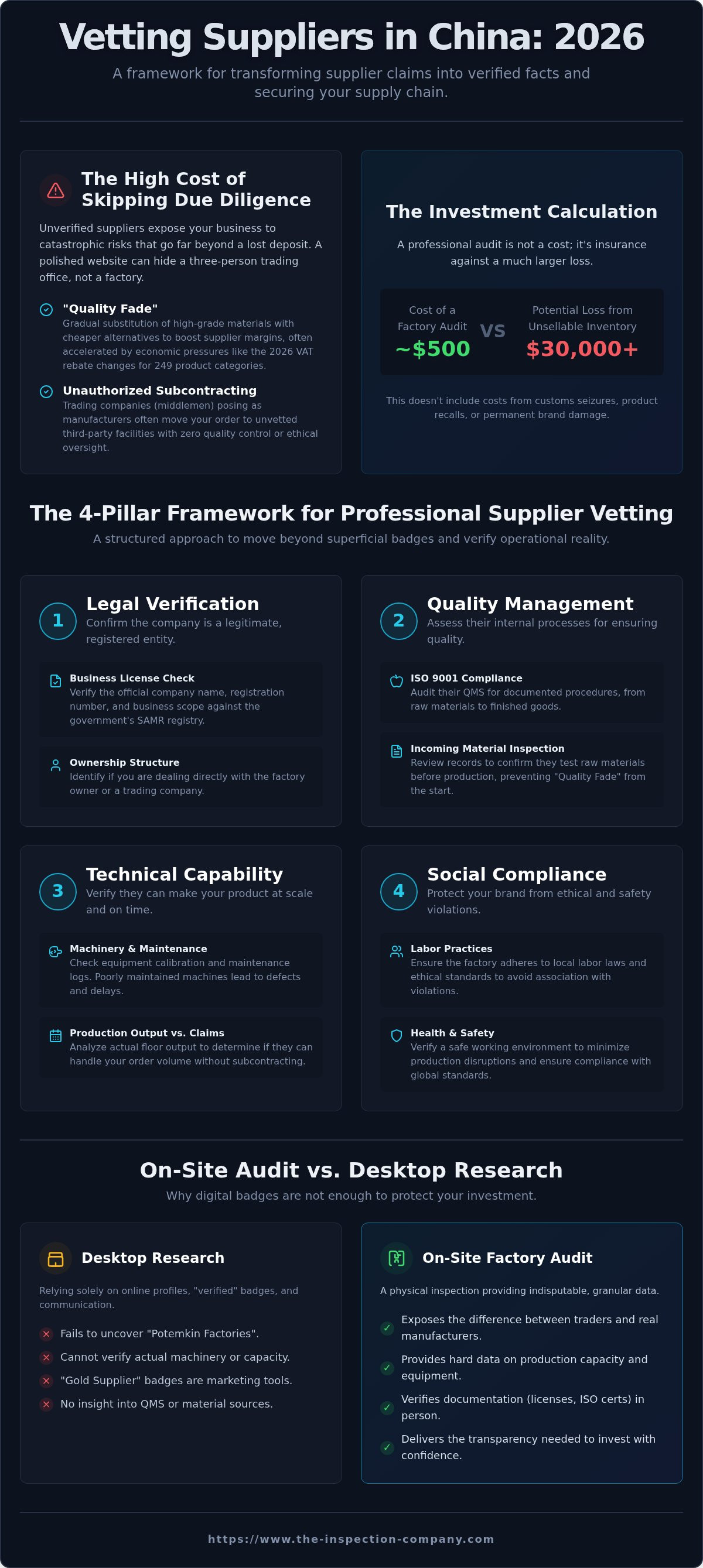
Many importers fall victim to "Quality Fade." This is the gradual, often invisible substitution of high-grade materials with cheaper alternatives to increase the supplier's margin. In 2026, this risk is heightened by recent changes to export VAT rebates, which have squeezed factory profits across 249 product categories. Beyond lost deposits, the financial impact of poor vetting includes Amazon account suspensions and catastrophic product recalls. A single batch of non-compliant goods can destroy years of brand equity in days.
The Hidden Costs of Skipping Due Diligence
The total cost of poor quality (COPQ) is the sum of all expenses incurred from manufacturing defects, including rework, returns, and lost market opportunity. A professional factory audit is a preventative investment. It's a simple calculation: spending a few hundred dollars on verification prevents a $30,000 loss in unsellable inventory. Non-compliance often leads to immediate seizure of goods by customs, particularly under tightening EU and US safety standards.
Trading Company vs. Manufacturer: The Eternal Dilemma
Middlemen frequently pose as factory owners to secure orders they don't actually produce. This leads to unauthorized subcontracting, where your order is moved to an unvetted third-party facility with zero quality oversight. Identifying whether your contact is a middleman or the factory owner is essential for maintaining control. Without on-site verification, you risk your production being handled by a facility that doesn't meet your technical or ethical standards.
The 4-Pillar Framework for Professional Supplier Vetting
Professional vetting suppliers in china requires a structured approach that moves beyond superficial profile badges. While many businesses rely on digital platforms for sourcing, the reality of eCommerce in China often masks the actual operational status of a vendor. A robust framework consists of four critical pillars: legal verification, quality management systems (QMS), technical capability, and social compliance.
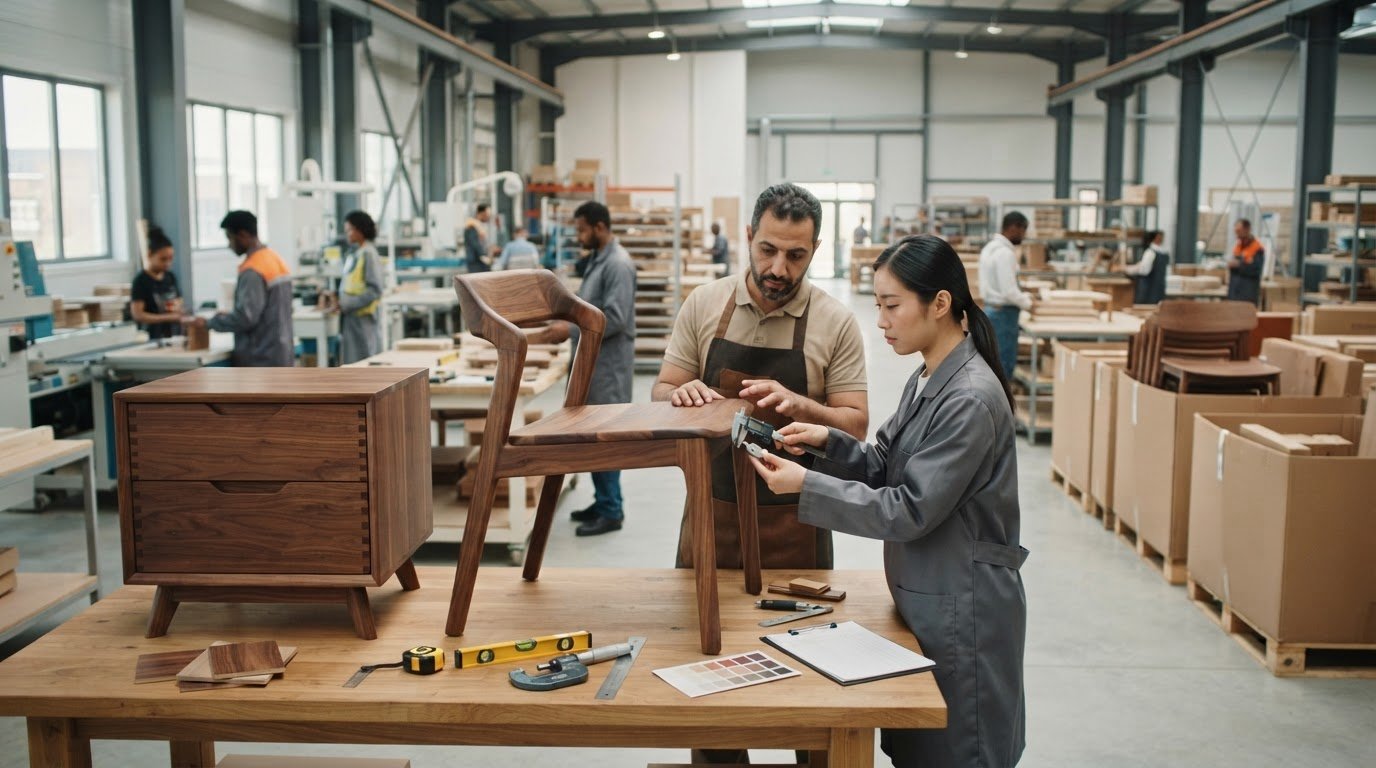
First, you must confirm the supplier's legal standing by verifying business licenses against the SAMR registry. Second, you evaluate their QMS, auditing for ISO 9001 compliance to ensure their internal standards match your requirements. Third, you must assess their technical capability to produce your specific SKU at scale. Finally, social compliance ensures your brand isn't linked to ethical violations. This comprehensive process is what separates successful importers from those facing catastrophic financial loss.
Deep Dive into Quality Management Systems (QMS)
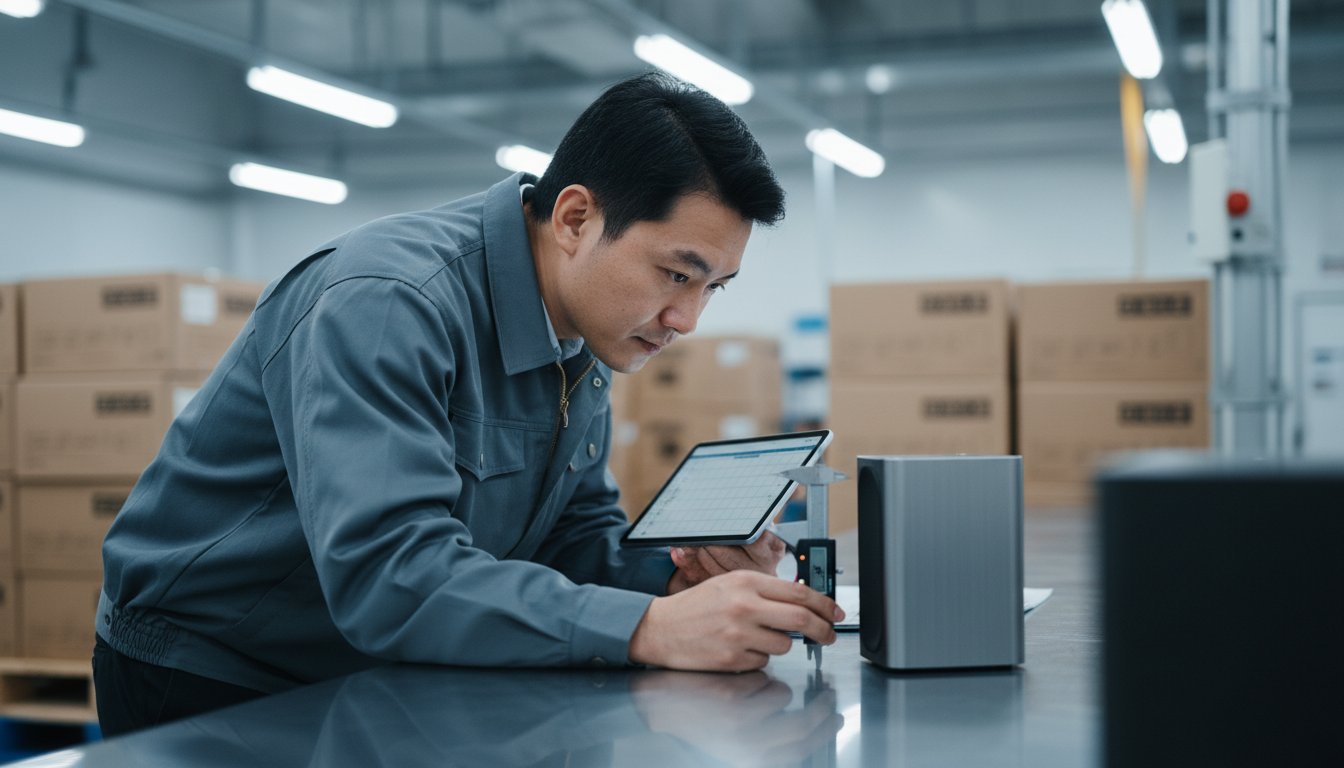
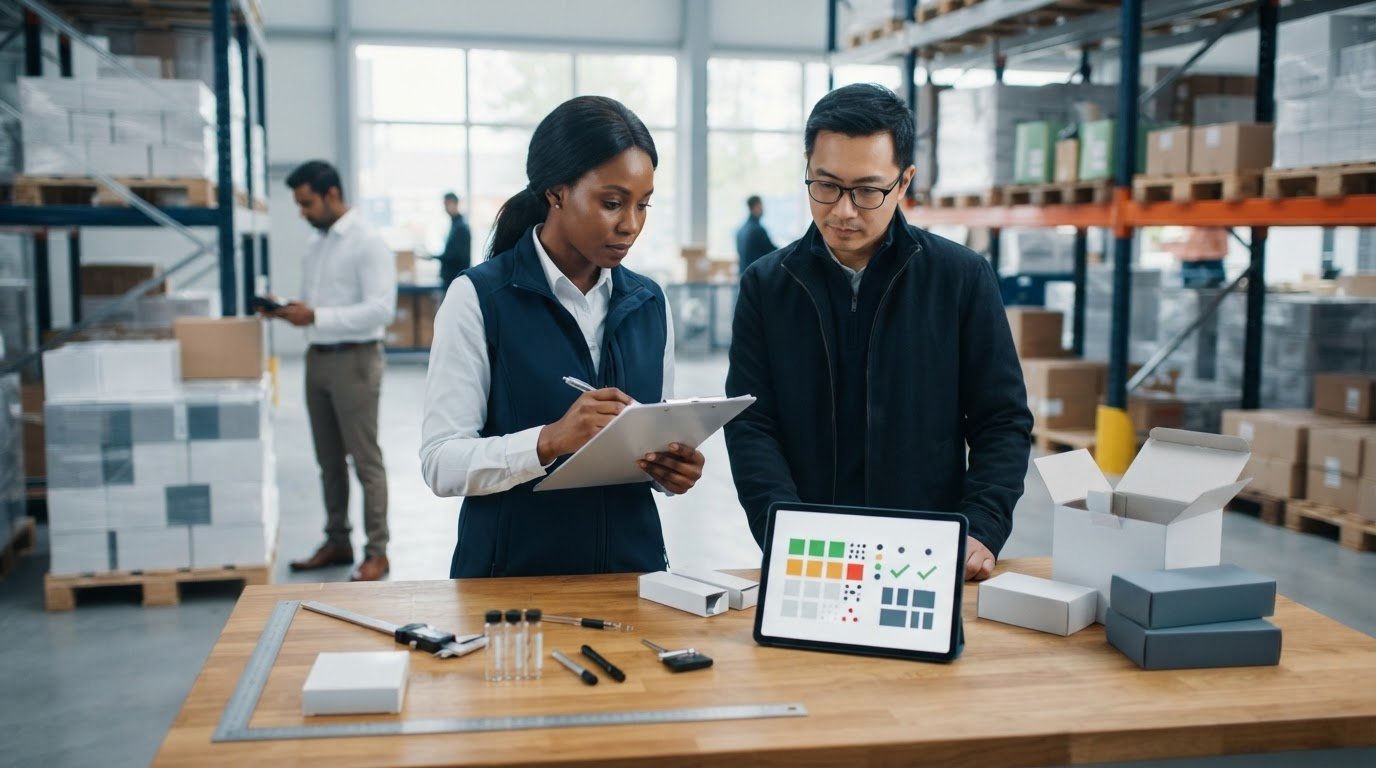
A high-performing factory maintains a dedicated internal testing laboratory. You should look for calibrated equipment and documented incoming material inspection records. These records prove the factory doesn't just accept raw materials blindly. It's vital to distinguish between a preliminary supplier survey and a comprehensive factory audit. A survey is a useful starting point, but an audit provides the granular data needed for final approval. This distinction is the core of vetting suppliers in china effectively.
Evaluating Production Capacity for Scale
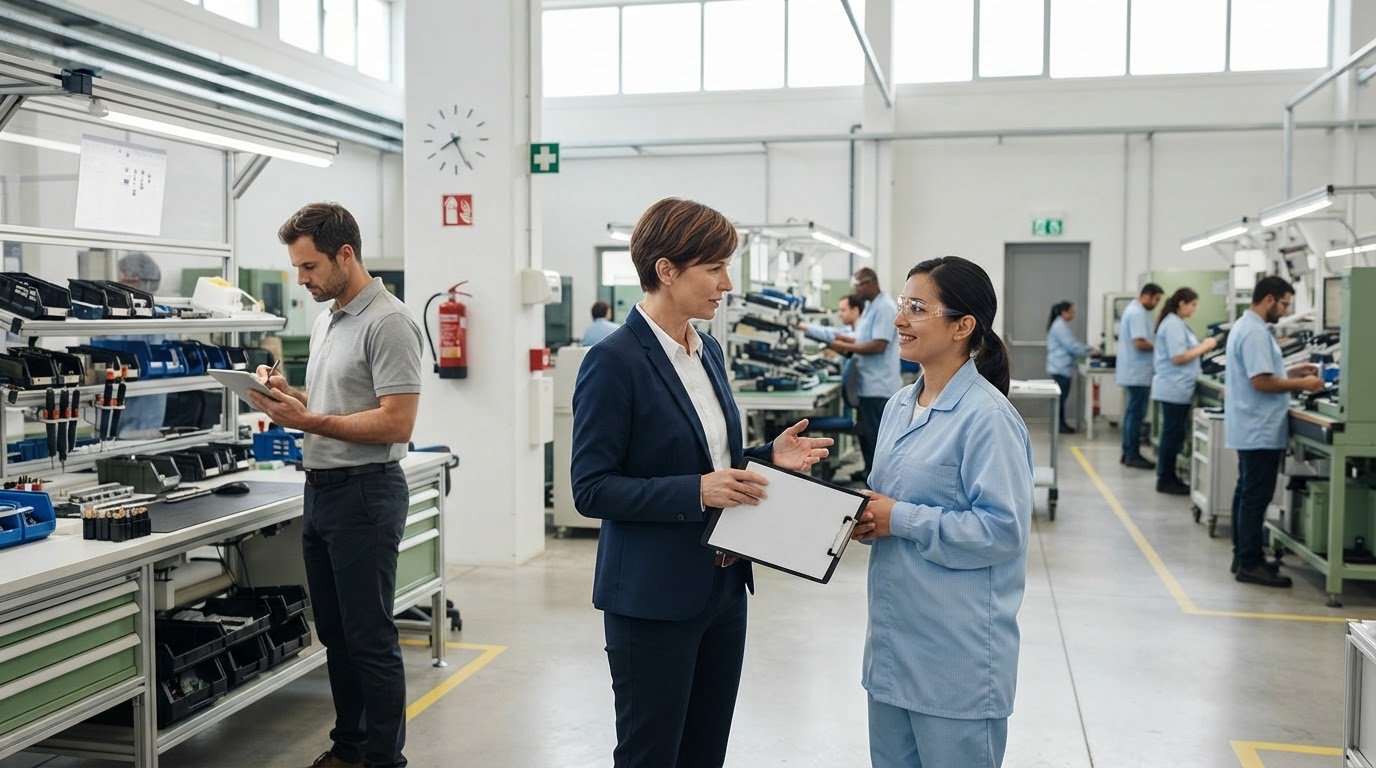
Don't take lead time promises at face value. You need to verify machinery maintenance logs and workforce stability. High staff turnover or poorly maintained equipment often leads to production delays or quality spikes. By analyzing actual floor output against their claims, you can determine if they can handle your order volume without subcontracting. If you're unsure about a potential partner's true capacity, you can review our verification services to secure your investment.
Why On-Site Factory Audits Beat Desktop Research
Digital platforms offer a sense of security that's often illusory. Many importers rely on "Gold Supplier" or "Verified" badges as their primary shield. In reality, these markers are marketing tools, not technical certifications. They prove a company exists and pays its platform fees, but they don't guarantee the product in the box matches your specifications. Professional vetting suppliers in china requires moving beyond the screen to verify the physical reality of the production floor.
The "Potemkin Factory" is a common industry trap. Trading companies frequently pose in front of facilities they don't own, using repurposed photos to simulate manufacturing scale. An independent factory audit exposes these facades by confirming ownership and actual production activity. With European management overseeing 700+ local inspectors, we bridge the cultural gap to provide 24-hour reporting. This real-time data is a non-negotiable tool for informed decision-making.
The Limitations of Digital Verification
Photos and videos are easily faked or staged for a polished online profile. While a supplier survey serves as a useful initial screening tool, it relies on self-reported data. It can't replace the physical inspection of machinery, raw material storage, or finished goods inventory. Digital checks are the beginning of the conversation, not the conclusion of the vetting suppliers in china process.
What a Professional Auditor Sees That You Don’t
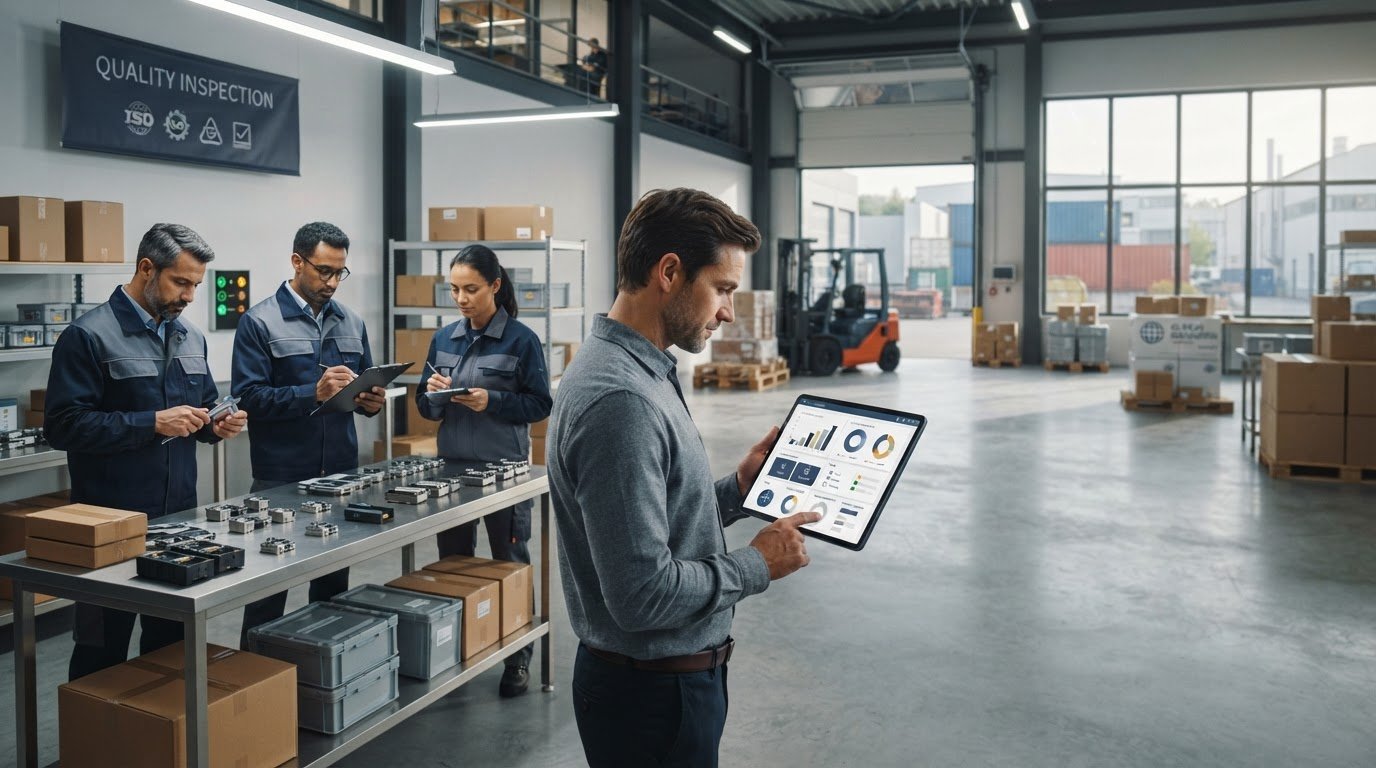
A seasoned auditor identifies red flags that a camera lens misses. They assess worker safety and morale, which are leading indicators of long-term quality stability. They also spot "hidden" subcontracting, where your order is quietly moved to an unvetted workshop down the street. To secure your supply chain with on-site verification, book a professional factory audit today.
From Vetting to Production: Securing the Supply Chain
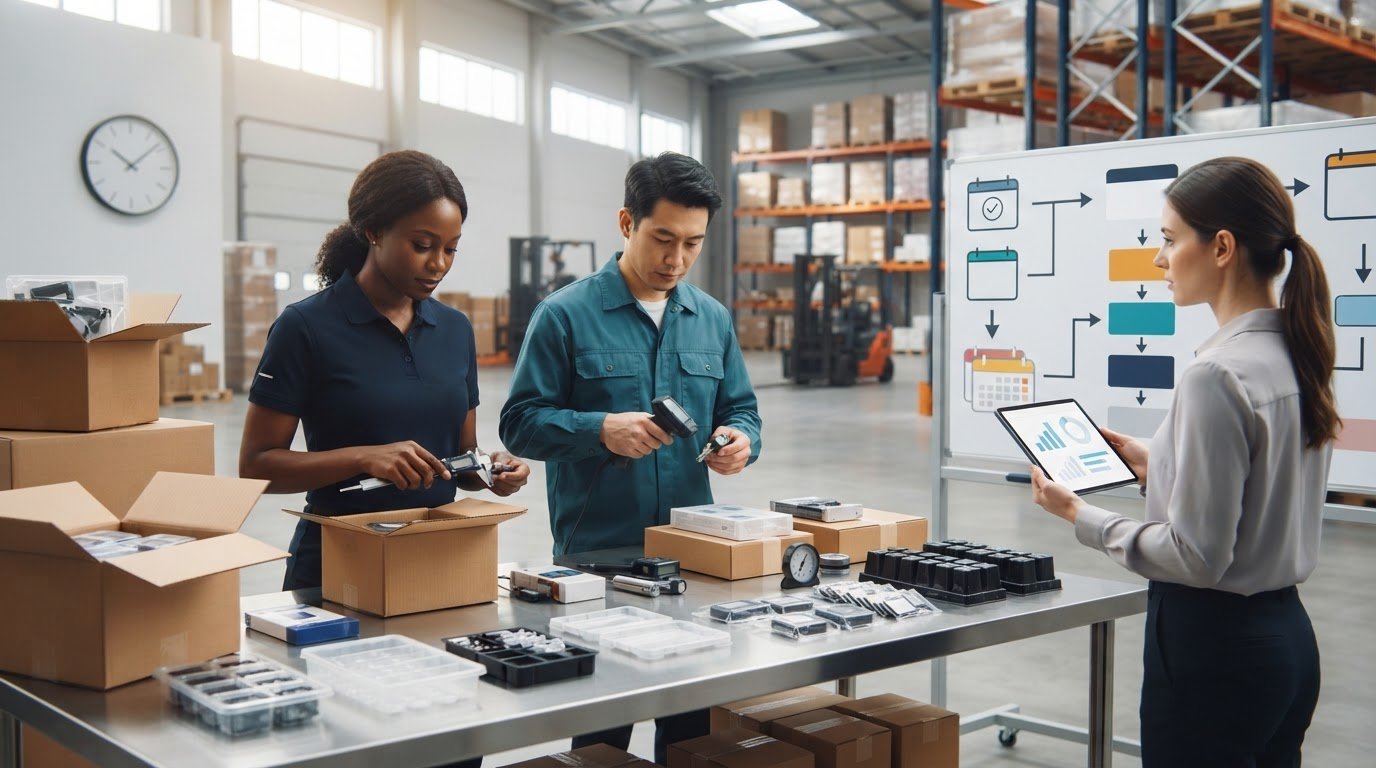
Successfully vetting suppliers in china provides a secure foundation, yet it doesn't guarantee flawless future performance. You must bridge the gap between initial approval and final shipment to maintain total control. Implementing During Production Inspections allows you to catch defects while goods are still on the line. It's far more cost-effective to rectify errors at 20% production than after the container is sealed and the vessel has departed.
Use your audit findings to establish clear quality goalposts. If an initial audit identified weaknesses in a factory's soldering process, your specific inspection checklist should prioritize that technical risk. These reports also serve as critical leverage during contract negotiations. They provide objective, fact-based evidence of a factory’s true capabilities, preventing you from paying premium prices for mediocre infrastructure.
The Role of Pre-Shipment Inspections
Pre-Shipment Inspection (PSI) acts as the final gatekeeper for your capital, ensuring finished goods meet every specification before you release the final balance payment. For a comprehensive breakdown of this critical stage, consult our Pre-Shipment Inspection: A Complete Guide.
Ongoing Supplier Management for Long-Term Success
Move beyond transactional buying by fostering strategic partnerships through regular social audits. These evaluations ensure long-term ethical compliance and operational stability, protecting your brand from reputational damage. If a supplier fails an audit, you must decide between a re-audit following corrective actions or sourcing a new partner. Continuous vetting suppliers in china ensures that quality standards remain high throughout the lifecycle of your product.
Taking Control of Your Manufacturing Future
The landscape of international trade in 2026 leaves no room for guesswork. As established, desktop research and platform badges are merely the starting point for a secure partnership. True risk mitigation relies on physical verification and a "Trust but Verify" model that spans from the initial audit to the final container loading. Professional vetting suppliers in china isn't just an administrative task; it's a critical preventative investment that forestalls catastrophic financial losses and brand damage.
You don't have to manage these high-stakes operations alone. By utilizing European management standards and a network of 700+ expert inspectors across Asia, you can transform uncertainty into actionable data. We deliver detailed reports within 24 hours, giving you the transparency needed to approve or reject shipments with total confidence. Don't let your capital be compromised by unverified claims or "ghost" factories. Secure your supply chain with a professional Factory Audit today and build a manufacturing partnership grounded in verified facts.
Frequently Asked Questions
Is an Alibaba Verified Supplier already vetted?
No, a "Verified" badge is a platform marketing tool, not a technical certification. It confirms a legal entity exists and has had a basic premise check. It doesn't evaluate technical capacity, quality management systems, or ethical standards for your specific project. Professional vetting suppliers in china requires an independent third-party audit to verify the manufacturer's actual ability to replicate your quality standards consistently.
What is the difference between a factory audit and a product inspection?
A factory audit evaluates the manufacturer’s overall infrastructure and quality management systems before you place an order. It's a foundational step to confirm legitimacy and technical capability. In contrast, a product inspection focuses on the physical goods after production begins. It verifies that the specific items in your order match your requirements for quality and packaging before you release the final balance payment to the factory.
How much does it cost to vet a supplier in China?
Costs for vetting a supplier depend on the depth of the assessment and the factory's geographic location. A preliminary supplier survey is generally less intensive than a full on-site factory audit that checks social compliance and technical capacity. While costs vary, this assessment is a preventative investment. It's significantly cheaper than the financial loss associated with a lost deposit or a container full of defective, unsellable inventory.
Can I vet a supplier myself without traveling to China?
You can conduct initial desktop research, but physical verification requires local expertise. Most successful importers hire independent third-party agencies to perform on-site audits. This approach provides an unbiased view of the production floor without the cost of international travel. Professional inspectors use standardized checklists to document machinery and quality controls, delivering detailed reports that provide the transparency needed for informed decision-making from your home office.
What are the top red flags during a supplier vetting process?
Primary red flags include a refusal to permit on-site inspections, business licenses that don't match the factory's address, and suspiciously low quotes. Watch for a lack of documented quality control procedures or evidence of unauthorized subcontracting. If a company is evasive about its ownership or manufacturing location, it's a major warning sign. These indicators are critical when vetting suppliers in china to protect your capital and brand reputation.