
What if the "state-of-the-art" facility you saw in a digital brochure is actually a third-party workshop using outdated machinery? You've likely felt that knot in your stomach after sending a deposit, wondering if the final shipment will match the golden sample. It's a valid concern; relying on a supplier's claims without verification is the fastest way to face the high costs of shipping defective goods back from overseas. Understanding what is a factory technical audit is the only way to confirm a manufacturer's true production capacity before you commit your capital.
We agree that uncertainty is the enemy of a profitable supply chain. This guide will show you how a technical audit acts as a deep-dive diagnostic to protect your investment and ensure consistent quality. You'll learn the 2026 framework for evaluation, including how to navigate the 38 specific changes in the ISO 9001:2025 revision and the new SQMS 1 standards. We'll provide a clear strategy to minimize risk, ensuring your partners are truly fit for purpose in an era where professional audit costs start from just $240 per man-day.
Key Takeaways
- Understand exactly what is a factory technical audit and how it goes beyond a simple site visit to verify a supplier's mechanical and systemic capabilities.
- Identify the five core pillars of a professional audit, including QMS protocols and resource management, to ensure your factory is truly fit for purpose.
- Protect your capital by uncovering the technical risks that cause costly surprises before your shipment leaves the factory floor.
- Learn how to use the Corrective Action Plan (CAP) framework to negotiate improvements and fix non-conformities before they impact your product quality.
What is a Factory Technical Audit? Definition and Scope
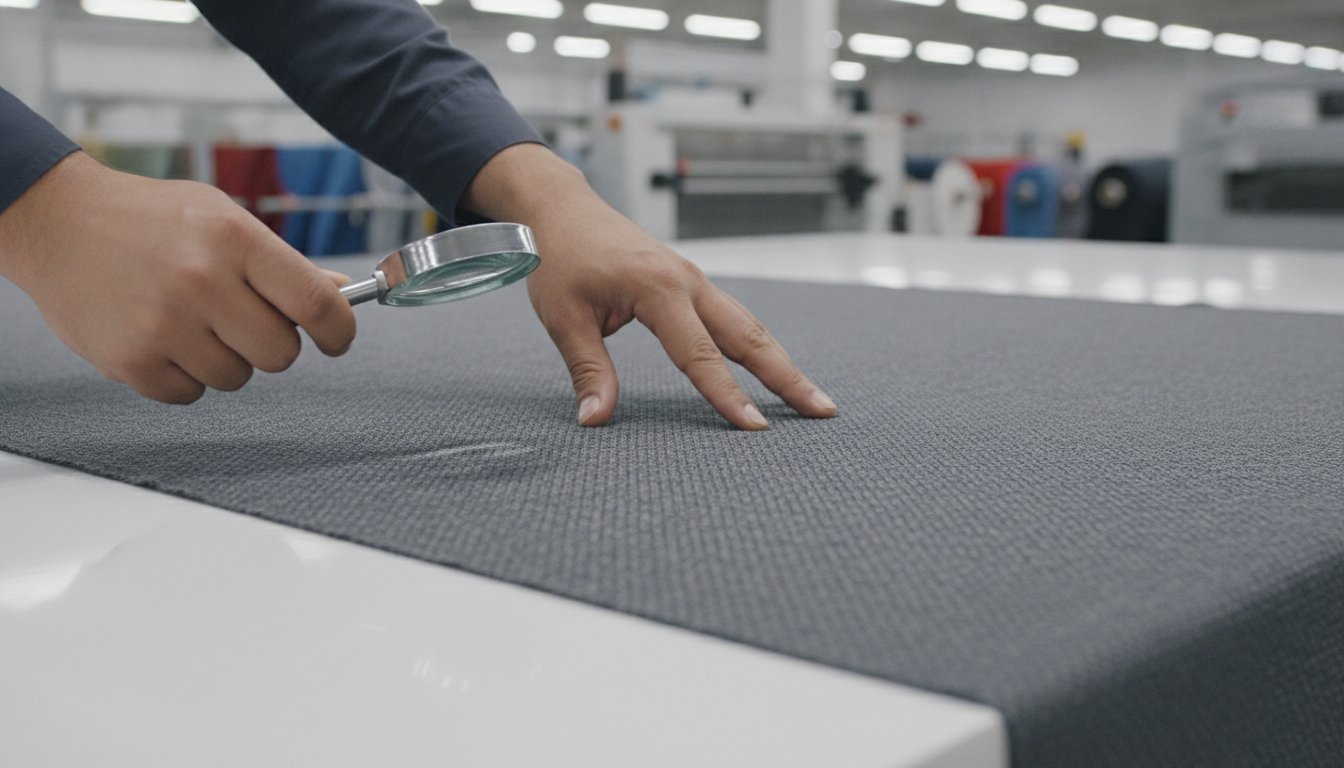
When asking what is a factory technical audit, you must view it as an on-site assessment of a factory's machinery, production lines, and quality systems. It's not just a quick walkthrough; it's a deep dive into the actual mechanics of production. A technical audit is a systematic evaluation of a factory's infrastructure and technical competence. This process ensures the factory isn't just a trading company in disguise but a legitimate manufacturing entity capable of meeting your specific standards. It serves as the final gatekeeper before you commit to a high-volume production run, stopping potential disasters before they cost you thousands in lost inventory.
Understanding what is a factory technical audit helps you move past the "face value" of a supplier's website or sales pitch. We look at the actual condition of the machines, the training levels of the staff, and the efficiency of the workflow. If a factory claims to produce 10,000 units a day but only has two functioning assembly lines, our auditors will find the discrepancy. This level of transparency is essential for any professional buyer who wants to avoid costly surprises and ensure their investment is protected.
Technical Audit vs. Social Audit: Key Differences
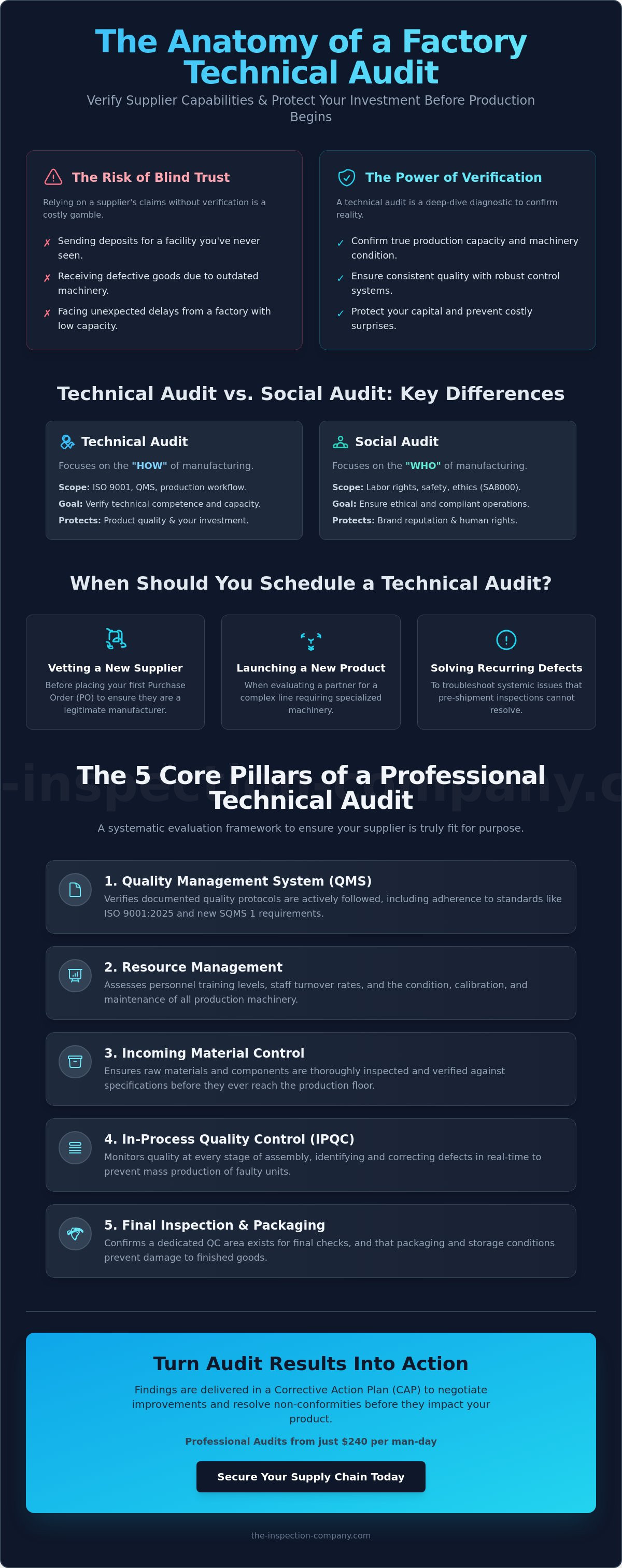
Many importers confuse these two, but they serve entirely different roles. Social audits focus on labor rights, safety, and ethics, often following frameworks like Sedex or SA8000. In contrast, a technical audit is a specific type of Quality audit that focuses on ISO 9001 standards, machine calibration, and production workflow. While social audits protect your brand reputation, technical audits focus on the "how" of manufacturing: Can they actually make your product? You need both to ensure a robust sourcing from asia strategy that minimizes operational risk.
When Should You Schedule a Technical Audit?
Timing is critical to prevent supply chain trouble. You should schedule an audit when:
- Vetting a new supplier before placing your first purchase order (PO).
- Evaluating an existing partner for a new, complex product line that requires specialized machinery.
- Troubleshooting recurring product defects that simple pre-shipment inspections can't solve.
By conducting these audits early, you gain the leverage needed to demand improvements or walk away from a high-risk partnership before payment is sent. It's a proactive step that saves months of trouble and protects your bottom line.
The 5 Core Pillars of a Professional Technical Audit
To truly understand what is a factory technical audit, you must look at the five pillars that form the foundation of a reliable supplier. These pillars aren't just checkboxes; they're the vital signs of a healthy manufacturing operation. We don't just look for certificates; we look for active evidence that quality is managed at every turn.
First, the Quality Management System (QMS) evaluates how the factory documents and actually executes quality protocols. Many factories have an ISO certificate on the wall, but we verify if they're following the 38 specific changes introduced in the ISO 9001:2025 revision. Second, Resource Management assesses personnel training and the condition of production machinery. This is a critical component of Supply chain risk management, as aging equipment or high staff turnover directly correlates with production delays and errors.
The third and fourth pillars focus on the line itself. Incoming Material Control ensures raw materials are inspected before they reach the production floor. In-Process Quality Control (IPQC) then monitors quality at every stage of assembly. Without these controls, defects aren't caught until it's too late to fix them without restarting the entire run. Knowing what is a factory technical audit means knowing that every stage of the process is being watched.
Production Process and Capacity Assessment
We verify if the factory's daily output matches their promised lead times. It's common for suppliers to over-promise to secure a contract, but we check for bottleneck points in the workflow that could cause significant delays. Reviewing machine maintenance logs is also mandatory. A single broken machine can halt your entire production schedule for weeks; our auditors ensure the equipment is up to the task.
Final Inspection and Packaging Procedures
The final pillar ensures the factory has a dedicated area for QC before goods are packed. We verify storage conditions to prevent moisture or dust damage to finished goods. This step is a vital link in your supplier management process. If you're unsure about a potential partner's capabilities, our professional factory audits provide the transparency you need to avoid costly surprises.
Why Technical Audits are Essential for Risk Mitigation in 2026
Supply chains in 2026 have become increasingly fragmented. We're seeing a rise in "factory hopping," where a primary supplier outsources your order to smaller, unvetted workshops to cut costs. This makes maintaining technical consistency nearly impossible without direct oversight. Understanding what is a factory technical audit is the only way to ensure your specifications are being met on the actual factory floor, not in a back alley shop. Shipping defective goods from Asia to Western markets is a financial catastrophe; the cost of return logistics and lost customer trust often exceeds the original production value by over 150%.
A technical audit is an investment that yields high ROI by preventing total shipment rejection before your goods sail. In an era where a single batch of poor quality products can trigger a viral social media backlash, you can't afford to guess. We stop problems at the source, ensuring your brand reputation remains intact and your investment is secure.
Compliance for Amazon FBA and Global Retailers
Amazon sellers face higher stakes than almost any other group. A defect rate exceeding 1% can lead to immediate account suspension or the permanent removal of a listing. We verify that your factory meets strict packaging and labeling requirements before anything leaves the dock. By using our quality platform, you can track compliance data across multiple suppliers in real time, reducing the risk of safety non compliance and expensive chargebacks.
Verifying 'Real' Factories vs. Trading Companies
Is your "manufacturer" actually making your goods? Many middlemen pose as factories but lack the physical assets to guarantee quality. Knowing exactly what is a factory technical audit allows you to filter out high risk partners by confirming physical machinery, staff levels, and legitimate business licenses. This transparency ensures you aren't paying a premium to a middleman who has zero control over the production line. To protect your capital and secure your supply chain today, book a professional factory audit and gain the clarity you need to scale safely.
Turning Audit Results into Action: The CAP Process
Receiving your report is only the beginning of the risk mitigation process. To truly master what is a factory technical audit, you must know how to translate data into supplier improvements. Our reports categorize findings into Critical, Major, and Minor non-conformities. Critical issues are immediate deal-breakers that put your entire shipment at risk. Major findings indicate systemic failures that require a structured fix, while Minor points are suggestions for operational optimization. Identifying these gaps allows you to move from uncertainty to a position of control.
The Corrective Action Plan (CAP) is your primary tool for negotiating these improvements. It's not enough for a supplier to promise they'll do better; they must provide a timeline and specific steps to fix the root cause of each failure. We recommend follow-up visits to verify that these technical gaps have actually been closed before you authorize the next production run. Integrating this data into your broader factory audit services strategy ensures that your supply chain becomes more resilient over time.
How to Read a Technical Audit Report
Don't get overwhelmed by the technical jargon. Focus on the executive summary and the 'Red Flag' items first. We provide detailed photo evidence so you can confront suppliers with proof of specific machinery or process failures. Based on the total score, a factory is categorized as High Risk, Medium Risk, or Low Risk. This classification tells you immediately if the supplier is fit for your specific order or if you need to find a more capable partner.
Partnering with a Third-Party Inspection Company
Our European management team in Hong Kong acts as a vital bridge between Western quality expectations and Asian manufacturing realities. We understand what is a factory technical audit requires on the ground: meticulous attention to detail and zero compromise on standards. With a network of 700+ professional inspectors, we can have boots on the ground at any facility within 48 hours. This speed and expertise stop problems before they scale. Avoid costly surprises-book your factory technical audit today.
Secure Your Supply Chain for 2026 and Beyond
By now, you understand exactly what is a factory technical audit and how it serves as your primary defense against sub-standard production. You've seen how the five pillars of a professional audit verify a supplier's true capacity. You also know how the CAP process turns technical failures into actionable improvements. Relying on a factory's word is a gamble. It often leads to costly surprises; however, with a systematic approach, you'll protect your capital and your brand reputation before the first unit is packed.
The Inspection Company brings over 25 years of quality control experience to your manufacturing process. Our European management team oversees a network of 700+ inspectors across Asia. We'll get boots on the ground within 48 hours. We deliver detailed reports within 24 hours of the audit, giving you the transparency needed to make informed business decisions. Secure your supply chain: Request a Factory Audit Quote today to stop problems before they sail. Don't leave your investment to chance. Take control of your production today and build a partnership based on verified facts.
Frequently Asked Questions
What is the difference between a factory audit and a product inspection?
A factory audit evaluates the manufacturer's systems, machinery, and production capacity, while a product inspection focuses on the specific goods within a shipment. Think of the audit as a check-up for the factory's health and the inspection as a check-up for the product's quality. You use audits to qualify a supplier for the long term and inspections to catch defects before a specific shipment sails.
How long does a typical factory technical audit take to complete?
A standard technical audit usually takes one man-day to complete on-site at the facility. For massive factories with multiple production buildings or complex machinery, it may require two man-days for a thorough assessment. Once the on-site work is finished, we deliver a professional report within 24 hours so you can proceed with your production schedule without unnecessary delays.
Can a factory technical audit help with ISO 9001 compliance?
Yes, understanding what is a factory technical audit is vital for verifying ISO 9001 compliance in a real-world setting. Our auditors specifically evaluate if the factory's quality management system adheres to the 38 changes in the ISO 9001:2025 revision. We look past the paper certificate to ensure the factory actually executes these quality protocols on the production line every day.
What happens if my supplier fails the technical audit?
If a supplier fails, you should immediately issue a Corrective Action Plan (CAP) to address the Critical and Major non-conformities identified in our report. You shouldn't send a deposit until the factory provides a clear implementation timeline for these fixes. If the factory is unwilling to improve, the audit serves as an essential warning to find a more reliable partner before your capital is at risk.
Is a technical audit necessary if the factory already has a good reputation?
Yes, because reputations don't guarantee current technical capacity or machine maintenance. Staff turnover in some manufacturing hubs can exceed 20% annually, which quickly erodes production quality. Conducting what is a factory technical audit ensures the facility has the physical assets and trained personnel to handle your specific order today, regardless of their past performance or marketing claims.