A third-party inspection in Hungary is an on-site check of your electronics or car parts by an inspector you book and pay, carried out at the Hungarian plant before you release payment or shipment. The inspector checks a random sample against your drawings, approved sample and test specification, then reports a pass, fail or pending result with photos and measurements. For electronics the focus is board workmanship, function and markings. For car parts it is dimensions, surface protection, traceability and packaging.
What a Third-Party Inspection in Hungary Covers
A third-party inspection in Hungary follows the same production stages used in any manufacturing country. You can book one stage or combine several, depending on how well you know the supplier, how safety-relevant the part is and how much the order is worth.
Most goods leaving Hungary for other EU countries travel by truck, so the loading check usually covers a trailer and its load securing rather than a sea container. For orders going overseas, the goods often move by rail or truck to a port first, and a container loading inspection is done at the plant or the consolidation warehouse.
Where Electronics and Car Parts Are Made in Hungary
Electronics and automotive production in Hungary sits mainly in the north-west, the centre and along the motorway corridors to the east. Vehicle assembly plants in Győr, Kecskemét, Esztergom and Debrecen pull a large supplier base around them: machining shops, die casters, plastic moulders, wire harness makers and electronics manufacturers producing control units, sensors and lighting. Contract electronics manufacturing is spread across Western and Central Transdanubia (around Székesfehérvár, Tatabánya, Komárom, Zalaegerszeg and Sárvár), Pest county around Budapest, and the north-east around Miskolc and Hatvan. Battery cell and module plants have been built around Göd, Komárom and Debrecen.
When you book, give the street address of the plant that actually makes and packs your goods. A Budapest registered office is often not the production site, and larger groups run several Hungarian plants under one company name.
Why Hungarian Plants Still Need an Independent Check
Hungarian plants that belong to large international groups work to group procedures and often hold IATF 16949 or ISO 9001 certificates. A certificate tells you a quality system exists. It does not tell you that your lot, built last week on a particular shift, matches your drawing. The non-conformities inspectors find in Hungary usually come from how production is organised:
- Components from Asia. Many Hungarian electronics and parts plants assemble boards, connectors, magnets, fasteners and housings bought from China and other Asian suppliers. A component change between your approved sample and bulk production is a frequent root cause of failures.
- Agency and temporary labour. Plants rely heavily on agency workers, including workers recruited from abroad. Turnover means new operators on hand soldering, crimping and visual inspection stations, and workmanship varies by shift.
- Production transfers. Lines moved to Hungary from Western Europe need time to run in. The first months after a transfer are when dimensional drift and assembly errors appear.
- Shared lines at contract manufacturers. An EMS plant runs dozens of customer products on the same SMT lines. Wrong reel loading, wrong firmware or mixed labels between similar variants are real risks.
- Smaller tier-2 and tier-3 suppliers. Machine shops and moulders further down the chain may have no customer audits at all, and their documents are sometimes copied from a previous part.
An inspection is independent when you book and pay for it and the inspection company takes no money from the supplier. A plant's own outgoing QC or an agent paid commission on the order has a reason to release a borderline lot.
Electronics Inspection in Hungary: What the Inspector Checks
Electronics inspections in Hungary cover both finished devices and bare assemblies such as PCBAs, control units and power supplies. The checklist depends on what you are buying; the full list for finished devices is on our consumer electronics inspection services page.
PCBA and solder workmanship
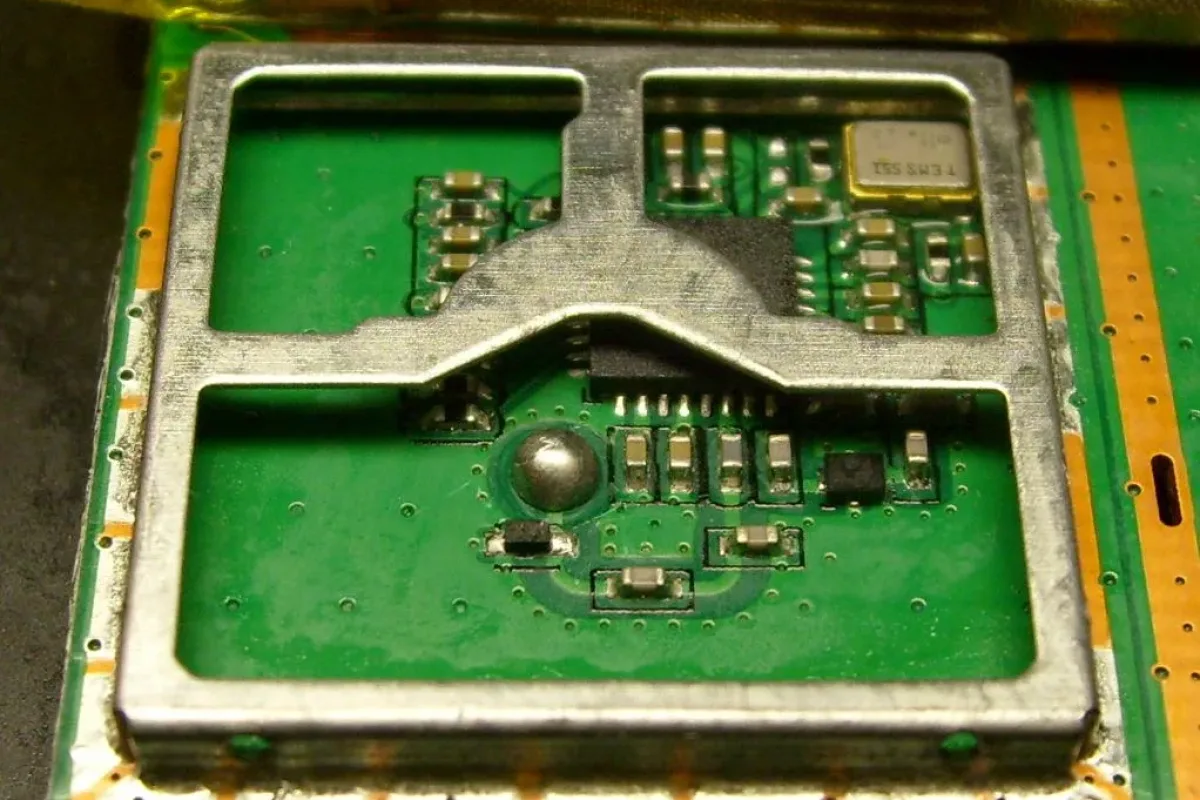
PCBA workmanship is judged against IPC-A-610 at the class stated in your specification, usually Class 2 for consumer products and Class 3 for many automotive and industrial assemblies. Under magnification the inspector looks for solder bridges, insufficient wetting, cold joints, tombstoned chip components, solder balls, lifted leads, wrong polarity on diodes and electrolytic capacitors, and missing or wrong components against the bill of materials and placement drawing. Hand-soldered THT joints and visible rework are recorded separately, because rework that is not allowed on your drawing is a major defect even if the joint looks good. BGA and QFN joints cannot be judged visually, so the inspector reviews the plant's X-ray or AOI records for your lot instead. Where boards carry conformal coating, coverage is checked under UV light, including keep-out zones on connectors and test points.
ESD and moisture handling
ESD and moisture handling are checked on the line and in the packing area. The inspector confirms that operators handling your boards wear grounded wrist straps or ESD footwear, that the work area is a marked ESD protected area, and that boards are packed in shielding bags or conductive trays, not ordinary bubble wrap. Moisture-sensitive components should be stored and baked according to J-STD-033, and outgoing packs should contain desiccant and a humidity indicator card where your specification calls for it.
Function, firmware and safety tests
Function tests are run on sampled units: power-on, every operating mode, displays, buttons, LEDs, communication interfaces, charging and standby current where the specification gives a limit. The firmware version is read from the device menu or a service tool and compared with the released version, because a plant running several variants can flash the wrong one. The inspector also reviews the plant's in-circuit and end-of-line test records for your lot and their first-pass yield. For mains-powered products, the inspector can witness the factory's hi-pot and earth continuity tests or repeat them with a portable tester. Full laboratory safety and EMC testing is a separate job, arranged through sample testing; our guide to electrical safety testing for electronics explains what each test measures.
Markings and EU documents
For consumer electronics sold in the EU, the inspector checks the CE mark, the crossed-out wheeled bin symbol for WEEE, the rating label line by line (model, voltage, frequency, power, protection class) and the plug type for the destination market. Under the General Product Safety Regulation (EU) 2023/988, consumer products must show the manufacturer's name, postal and electronic address and a type, batch or serial number, and safety information must be in the language of the country of sale. A device made in Hungary for the German market needs German instructions; one sold in Hungary needs Hungarian. The inspector also confirms that the declaration of conformity and RoHS declaration on file name the same model numbers that appear on the labels.
Findings that most often fail an electronics lot from a Hungarian plant:
- Solder bridges, missing components or reversed polarity on a small share of boards
- Unauthorised rework or hand-soldered repairs on boards specified as no-rework
- Wrong firmware version or mixed variants in one lot
- Boards packed without ESD protection or without desiccant
- Rating labels or declarations that do not match the model shipped
- Instructions missing in the language of the destination country
Car Parts Inspection in Hungary: What the Inspector Checks
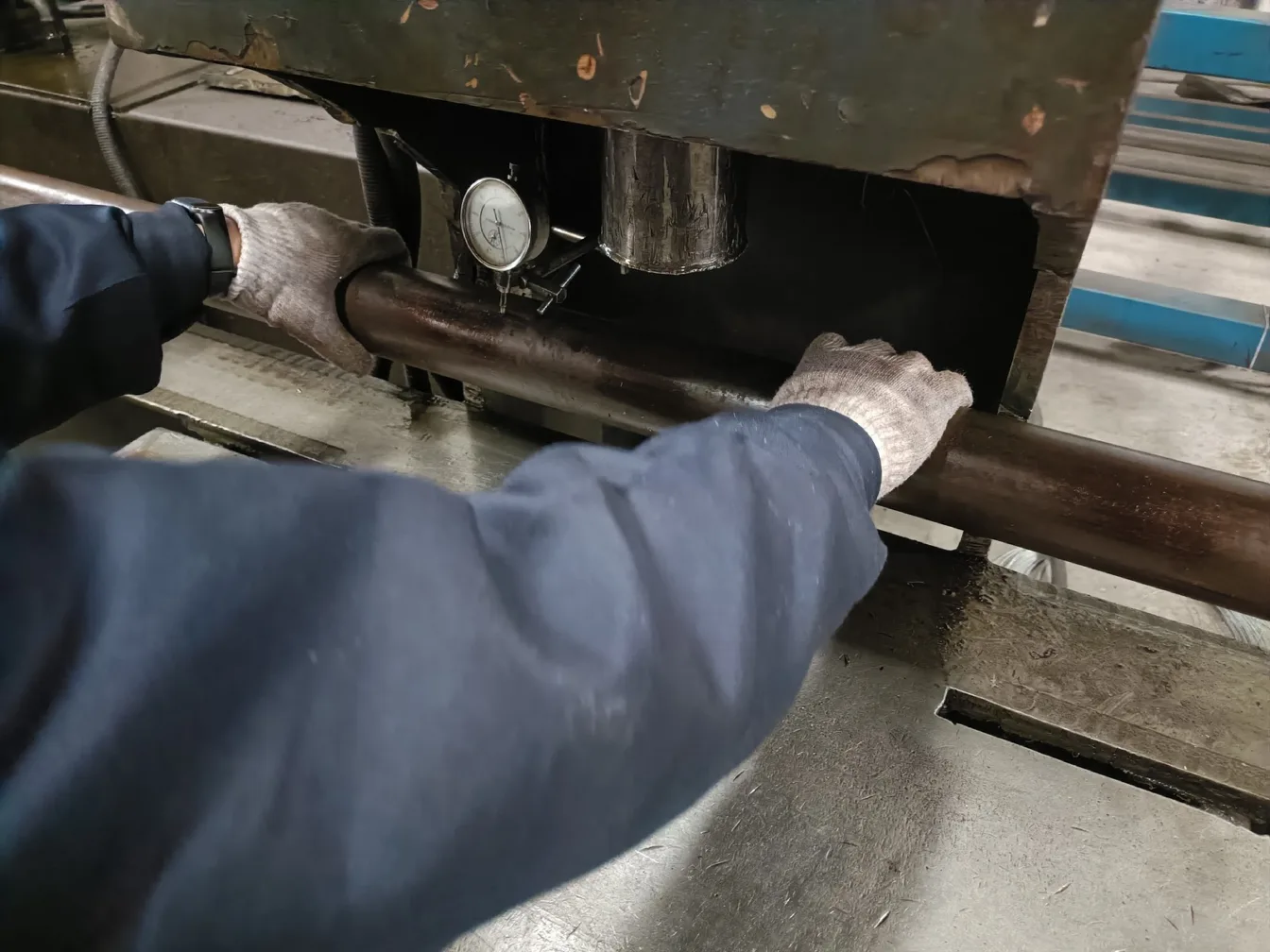
Car parts inspections in Hungary focus on measurable features, because a part that looks perfect can still miss a bore tolerance by 0.02 mm and fail at the customer's assembly line. The inspector works from your drawing with the characteristics you mark as special or critical, and from your control plan if you share it.
Dimensions and fit
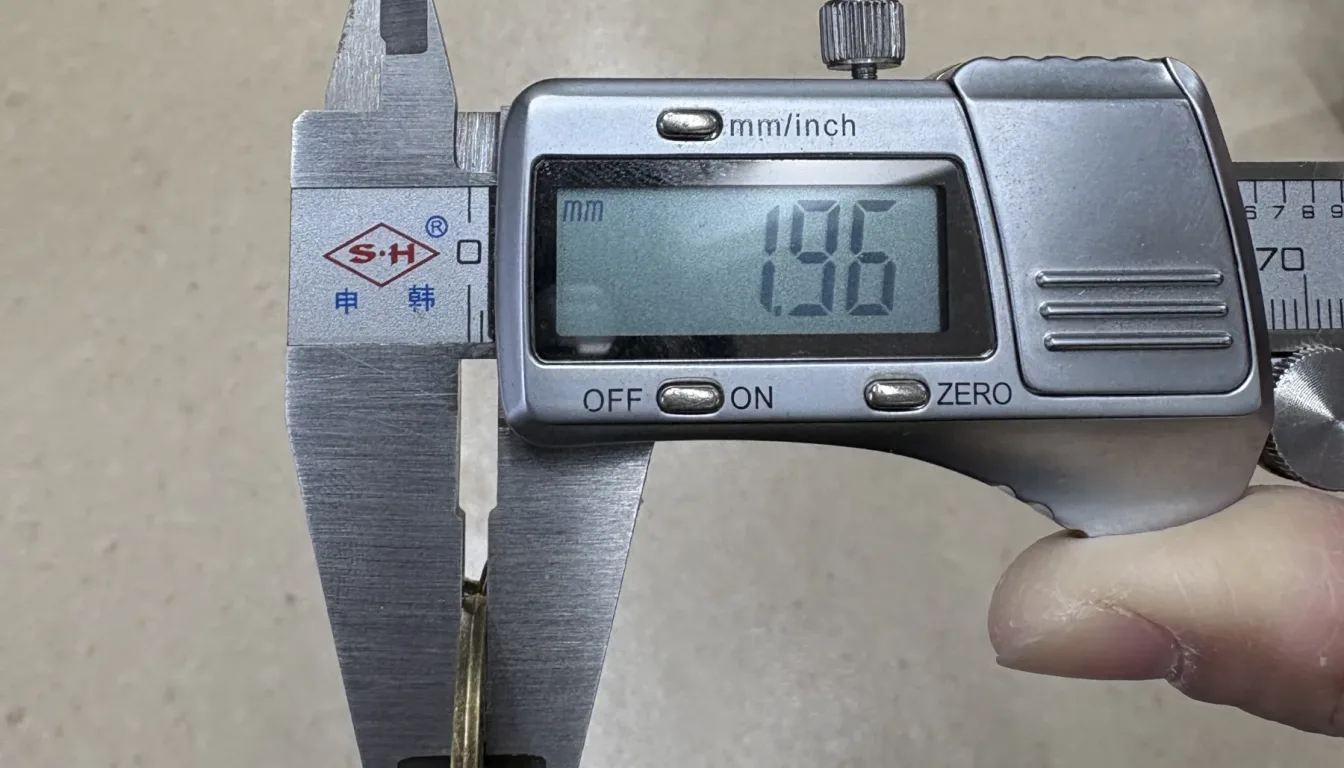
Dimensional checks use calipers, micrometers, height gauges, bore gauges and go/no-go plug and ring gauges on the characteristics listed in your specification. Threads are checked with thread gauges to the tolerance class on the drawing, for example 6H for internal and 6g for external metric threads. Where a feature can only be measured on a CMM, the inspector reviews the plant's CMM report for parts from your lot, checks that the report carries the part number, revision and date, and can ask for a part to be measured while they watch. Fit is checked against mating parts or fixtures if the plant has them.
Cast, machined and moulded parts
Aluminium die castings are checked for porosity exposed on machined faces, cold shuts, cracks, flash and incomplete fill. Housings that must be sealed should come with leak test records for your lot, with the test pressure and reject limit stated. Machined parts are checked for burrs in bores and cross-holes, chatter marks and surface roughness where the drawing gives an Ra value, measured with a portable roughness tester. Injection moulded parts are checked for short shots, flash, sink marks, weld lines at load points and gate remains, and for the material marking moulded into the part to ISO 11469, for example >PA66-GF30<, which shows whether the resin grade matches the drawing.
Coatings and corrosion protection
Coatings are measured with a coating thickness gauge at several points on each sampled part, and the readings in µm go into the report. Zinc flake, zinc-nickel, e-coat and powder coat are checked for bare spots, runs, blistering and coating in threads or on contact surfaces that must stay clean. Salt spray resistance cannot be tested on site; the inspector checks that a current neutral salt spray report to ISO 9227 exists for the coating batch and that the hours stated meet your requirement.
Wire harnesses and connectors
Wire harness inspections cover crimp height, measured with a crimp micrometer against the terminal maker's specification, crimp pull-off force on sample terminals, insulation and conductor position in the crimp, and seal position on sealed terminals. The inspector checks that every harness has passed 100% electrical continuity testing on the plant's test board, then checks branch lengths against the drawing, taping and clip positions, and that connector position assurance and terminal position assurance features are engaged.
PPAP, IATF 16949 and traceability
For automotive programmes, the inspector checks that the parts match the PPAP-approved revision, that the IATF 16949 certificate is current and covers the plant producing your parts, and that each pack carries a batch or heat number that traces back to material certificates. Our guide to the PPAP process explains which of the 18 elements matter most for importers. The validity of an IATF certificate can be checked through the IATF Global Oversight database.
Aftermarket parts sold to the public
Aftermarket parts need type-approval markings for some categories. Replacement brake pads, discs and drums fall under UN Regulation No. 90 and carry an approval number, lamps carry an E-mark, and electronic sub-assemblies fitted to vehicles need approval under UN Regulation No. 10 for electromagnetic compatibility. The inspector checks that the approval number on the part matches the certificate on file and appears on every sampled part.
Packaging and Labels for Automotive and Electronics Deliveries
Packaging for car parts going to a vehicle or tier-1 plant is usually returnable: KLT small load carriers and pallet boxes to VDA standards, with a label in the format your customer demands, often the VDA 4902 or Global Transport Label. The inspector checks quantity per carrier, label content against the delivery schedule, part orientation and layer separators, VCI bags or rust protection on steel parts, and that no foreign parts or loose fragments sit in the carrier. Electronics packaging is checked for ESD bags, tray orientation, carton markings against the packing list and a drop test to the procedure in your specification. Mixed-up labels between similar part numbers are one of the most common findings on both product types.
Setting Acceptance Levels: AQL for Electronics, Zero Defects for Car Parts
Acceptance levels for consumer electronics are normally set with the sampling tables in ISO 2859-1, which match ANSI/ASQ Z1.4: zero critical defects, AQL 1.0 or 2.5 for major defects and AQL 4.0 for minor defects at general inspection level II.
Car parts are a different case. Automotive customers expect zero defects, so buyers usually set an accept number of zero for any dimensional or functional non-conformity, and measure special characteristics on a fixed number of parts per lot, for example 5 or 32 pieces, as stated in the control plan. If a lot fails, the usual response is 100% sorting at the plant before anything ships. Our product sorting and rework service covers that step with an independent team. For electronics, function tests are often run on a smaller special sample such as S-4 so that time goes into longer run tests. Our AQL calculator gives the sample size and acceptance numbers for any lot size.
Which Inspection Stages Each Product Needs
The right combination of stages depends on where each product usually goes wrong. This table is a starting point for a Hungarian supplier you have not used before.
Once a supplier passes several orders in a row, many buyers move to a pre-shipment check only. Keep a during production inspection for the first order after a line transfer, a tool change or a new component source.
Preparing for an Inspection in Hungary
An inspection report is only as useful as the documents behind it. Send the inspection company these before the booking date:
- Drawings or specification with tolerances, revision level and marked special characteristics
- Photos of the approved sample, with an instruction to keep the signed sample at the plant
- Purchase order quantity, packing list and label artwork
- Acceptance levels and a defect list that classes each defect as critical, major or minor
- The tests you want on site: function and run time, hi-pot witness, coating thickness, crimp height, gauge checks
- Firmware version, bill of materials and the list of approved component sources for electronics
- The full address of the production site and a contact person for the inspector
Book the pre-shipment inspection of the finished lot for when the plant confirms 100% of the goods are produced and at least 80% are packed. Check the Hungarian calendar before you confirm a date. National holidays include 15 March, Easter Monday, 1 May, Whit Monday, 20 August, 23 October, 1 November and 25 and 26 December. Hungary also moves working days each year to create long weekends, so a Friday or Monday may be a day off and a Saturday a working day. Many automotive plants shut for one to three weeks in summer and between Christmas and New Year, aligned with their customers' vehicle plants.
Buyers who source the same parts from Hungary and Asia should use one specification and one defect list for both, so reports can be compared directly. Our guide to third-party inspection in China uses the same stages, and the guide to inspection in Italy covers EU markings for appliances and tools in more detail.
The Inspection Company has carried out independent inspections since 2007, with European management, a European branch in Germany and inspections run to German QC standards. We take no commission from suppliers, the inspector's check-in and check-out at the plant are geo-tracked, and you receive a quick report on the inspection day and the full photo-backed report with a pass, fail or pending result within 24 hours. Our network is strongest in Asia and covers select European countries, so send us your Hungarian plant location and we will confirm availability before you book.
To book a third-party inspection in Hungary, send us your plant address, product details and order quantity through our quotation form, and we will confirm inspector availability, recommend the inspection stages for your electronics or car parts order and quote a man-day price.
Frequently Asked Questions
How much does a third-party inspection in Hungary cost?
Most inspections are priced per man-day, and the total depends on the product, order quantity, number of tests and plant location. Send the details for a free quote, which is usually confirmed within a few hours.
Do IATF 16949 certified plants in Hungary still need inspection?
Yes, for any order where a defect would be costly. The certificate shows the plant has a quality system; an inspection checks whether your specific lot meets your drawing.
Can an inspector check BGA solder joints on site?
No, BGA and QFN joints are hidden under the component. The inspector reviews the plant's X-ray and AOI records for your lot, and laboratory X-ray can be arranged on sample boards.
Does an on-site inspection include EMC or full electrical safety testing?
No. On site the inspector runs function tests, checks markings and can witness hi-pot and earth continuity tests. EMC and full safety testing are done in a laboratory.
When should I avoid booking an inspection in Hungary?
Avoid national holidays, transferred rest days, the summer shutdown at automotive plants and the period between Christmas and New Year. Ask the plant to confirm its working calendar before you fix the date.